Inbunden, Engelska, 2026
1 253 kr
Skickas inom 5-8 vardagar
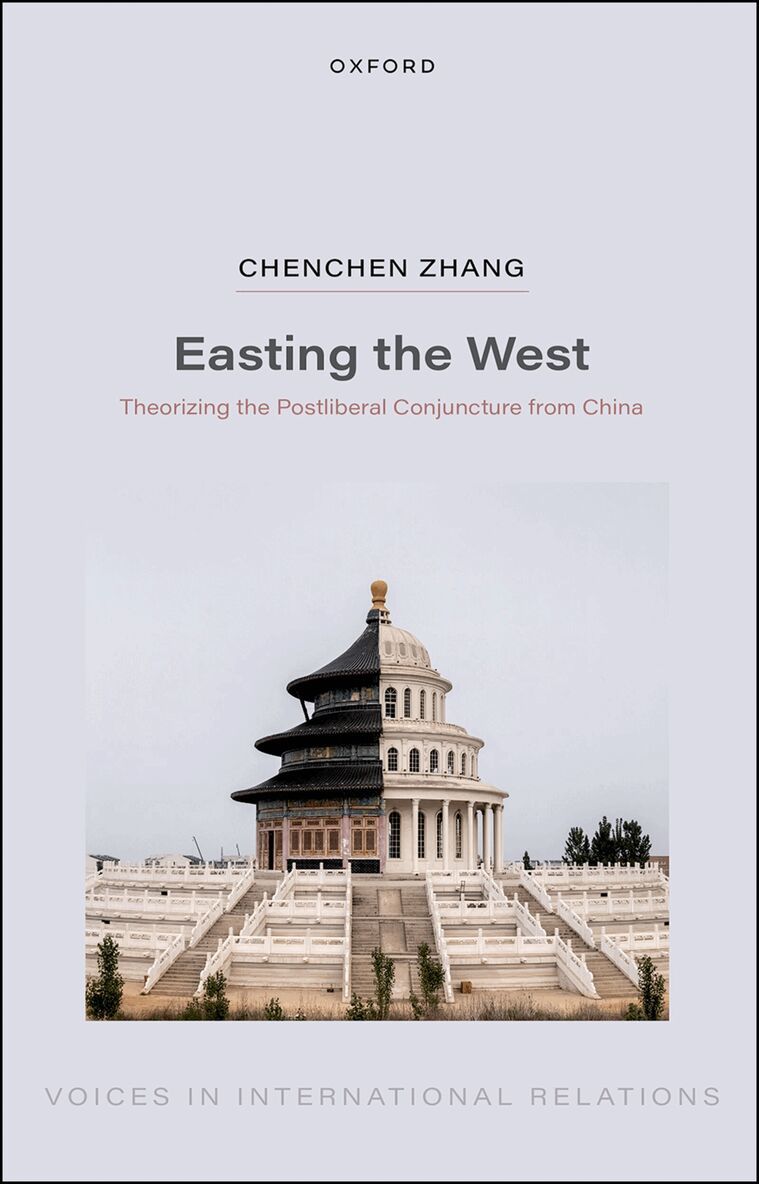
From intellectual history to the dazzling, chaotic, and jargon-laden world of digital culture, this book explores how ideas of 'the West' and articulations of China/West difference are produced and mobilized in Chinese political discourse. It foregrounds not only the co-construction and appropriation of civilizational binaries from the 'peripheries' of the international social order, but also the entanglement between ostensibly 'pro-Western' and 'anti-Western' narratives in Chinese nationalism. The book offers an in-depth study of digital reactionary discourse on Chinese social media, analysed within globally interconnected and locally embedded reinvigorations of racial nationalism, authoritarianism, and backlash against social justice movements. Theorizing the postliberal conjuncture from digital China, Zhang delineates how postliberal political sensibilities converge across conventional geopolitical and ideological fault lines. Employing identity markers such as 'East' and 'West' as flexible transnational codes, geopolitically opposed actors capitalize on structurally similar narratives to justify oppression at home and perpetuate logics of civilizational rivalry through mutual othering. As the legitimacy of liberal orders erodes, the political valence of critique is unstable. The anticolonial language may be mobilized not for emancipatory ends, but to consolidate authoritarian control and legitimate violence against racialized and marginalized groups.This book makes an original contribution to the international cultural politics of reaction by centring Chinese digital narratives as a constitutive site of ideological production in our shared global present. It deepens understanding of transversal alignment and the repurposing of critique in the postliberal conjuncture and in digital reactionary formations. ABOUT THE SERIES: Voices in International Relations, published under the auspices of the European International Studies Association (EISA), furthers the development of research at the frontiers of International Relations (IR). It expands the remit of the field by including innovative scholarship that broadens key debates in the discipline, but it is more interested in reconfiguring such debates by approaching them from inside and outside the conventional core. Thematically, we aim to publish research that pushes the limits of IR conventionally defined from within and connects it to debates developing outside the discipline. We are committed to furthering diversity and inclusion in terms of authorship, location, topics and approaches from both inside and outside Europe. We have an inclusive approach to neighbouring disciplines, be it sociology, history, anthropology, geography, economics, political theory or law.Series editors: Debbie Lisle, Tanja Aalberts, Anna Leander, and Laura Sjoberg.