
Häftad, Engelska, 2014
283 kr
Skickas
283 kr
Skickas

230 kr
Skickas

275 kr
Skickas
1 239 kr

541 kr
Skickas

261 kr
Skickas inom 3-6 vardagar

255 kr
Skickas

187 kr
Tillfälligt slut

1 395 kr
Skickas
The second edition of this acclaimed graduate text provides a unified treatment of two methods used in contemporary econometric research, cross section and data panel methods. By focusing on assumptions that can be given behavioral content, the book maintains an appropriate level of rigor while emphasizing intuitive thinking. The analysis covers both linear and nonlinear models, including models with dynamics and/or individual heterogeneity. In addition to general estimation frameworks (particular methods of moments and maximum likelihood), specific linear and nonlinear methods are covered in detail, including probit and logit models and their multivariate, Tobit models, models for count data, censored and missing data schemes, causal (or treatment) effects, and duration analysis.
Econometric Analysis of Cross Section and Panel Data was the first graduate econometrics text to focus on microeconomic data structures, allowing assumptions to be separated into population and sampling assumptions. This second edition has been substantially updated and revised. Improvements include a broader class of models for missing data problems; more detailed treatment of cluster problems, an important topic for empirical researchers; expanded discussion of "generalized instrumental variables" (GIV) estimation; new coverage (based on the author's own recent research) of inverse probability weighting; a more complete framework for estimating treatment effects with panel data, and a firmly established link between econometric approaches to nonlinear panel data and the "generalized estimating equation" literature popular in statistics and other fields. New attention is given to explaining when particular econometric methods can be applied; the goal is not only to tell readers what does work, but why certain "obvious" procedures do not. The numerous included exercises, both theoretical and computer-based, allow the reader to extend methods covered in the text and discover new insights.

205 kr
Skickas
413 kr
Skickas
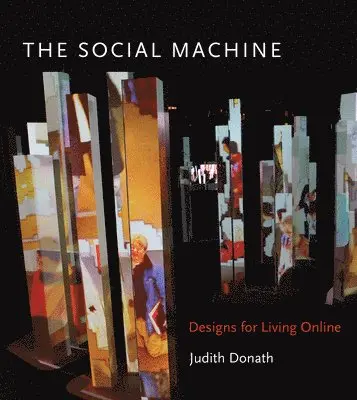
Computers were first conceived as “thinking machines,” but in the twenty-first century they have become social machines, online places where people meet friends, play games, and collaborate on projects. In this book, Judith Donath argues persuasively that for social media to become truly sociable media, we must design interfaces that reflect how we understand and respond to the social world. People and their actions are still harder to perceive online than face to face: interfaces are clunky, and we have less sense of other people's character and intentions, where they congregate, and what they do.
Donath presents new approaches to creating interfaces for social interaction. She addresses such topics as visualizing social landscapes, conversations, and networks; depicting identity with knowledge markers and interaction history; delineating public and private space; and bringing the online world's open sociability into the physical world. Donath asks fundamental questions about how we want to live online and offers thought-provoking designs that explore radically new ways of interacting and communicating.

379 kr
Skickas

905 kr
Skickas
610 kr
Skickas
610 kr
Skickas

459 kr
Skickas
2 540 kr
Skickas
This textbook offers an introduction to the use of probability models for analyzing risks and economic decisions. It takes a learn-by-doing approach, teaching the student to use spreadsheets to represent and simulate uncertainty and to analyze the effect of such uncertainty on an economic decision. Students in applied business and economics can more easily grasp difficult analytical methods with Excel spreadsheets.
The book covers the basic ideas of probability, how to simulate random variables, and how to compute conditional probabilities via Monte Carlo simulation. The first four chapters use a large collection of probability distributions to simulate a range of problems involving worker efficiency, market entry, oil exploration, repeated investment, and subjective belief elicitation. The book then covers correlation and multivariate normal random variables; conditional expectation; optimization of decision variables, with discussions of the strategic value of information, decision trees, game theory, and adverse selection; risk sharing and finance; dynamic models of growth; dynamic models of arrivals; and model risk.
New material in this second edition includes two new chapters on additional dynamic models and model risk; new sections in every chapter; many new end-of-chapter exercises; and coverage of such topics as simulation model workflow, models of probabilistic electoral forecasting, and real options. The book comes equipped with Simtools, an open-source, free software used througout the book, which allows students to conduct Monte Carlo simulations seamlessly in Excel.

836 kr
Skickas inom 3-6 vardagar

324 kr
Skickas

451 kr
Skickas
1 061 kr
Skickas inom 7-10 vardagar
575 kr
Skickas inom 7-10 vardagar
317 kr
Skickas inom 11-20 vardagar
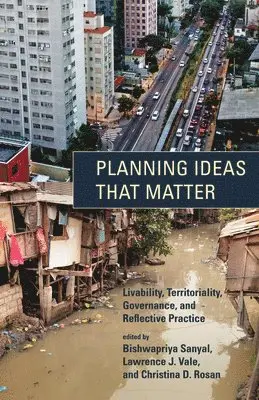
Over the past hundred years of urbanization and suburbanization, four key themes have shaped urban and regional planning in both theory and practice: livability, territoriality, governance, and reflective professional practice. Planning Ideas That Matter charts the trajectories of these powerful planning ideas in an increasingly interconnected world.
The contributors, leading theorists and practitioners, discuss livability in terms of such issues as urban density, land use, and the relationship between the built environment and natural systems; examine levels of territorial organization, drawing on literature on regionalism, metropolitanism, and territorial competition; describe the ways planning connects to policy making and implementation in a variety of political contexts; and consider how planners conceive of their work and learn from practice.
Throughout, the emphasis is on how individuals and institutions—including government, business, professional organizations, and universities—have framed planning problems and ideas. The focus is less on techniques and programs than on the underlying concepts that have animated professional discourse over the years. The book is recommended for classroom use, as a reference for scholars and practitioners, and as a history of planning for those interested in the development of the field.

535 kr
Skickas inom 7-10 vardagar

383 kr
Skickas inom 7-10 vardagar

1 204 kr
Skickas inom 7-10 vardagar

447 kr
Skickas inom 7-10 vardagar

668 kr
Skickas inom 7-10 vardagar

759 kr
Skickas inom 7-10 vardagar

610 kr
Skickas inom 7-10 vardagar