A conversation about design, filmmaking, Afrofuturism, world-building, and other topics with Hannah Beachler, Academy-Award-winning production designer of Black Panther.Hannah Beachler is known as an award-winning production designer, but she tells an audience that she considers herself to be more of a story designer. As film stills and concept art from a few of those stories--Moonlight, Miles Ahead, Creed, Lemonade, and Black Panther--flash across a screen, Beachler engages in a meandering conversation with Jacqueline Stewart and Toni L. Griffin about set building and curation, urban design, location scouting, Afrofuturism, fictional histories, and Black feminist narratives, and illustrates her role: a designer behind on-screen tableaux that provide not only visual feasts of artistry and imagination, but also intimate spaces of emotion, humanity, and constructed memory.Copublished with Harvard University Graduate School of Design
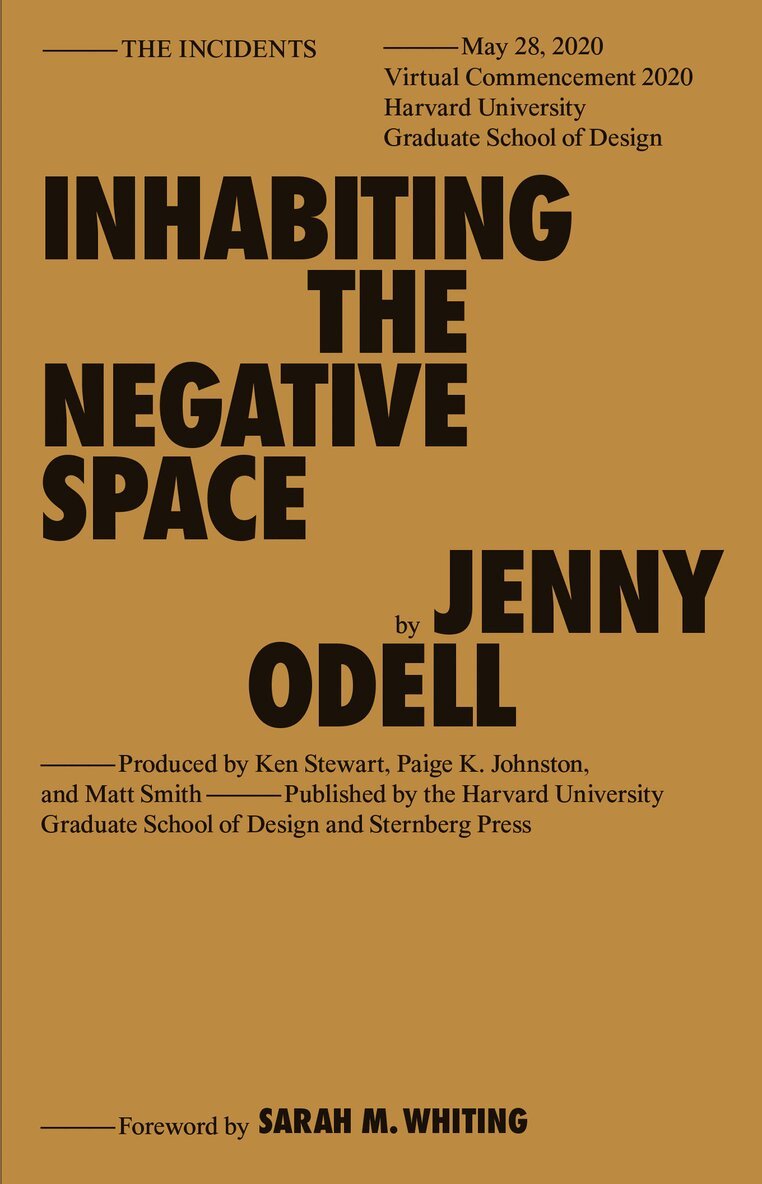
A hopeful meditation on how periods of inactivity become reimagined as fertile spaces for design and how we might use this strange moment in history."Hi, everyone. I'm speaking to you from my apartment in Oakland, though I've virtually placed myself in the rose garden nearby."Artist and writer Jenny Odell hadn't originally planned to deliver the Harvard University Graduate School of Design's 2020 Class Day Address from her living room. But on May 25, 2020, there was Jenny, framed by a rose garden in her Zoom background, speaking to an audience she could not see about the role of design in a suspended moment marked by uncertainty in a global pandemic. Odell's message, itself a timely reflection on observation, embraces the standstill and its potential to deepen and expand our individual and collective attention and sensitivity to time, place, and presence--in turn, perhaps, enabling us all, amid our "new" virtual contexts, to better connect with our natural and cultural environments.Odell unspools this hopeful meditation in Inhabiting the Negative Space, where periods of inactivity become reimagined not as wasted time but fertile spaces for a kind of design predicated less on relentless production and more on permitting a deeper, more careful look at what exactly is demanding or tapping our time and attention, and how we might use this strange moment in history to respond.Copublished with Harvard University Graduate School of Design
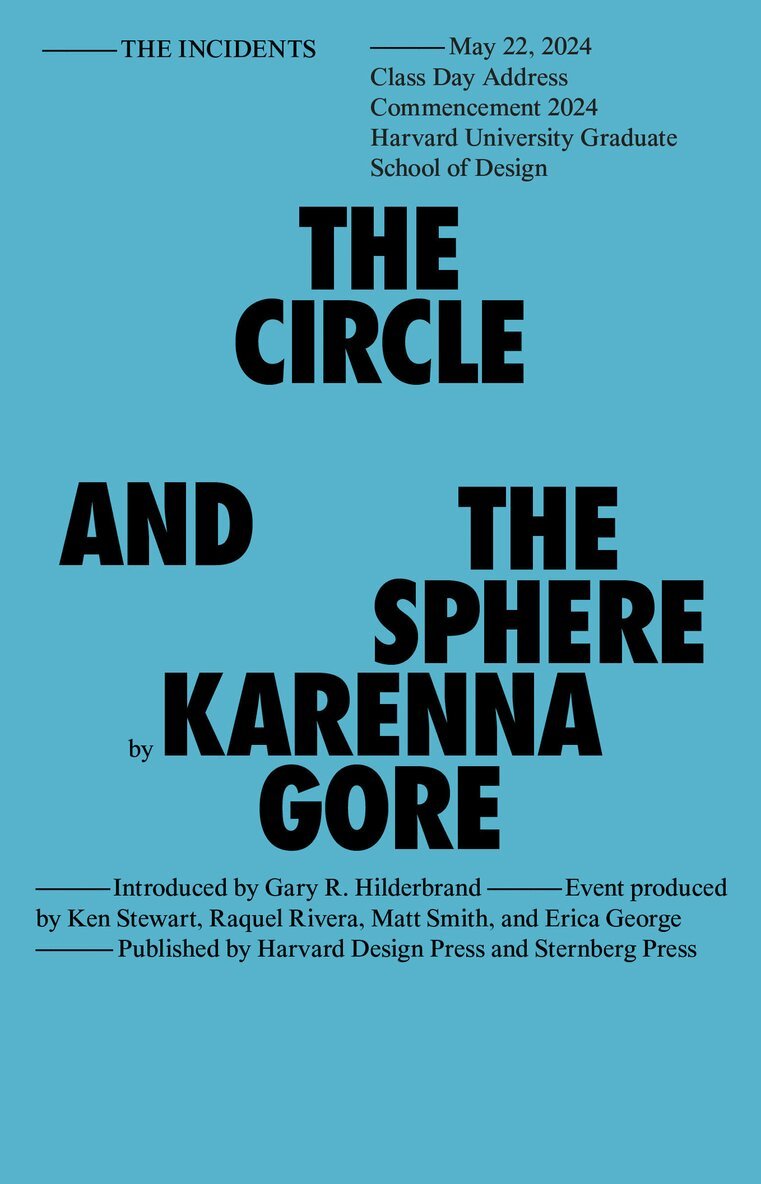
A future for the design practices that works within the living and intelligent design of Earth.On a spring afternoon in Cambridge, Massachusetts, standing against the concrete and glass backdrop of the Harvard University Graduate School of Design’s Gund Hall, Karenna Gore addressed a graduating class of future architects, landscape architects, design engineers, and urban planners and designers. Gore, a professor of earth ethics whose work hovers around the intersection of values, faith, and ecology, could seem an unexpected fit as the messenger of parting wisdom to a group of designers. But she begins her speech by foregrounding the shared task of facing a climate crisis that continues to threaten life and systems on Earth in new and increasingly erratic ways, and encourages a future for design that lies in learning from the natural world. Calling on figures as varied as theologian Thomas Berry to landscape architect Kate Orff, Gore suggests this multidisciplinary Earth-centered approach could not only be benefical to design thinking but integral to it. “It is not Earth that needs fixing,” she said. “It is us.”Copublished by Harvard Design Press