519 kr
Läs direkt efter köp
519 kr
Läs direkt efter köp
1 463 kr
Läs direkt efter köp
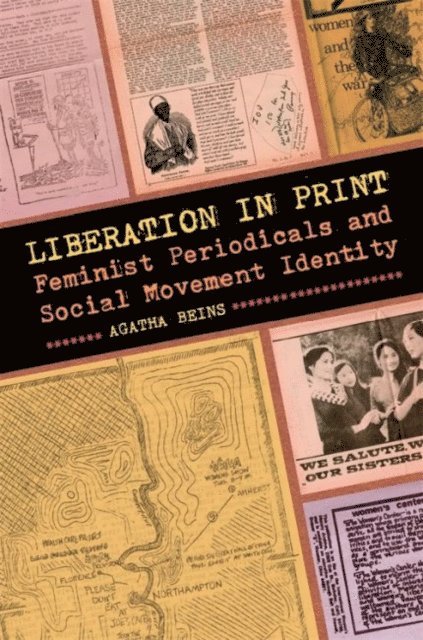
This is the first analysis of periodicals’ key role in U.S. feminism’s formation as a collective identity and set of political practices in the 1970s. Between 1968 and 1973, more than five hundred different feminist newsletters and newspapers were published in the United States. Agatha Beins shows that the repetition of certain ideas in these periodicals—ideas about gender, race, solidarity, and politics—solidified their centrality to feminism.Beins focuses on five periodicals of that era, comprising almost three hundred different issues: Distaff (New Orleans, Louisiana); Valley Women’s Center Newsletter (Northampton, Massachusetts); Female Liberation Newsletter (Cambridge, Massachusetts); Ain’t I a Woman? (Iowa City, Iowa); and L.A. Women’s Liberation Newsletter, later published as Sister (Los Angeles, California). Together they represent a wide geographic range, including some understudied sites of feminism. Beins examines the discourse of sisterhood, images of women of color, feminist publishing practices, and the production of feminist spaces to demonstrate how repetition shaped dominant themes of feminism’s collective identity. Beins also illustrates how local context affected the manifestation of ideas or political values, revealing the complexity and diversity within feminism.With much to say about the study of social movements in general, Liberation in Print shows feminism to be a dynamic and constantly emerging identity that has grown, in part, out of a tension between ideological coherence and diversity. Beins’s investigation of repetition offers an innovative approach to analyzing collective identity formation, and her book points to the significance of print culture in activist organizing.
519 kr
Läs direkt efter köp
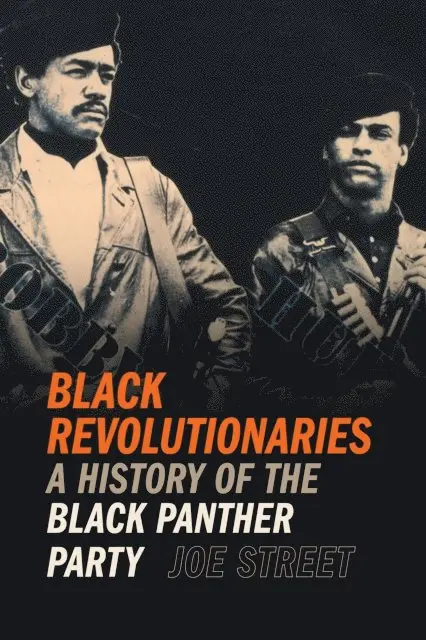
Black Revolutionaries is an accessible yet rigorously argued history of the Black Panther Party (BPP), one of the emblematic organizations of the 1960s. Joe Street highlights the complexity of the BPP’s history through three key themes: the BPP’s intellectual history, its political and social activism, and the persecution its members endured. Together, these themes confirm the BPP’s importance in understanding Black America’s response to white oppression in the 1960s and 1970s. Based on a wealth of archival material, Black Revolutionaries reveals the enduring importance of leftist political philosophy to 1960s and 1970s radicalism, and how the BPP helps us to understand more deeply the role of public space and public protest in the 1960s.Street shows how the BPP were key to the transformation of political activism in the post-civil rights era. As the BPP faced the psychological and organizational impacts of FBI surveillance, police repression, and imprisonment, Street examines how these negative forces helped to shape and destroy the BPP. Most significantly, Black Revolutionaries demonstrates that an understanding of African American grassroots politics and protest, racial injustice, and police brutality in the post-civil rights era is only comprehensible through engagement with the BPP’s history.