
Inbunden, Engelska, 2005
432 kr
Skickas
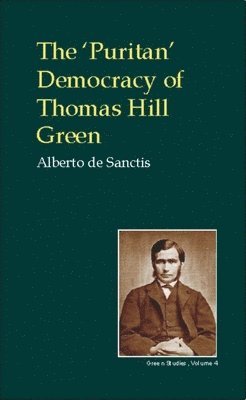
The central concern of this book is to demonstrate how Puritanism was a theme which ran through all Green's biography and political philosophy.
432 kr
Skickas
435 kr
Tillfälligt slut
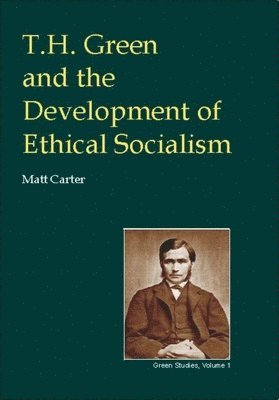
This book uncovers the philosophical foundations of a tradition of ethical socialism best represented in the work of R.H. Tawney, tracing its roots back to the work of T.H. Green. Green and his colleagues developed a philosophy that rejected the atomistic individualism and empiricist assumptions that underpinned classical liberalism and helped to found a new political ideology based around four notions: the common good; a positive view of freedom; equality of opportunity; and an expanded role for the state. The book shows how Tawney adopted the key features of the idealists' philosophical settlement and used them to help shape his own notions of true freedom and equality, thereby establishing a tradition of thought which remains relevant in British politics today.
432 kr
Tillfälligt slut
This study of T.H. Green views his philosophical opus through his public life and political commitments, and it uses biography as a lens through which to examine Victorian political culture and its moral climate. The book deals with the political and religious history of Victorian Britain in examining the basis of Green's Liberal partisanship. It demonstrates how his main ethical and political conceptions—his idea of "self-realisation" and his theory of individuality within community—were informed by evangelical theology, popular Protestantism and an idea of the English national consciousness as formed by religious conflict. While the significance of Kantian and Hegelian elements in Green's thought is acknowledged, it is argued that "indigenous" qualities of Green’s teachings resonated with values shared alike by elite and rank-and-file Liberals during the mid and late Victorian era. In examining Green’s beliefs about the historical evolution of English liberty, his championing of (Liberal) Nonconformity and Nonconformist causes and his approval of religious bases of community, this study analyzes the ripening of a Greenian moment and traces Green’s influence on Liberal, quasi-socialist and Conservative social reform down to the 1920s. The lasting impact of Green’s teachings on British and Western political philosophy, apparent in the current vogue for communitarianism in liberal theory, indicates limitations of the “secularization thesis” still tacitly accepted by historians of Western political thought.
435 kr
Tillfälligt slut
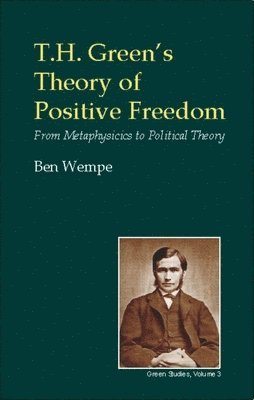
In this new and entirely revised edition of his study of Green's theory of positive freedom, Ben Wempe argues that the far-reaching and beneficial influence of Green’s political doctrine, on public policy as well as in the field of political theory, was founded on a misinterpretation of his philosophical stand, since the metaphysical basis on which Green argued for his political position was largely neglected. The book discusses Green’s philosophical development and examines an important, hitherto underrated, influence that went into the formation of his philosophical opinions. It then considers Green’s metaphysics and describes how some omissions from the concise version of his metaphysical doctrine, as it is found in his published works, may be remedied by reference to Green’s unpublished material.
435 kr
Tillfälligt slut
This first part of Colin Tyler's new critical assessment of the social and political thought of T.H. Green (1836–1882) explores the grounding that Green gives to liberal socialism. Tyler shows how, for Green, ultimately, personal self-realisation and freedom stem from the innate human drive to construct a bedrock of fundamental values and commitments that can define and give direction to the individual's most valuable potentials and talents. This book is not only a significant contribution to British idealist scholarship. It highlights also the enduring philosophical and ethical resources of a social democratic tradition that remains one of the world's most important social and political movements, and not least across Britain, Europe, North America, India and Australia.
435 kr
Tillfälligt slut
This book presents a critical reconstruction of the social and political facets of Thomas Hill Green's liberal socialism. It explores the complex relationships Green sees between human nature, personal freedom, the common good, rights and the state. It explores Green's analysis of free exchange, his critique of capitalism and his defence of trade union activity and the cooperative movement. It establishes that Green gives only grudging support to welfarism, which he saw as a conservative mechanism in effect if not conscious design. It is shown that he believes state provision of welfare to be justified only to the extent that peasants and the proletariat lack a culture and institutions which enable them to assert themselves against abusive landlords and capitalists. Ultimately, it is shown that Green’s guiding ideal is the creation of a eudaimonically-enriching kingdom of ends, which favours the creation of a dynamic and free society driven by mass participation through decentralised social and political institutions. This book builds on Colin Tyler’s The Metaphysics of Self-realisation and Freedom (2010), although it can also be read as a freestanding work.