

Häftad, Engelska, 2022
234 kr
Skickas inom 3-6 vardagar
234 kr
Skickas inom 3-6 vardagar

201 kr
Skickas
199 kr
Skickas
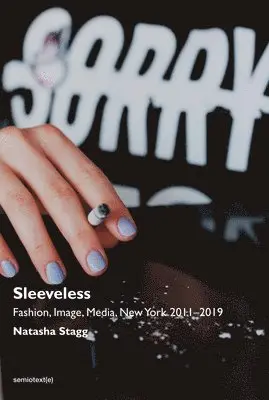
We were supposed to meet Rose McGowan at Café d'Alsace after the party, but she cancelled at the last minute. I saw on Twitter that she had been hit with a drug possession charge, which she insisted was a scheme to keep her Weinstein dirt quiet. I hadn't even read her Weinstein story… I still wanted to know that the articles were being published, and in large quantities, but reading stories of abuse and humiliation was as stupefying as a hangover. I didn't feel empowered; I only felt more hopeless. I wanted to watch the patriarchy go up in flames, but I wasn't excited about what was being pitched to replace it. If we got all of it out in the open, what would we have left? My fear was that guilt would destroy the classics and there'd be no one left to fuck. All movies would be as low-budget and as puritanical as the stuff they play on Lifetime, all of New York would look like a Target ad, every book or article would be a cathartic tell-all, and I'd be sexually frustrated but too ashamed to hook up with assholes, or even to watch porn.—from Sleeveless
Eve Babitz meets Roland Barthes in Sleeveless, Natasha Stagg's follow up to Surveys, her 2016 novel about internet fame. Composed of essays and stories commissioned by fashion, art, and culture magazines, Sleeveless is a scathing and sensitive report from New York in the 2010s. During those years, Stagg worked as an editor for V magazine and as a consultant, creating copy for fashion brands. Through these jobs, she met and interviewed countless industry luminaries, celebrities, and artists, and learned about the quickly evolving strategies of branding. In Sleeveless, she exposes the mechanics of personal identity and its monetization that propelled the narrator of Surveys from a mall job in Tucson to international travel and internet fame.

277 kr
Skickas inom 7-10 vardagar

155 kr
Skickas
“Why am I telling you all this? Partly 'cause the whole queerness/identity thing for me stretches through everything, absolutely everything. Slipping between straight/gay is child's play compared to slipping between writer/teacher/influence-peddler whatever. I forget who I am. You reminded me of who I prefer to be.” [M.W.]
“It's two in the morning... I know what you mean about slipping roles: I love it, going high low, power helpless even captive, male female, all over the place, space totally together and brain-sharp, if it wasn't for play I'd be bored stiff and I think boredom is the emotion I find most unbearable... ” [KA]—from I'm Very into You
After Kathy Acker met McKenzie Wark on a trip to Australia in 1995, they had a brief fling and immediately began a heated two-week email correspondence. Their emails shimmer with insight, gossip, sex, and cultural commentary. They write in a frenzy, several times a day; their emails cross somewhere over the International Date Line, and themselves become a site of analysis. What results is an index of how two brilliant and idiosyncratic writers might go about a courtship across 7,500 miles of airspace—by pulling in Alfred Hitchcock, stuffed animals, Georges Bataille, Elvis Presley, phenomenology, Marxism, The X-files, psychoanalysis, and the I Ching.
Their corresepondence is a Plato's Symposium for the twenty-first century, but written for queers, transsexuals, nerds, and book geeks. I'm Very Into You is a text of incipience, a text of beginnings, and a set of notes on the short, shared passage of two iconic individuals of our time.
273 kr
Skickas inom 3-6 vardagar

189 kr
Skickas
Radical feminist author Andrea Dworkin was a caricature of misandrist extremism in the popular imagination and a polarizing figure within the women's movement, infamous for her antipornography stance and her role in the feminist sex wars of the 1980s. She still looms large in feminist demands for sexual freedom, evoked as a censorial demagogue, more than a decade after her death. Among the very first writers to use her own experiences of rape and battery in a revolutionary analysis of male supremacy, Dworkin was a philosopher outside and against the academy who wrote with a singular, apocalyptic urgency.
Last Days at Hot Slit brings together selections from Dworkin's work, both fiction and nonfiction, with the aim of putting the contentious positions she's best known for in dialogue with her literary oeuvre. The collection charts her path from the militant primer Woman Hating (1974), to the formally complex polemics of Pornography (1979) and Intercourse (1987) and the raw experimentalism of her final novel Mercy (1990). It also includes “Goodbye to All This” (1983), a scathing chapter from an unpublished manuscript that calls out her feminist adversaries, and “My Suicide” (1999), a despairing long-form essay found on her hard drive after her death in 2005.
Not Stated
276 kr
Kommande
366 kr
Skickas inom 7-10 vardagar
211 kr
Skickas inom 3-6 vardagar

Not Stated
283 kr
Kommande
219 kr
Skickas inom 7-10 vardagar
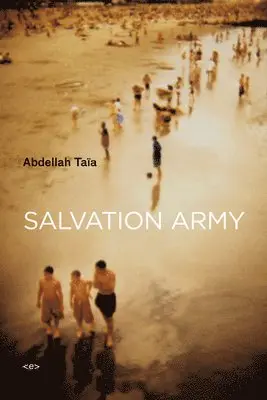
An autobiographical novel by turn naïve and cunning, funny and moving, this most recent work by Moroccan expatriate Abdellah Taïa is a major addition to the new French literature emerging from the North African Arabic diaspora. Salvation Army is a coming-of-age novel that tells the story of Taïa's life with complete disclosure—from a childhood bound by family order and latent (homo)sexual tensions in the poor city of Salé, through an adolescence in Tangier charged by the young writer's attraction to his eldest brother, to a disappointing arrival in the Western world to study in Geneva in adulthood. In so doing, Salvation Army manages to burn through the author's first-person singularity to embody the complex mélange of fear and desire projected by Arabs on Western culture. Recently hailed by his native country's press as “the first Moroccan to have the courage to publicly assert his difference,” Taïa, through his calmly transgressive work, has “outed” himself as “the only gay man” in a country whose theocratic law still declares homosexuality a crime. The persistence of prejudices on all sides of the Mediterranean and Atlantic makes the translation of Taïa's work both a literary and political event. The arrival of Salvation Army (published in French in 2006) in English will be welcomed by an American audience already familiar with a growing cadre of talented Arab writers working in French (including Muhammad Dib, Assia Djebar, Tahar Ben Jelloun, Abdelkebir Khatibi, and Katib Yasin).

259 kr
Skickas inom 7-10 vardagar
181 kr
Skickas
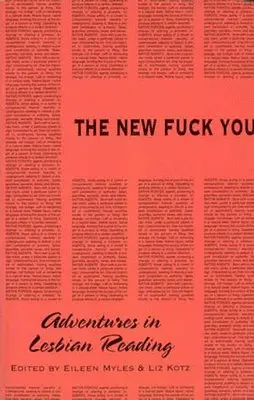
Borrowing its name from the notorious '60s Ed Sanders magazine, Fuck You: A Magazine of the Arts, the editors have figured a way to rehone its countercultural and frictional stance with style and aplomb. A unique and provocative anthology of lesbian writing, guaranteed to soothe the soulful and savage the soulless. Includes Adele Bertei, Holly Hughes, Sapphire, Laurie Weeks, and many more.

240 kr
Skickas inom 7-10 vardagar
240 kr
Skickas inom 7-10 vardagar
364 kr
Skickas inom 7-10 vardagar
218 kr
Skickas
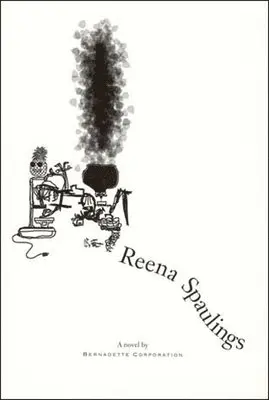
Set in post-9/11 New York City, Reena Spaulings was written by a large collective of writers and artists that bills itself as The Bernadette Corporation. Like most contemporary fiction, Reena Spaulings is about a female twenty-something. Reena is discovered while working as a museum guard and becomes a rich international supermodel. Meanwhile, a bout of terrible weather seizes New York, leaving in its wake a strange form of civil disobedience that stirs its citizens to mount a musical song-and-dance riot called "Battle on Broadway." Fashioned in the old Hollywood manner by a legion of professional and amateur writers striving to achieve the ultimate blockbuster, the musical ends up being about a nobody who could be anybody becoming a somebody for everybody. The result is generic and perfect—not unlike Reena Spaulings itself, whose many authors create a story in which New York itself strives to become the ultimate collective experiment in which the only thing shared is the lack of uniqueness.
266 kr
Skickas inom 3-6 vardagar

219 kr
Skickas
Long ago, in childhood, when Summer reverberates and feels and throbs all over, it begins to circumscribe my body along with my self, and my body gives it shape in turn: the “joy” of living, of experiencing, of already foreseeing dismembers it, this entire body explodes, neurons rush toward what attracts them, zones of sensation break off almost in blocks that come to rest at the four corners of the landscape, at the four corners of Creation.—from Coma
The novelist and playwright Pierre Guyotat has been called the last great avant-garde visionary of the twentieth century, and the near-cult status of his work—because of its extreme linguistic innovation and its provocative violence—has made him one of the most influential of French writers today. He has been hailed as the true literary heir to Lautréamont and Arthur Rimbaud, and his “inhuman” works have been mentioned in the same breath as those by Georges Bataille and Antonin Artaud.
Winner of the 2006 prix Décembre, Coma is the deeply moving, vivid portrayal of the artistic and spiritual crisis that wracked Guyotat in the 1980s when he reached the physical limits of his search for a new language, entered a mental clinic, and fell into a coma brought on by self-imposed starvation. A poetic, cruelly lucid account, Coma links Guyotat's illness and loss of subjectivity to a broader concern for the slow, progressive regeneration of humanity. Written in what the author himself has called a “normalized writing,” this book visits a lifetime of moments that have in common the force of amazement, brilliance, and a flash of life. Grounded in experiences from the author's childhood and his family's role in the French Resistance, Coma is a tale of initiation that provides an invaluable key to interpreting Guyotat's work, past and future.
406 kr
Skickas inom 7-10 vardagar
218 kr
Skickas
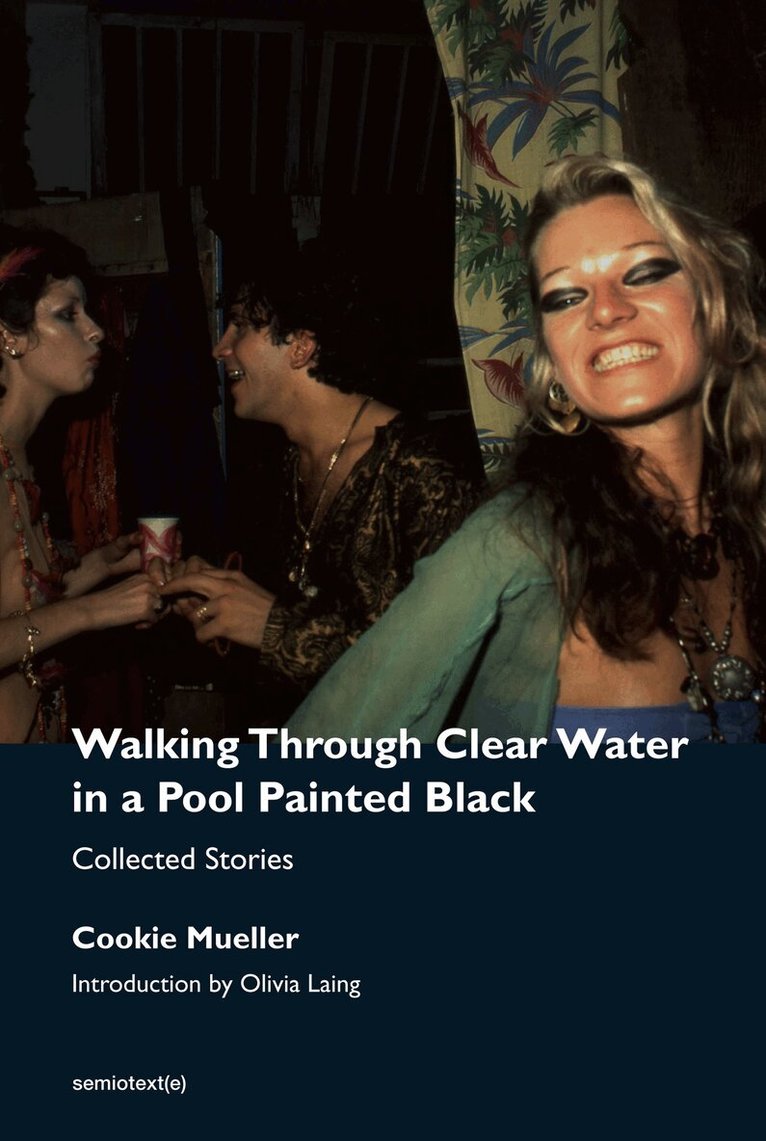
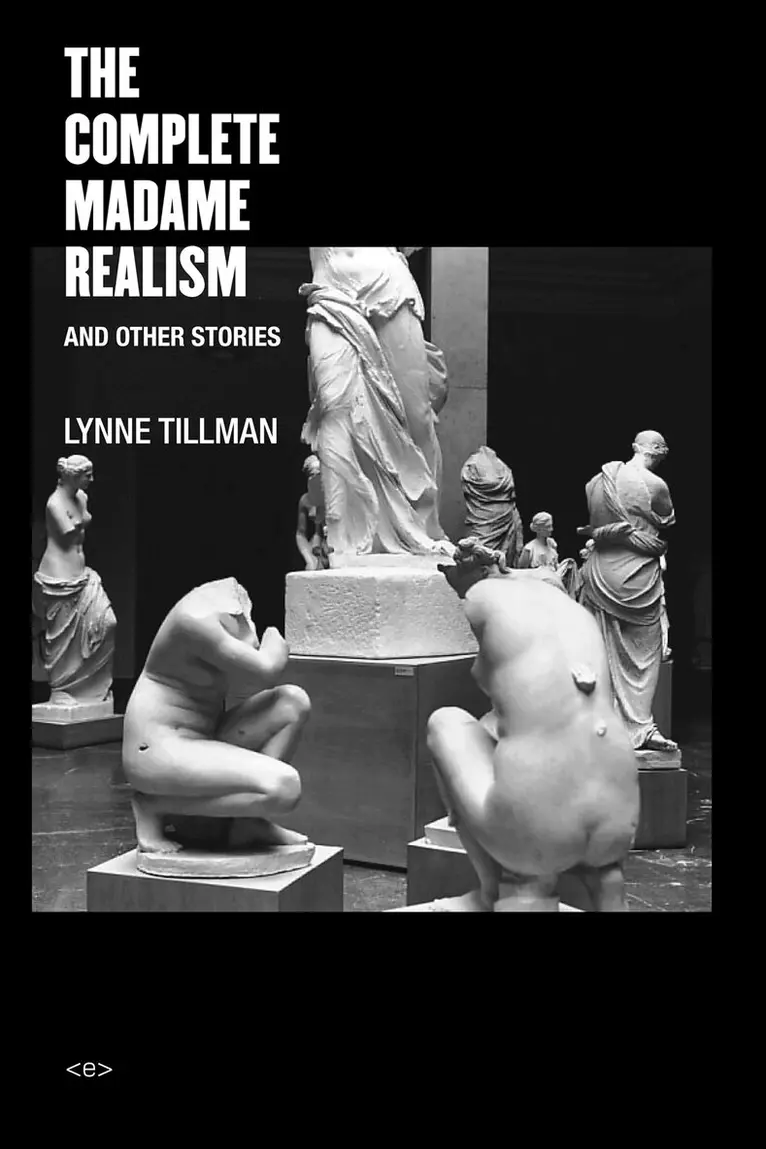
The Complete Madame Realism and Other Stories gathers together Lynne Tillman's groundbreaking fiction/essays on culture and places, monuments, artworks, iconic TV shows, and received ideas, written in the third person to record the subtle, ironic, and wry observations of the playful but stern “Madame Realism.”
Through her use of a fictional character, Tillman devised a new genre of writing that melded fiction and theory, sensation, and critical thought, disseminating her third-person art writer's observations in such magazines as Art in America and in a variety of art exhibition catalogs and artist books. Two decades after the original publication of these texts, her approach to investigation through embodied thought has been wholly absorbed by a new generation of artists and writers. Provocative and wholly pleasurable, Tillman's stories/essays dissect the mundane with alarming precision. As Lydia Davis wrote of her work, “Our assumptions shift. The every day becomes strange, paradox is embraced, and the unexpected is always around the corner.”
This new collection also includes the complete stories of Tillman's other persona, the quixotic author Paige Turner (whose investigation of the language of love overshoots any actual experience of it), and additional stories and essays that address figures such as the “Translation Artist” and Cindy Sherman.

176 kr
Skickas
Tangier is a possessed city, haunted by spirits of different faiths. When we have literature in our blood, in our souls, it's impossible not to be visited by them.—from Another Morocco
In 2006, Abdellah Taïa returned to his native Morocco to promote the Moroccan release of his second book, Le rouge du tarbouche (The Red of the Fez). During this book tour, he was interviewed by a reporter for the French-Arab journal Tel Quel, who was intrigued by the themes of homosexuality she saw in his writing. Taïa, who had not publically come out and feared the repercussions for himself and his family of doing so in a country where homosexuality continues to be outlawed, nevertheless consented to the interview and subsequent profile, “Homosexuel envers et contre tous” (“Homosexual against All Odds”). This interview made him the first openly gay writer to be published in Morocco.
Another Morocco collects short stories from Taïa's first two books, Mon Maroc (My Morocco) and Le rouge du tarbouche, both published before this pivotal moment. In these stories, we see a young writer testing the porousness of boundaries, flirting with strategies of revelation and concealment. These are tales of life in a working-class Moroccan family, of a maturing writer's fraught relationship with language and community, and of the many cities and works that have inspired him.
With a reverence for the subaltern—for the strength of women and the disenfranchised—these stories speak of humanity and the construction of the self against forces that would invalidate its very existence. Taïa's work is, necessarily, a political gesture.
190 kr
Skickas
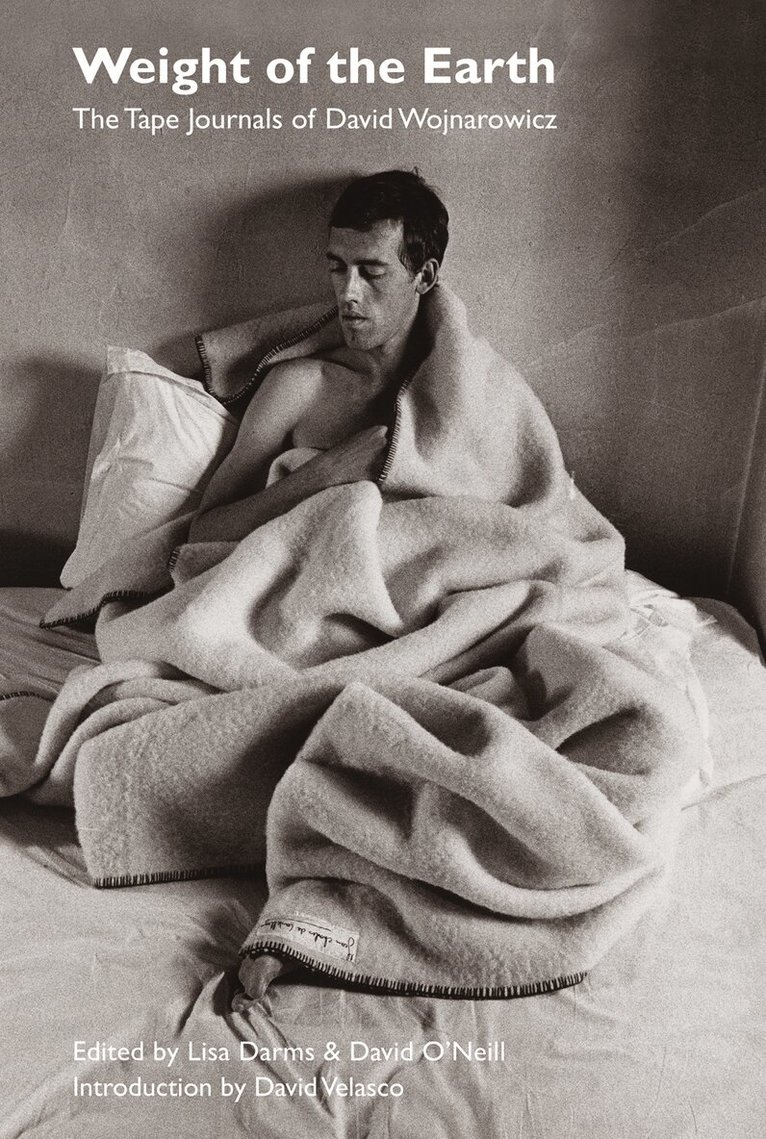
In these moments I hate language. I hate what words are like, I hate the idea of putting these preformed gestures on the tip of my tongue, or through my lips, or through the inside of my mouth, forming sounds to approximate something that's like a cyclone, or something that's like a flood, or something that's like a weather system that's out of control, that's dangerous, or alarming.... It just seems like sounds that have been uttered back and forth maybe now over centuries. And it always boils down to the same meaning within those sounds, unless you're more intense uttering them, or you precede them or accompany them with certain forms of violence.—from The Weight of the Earth
Artist, writer, and activist David Wojnarowicz (1954–1992) was an important figure in the downtown New York art scene. His art was preoccupied with sex, death, violence, and the limitations of language. At the height of the AIDS epidemic, Wojnarowicz began keeping audio journals, returning to a practice he'd begun in his youth.The Weight of the Earth presents transcripts of these tapes, documenting Wojnarowicz's turbulent attempts to understand his anxieties and passions, and tracking his thoughts as they develop in real time.
In these taped diaries, Wojnarowicz talks about his frustrations with the art world, recounts his dreams, and describes his rage, fear, and confusion about his HIV diagnosis. Primarily spanning the years 1987 and 1989, recorded as Wojnarowicz took solitary road trips around the United States or ruminated in his New York loft, the audio journals are an intimate and affecting record of an artist facing death. By turns despairing, funny, exalted, and angry, this volume covers a period largely missing from Wojnarowicz's written journals, providing us with an essential new record of a singular American voice.
292 kr
Skickas inom 7-10 vardagar
178 kr
Skickas

219 kr
Skickas
Hervé Guibert published twenty-five books before dying of AIDS in 1991 at age 36. An originator of French "autofiction" of the 1990s, Guibert wrote with aggressive candor, detachment, and passion, mixing diary writing, memoir, and fiction. Best known for the series of books he wrote during the last years of his life, chronicling his coexistence with illness, he has been a powerful influence on many contemporary writers.
Written in Invisible Ink maps the writer's artistic development, from his earliest texts—fragmented stories of queer desire—to the unnervingly photorealistic descriptions in Vice and the autobiographical sojourns of Singular Adventures. Propaganda Death, his harsh, visceral debut, is included in its entirety. The volume concludes with a series of short, jewel-like stories composed at the end of his life. These anarchic and lyrical pieces are translated into English for the first time by Jeffrey Zuckerman.
From midnight encounters with strangers to tormented relationships with friends, from a blistering sequence written for Roland Barthes to a tender summoning of Michel Foucault upon his death, these texts lay bare Guibert's relentless obsessions in miniature.

194 kr
Skickas
Castle Faggot is Derek McCormack's darkest and most delicious book yet, a satire of sugary cereals and Saturday morning cartoons set in an amusement park more deranged than anything Disney dreamed up. At the heart of the park is Faggotland, a playland for gay men, and Castle Faggot, the darkest dark ride in the world. Home to a cartoon Dracula called Count Choc-o-log, the castle is decorated with the corpses of gays—some were killed, some killed themselves, all ended up as décor.
The book includes a map of Faggotland, a photobook of the castle, the instructions for a castle-shaped dollhouse, and the novelization of a TV puppet show about Count Choc-o-log and his friends—reminiscent of the classic stop-motion special Rudolph the Red-Nosed Reindeer, but even gayer and more grotesque. As scatological as Sade but with a Hanna-Barbera vibe, Castle Faggot transmutes McCormack's love of the lurid and the childlike, of funhouses and sickhouses, into something furiously funny: as Edmund White says, “the mystery of objects, the lyricism of neglected lives, the menace and nostalgia of the past—these are all ingredients in this weird and beautiful parallel universe.”
218 kr
Skickas

214 kr
Skickas