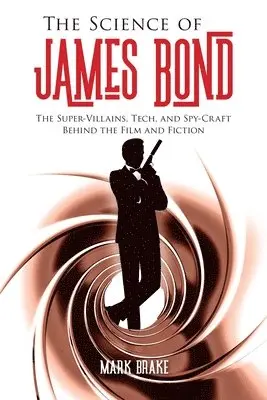
Spy-Fi Culture with a License to KillFrom Sean Connery to Daniel Craig, James Bond is the highest-grossing movie franchise of all time. Out-grossing Star Wars, Harry Potter, and the Marvel Cinematic Universe, the world’s most iconic and international secret agent has a shelf life of almost six decades, from Dr. No to Spectre. As nuclear missile threats are replaced by a series of subtler threats in a globalized and digital world, Bond is with us still.In The Science of James Bond, we recognize the Bond franchise as a unique genre: spy-fi. A genre of film and fiction that fuses spy fiction with science fiction. We look at Bond’s obsessions with super-villains, the future, and world domination or destruction. And we take a peek under the hood of trends in science and tech, often in the form of gadgets and spy devices in chapters such as:Goldfinger: Man Has Achieved Miracles in All Fields but Crime!You Only Live Twice: The Race to Conquer SpaceLive and Let Die: Full Throttle: Bond and the CarSkyfall: The Science of CyberterrorismAnd more!This is the only James Bond companion that looks at the film and fiction in such a spy-fi way, taking in weapon wizards, the chemistry of death, threads of nuclear paranoia, and Bond baddies’ obsession with the master race!
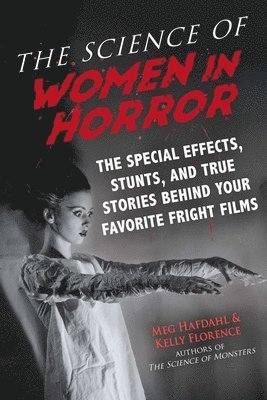
From scream queens to femmes fatale, horror isn’t just for the boys. Gothic media moguls Meg Hafdahl and Kelly Florence, authors of The Science of Monsters, and co-hosts of the Horror Rewind podcast called “the best horror film podcast out there” by Film Daddy, present a guide to the feminist horror movies, TV shows, and characters we all know and love. Through interviews, film analysis, and bone-chilling discoveries, The Science of Women in Horror uncovers the theories behind women’s most iconic roles of the genre. Explore age-old tropes such as “The Innocent” like Lydia in Beetlejuice, “The Gorgon” like Pamela Voorhees in Friday the 13th, and “The Mother” like Norma Bates in Pyscho and Bates Motel, and delve deeper into female-forward film and TV including: The Haunting of Hill HouseTeethChilling Adventures of SabrinaBuffy the Vampire SlayerAnd so much more!Join Kelly and Meg in The Science of Women in Horror as they flip the script and prove that every girl is a “final girl.”
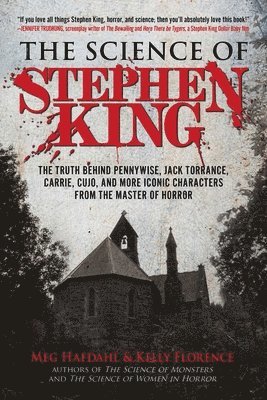
Uncover the theories behind the Master of Horror's macabre tales: It, The Shining, Carrie, Cujo, Misery, Pet Semetary, and so much more! Gothic media moguls Meg Hafdahl and Kelly Florence, authors of The Science of Monsters and The Science of Women in Horror, and co-hosts of the Horror Rewind podcast called “the best horror film podcast out there” by Film Daddy, present a guide to the Stephen King stories and characters we all know and love. Through interviews, literary and film analysis, and bone-chilling discoveries, The Science of Stephen King delves into the uniquely horrific Stephen King universe to uncover the science behind the legendary novels that have become an integral part of modern pop culture, answering such questions as: What is the science behind time travel and parallel universes like in The Dark Tower series and 11/22/63? How does lack of sleep affect the human body like in Insomnia? Is it possible for horrific creatures to exist like in Nightshift? What is the science behind curses and legends like in Dreamcatcher and Thinner? Join Kelly and Meg as they learn if we all really do float down here!
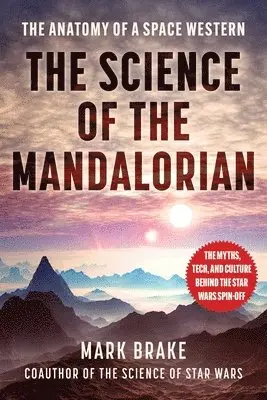
Take a trip beyond this Earth to explore the myths of The Mandalorian and uncover the anatomy of the newest space western in the Star Wars Universe.Star Wars dominates the film world. The combined box office revenue of the Star Wars movies equates to over $10 billion, making it the second highest-grossing film franchise of all time. But this franchise is no blaster from the past. Its fantastically successful films have now been followed by multiple television series set in that same galaxy far, far away. The franchise’s flagship television series, and likely the firmest fan favorite for some time to come, is The Mandalorian.Tracing the tale of the titular bounty hunter, traveling across the furthest reaches of that mythic galaxy, The Mandalorian has been greatly praised and highly acclaimed for creating characters with gravitas and originality, worlds with depth and impact, resulting in some of the best Star Wars content ever. Even though it’s set in deep space, The Mandalorian has as much in common with Western movies as it does with science fiction. Saloons. Bandits. “Gun” duels. Bounty hunters. Outlaws with a price on their heads. Space exploration as a “final frontier.” And a wild hero who doesn’t quite belong in a lawless part of the Galaxy after the fall of the Empire.The Science of The Mandalorian takes you on a badass journey with a mysterious, lone gunfighter in the outer reaches of the galaxy, where your beskar armor will protect you from many things, but not the sight of a small, green, carnivorous humanoid with big black eyes and mysterious powers. This is the way.
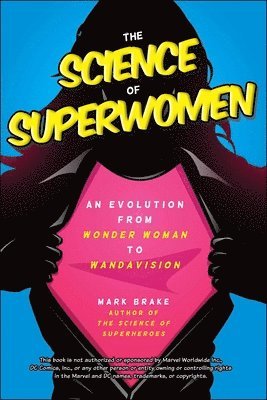
Celebrate the rise of superwomen and discover the science behind the abilities of Wonder Woman, Scarlet Witch, Black Widow, Catwoman, and more!Superhero fiction has been with us for almost a century; high-octane tales crammed with concepts and contrasting themes, from superpowers and the post-human, to masked vigilantes and immortality. In that time, superwomen have evolved from comic book caricatures (created by men, for men) to stronger representations of female power.The Science of Superwomen looks at this evolution, from its hypersexualised origins to today’s more nuanced diversity. Focusing on characters from Star Wars and X-Men, as well as the likes of Wonder Woman, Batgirl, Captain Marvel, Harley Quinn, Wednesday Addams, Doctor Who, and Buffy the Vampire Slayer, The Science of Superwomen explores the relationship between superhero film and fiction and the underlying science of our ever-evolving universe.
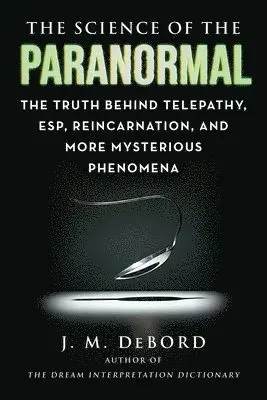
Discover the truth behind ESP, paranormal powers, and psychic abilities—the perfect gift for curious minds and bold scientists alike.Some paranormal phenomena and powers of the mind are real, but mainstream science dismisses it all as fantasy. The Science of the Paranormal looks toward the overwhelming evidence that something weird and wild lies behind our everyday reality. Credible witnesses have seen paranormal activity with their own eyes. Scientists have studied it in their labs. And everyday we see depictions of it in popular media like Stranger Things and X-Men. Separate fact from fiction in this book and get answers to questions like: Can objects be moved with psychokinesis? Is the future foreseeable? Can we communicate telepathically? What does science say about ESP? Where is the evidence for reincarnation and spirits? And much more! Explore the fascinating discoveries behind the paranormal with The Science of the Paranormal.
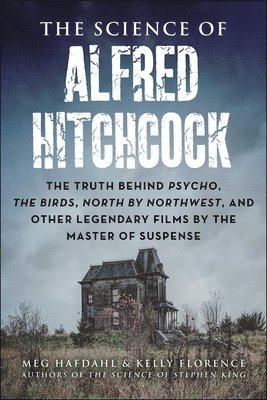
From the authors of The Science of Stephen King and The Science of Agatha Christie comes a book made for every classic film aficionado. The Science of Alfred Hitchcock is a close look at the Master of Suspense’s most revered works. From his start in the silent era to his shocking unmasking of Norman Bates in Psycho, we explore Hitchcock’s legacy through the lens of biography, science, and pop culture. Steeped in the golden era of Hollywood, The Science of Alfred Hitchcock is a daringly close look at the man behind the camera lens. Join us as we delve into the history of Hitchcock’s ouvre to discover; Who was the true life murderer who inspired Shadow of a Doubt? Was there really a feud between Hitchcock and studio legend David O. Selznick? What is the psychology behind some of Hitchcock’s most famous characters? Is there science to support a “perfect” murder as featured in many of Hitchcock’s films? With a comprehensive look at Alfred Hitchcock’s impressive filmography, this book is a must-read for every lover of suspense. Whether you’re a film buff or a cinema newbie, you’ll be mesmerized by the history and science behind the greatest film director of a generation.