
Inbunden, Engelska, 2024
266 kr
Skickas inom 7-10 vardagar
266 kr
Skickas inom 7-10 vardagar
347 kr
Skickas inom 3-6 vardagar
266 kr
Skickas inom 7-10 vardagar
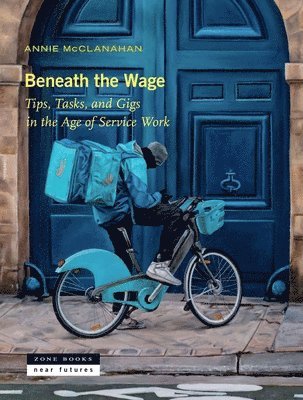
Beneath the Wage retheorizes capitalism from the perspective of the service economy, challenging conventional assumptions about how work is waged, regulated, managed, and automatedToday, 80 percent of U.S. workers do service work, from delivering takeout to mopping floors to teaching. Each time we are handed a bag of groceries or a cup of coffee, call for a cab or have our homework graded, we confront both the enormity and the intimacy of the contemporary service sector.Do these jobs have anything in common? Who is doing this work? And what kind of labor politics does it generate?If service work has often been treated as a footnote to modern capitalism, Beneath the Wage reveals it as crucial to understanding how exploitation functions today. Uncovering a history that runs from eighteenth-century servants to present-day gig workers, Annie McClanahan retheorizes capitalism from the perspective of the service economy, challenging conventional assumptions about how work is waged, regulated, managed, and automated.Assembling a diverse set of sources for understanding and reimagining service work—from reality television and conceptual poetry to novels and workers’ own descriptions of what they do—McClanahan explores three paradigmatic types of contemporary service labor: superexploited tipwork, deskilled clerical microwork, and informalized gigwork. She shows how work done “beneath the wage” depends on racialized and gendered forms of economic domination, is often excluded from labor organizing and regulation, and yet has begun to generate a new politics of social reproduction and solidarity.
258 kr
Skickas inom 7-10 vardagar
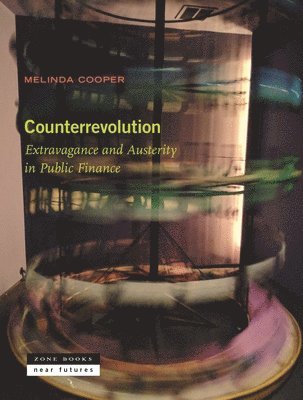
A thorough investigation of the current combination of austerity and extravagance that characterizes government spending and central bank monetary policyAt the close of the 1970s, government treasuries and central banks took a vow of perpetual self-restraint. To this day, fiscal authorities fret over soaring public debt burdens, while central bankers wring their hands at the slightest sign of rising wages. As the brief reprieve of coronavirus spending made clear, no departure from government austerity will be tolerated without a corresponding act of penance.Yet we misunderstand the scope of neoliberal public finance if we assume austerity to be its sole setting. Beyond the zero-sum game of direct claims on state budgets lies a realm of indirect government spending that escapes the naked eye. Capital gains are multiply subsidized by a tax system that reserves its greatest rewards for financial asset holders. And for all its airs of haughty asceticism, the Federal Reserve has become adept at facilitating the inflation of asset values while ruthlessly suppressing wages. Neoliberalism is as extravagant as it is austere, and this paradox needs to be grasped if we are to challenge its core modus operandi.Melinda Cooper examines the major schools of thought that have shaped neoliberal common sense around public finance. Focusing, in particular, on Virginia school public choice theory and supply-side economics, she shows how these currents produced distinct but ultimately complementary responses to the capitalist crisis of the 1970s. With its intellectual roots in the conservative Southern Democratic tradition, Virginia school public choice theory espoused an austere doctrine of budget balance. The supply-side movement, by contrast, advocated tax cuts without spending restraint and debt issuance without guilt, in an apparent repudiation of austerity. Yet, for all their differences, the two schools converged around the need to rein in the redistributive uses of public spending. Together, they drove a counterrevolution in public finance that deepened the divide between rich and poor and revived the fortunes of dynastic wealth.Far-reaching as the neoliberal counterrevolution has been, Cooper still identifies a counterfactual history of unrealized possibilities in the capitalist crisis of the 1970s. She concludes by inviting us to rethink the concept of revolution and raises the question: Is another politics of extravagance possible?

266 kr
Skickas inom 7-10 vardagar
285 kr
Tillfälligt slut