• Fri frakt över 249 kr
  • •
  • Snabba leveranser
  • •
  • Billiga böcker
Kundservice
Bokus logotyp. Gå till startsidan.
  • Erbjudanden
  • E-böcker
  • Jul
  • Nyheter
  • Pocket
  • Spel & pussel
  • Student
  • Topplistor
  • Barn & ungdom
  • Bokus Play
Black Week 15% på allt med kod:
Se alla aktuella erbjudanden

Mina sidor

    Hjälp

    • Kundservice
    • Vanliga frågor och svar
    • Frakt och leverans
    • Retur vid ångerrätt
    • Reklamera vara
    • Betalning
    • Köpvillkor
    • Allmänna villkor
    • Information om webbplatsens tillgänglighet

    Om Bokus

    • Om oss
    • Pressrum
    • För studenter
    • För företag
    • För bibliotek och offentlig verksamhet
    • För leverantörer
    • Hållbarhet

    Populärt

    • Aktuella erbjudanden
    • Bokus Play
    • Presentkort
    • Student
    • Nyheter
    • Topplistor
    • Black friday
    • Signerade böcker
    • Engelska böcker
    • Jul

    Inspiration

    • Boktips
    • BookTok
    • Populära bokserier
    • Barnbokskaraktärer
    • Populära författare
    • Bokcirkel
    • Prisbelönade böcker
    • Barn och läsning

    Mina sidor

      Hjälp

      • Kundservice
      • Vanliga frågor och svar
      • Frakt och leverans
      • Retur vid ångerrätt
      • Reklamera vara
      • Betalning
      • Köpvillkor
      • Allmänna villkor
      • Information om webbplatsens tillgänglighet

      Om Bokus

      • Om oss
      • Pressrum
      • För studenter
      • För företag
      • För bibliotek och offentlig verksamhet
      • För leverantörer
      • Hållbarhet

      Populärt

      • Aktuella erbjudanden
      • Bokus Play
      • Presentkort
      • Student
      • Nyheter
      • Topplistor
      • Black friday
      • Signerade böcker
      • Engelska böcker
      • Jul

      Inspiration

      • Boktips
      • BookTok
      • Populära bokserier
      • Barnbokskaraktärer
      • Populära författare
      • Bokcirkel
      • Prisbelönade böcker
      • Barn och läsning
      Logotyp för Bokus
      Följ oss på Facebook (extern länk)Följ oss på Instagram (extern länk)Följ oss på YouTube (extern länk)Följ oss på TikTok (extern länk)
      Bokus @ CookiesIntegritetspolicyKöpvillkor
      Till Citymail hemsida (extern länk)Till DHL hemsida (extern länk)Till Instabox hemsida (extern länk)Till Bring hemsida (extern länk)Till Budbee hemsida (extern länk)Till Postnord hemsida (extern länk)Till Schenker hemsida (extern länk)Till Early Bird hemsida (extern länk)Till Walleys hemsida (extern länk)
      • Skönlitteratur
      • Barn och ungdom
      • Deckare
      • Samhälle och politik
      • Spel och pussel
      • Fantasy, SciFi och skräck
      • Psykologi och pedagogik
      • Kalender
      • Biografier
      • Sport, fritid och hobby
      • Historia och arkeologi
      • Mat och dryck
      • Hälsa och familj
      • Tecknade serier
      • Ekonomi och Ledarskap
      • Filosofi och religion
      • Kultur
      • Pennor och tillbehör
      • Naturvetenskap och teknik
      • Medicin
      • Läromedel
      • Juridik
      • Ande, kropp och själ
      • Djur och Natur
      • Språk och ordböcker
      • Måla och pyssla
      • Reseguider
      • Hem och Trädgård
      • Data och IT
      • Anteckning
      • Kort, Kuvert och Brevpapper
      • Kontorsmaterial
      • Lästillbehör
      • Garn stickning
      • Presentinslagning
      • Romaner
      • Romance
      • Feelgood
      • Action och Äventyrsromaner
      • Komedi
      • Poesi
      • Noveller
      • Essäer
      • Litteraturvetenskap
      • Myter
      • Dramatik
      • Erotiska böcker
      • Antologier
      • Sagor
      • Folksagor
      • Barnböcker 3-6 år
      • Barnböcker 6-9 år
      • Barnböcker 9-12 år
      • Barnböcker 0-3 år
      • Faktaböcker
      • Pysselböcker
      • Kapitelböcker
      • Böcker 12-15 år
      • Lättlästa barnböcker
      • Ungdomsböcker
      • Böcker om känslor
      • Klassiska barnböcker
      • Populära teman
      • Kokböcker för barn
      • Presentböcker
      • Godnattsagor
      • Thriller
      • Polisromaner
      • Deckare
      • Historiska deckare
      • Mysdeckare
      • Psykologisk spänning
      • Klassiska deckare
      • Samhälle och kultur
      • Politik och statsskick
      • Social välfärd och brottslighet
      • Reportage, journalistik och krönikor
      • Krig och försvar
      • Sociologi och antropologi
      • Spel
      • Pussel
      • Leksaker
      • Fantasy
      • Science fiction
      • Skräck
      • Psykologi
      • Pedagogik
      • Kalender och almanacka
      • Adventskalender
      • Sanna berättelser
      • Biografier
      • Självbiografier och Memoarer
      • Tal
      • Hantverk och handarbete
      • Hobby, spel och lekar
      • Sportböcker
      • Humor och presentböcker
      • Fordonsböcker
      • Fiske, jakt och skytte
      • Antikviteter och samlarobjekt
      • Fest och bröllop
      • Livsstil och stilguider
      • Historia
      • Arkeologi
      • Kokböcker
      • Kokböcker från kända kockar
      • Drycker
      • Tobak
      • Hälsa
      • Relationer
      • Självhjälp och praktiska råd
      • Föräldraböcker
      • Självförsörjning och grön livsstil
      • Prepping och överlevnadskunskap
      • Tecknade serier och romaner
      • Manga
      • Företagsekonomi
      • Ledarskapsböcker
      • Nationalekonomi
      • Industrier och branscher
      • Karriärplanering
      • Privatekonomi
      • Religion och tro
      • Filosofi
      • Musikböcker
      • Konstböcker
      • Scenkonst och film
      • Arkitektur
      • Fotoböcker
      • Designböcker
      • Pennor
      • Penntillbehör
      • Matematik och naturvetenskap
      • Teknik och industri
      • Geovetenskap
      • Andra medicinska specialiteter
      • Medicin: allmänt
      • Omvårdnad och medicinska stödfunktioner
      • Klinisk medicin och internmedicin
      • Medicin: icke kliniska discipliner
      • Medicinska studiehandledningar och referensmaterial
      • Veterinärmedicin
      • Alternativ medicin och terapier
      • Kirurgi
      • Läromedel: språk
      • Läromedel: matematik och naturvetenskap
      • Läromedel: samhälle och humaniora
      • Läromedel: yrkesutbildning och övriga ämnen
      • Läromedel: estetiska ämnen
      • Läromedel: studiehandledningar och handböcker
      • Särskilda rättsområden
      • Rättsvetenskap
      • Lagtextsamlingar, lagböcker
      • Internationell rätt
      • Juridik: handböcker
      • Ande, kropp och själ
      • Övernaturliga fenomen / det paranormala
      • Djurböcker
      • Naturböcker
      • Språk: referensverk och allmänt
      • Språkundervisning och språkinlärning
      • Språkvetenskap och lingvistik
      • Pyssel & DIY
      • Kreativitet
      • Måla och teckna
      • Fotoalbum och tillbehör
      • Reseböcker
      • Kartböcker
      • Parlörer
      • Trädgårdsböcker
      • Hus och hem
      • Heminredning
      • Systemvetenskap och AI
      • Informationsteknik: allmänt
      • Programmeringsböcker
      • Digital livsstil och datorspel
      • Grafik och bildbehandling
      • Databaser
      • Affärsapplikationer
      • Människa – datorinteraktion
      • Tillämpad datateknik
      • IT-säkerhet
      • Nätverk och kommunikation
      • Operativsystem
      • Hårdvara
      • It-certifieringar
      • Anteckningsböcker och block
      • Notisblock och flikar
      • Anteckning för barn
      • Gästböcker och adressböcker
      • Kort
      • Kuvert
      • Brevpapper
      • Etiketter
      • Placeringskort
      • Skrivbordsprodukter
      • Skrivbordsförvaring
      • Kopieringspapper
      • Arkivering och bokföring
      • Bokstöd och Book Nook
      • Läslampor
      • Bokmärken
      • Läsglasögon
      • Garn
      • Stickor
      • Presentsnören
      • Presentpapper
      • Presentpåsar
      1. Serie
      2. Makers of the Modern World

      Makers of the Modern World – serie

      Visar alla böcker i serien Makers of the Modern World. Handla med fri frakt och snabb leverans.
      29 produkter
      Hoppa över filtreringsmeny
      Böcker
      29 produkter
      • Jamie Bulloch - Karl Renner: Austria, Inbunden. Tillgänglighet: Lägg i varukorg
        Del 23 - Makers of the Modern World

        Karl Renner: Austria

        The Peace Conferences of 1919-23 and Their Aftermath

        AvJamie Bulloch

        Inbunden, Engelska, 2009

        149 kr

        Skickas

        The Socialist politician Karl Renner (1870 1950) was prime minister of the government that took power in Vienna after the collapse of the Austro-Hungarian Empire. He lead the delegation to Paris, which had to face the difficult issue of reparations and war guilt, for which the Allies held the successor states to the Empire responsible for. Fortunately, Renner was a likeable man and a realist, and the Austrian delegation became quite popular in Paris. The new Austrian state was in a perilous condition in 1919, on the brink of starvation and revolution, and facing territorial demands from both Italy, which had its eyes on the Tyrol, and the new Yugoslavia. Many in the German-speaking rump of the Empire sought union with Germany, Anschluss, but the Allied Powers vetoed it. Austria is often overlooked as one of the successor states to the Habsburg Empire, but it was no less important in the postwar settlement than Hungary, Czechoslovakia and the Balkan countries. Jamie Bulloch's account of Karl Renner's adroit handling of a difficult situation makes for fascinating reading.
      • Robert McNamara - The Hashemites: The Dream of Arabia, Inbunden. Tillgänglighet: Lägg i varukorg
        Del 21 - Makers of the Modern World

        The Hashemites: The Dream of Arabia

        The Peace Conferences of 1919-23 and Their Aftermath

        AvRobert McNamara

        Inbunden, Engelska, 2010

        179 kr

        Skickas inom 7-10 vardagar

        The story of the Arab Revolt and the Hashemite princes who led it during the First World War is inextricably linked in modern eyes to the legend of "Lawrence of Arabia" as portrayed in David Lean's 1962 film. But behind this romantic image lies a harsher reality of wartime expediency, double-dealing and dynastic ambition, which shaped the modern Middle East and laid the foundations of many of the conflicts that rack the region to this day. Arab nationalists claim that British instigation for the Arab Revolt against the Ottoman Empire was a commitment to independence for the Arab people, but in this book Robert McNamara shows how the British cultivated the Hashemite Sherifs of Mecca more as an alternative focus during the First World War for Muslim loyalty from the Ottoman Sultan, who as Caliph had declared a jihad against the Allies when the Turks joined the Central Powers, than a leader of an independent and united Arabia. At the same time, the Sykes-Picot Agreement divided up the Middle East between British and French spheres of influence. The sense of betrayal that this caused has coloured Arab nationalists' views of the West ever since.The main countries of the Middle East Jordan, Syria and Iraq are all the creations of the post-First World War settlement worked out at the Paris Peace Conference. The story of the Hashemite dynasty at the Paris Peace Conference is the story of the birth of the modern history of a region that is now more than ever at the centre of world affairs.
      • T. G. Fraser - Chaim Weizmann: The Zionist Dream, Inbunden. Tillgänglighet: Lägg i varukorg
        Del 19 - Makers of the Modern World

        Chaim Weizmann: The Zionist Dream

        The Peace Conferences of 1919-23 and Their Aftermath

        AvT. G. Fraser

        Inbunden, Engelska, 2009, 15+ år

        183 kr

        Skickas inom 7-10 vardagar

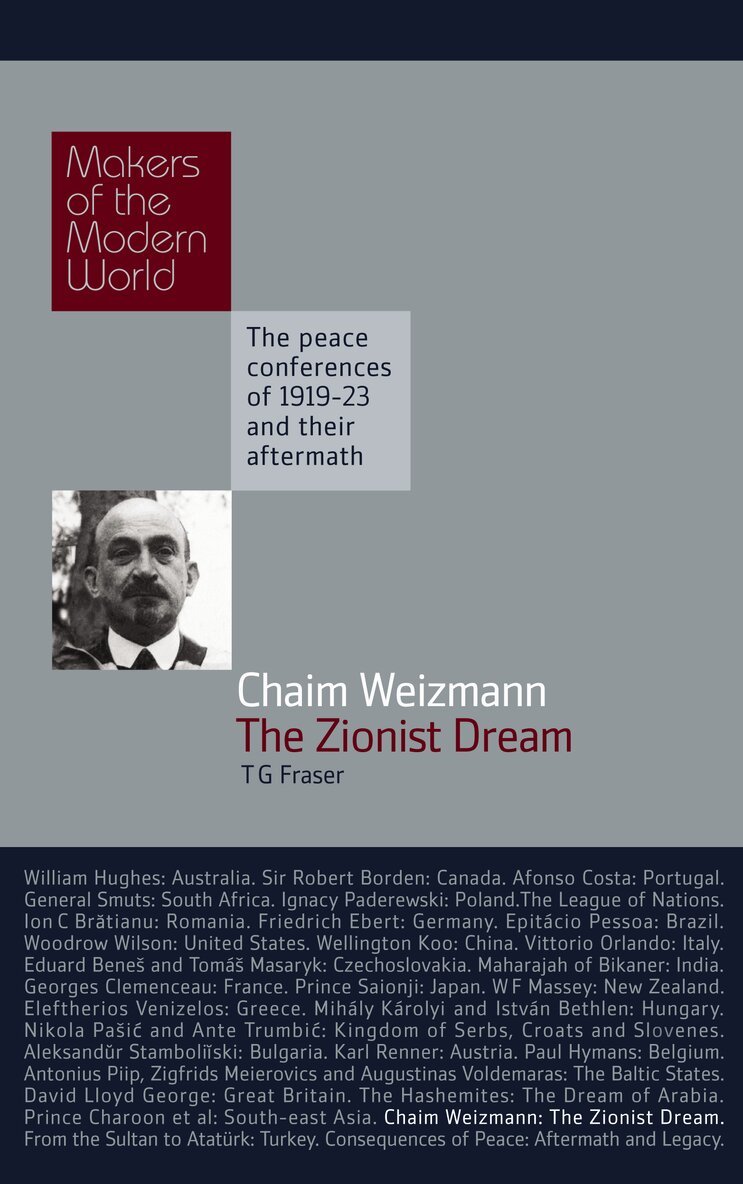
        The Arab-Israeli conflict has been one of the most defining features of recent world history, flaring up into open war fare yet again in Gaza at the end of 2008 and provoking large-scale demonstrations in the streets of cities across the world. When the Zionist leader Chaim Weizmann (1874 1952) spoke before the Conference on 27 February 1919, he would have appeared as only one of the many representatives of minor nationalities putting their case to the peacemakers. Ninety years after the Conference, what Weizmann said and did there is an essential part of our understanding of how this small, but critical, part of the world evolved out of the deliberations.
      • Jonathan Clements - Wellington Koo: China, Inbunden. Tillgänglighet: Lägg i varukorg

        Wellington Koo: China

        The Peace Conferences of 1919-23 and Their Aftermath

        AvJonathan Clements

        Inbunden, Engelska, 2008, 15+ år

        183 kr

        Skickas inom 7-10 vardagar

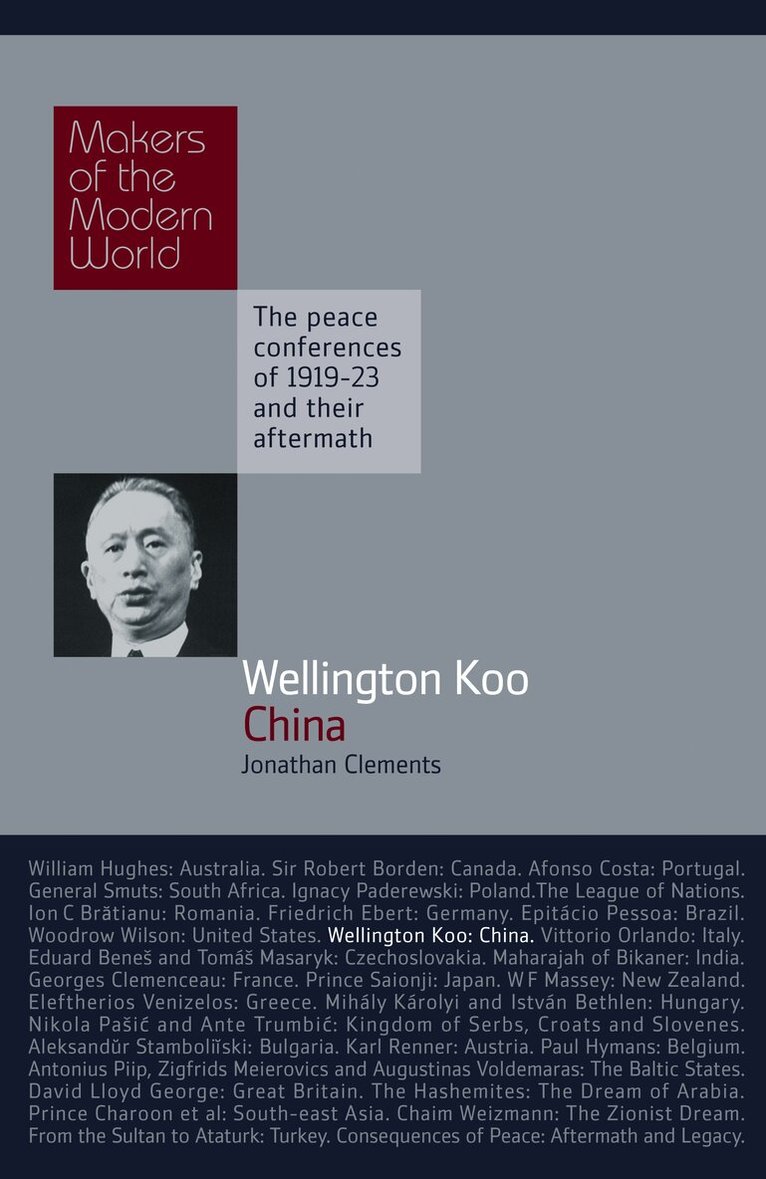
        Born in Shanghai and raised in the city's International Settlement, Gu Weijun, a.k.a. Wellington Koo (1887-1985) became fluent in English during his postgraduate studies abroad - he got a PhD in Law from Columbia in 1912. He was recalled soon afterwards to become the English Secretary to the newly formed Republic of China, and became ambassador to the United States in 1915. He achieved notoriety at the Paris Peace Conference where he sternly resisted Japanese attempts to hold onto seized German colonial territory in mainland China. In protest at their treatment, the Chinese were the only delegates not to sign the subsequent Treaty of Versailles. Koo was China's first representative to the League of Nations, and ended up as acting president of Republican China during the unrest of the period 1926-7.He subsequently served briefly as a Foreign Minister during the peak of the Warlord Era, before returning to Europe, first as a delegate at the League of Nations, and then as China's ambassador to France. With the Nazi occupation, Koo fled to Britain, where he became the Chinese ambassador to the UK until 1946.A founder member of the United Nations, Koo was instrumental in maintaining the position of Republican China on the Security Council - by this time, 'Republican China' was limited solely to the island of Taiwan, while the Communists proclaimed themselves to be the new rulers of China itself.Retiring from the diplomatic service in 1956, the venerable Koo went on to become a judge at the International Court of Justice at the Hague, rising to vice-president before his retirement, aged 80, in 1967. He settled in New York, where his final years were tormented by 'Republican' China's loss of its seat on the United Nations Security Council to the Communists, following Nixon's famous visit to China.
      • Anita Prazmowska - Ignacy Paderewski: Poland, Inbunden. Tillgänglighet: Lägg i varukorg

        Ignacy Paderewski: Poland

        The Peace Conferences of 1919-23 and Their Aftermath

        AvAnita Prazmowska

        Inbunden, Engelska, 2009, 15+ år

        148 kr

        Skickas

        The thirteenth of President Wilson’s Fourteen Points of 1918 read: An independent Polish state should be erected which should include the territories inhabited by indisputably Polish populations, which should be assured a free and secure access to the sea, and whose political and economic independence and territorial integrity should be guaranteed by international covenant. Ever since the Third Partition in 1795 brought Polish independence to an end, nationalists had sought the restoration of their country, and the Paris Peace Conference of 1919 did indeed produce the modern Polish state. The Western Allies saw a revived Poland as both a counter to German power and a barrier to the westward expansion of the Bolshevik Revolution in Russia a role the Polish army fulfilled by defeating a Soviet invasion in 1920. But caught between two powers and composed of territory taken from both of them, Poland was vulnerable, and in 1939 it was divided up between the Soviet Union and Nazi Germany following the Molotov-Ribbentrop Pact. The highest profile Polish representative at the Conference was the pianist and politician Ignacy Paderewski (1860-1941), the most famous Pole in the world, whose image had done much to promote the Polish cause in the West. But he was joined by the altogether less romantic figure of Roman Dmowski (1864-1939), whose anti-Semitic reputation Paderewski took pains to distance himself from when seeking support in the United States.
      • Bryan Cartledge - Mihály Károlyi and István Bethlen: Hungary, Inbunden. Tillgänglighet: Lägg i varukorg

        Mihály Károlyi and István Bethlen: Hungary

        The Peace Conferences of 1919-23 and Their Aftermath

        AvBryan Cartledge

        Inbunden, Engelska, 2009

        190 kr

        Skickas inom 7-10 vardagar

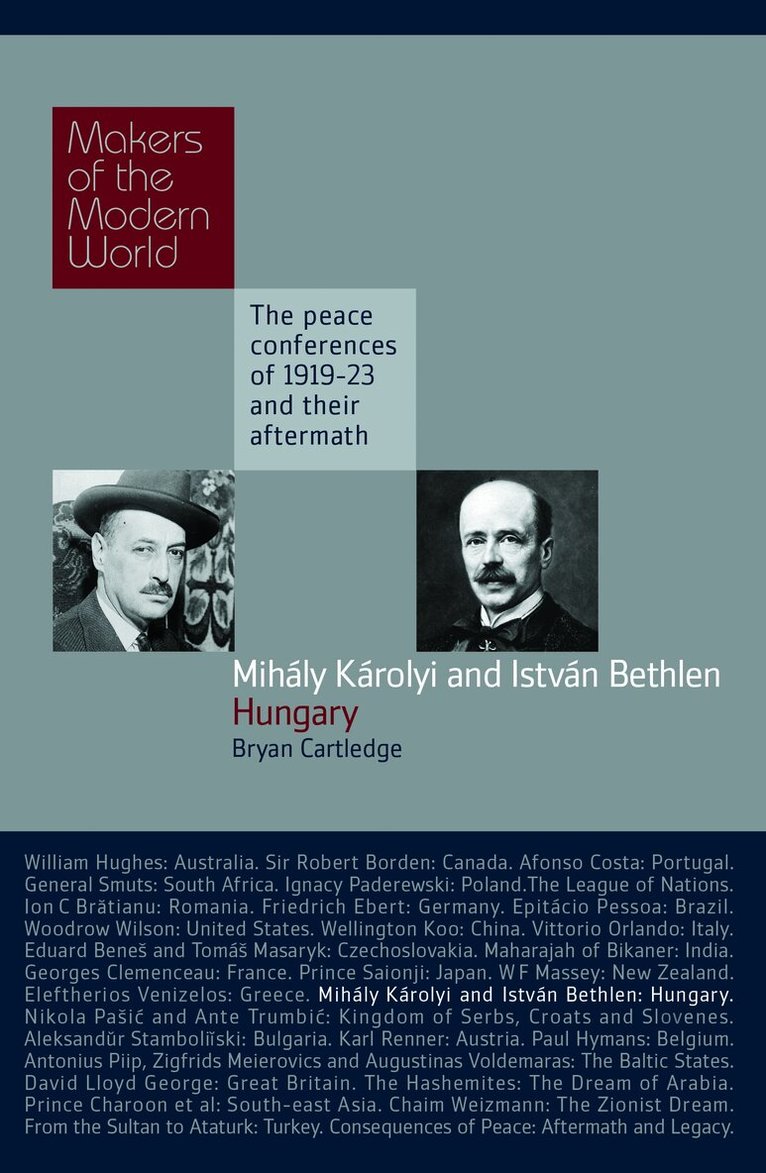
        White aster flowers, on sale on the streets of Budapest on the eve of All Souls' Day, are made the symbol of a revolution which brings Mihaly Karolyi (1875-1955) to power at the head of a National Council. Karoly concludes an armistice which leaves large areas of Hungarian territory under occupation by French, Romanian and Serbian forces. Following the King-Emperor's abdication in November 1918, Hungary is declared an independent republic with Karolyi as its President. He sets about meeting Hungary's most pressing social need, for land reform. But Karolyi's liberal regime is soon beset by strong opposition from the right and from the left. The Allies seal Karolyi's fate by refusing to end the economic blockade of Hungary and by imposing, even in advance of a peace settlement (Hungary is denied an invitation until the Conference is virtually over), even harsher armistice terms. Karolyi flinches from opposing these measures by force. The small socialist element in his government of well-meaning aristocrats defects and forms an alliance with Hungary's fledgling Communist Party. Karolyi resigns and chooses exile. The Communists, led by Bela Kun, take power.Kun raises a Red Army, which defeats a Czech invasion but fails to stem the Romanian advance, which enters Budapest in defiance of orders from Paris and engages in an orgy of pillage and destruction. The Peace Conference despatches a British diplomat, Sir George Clerk, to Budapest to broker a Romanian withdrawal. Clerk succeeds in forming a coalition government of right-wing parties, with token representation for the centre-left, which he recognises in the name of the Peace Conference and invites to send a delegation to Paris. It includes Counts Istvan Bethlen (1874-1946) and Pal Teleki, both future prime ministers. The delegation is presented on arrival, on 6 January 1920, with the draft peace treaty for Hungary which the expert committees of the Conference have produced and which the Council has approved without amendment. The Hungarians are appalled to find that the treaty will deprive their country of two-thirds of her territory and over half of her population. The injustice of the Treaty will drive Hungary into the arms of Nazi Germany, a fatal alliance which will doom Hungary's Jews to annihilation and Hungary to defeat and destruction in the Second World War.
      • Antony Lentin - General Smuts: South Africa, Inbunden. Tillgänglighet: Lägg i varukorg

        General Smuts: South Africa

        The Peace Conferences of 1919-23 and Their Aftermath

        AvAntony Lentin

        Inbunden, Engelska, 2010

        179 kr

        Skickas inom 7-10 vardagar

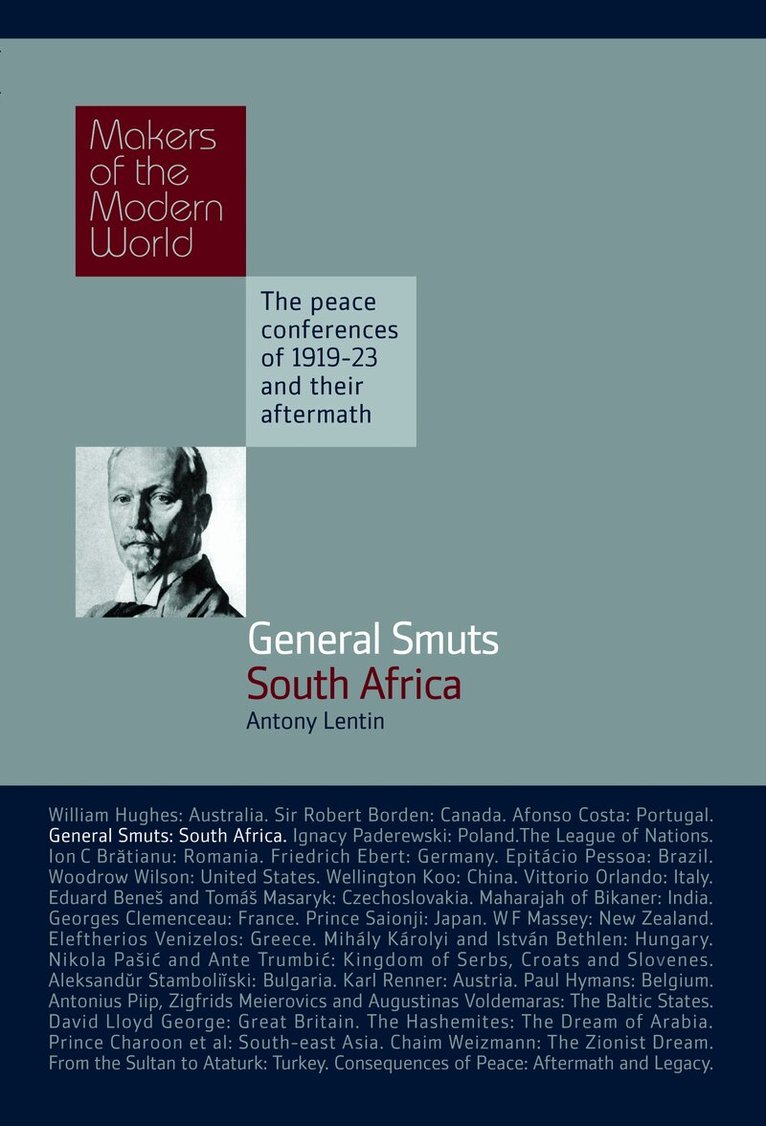
        Jan Christian Smuts was one of the key figures behind the creation of the League of Nations; Woodrow Wilson was inspired by his ideas on the League and borrowed heavily from them, including the mandates scheme, whereby South Africa took responsibility for Namibia. Alarmed at the turn that peacemaking was taking, Smuts took the lead in urging moderation on reparations and Germany's frontiers with Poland and pleaded for a magnanimous peace, warning that the treaty of Versailles would lead to another war. Declaring I return to South Africa a defeated man', Smuts encouraged Keynes to write The Economic Consequences of the Peace, and denounced the occupation of the Ruhr in 1923. He became Prime Minister of South Africa and a leading Commonwealth statesman. He made important contributions to the British cause in the Second World War and was instrumental in the establishment of the United Nations.
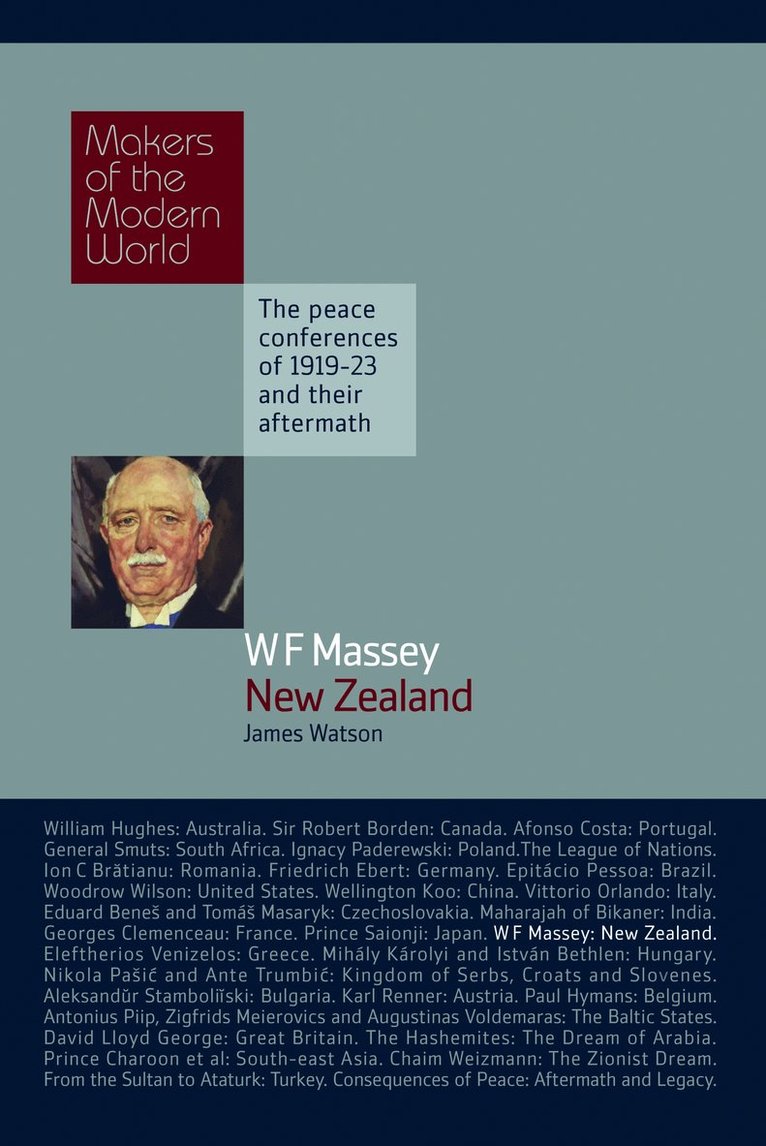
      • James Watson - William Massey: New Zealand, Inbunden. Tillgänglighet: Lägg i varukorg

        William Massey: New Zealand

        The Peace Conferences of 1919-23 and Their Aftermath

        AvJames Watson

        Inbunden, Engelska, 2010

        185 kr

        Skickas inom 7-10 vardagar

        The Great War profoundly affected both New Zealand and its Prime Minister William Massey (1856-1925). Farmer Bill oversaw the dispatch of a hundred thousand New Zealanders, including his own sons, to Middle Eastern and European battlefields. In 1919 he led the New Zealand delegation to the Paris Peace Conference, where it was represented both in its own right and as part of the British Empire. This symbolised its staunch loyalty to Empire and the fact that it had its own particular interests. Massey was largely satisfied with the Versailles Treaty, as New Zealand gained a mandate over Western Samoa, Germany forfeited its other Pacific colonies, and control over Nauru's valuable phosphate deposits was shared between Britain, Australia and New Zealand, rather than simply being given to Australia. He believed that the apparent confirmation of British power improved New Zealand's security, and had little faith in the League of Nations. However, the opposition Labour Party came to believe the League could prevent a major war and made that a cornerstone of their foreign policy in government after 1935.Their belief that Versailles was unfair to Germany partly influenced them to favour negotiations with Hitler even after the outbreak of war in 1939.
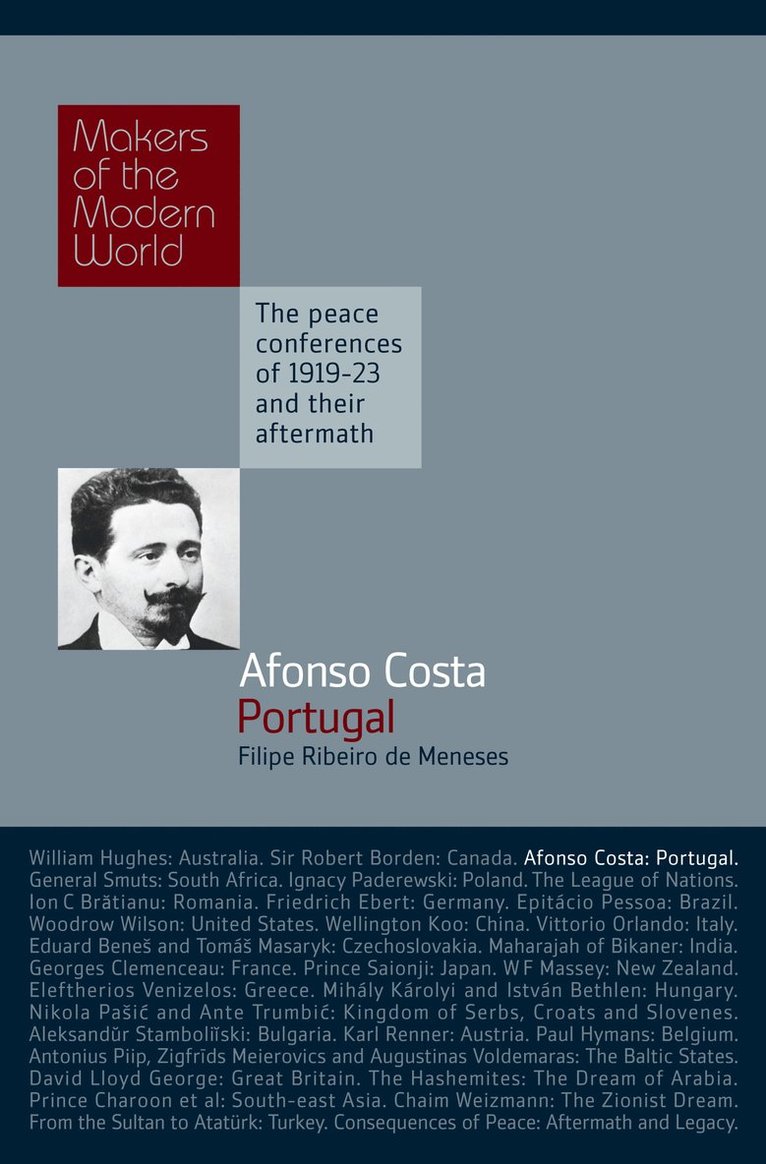
      • Filipe Ribeiro de Meneses - Afonso Costa: Portugal, Inbunden. Tillgänglighet: Lägg i varukorg

        Afonso Costa: Portugal

        AvFilipe Ribeiro de Meneses

        Inbunden, Engelska, 2010

        190 kr

        Skickas inom 7-10 vardagar

        Portugal's poor military performance in the First World War, notably in Africa, restricted Afonso Costa's (1871-1937) ability to secure his diplomatic aims which, in any case, were highly unrealistic. Nevertheless, his loyal press in Portugal described him as the leader of the small nations', and reported his every statement as a major triumph. Afonso Costa's most important intervention took place in May 1919, when he denounced the Allies' unwillingness to make Germany pay for all the damage she had caused during the conflict; this speech led to a number of newspaper interviews in which Costa restated his position. It is clear that the interventionists needed a favourable Treaty in order to demonstrate to the country that its sacrifices had been worthwhile. The final draft of the Treaty was thus a complete shock to Portuguese public opinion, and came as a major defeat to the interventionists, who saw all their hopes for tangible gain evaporate. It effectively spelt the end of Costa's political career, although this was not yet clear. This biography of Afonso Costa considers the political implications of Portugal's participation in the First World War and of the defeat' in Paris.Reconciliation between the rival parties and between factions within parties became impossible, as did, as a result, the formation of a stable cabinet. With governments following each other in quick succession, it became increasingly difficult to carry out any of the reforms Portugal needed, and the Republic lost much of the support that remained. Nationalist opinion abandoned the regime and turned to the authoritarian models that had been pioneered by Sidonio Pais, and were now spreading throughout Europe. Politically neutral for decades, the army now intervened in politics, overthrowing the government after a failed coup in April 1925 in May 1926. The need for order in politics and on the street was paramount in the minds of the officers who plotted the downfall of the regime. This military dictatorship gave way, in the early 1930s, to Salazar's New State, and the volume concludes with a quick overview of this regime's domestic and foreign policy. Salazar, like Afonso Costa a Coimbra academic, announced Portugal's neutrality when Germany invaded Poland, in 1939, and his wartime diplomacy would be the reverse of Afonso Costa's, some twenty years earlier.
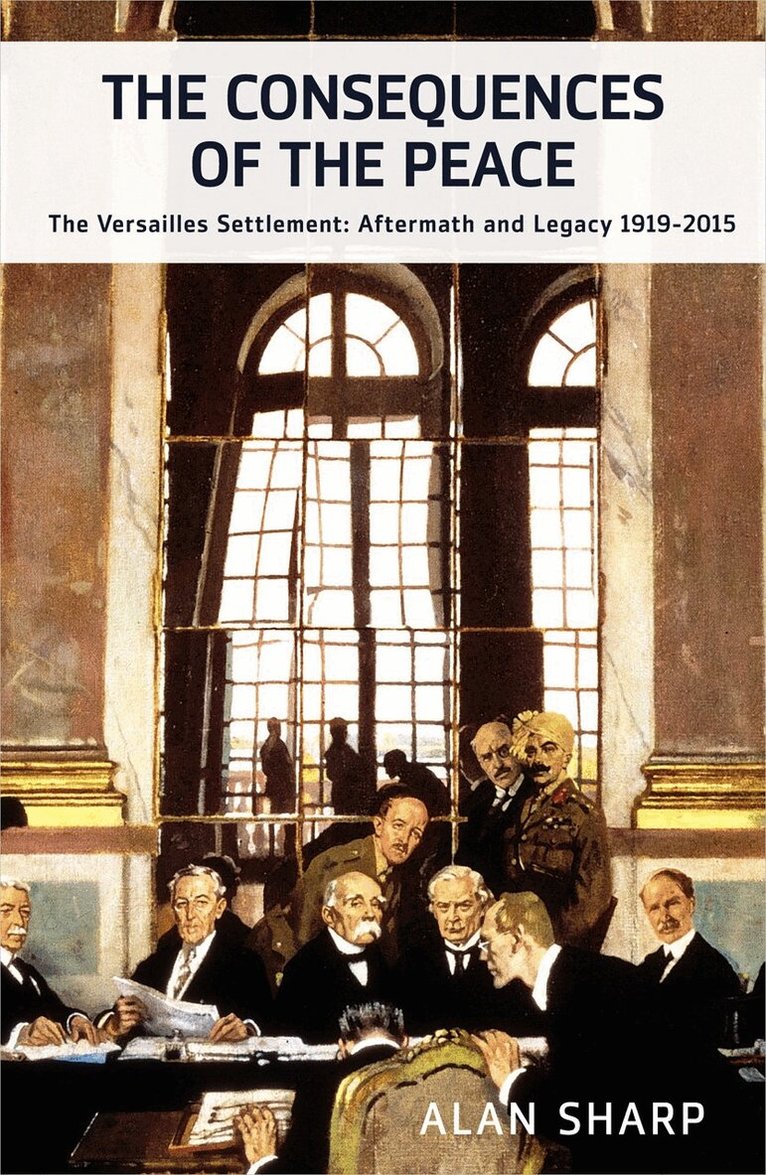
      • Alan Sharp - The Consequences of the Peace, Inbunden. Tillgänglighet: Lägg i varukorg

        The Consequences of the Peace

        The Versailles Settlement: Aftermath and Legacy 1919-2010

        AvAlan Sharp

        Inbunden, Engelska, 2015

        280 kr

        Skickas inom 7-10 vardagar

        The Versailles Settlement does not enjoy a good international reputation: despite its lofty aim to settle the world's affairs at a stroke, it is widely considered to have set the world on the path to a second major conflict within a generation. Woodrow Wilson's controversial principle of self-determination amplified political complexities, and the war and its settlement bear significant responsibility for national borders and related conflicts in the Middle East. Furthermore, other objectives of the peacemakers, such as global disarmament and minority protection, are yet to be realised. This book, revised and updated with new material to mark the centenary of the First World War, sets the consequences - for good or ill - of the Paris Peace Treaties into their longer term context and argues that the responsibility for Europe's continuing interwar instability cannot be wholly attributed to the peacemakers of 1919-23.
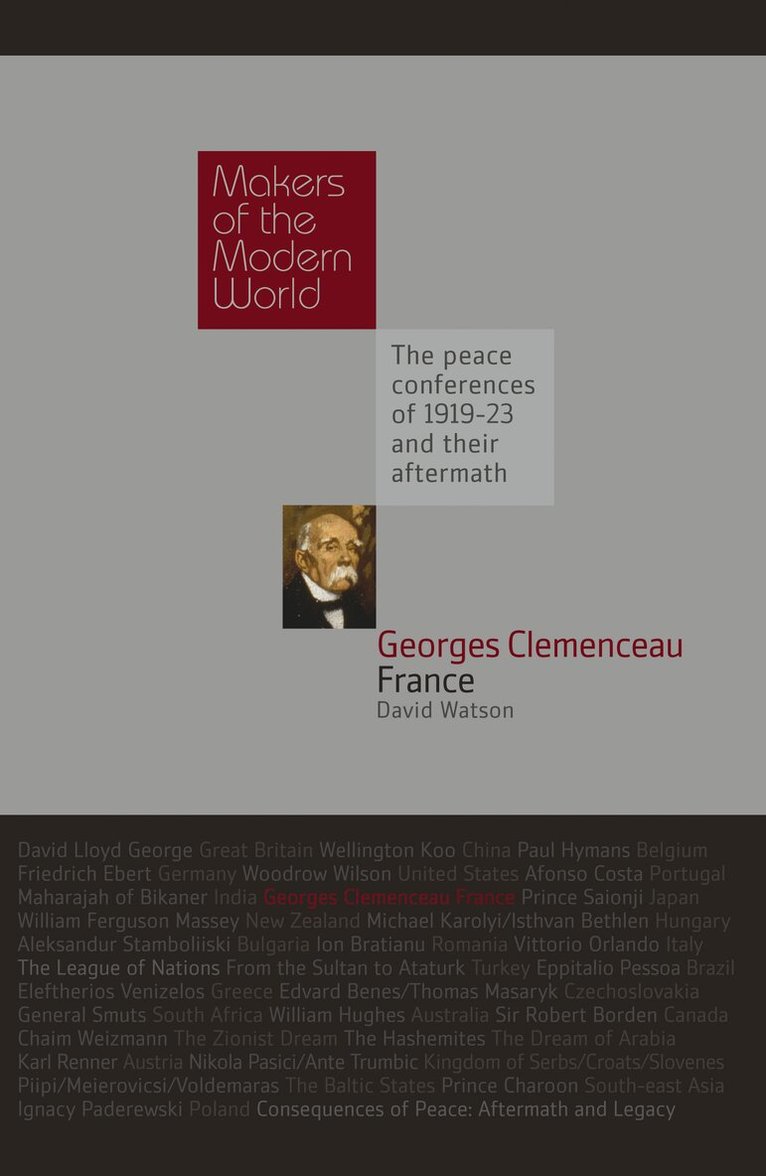
      • David Watson - Georges Clemenceau: France, Inbunden. Tillgänglighet: Tillfälligt slut

        Georges Clemenceau: France

        The Peace Conferences of 1919-23 and Their Aftermath

        AvDavid Watson

        Inbunden, Engelska, 2008

        141 kr

        Tillfälligt slut

        The Anglo-Saxon view of Georges Clemenceau (1841-1929) is based on John Maynard Keynes' misjudged caricature, that he had imposed a treaty that was harsh and oppressive of Germany. French critics' view, however, is that he had been too lenient, and left Germany in a position to challenge the treaty. In fact the treaty was a just settlement, and it could have been maintained. The failure was not in the terms of the treaty but in the subsequent failure to insist on maintaining them in the face of German resistance.
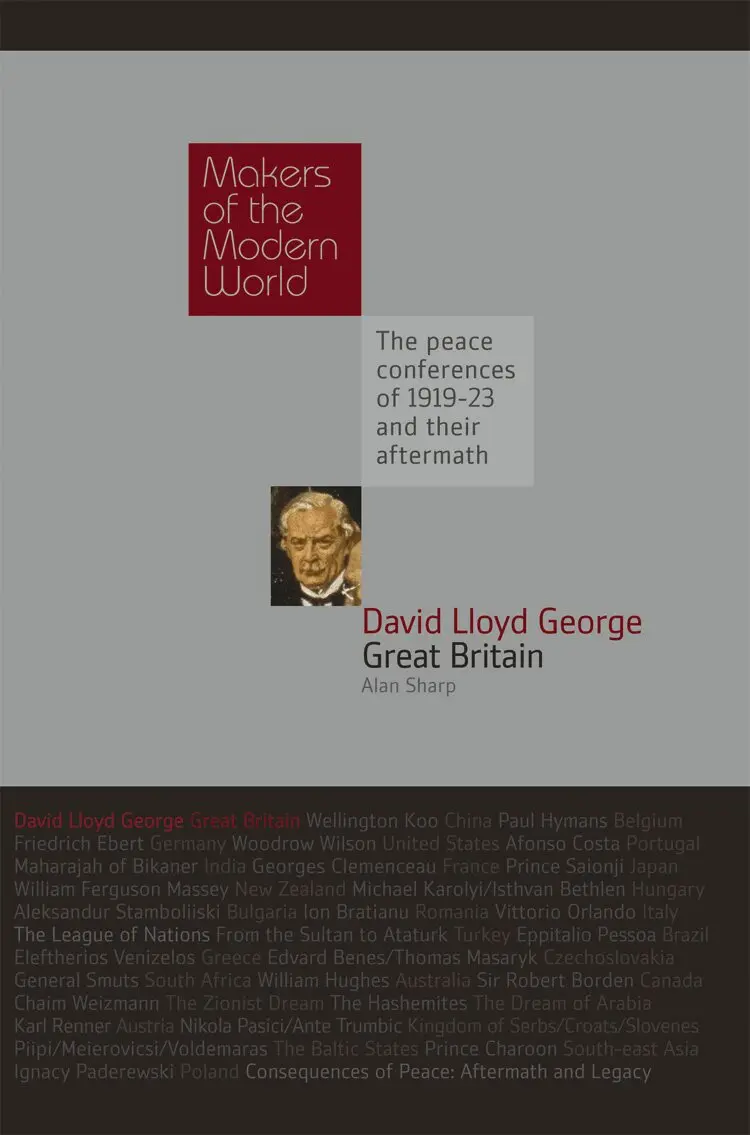
      • Alan Sharp - David Lloyd George: Great Britain, Inbunden. Tillgänglighet: Tillfälligt slut

        David Lloyd George: Great Britain

        AvAlan Sharp

        Inbunden, Engelska, 2008

        141 kr

        Tillfälligt slut

        The end of the First World War saw Britain at the height of its power. Its fleet and air force were the largest in the world. Its armies had triumphed in the Middle East and spearheaded the final attacks in Western Europe that had driven the defeated Germans to seek an armistice. Britain now had to translate this military victory into the achievement of its war aims and future security and prosperity. Its main negotiator at the forthcoming peace conference would be its prime minister, the ebullient and enigmatic David Lloyd George (1863-1945), the "Welsh Wizard" - "the man who had won the war". Lloyd George's energy had maintained the war effort through the dark days of 1917 and early 1918, but now he anticipated, with relish, the prospect of winning the peace. Few were better equipped. He was a skilled and accomplished negotiator with the knack of reconciling the apparently irreconcilable. His admirers, of whom there were many, pointed to his brilliant and agile mind, his rapid grasp of complex questions and his powers of persuasion. His critics, who were also numerous, distrusted his sleight of hand, fleetness of foot and, frankly, his word.His six months in Paris in 1919, as he pitted his wits against formidable world leaders like Woodrow Wilson and Georges Clemenceau, were among the most enjoyable but exhausting of his life. This study investigates the extent to which Lloyd George succeeded in his aims and evaluates the immediate and longer-term results of his negotiations for Britain.
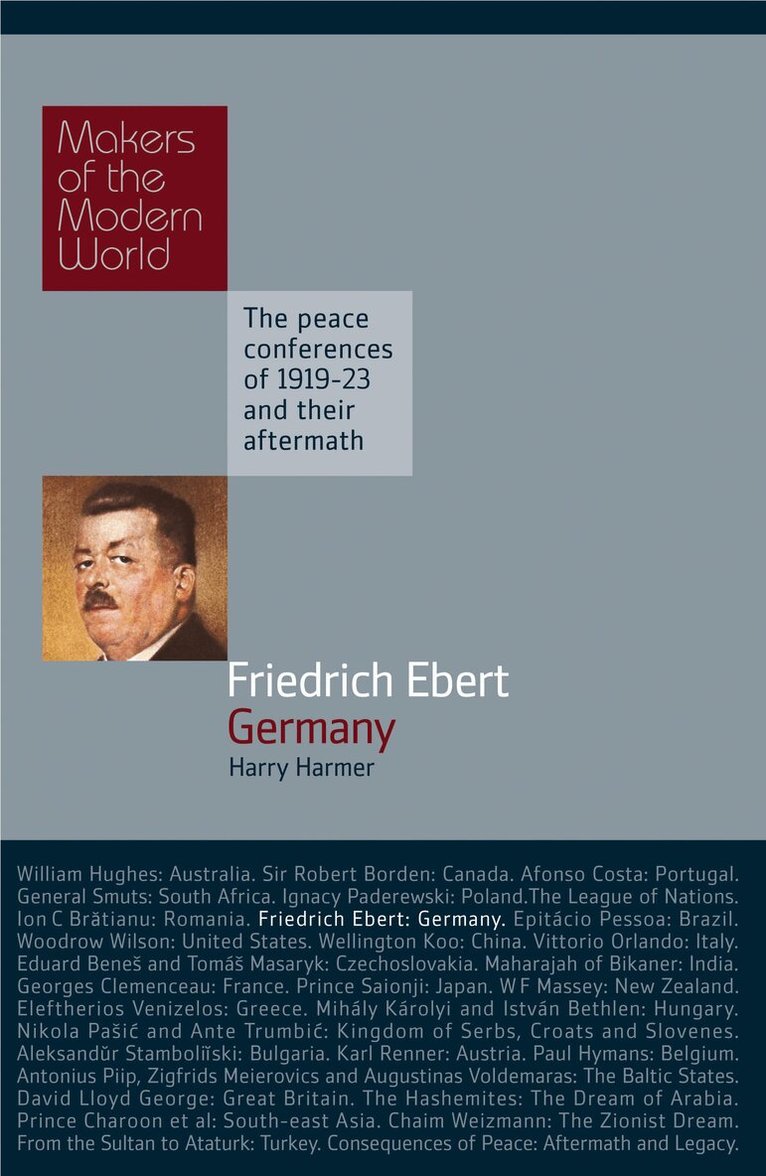
      • Harry Harmer - Friedrich Ebert: Germany, Inbunden. Tillgänglighet: Tillfälligt slut

        Friedrich Ebert: Germany

        The Peace Conferences of 1919-23 and Their Aftermath

        AvHarry Harmer

        Inbunden, Engelska, 2008

        141 kr

        Tillfälligt slut

        This title is about Friedrich Ebert (1871-1925). Ebert was influential in securing SPD support for the war in 1914. On the eve of war he travelled to Switzerland to arrange the movement of SPD funds if the party was outlawed. As the leader of organized labour, Ebert had close relations with government and military authorities throughout the war. Two of his sons were killed during the war, something he used to emphasise his patriotism. On 9 November, 1918, Ebert became Imperial Chancellor as revolution broke out in Berlin. He opposed the radical left, declaring, 'Without democracy there is no freedom. Violence, no matter who is using it, is always reactionary', but he compromised Weimar democracy by his dependence on the army command and his use of the para-military Freikorps against the left.Ebert headed a joint SPD-USPD government until elections were held to a National Constituent Assembly in January 1919. Ebert became president of the new Weimar Republic (Germany's first democratically elected head of state) and retained office in a turbulent period in German politics.Ebert reluctantly accepted the need for Germany to sign the Treaty of Versailles, at one point saying he might be prepared to resume the war. It was left to Johannes Bell (depicted by Sir William Orpen from behind) and Hermann Muller (shown leaning over him) to sign on behalf of Germany. There were arguments among the Allies over how Germany should be treated, as France, Britain and the United States prioritised different objectives.In May 1919, the terms of the Treaty - on reparations, war guilt clause, loss of territories in Europe and colonies, limitations on armed forces - were presented to German representatives, precipitating opposition in government and the Armed Forces, and heated discussion in Cabinet. He continued as President until 1925, forced to confront the issues that arose from the Treaty and its political and economic consequences. After his death came the unravelling of the Treaty and the book examines how much of a part it played in creating the circumstances of the Second World War.
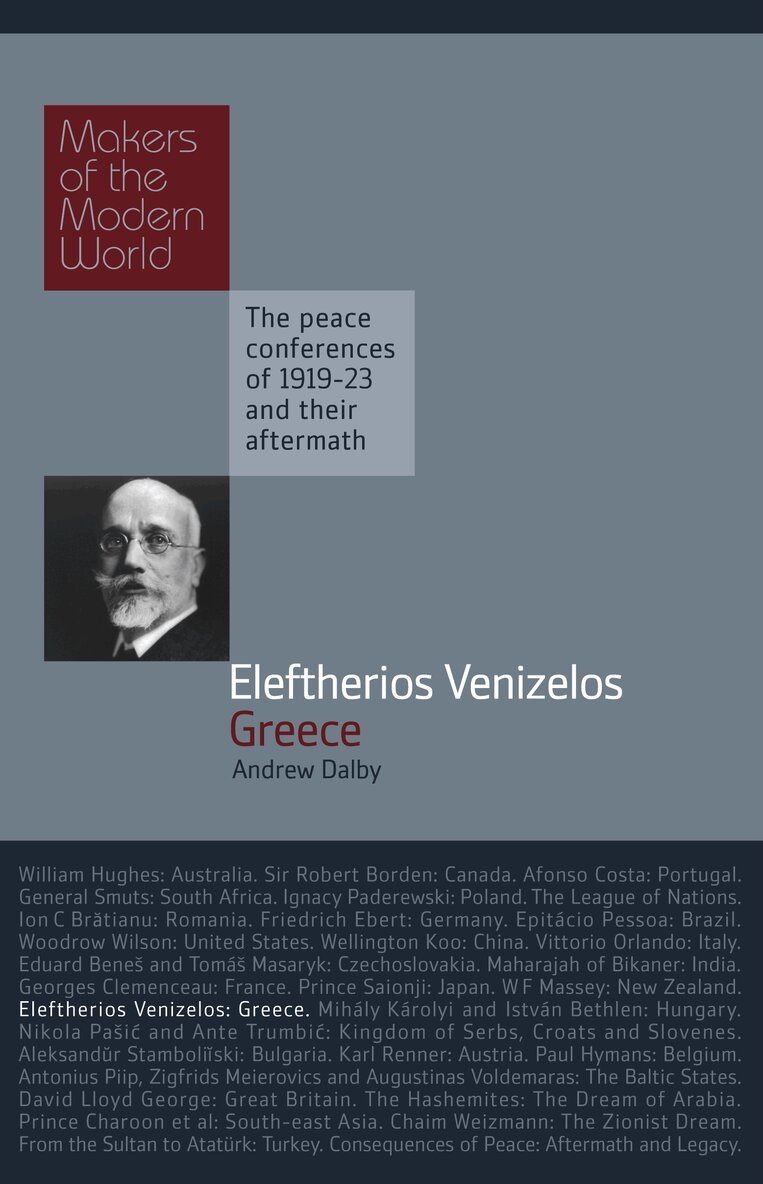
      • Andrew Dalby - Eleftherios Venizelos: Greece, Inbunden. Tillgänglighet: Tillfälligt slut

        Eleftherios Venizelos: Greece

        The Peace Conferences of 1919-23 and Their Aftermath

        AvAndrew Dalby

        Inbunden, Engelska, 2010

        137 kr

        Tillfälligt slut

        The Greek Prime Minister Eleftherios Venizelos (1864-1936) was one of the stars of the Paris Peace Conference, impressing many of the Western delegates, already possessed of a romantic view of 'the grandeur that was Greece', with his charm and oratorical style. He won support for his country's territorial ambitions in Asia Minor, the 'Great Idea' of a revived Hellenic empire controlling the Aegean and stretching to the Black Sea. Venizelos had won this support by bringing Greece into the war on the Allied side, but in doing so he had split his country, and in order to secure his government's position he had to deliver territorial gains at the expense of the Ottoman Empire. It was the Greek occupation of Asia Minor, however, that spurred the Turks to support Mustafa Kemal and resulted not in the creation of a Greater Greece but the modern Republic of Turkey. The conflict between Greece and Turkey began the tension between the two states that has continued for the past 90 years and is most clearly seen in the dispute over the divided island of Cyprus.The Paris Peace Conferences were where the modern Near East, with all its problems of competing nationalisms and ethnic divisions, was created, and Venizelos' Greece was the key player in this process.
      • Andrew Mango - From the Sultan to Atatürk: Turkey, Inbunden. Tillgänglighet: Tillfälligt slut
        Del 20 - Makers of the Modern World

        From the Sultan to Atatürk: Turkey

        The Peace Conferences of 1919-23 and Their Aftermath

        AvAndrew Mango

        Inbunden, Engelska, 2009

        146 kr

        Tillfälligt slut

        World War I sounded the death knell of empires. The forces of disintegration affected several empires simultaneously. To that extent they were impersonal. But prudent statesmen could delay the death of empires, rulers such as Emperor Franz Josef II of Austria-Hungary and the Ottoman Sultan Abdulhamid II. Adventurous rulers Kaiser Wilhelm of Germany and Enver Pasha in the Ottoman Empire hastened it. Enver's decision to enter the war on the side of Germany destroyed the Ottoman state. It may have been doomed in any case, but he was the agent of its doom. The last Sultan Mehmet VI Vahdettin thought he could salvage the Ottoman state in something like its old form. But Vahdettin and his ministers could not succeed because the victorious Allies had decided on the final partition of the Ottoman state. The chief proponent of partition was Lloyd George, heir to the Turcophobe tradition of British liberals, who fell under the spell of the Greek irredentist politician Venizelos. With these two in the lead, the Allies sought to impose partition on the Sultan's state. When the Sultan sent his emissaries to the Paris peace conference they could not win a reprieve.The Treaty of Sevres which the Sultan's government signed put an end to Ottoman independence. The Treaty of Sevres was not ratified. Turkish nationalists, with military officers in the lead, defied the Allies, who promptly broke ranks, each one trying to win concessions for himself at the expense of the others. Mustafa Kemal emerged as the leader of the military resistance. Diplomacy allowed Mustafa Kemal to isolate his people's enemies: Greek and Armenian irredentists. Having done so, he defeated them by force of arms. In effect, the defeat of the Ottoman empire in the First World War was followed by the Turks' victory in two separate wars: a brief military campaign against the Armenians and a long one against the Greeks. Lausanne where General Ismet succeeded in securing peace on Turkey's terms was the founding charter of the modern Turkish nation state. But more than that it showed that empires could no longer rule people against their wishes. This need not be disastrous: Mustafa Kemal demonstrated that the interests of developed countries were compatible with those of developing ones. He fought the West in order to become like it.Where his domestic critics wanted to go on defying the West, Mustafa Kemal saw that his country could fare best in cooperation with the West.
      • Jonathan Clements - Prince Saionji: Japan, Inbunden. Tillgänglighet: Tillfälligt slut

        Prince Saionji: Japan

        The Peace Conferences of 1919-23 and Their Aftermath

        AvJonathan Clements

        Inbunden, Engelska, 2009

        141 kr

        Tillfälligt slut

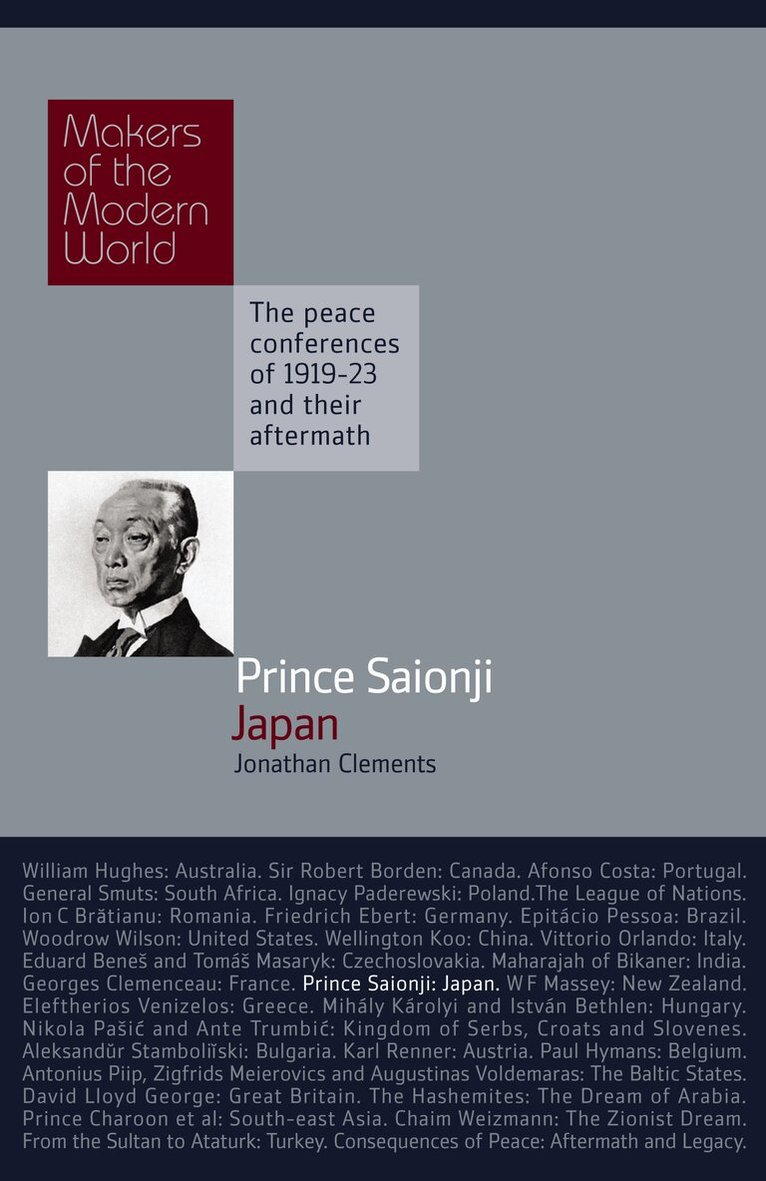
        The Japanese delegation at the Paris Peace Conference did not have the Japanese prime or foreign ministers with them as they had only just been elected and had plenty to do back home. The delegation was instead led by Prince Saionji Kinmochi (1849-1940), the dashing 'kingmaker' of early 20th-century Japanese politics whose life spanned the arrival of Commodore Perry and his 'black ships', the Japanese civil war, the Meiji Restoration, the Sino-Japanese War, the Russo-Japanese War, the First World War, the Paris Peace Conference and the Treaty of Versailles, and the rise of Japanese militarism. Unlike many of the conservatives of his day, Saionji was a man with experience of international diplomacy and admiration for European culture.Brought up in the days of the last Shogun, he became an active supporter of Japan's new ruling regime, after the Shogun was overthrown in a civil war, and a leading figure in the post-Restoration reform movement. In 1869, he founded the institution that would become the Ritsumeikan University - literally, 'the place to establish one's destiny'.He was sent to France for nine years to investigate Western technology and philosophy, and served for a decade as a Japanese ambassador in Europe. Returning to Japan, he served twice as Minister of Education and later became prime minister before resigning to become a revered elder statesman. Japan entered the First World War on the Allied side, seizing German possessions in China and the Pacific. In the closing days of the war, Japanese military forces participated in the Siberian Intervention - an American-led invasion of eastern Russia against Communist insurgents.At the Conference Saionji's presence was initially regarded by the Japanese as a sign that Japan had become a fully-fledged member of the international community and accepted on an equal footing with the Western Powers. His delegation introduced a controversial proposal to legally enshrine racial equality as one of the tenets of the League of Nations. The Japanese were also keen to grab colonies of their own, and went head-to-head with the Chinese delegation over the fate of the former German possession of Shandong. When Shandong was 'returned' not to China but to its Japanese occupiers, riots broke out in China.Despite Saionji's statesmanship and diplomacy, the Treaty of Versailles was regarded by many Japanese as a slap in the face. Saionji's influence weakened in his last years, while his party was dissolved and amalgamated with others.
      • Charlotte Alston - Piip, Meierovics & Voldemaras: The Baltic States, Inbunden. Tillgänglighet: Tillfälligt slut

        Piip, Meierovics & Voldemaras: The Baltic States

        The Peace Conferences of 1919-23 and Their Aftermath

        AvCharlotte Alston

        Inbunden, Engelska, 2010

        137 kr

        Tillfälligt slut

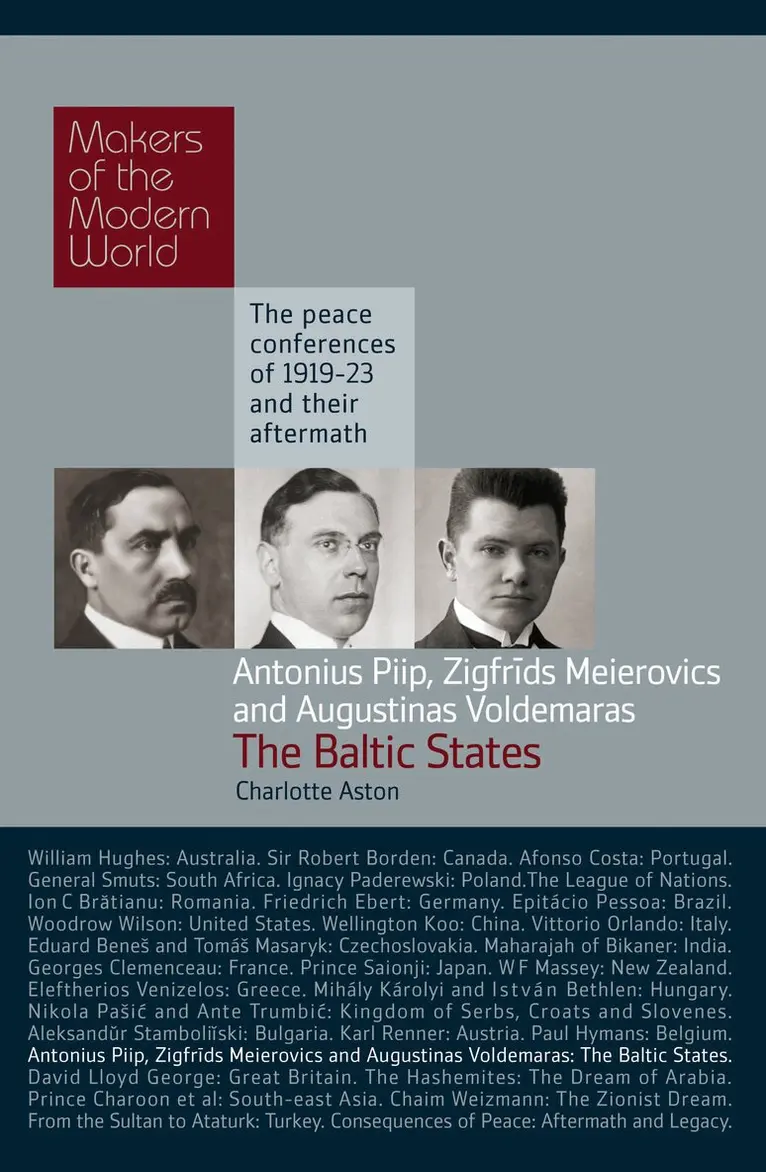
        Conflict on the borders of the Russian Empire, whatever the complexion of the government controlling it, has been a constant feature of the past 90 years, most recently with Russia's brief war with Georgia in August 2008. In 1919, as the smaller nations on Russia's borders sought self-determination while the Civil War raged between the Whites and the Bolsheviks, the Paris Peace Conference struggled with a situation complicated by mutually exclusive aims. The Baltic States of Latvia, Lithuania and Estonia were seen by both the Russians and the Western Allies as a protective buffer for their own territory, which led to the curious situation that the Peace Conference requested German troops to remain temporarily in the Baltic territory they had occupied during the First World War to block the westward spread of the Bolshevik Revolution. The ongoing civil war in Russia further complicated the issue, because if the Whites should win and restore the legitimate' Russian government, the Peace Conference could not divide up the territory of a power that had been one of the original members of the Entente.The US politician Herbert Hoover described Russia as Banquo's ghost' at the Paris Peace Conference, an invisible but influential presence, and nowhere can this be more clearly seen than in the deliberations over the Baltic States.
      • Peter Neville - Benes & Masaryk: Czechoslovakia, Inbunden. Tillgänglighet: Tillfälligt slut

        Benes & Masaryk: Czechoslovakia

        AvPeter Neville

        Inbunden, Engelska, 2010

        142 kr

        Tillfälligt slut

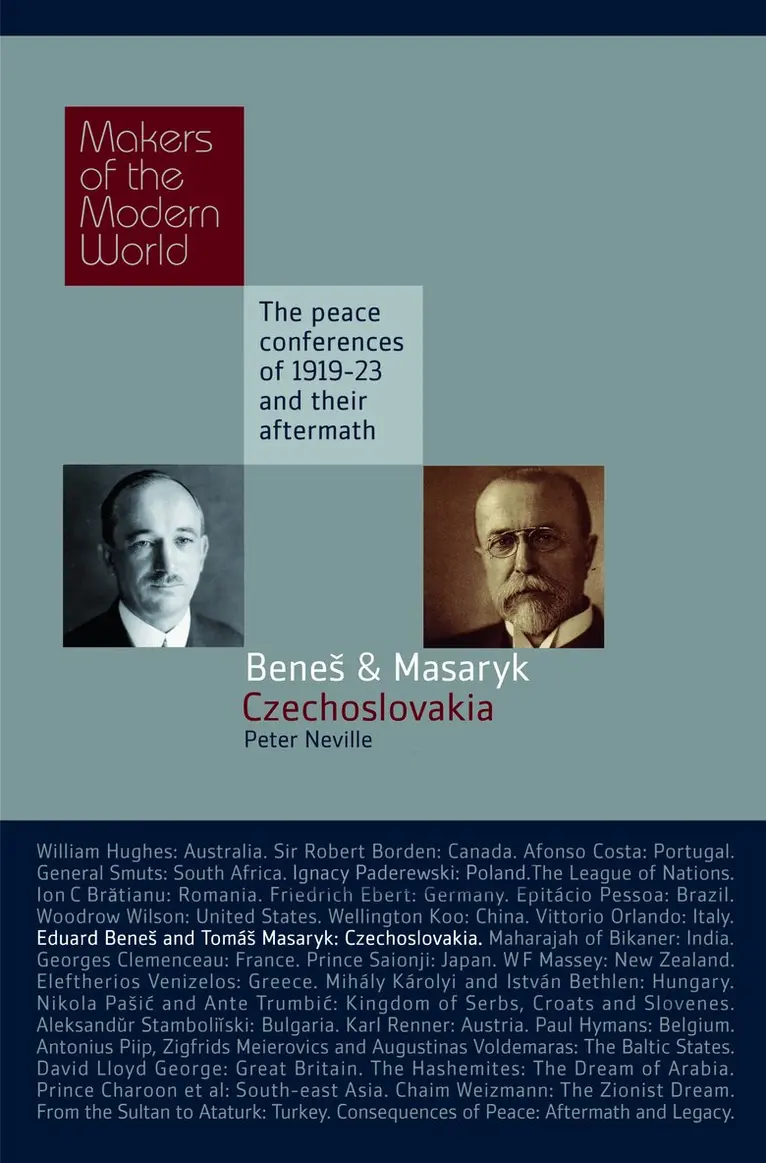
        Of even greater importance for Hungary's future were the activities of the champions of an independent state of Czechs and Slovaks. Tomas Masaryk, a Czech professor of philosophy and a future leader of his people, was hard at work within a month of the outbreak of war lobbying in Paris and London for an independent Bohemia, still a major component of the Austrian Empire within the Austro-Hungarian Monarchy, which would incorporate the predominantly Slovak regions of northern Hungary. Masaryk, who was assisted in his efforts by Eduard Benes, a bitter enemy of the Habsburgs. Thus the new state was effectively shaped before the Paris Peace Conference. But the Conference laid down the seeds of Czechoslovakia's later destruction. Only nine million Czechoslovaks lived in the state out of a population of fourteen million. A large discontented Hungarian minority lived in Slovakia, and the Polish majority area of Teschen poisoned Czech-Polish relations. Yet the greatest challenge came from the rise of the Nazis in Germany in 1930s: Masaryk always claimed that he did not want three and half million ethnic Germans, but he and Benes accepted them nonetheless.Masaryk died in 1937, and Britain and France would not support the Czechs over the Sudetenland, the infamous deal struck in Munich by Neville Chamberlain and Adolf Hitler.
      • Keith Hitchins - Ion Bratianu: Romania, Inbunden. Tillgänglighet: Tillfälligt slut
        Del 22 - Makers of the Modern World

        Ion Bratianu: Romania

        The Peace Conferences of 1919-23 and Their Aftermath

        AvKeith Hitchins

        Inbunden, Engelska, 2011

        142 kr

        Tillfälligt slut

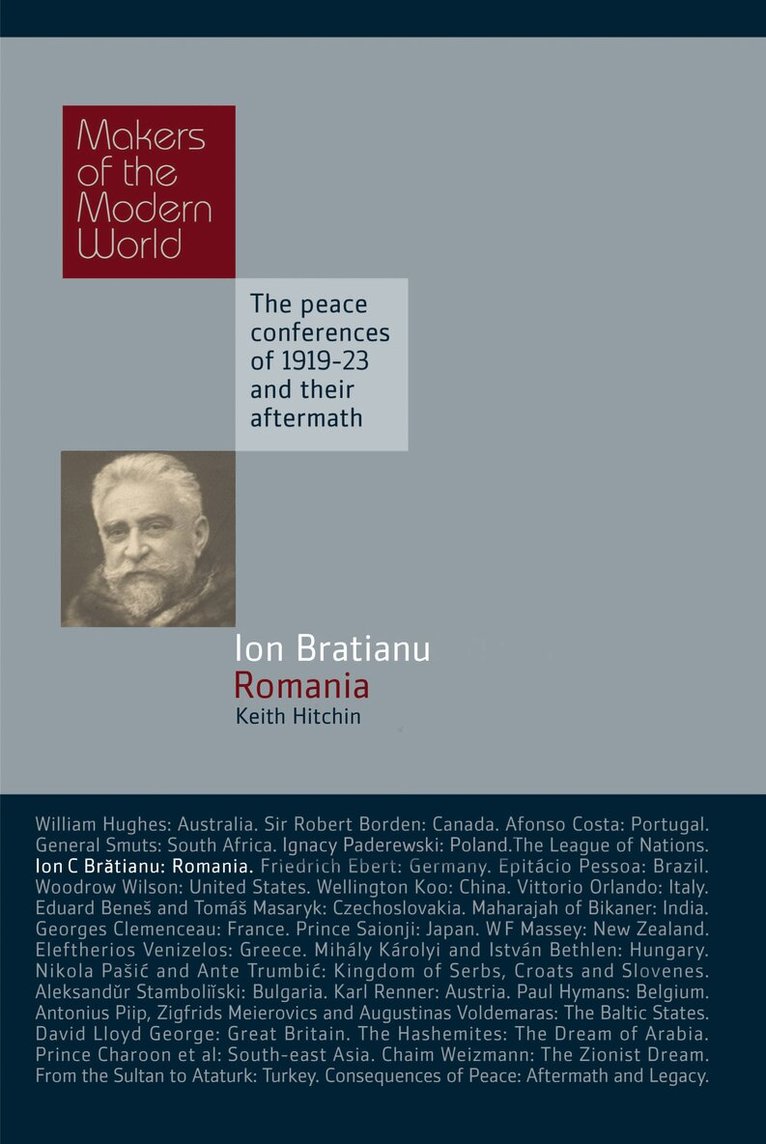
        At the beginning of 1918 the British War Cabinet endorsed the view of the Prime Minister, David Lloyd George, that after the war Austria-Hungary should be in a position to exercise a powerful influence in south-east Europe. These reassuring professions were the essence of hypocrisy, since the Allies had already given away, at least on paper, large chunks of Austro-Hungarian territory as bribes to potential allies. In 1916 Romania was promised the whole of Transylvania, the Banat both components of historic Hungary and the Bukovina in return for her entry into the war. These promises persuaded the Romanian Prime Minister Ion Bratianu (1864-1927) to intervene in the war on the side of the Allies in 1916. He lead the Romanian delegation to the Paris Peace Conference, where he insisted on those promises to be fulfilled. His often-strained relations with the Big Four and the Supreme Council were further eroded when Romania invaded Hungary. Romania, however, in the end signed and adhered to the Treaty of Saint-Germain-en-Laye with Austria, Neuilly-sur-Seine with Bulgaria, the Treaty of Paris (1920), the Treaty of Trianon with Hungary, and the minorities treaty.
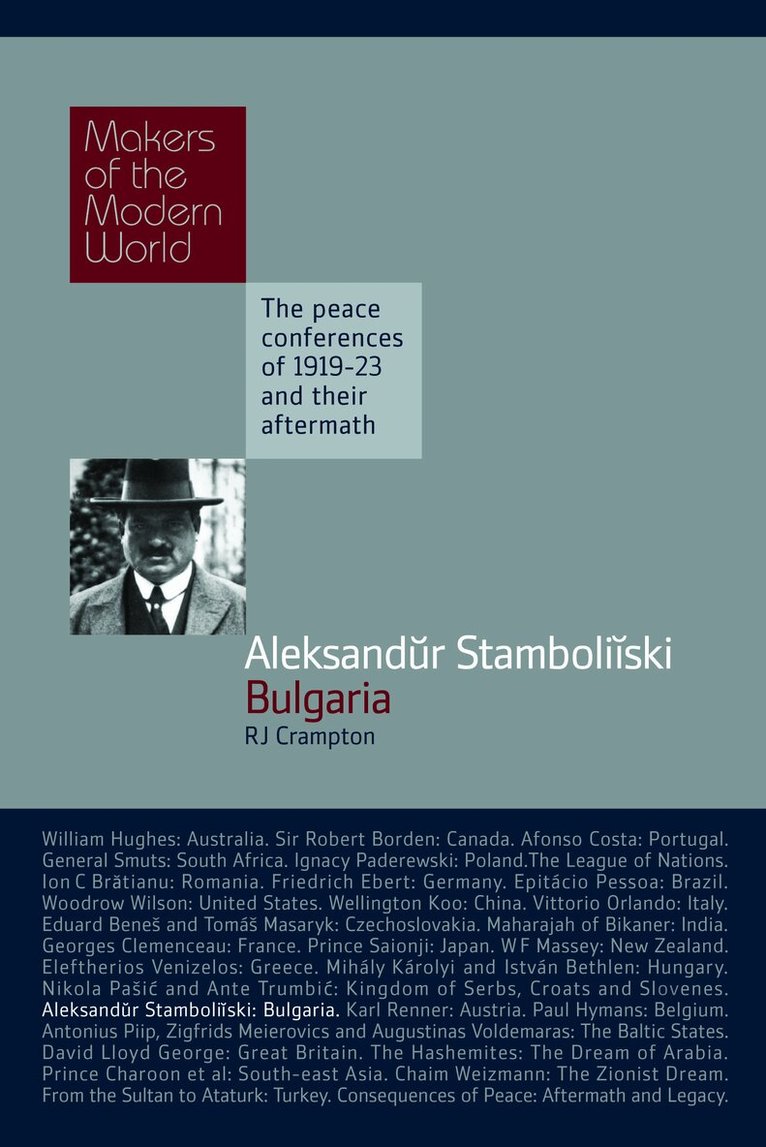
      • Richard Crampton - Aleksandur Stamboliiski: Bulgaria, Inbunden. Tillgänglighet: Tillfälligt slut

        Aleksandur Stamboliiski: Bulgaria

        The Peace Conferences of 1919-23 and Their Aftermath

        AvRichard Crampton

        Inbunden, Engelska, 2009, 15+ år

        141 kr

        Tillfälligt slut

        Aleksandur Stamboliiski was one of the most original politicians of the 20th century. His tragedy was that he came to power at the end of the First World War in which Bulgaria had been defeated. It fell to him, therefore, to accept and apply the peace settlement. This created tensions between him and traditional Bulgarian nationalism, tensions which ended with his murder in 1923. The book will examine the origins of this traditional nationalism from the foundation of the Bulgarian state in 1878, and of the agrarian movement which came to represent the social aspirations of the majority of the peasant population. It will also illustrate Stamboliiski’s rise to power and examine his ideology. Emphasis will be placed on how this ideology clashed with the monarchy, the military, and the nationalists. Stamboliiski’s policies in the Balkan wars and the First World War will be described before the details of the 1919 peace settlement are examined. The implementation of those terms will then be discussed as will the coup of 1923. The legacy of the peace treaty in the inter-war period and of Stamboliiski’s image in the years after his downfall will form the final section of the book.
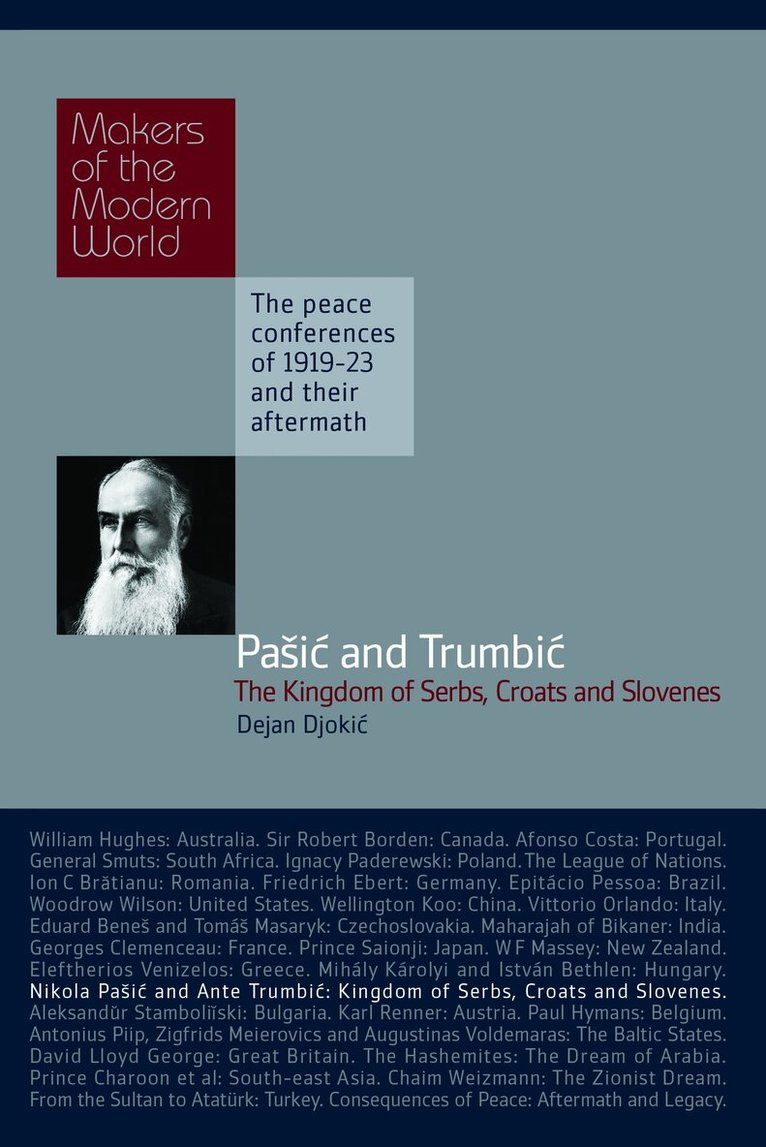
      • Dejan Djokic - Pasic & Trumbic: The Kingdom of Serbs, Croats and Slovenes, Inbunden. Tillgänglighet: Tillfälligt slut

        Pasic & Trumbic: The Kingdom of Serbs, Croats and Slovenes

        AvDejan Djokic

        Inbunden, Engelska, 2010

        141 kr

        Tillfälligt slut

        "Nicola Pasic and Ante Trumbic: The book" will provide the first parallel biographies of two key Yugoslav politicians of the early 20th century: Nikola Pasic, a Serb, and Ante Trumbic, a Croat. It will also offer a brief history of the creation of Yugoslavia (initially known as the Kingdom of Serbs, Croats, and Slovenes), internationally accepted at the Paris Peace Conference of 1919-20 (at the Treaty of Versailles). Such an approach will fill two major gaps in the literature - scholarly biographies of Pasic and Trumbic are lacking, while Yugoslavia's formation is due a reassessment - and to introduce the reader to the central question of South Slav politics: Serb-Croat relations. Pasic and Trumbic's political careers and their often troubled relationship in many ways perfectly epitomize the wider Serb-Croat question.
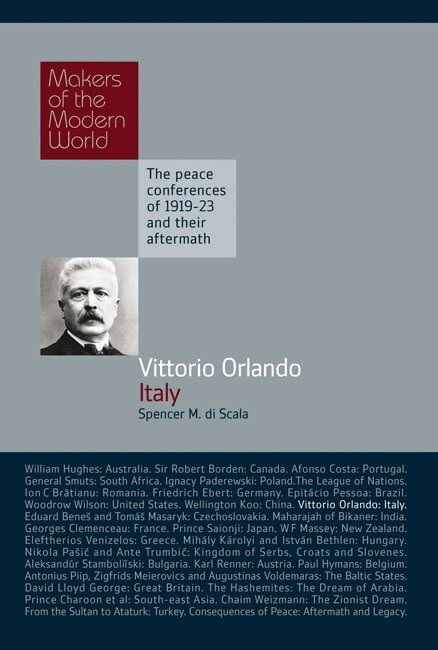
      • Spencer Di Scala - Vittorio Orlando: Italy, Inbunden. Tillgänglighet: Tillfälligt slut

        Vittorio Orlando: Italy

        The Peace Conferences of 1919-23 and Their Aftermath

        AvSpencer Di Scala

        Inbunden, Engelska, 2010

        142 kr

        Tillfälligt slut

        The Italian premier Vittorio Orlando came to Paris as one of the Big Four', yet in April 1919 walked out in one of the most dramatic crises of the Peace Conferences. Orlando's failure to win for Italy the territories she felt were owed to her was to have far-reaching consequences for both Italy and Europe as a whole. Italy in 1918 was in an ambivalent position: at the outbreak of war the country had been part of the Triple Alliance with Germany and Austria-Hungary, but had stayed neutral until joining the Allies in 1915 on the promise of territorial rewards. The war was a near-disaster for the Italians, culminating in the collapse of their armies at Caporetto in 1917. It was this crisis that brought Orlando to power, and he did much to restore the situation, but the Italians looked to Versailles to compensate them for the terrible losses they had suffered.In this book, the clash between Italy's territorial demands in the Balkans, which had been guaranteed by the Allies in 1915 and earned through her losses in the War, with the new Wilsonian doctrine of open diplomacy and national self-determination is detailed, and it traces the effects the failure of Orlando's delegation to satisfy their people's demands which directly to the rise of Fascism and to Mussolini's policies in the 1930s as he sought to obtain what Italy had been denied at Versailles.
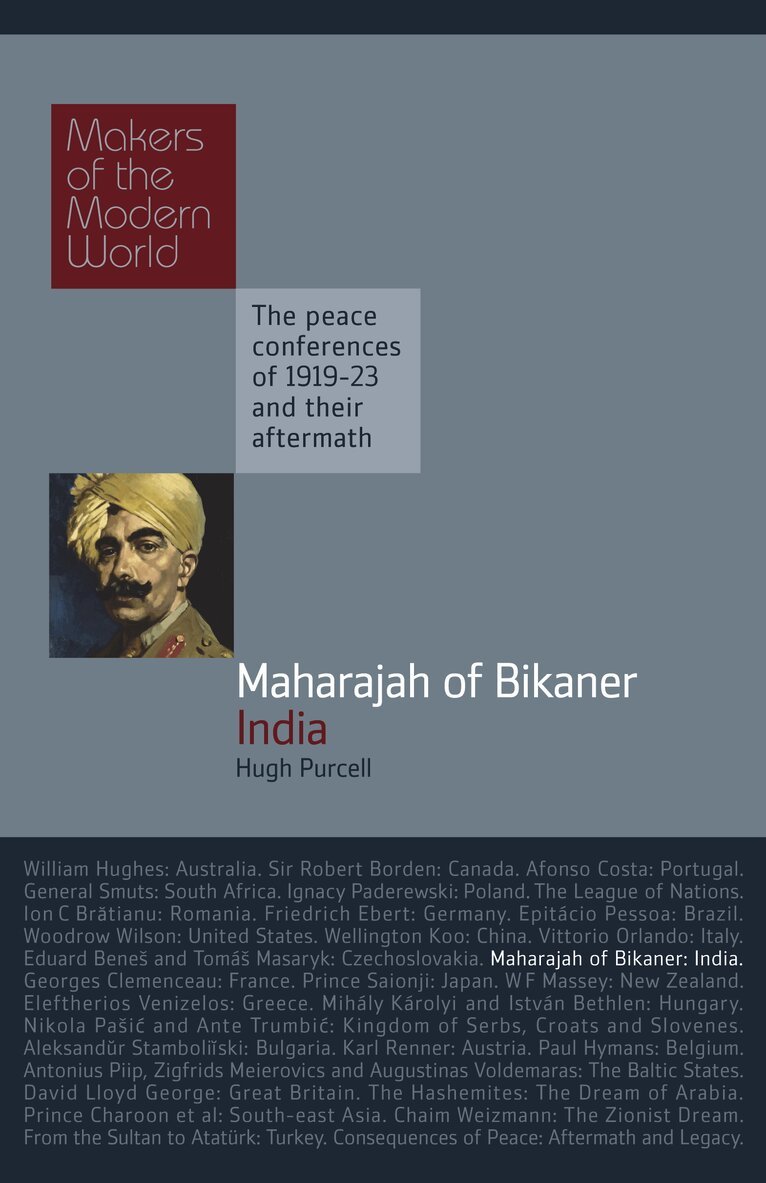
      • Hugh Purcell - Maharajah of Bikaner: India, Inbunden. Tillgänglighet: Tillfälligt slut

        Maharajah of Bikaner: India

        The Peace Conferences of 1919-23 and Their Aftermath

        AvHugh Purcell

        Inbunden, Engelska, 2010

        152 kr

        Tillfälligt slut

        The story of the Indian soldiery in the Great War needs a new telling and one important chapter of it will be about the Maharajah of Bikaner: Dashing, autocratic and a formidable public speaker, Ganga Singh commanded his own camel corps called the Ganga Risala, fought on the Western Front and in Egypt, became the first Indian general in the British Indian army and persuaded the maharajas to unite into the Chamber of Princes. As a result of this and his war record he was invited by Lloyd George to attend the Imperial War Conference in 1917 and then the Versailles Peace Conference two years later, where he persuaded the other delegates to include India in the new League of Nations, quite an achievement as it was not an independent nation. Less successfully he tried to prevent the dismemberment of Turkey.
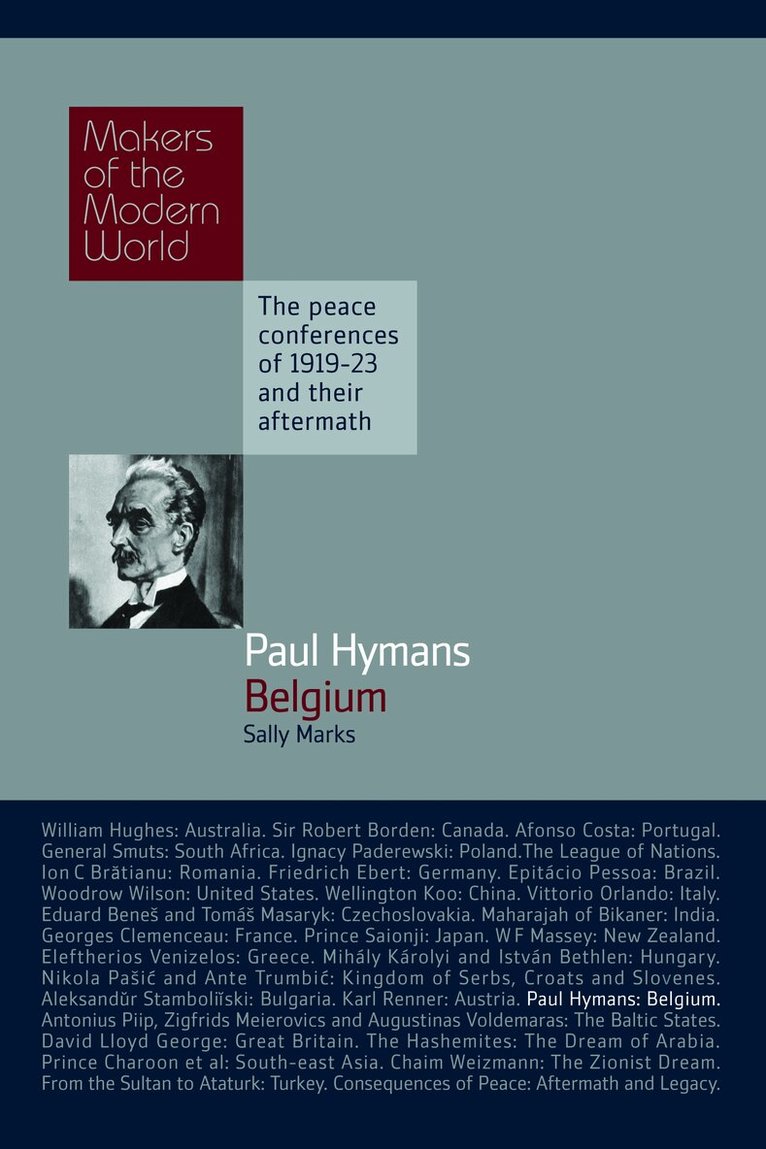
      • Sally Marks - Paul Hymans: Belgium, Inbunden. Tillgänglighet: Tillfälligt slut

        Paul Hymans: Belgium

        The Peace Conferences of 1919-23 and Their Aftermath

        AvSally Marks

        Inbunden, Engelska, 2010

        140 kr

        Tillfälligt slut

        On 4 February 1919 in the League of Nations Commission at the Paris Peace Conference, Paul Hymans resisted minimal representation of small states on the League Council by shouting at Lord Robert Cecil, What you propose is a revival of the Holy Alliance of unhallowed memory!' It was Hymans, above all, who struggled to give the small states at the Conference a voice, making himself deeply disliked in the process. He was was rewarded by becoming the League's first president. Belgium had suffered the greatest degree of devastation in the Great War. When the country was liberated and the Peace Conference was set up, it was determined to succeed in its claims for territory and reparations. Equally important was the need for security from larger nations' ambitions. Only some of these would be achieved at Versailles, leaving a lasting legacy which influenced the country's policy as the Second World War approached. Hymans instigated Belgium's transition from the status of sheltered child to full participation in much great-power diplomacy.
      • Andrew Dalby - Prince Charoon et al: South East Asia, Inbunden. Tillgänglighet: Tillfälligt slut

        Prince Charoon et al: South East Asia

        The Peace Conferences of 1919-23 and Their Aftermath

        AvAndrew Dalby

        Inbunden, Engelska, 2010, 15+ år

        142 kr

        Tillfälligt slut

        Southeast Asia needs to be dealt with as a whole, because, although the one national delegation from the region (Siam) took a minor part, nationalist movements in several Southeast Asian countries reached an early climax significant though inconclusive  in the years 1919-1920. The planned Peace Conference, Wilsons Fourteen Points, and the victory of Communism in Russia, all contributed to this activity, and in spite of national differences it needs to be seen as a whole. The focus of the book will be on developments around 1919; thus it will bring out for the first time the unexpected significance for South-east Asia of the 1919 milestone. It will also have a biographical bias taking a special interest in the personalities of major figures in this important period, in order to show the influences and the patterns of thought that underlie their activities at the time of the Peace Conference. Following a brief introduction making the link between world events in 1919 and South-east Asia, the book sets the scene in the region. Succeeding chapters deal with the five countries Siam, Vietnam, Burma, Indonesia, Philippines in which the years 1919 21 were of special significance, as well as the impact of the peace conferences in relationships with their neighbours, the growth of international Communism and global politics in later years.
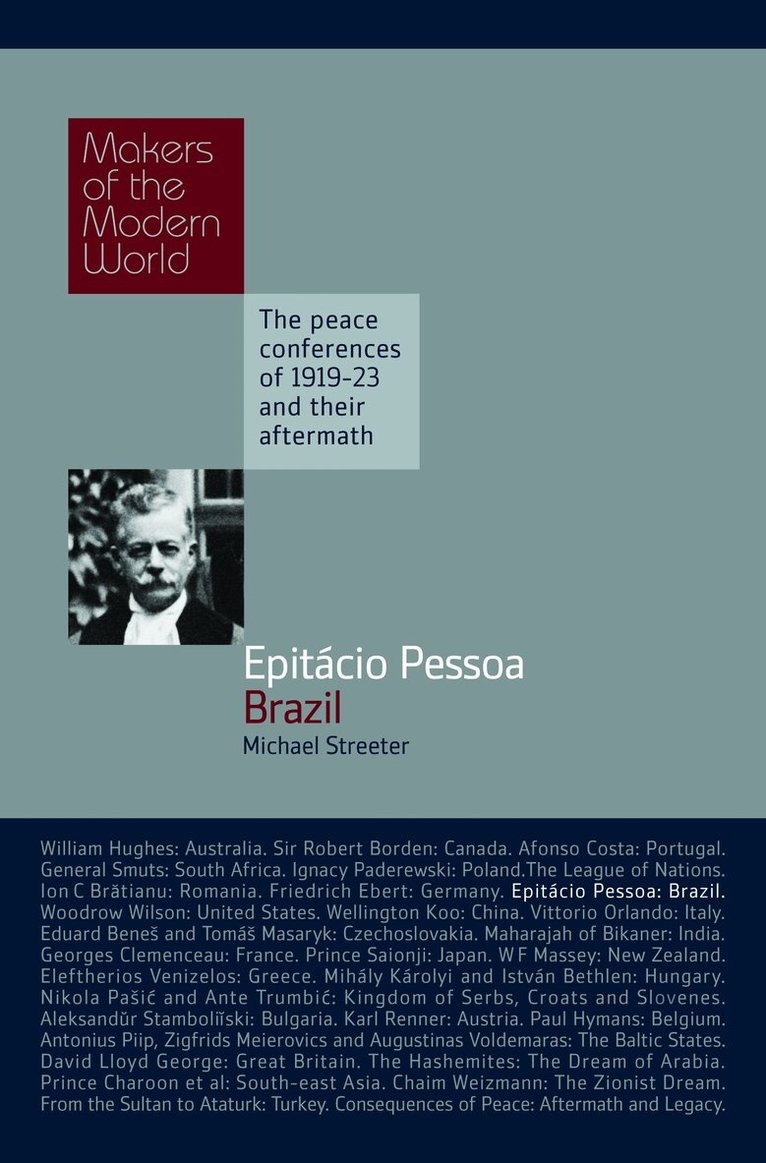
      • Michael Streeter - Epitacio Pessoa: Brazil, Inbunden. Tillgänglighet: Tillfälligt slut

        Epitacio Pessoa: Brazil

        The Peace Conferences of 1919-23 and Their Aftermath

        AvMichael Streeter

        Inbunden, Engelska, 2010

        142 kr

        Tillfälligt slut

        Epitacio Pessoa (1865-1942). Brazil was one of the emerging world powers to be invited to the Paris Peace Conference in 1919. Having jettisoned her empire just thirty years before, the Portuguese-speaking nation was showed signs of becoming one of the financial powerhouses not just of Latin America, but of the world. In Paris, the country's delegation was led by Epitacio Pessoa, a brilliant lawyer who negotiated a deal to rescue Brazilian coffee from the German ports where it had languished since the middle of the war. He also helped win a place at the top table for Brazil in the new League of Nations. Pessoa was then rewarded by being elected president of Brazil even though he was in Paris at the time. Yet even as Brazil enjoyed its moment of triumph on the international stage, the country's political system was starting to unravel. Pessoa's presidency ended in failure in 1922, its modest achievements overshadowed by bitter army revolts. This, then, is the story of Epitacio Pessoa, the Treaty of Versailles and the rise and fall of Brazil's tumultuous First Republic.
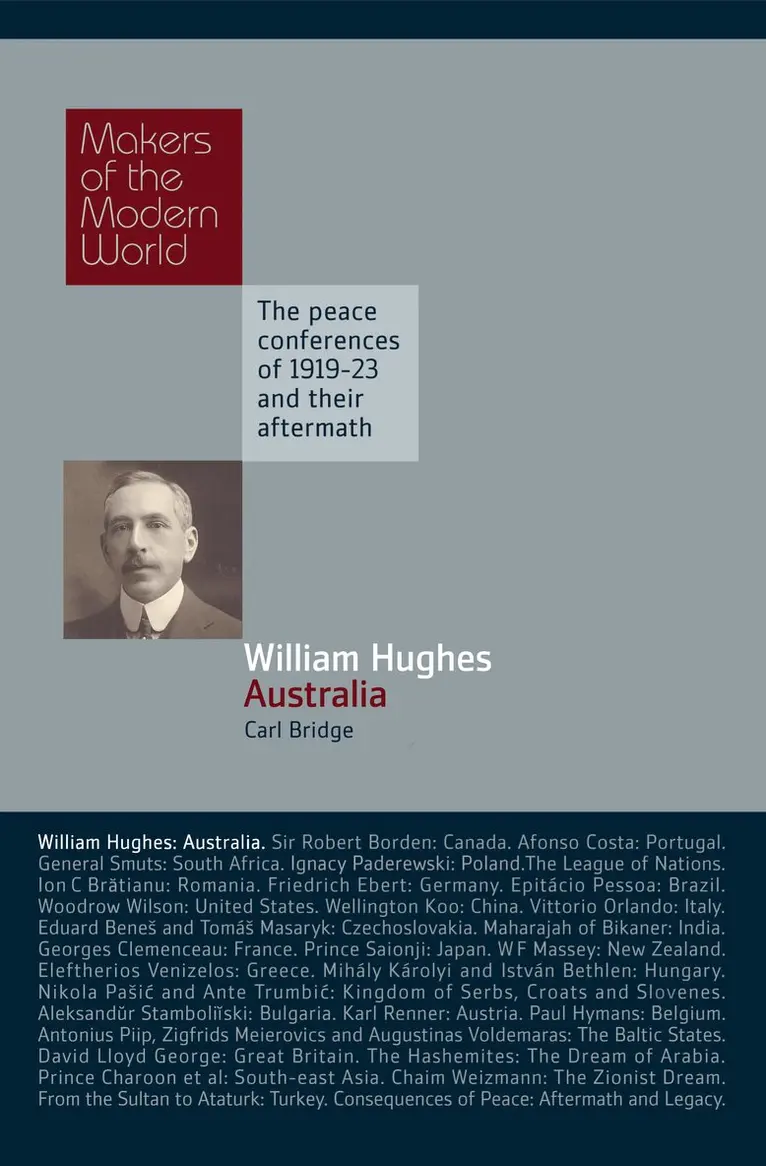
      • Carl Bridge - William Hughes: Australia, Inbunden. Tillgänglighet: Tillfälligt slut

        William Hughes: Australia

        The Peace Conferences of 1919-23 and Their Aftermath

        AvCarl Bridge

        Inbunden, Engelska, 2011, 15+ år

        147 kr

        Tillfälligt slut

        The First World War marked the emergence of the Dominions on the world stage as independent nations, none more so than Australia. The country's sacrifice at Gallipoli in 1915, and the splendid combat record of Australian troops on the Western Front not only created a national awakening at home, but also put Great Britain in their debt, ensuring them greater influence at the Peace Conferences. Australia was represented at Versailles by the Prime Minister, the colourful Billy Hughes, whom Woodrow Wilson called a pestiferous varmint' after their repeated clashes over Australia's claims to the Pacific Islands its troops had taken from Germany during the War. Hughes was also the most vociferous (though by no means at all the only) opponent of the racial equality clause put forward by Japan. Indeed, it was fear of Japanese expansion that drove Australia's territorial demands in the Pacific.
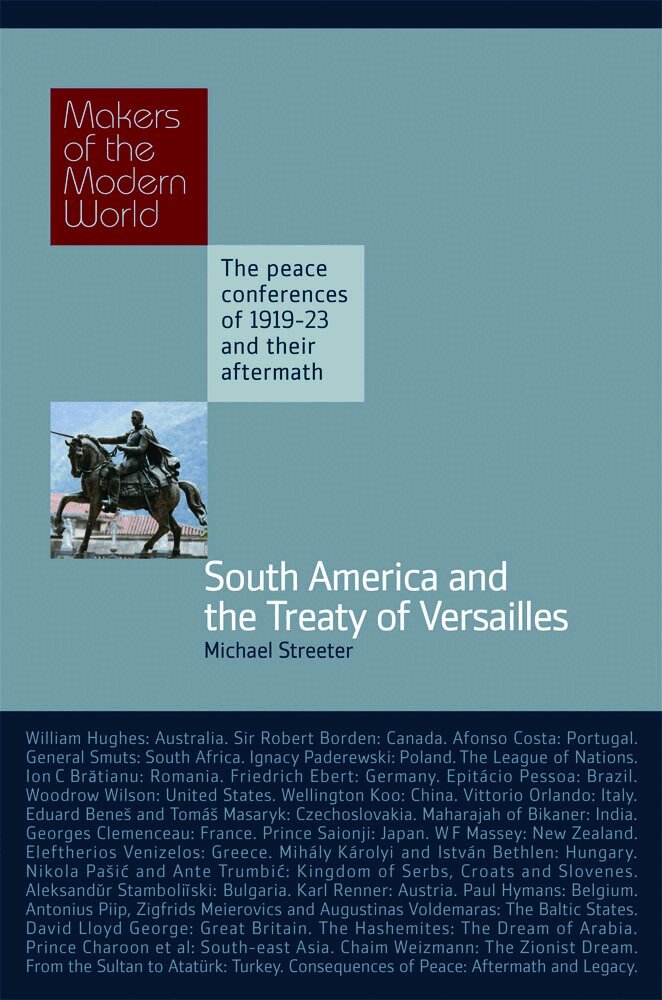
      • Michael Streeter - South America and the Treaty of Versailles, Inbunden. Tillgänglighet: Tillfälligt slut

        South America and the Treaty of Versailles

        The Peace Conferences of 1919-23 and Their Aftermath

        AvMichael Streeter

        Inbunden, Engelska, 2011, 15+ år

        140 kr

        Tillfälligt slut

        While Portuguese-speaking Brazil declared war on Germany, in the First World War, the rest of South America held back. In the end no other South American nation joined the fighting. But four - Bolivia, Equador, Peru and Uruguay - did break off diplomatic relations with Germany in 1917, in sympathy with US policy and with the Allies in Europe. Their reward was a place at the Paris Peace Conference table and for the first time a chance to play a role on the world stage rather than just in their own backyard.
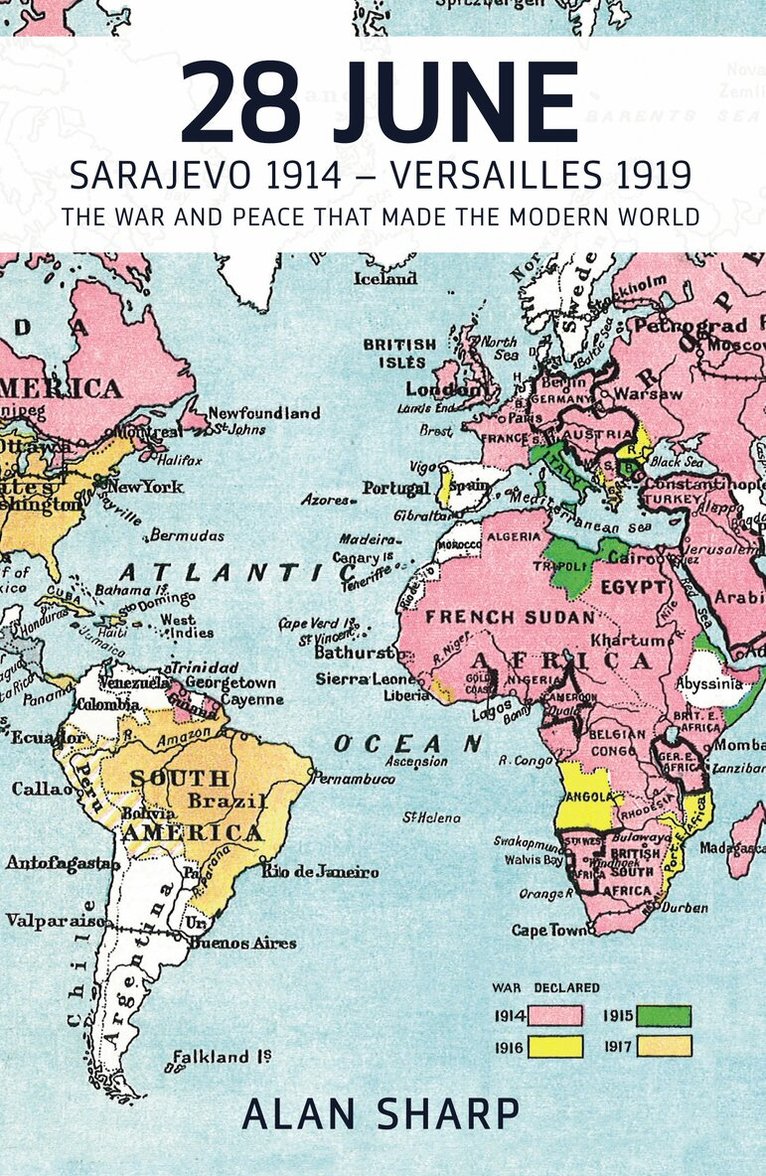
      • Alan Sharp - 28 June, Inbunden. Tillgänglighet: Tillfälligt slut

        28 June

        Sarajevo 1914 - Versailles 1919: The War and Peace That Made the Modern World

        AvAlan Sharp

        Inbunden, Engelska, 2014

        334 kr

        Tillfälligt slut

        On 28 June 1914, Archduke Franz Ferdinand of Austria was assassinated in Sarajevo. The assassin’s bullets proved fatal not only to the heir to the Austro-Hungarian throne (and, accidentally, to his wife, Sophie) but ultimately to the peace of Europe and to four great multi-national, multi-ethnic, multi-lingual empires that had dominated Eastern and Central Europe for centuries. At the end of the war, whose length and ferocity stunned its participants, subject populations across the globe, encouraged (not always intentionally) by the inspirational rhetoric of the American president, Woodrow Wilson, sought self-determination and statehood. Not all were successful but those that were transformed the maps of Europe and the world. Taken in conjunction with the peacemakers’ ambitious attempt to transform the conduct of international relations with the founding of the League of Nations, the Paris peace settlements suggested nothing less than a New World Order, though hardly an uncontested one. Vladimir Lenin’s bolshevism was the first of several revolutionary ideologies that would pose a serious threat to the new status quo.Following on from Haus’s landmark 32-volume Makers of the Modern World series, this unique volume for the first time studies participation in the war from a truly global perspective. Its collection of 28 essays seeks to explain how each of the countries that signed the first of five Parisian peace treaties at Versailles on 28 June 1919 – exactly five years after that fateful day in Sarajevo – came to be there, or, the case of Russia and China, why they were not. Some, like the Kingdom of Hejaz, had never been a signatory to a treaty before whilst Poland had seen its nationals fight for three different, opposing armies. Finally it offers an overview of the peace settlements and the post-war world.