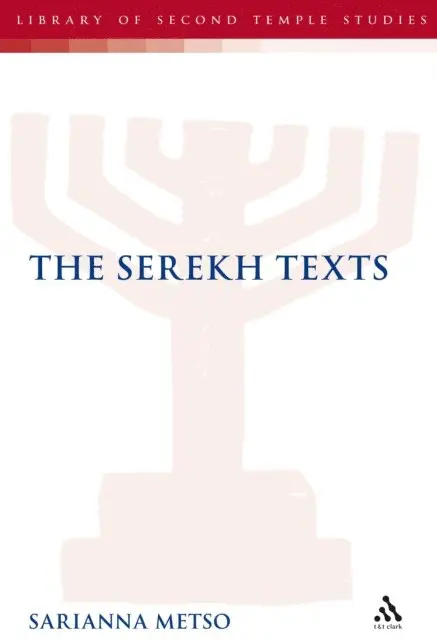
The Serekh Texts discusses the central rule documents produced by a pious Jewish community of the Essenes that lived at Qumran by the Dead Sea at the turn of the era. The texts describe the life of a highly ascetic group that had rejected the hellenistic Jewish culture and had withdrawn into the desert to live a life of perfect obedience to the Torah. Sarianna Metso introduces the twelve manuscripts of the Community Rule found in Qumran Caves 1, 4 and 5 in terms of their content, textual history, literary function, and significance for the study of ancient Judaism and early Christianity. The writings of the community open a fascinating window onto the religious life in Palestine at the time of the emergence of early Christianity and rabbinic Judaism. There are few other contemporary Jewish sources in which the life and religious practices of a Jewish group are so vividly and authentically illustrated. The Serekh Texts provides an accessible summary of current scholarly discussion on the central topics related to the Community Rule, such as the community''s identity and history, and offers comprehensive bibliographies for further study.
The Serekh Texts discusses the central rule documents produced by a pious Jewish community of the Essenes that lived at Qumran by the Dead Sea at the turn of the era. The texts describe the life of a highly ascetic group that had rejected the hellenistic Jewish culture and had withdrawn into the desert to live a life of perfect obedience to the Torah. Sarianna Metso introduces the twelve manuscripts of the Community Rule found in Qumran Caves 1, 4 and 5 in terms of their content, textual history, literary function, and significance for the study of ancient Judaism and early Christianity. The writings of the community open a fascinating window onto the religious life in Palestine at the time of the emergence of early Christianity and rabbinic Judaism. There are few other contemporary Jewish sources in which the life and religious practices of a Jewish group are so vividly and authentically illustrated. The Serekh Texts provides an accessible summary of current scholarly discussion on the central topics related to the Community Rule, such as the community''s identity and history, and offers comprehensive bibliographies for further study.
The Serekh Texts discusses the central rule documents produced by a pious Jewish community of the Essenes that lived at Qumran by the Dead Sea at the turn of the era. The texts describe the life of a highly ascetic group that had rejected the hellenistic Jewish culture and had withdrawn into the desert to live a life of perfect obedience to the Torah. Sarianna Metso introduces the twelve manuscripts of the Community Rule found in Qumran Caves 1, 4 and 5 in terms of their content, textual history, literary function, and significance for the study of ancient Judaism and early Christianity. The writings of the community open a fascinating window onto the religious life in Palestine at the time of the emergence of early Christianity and rabbinic Judaism. There are few other contemporary Jewish sources in which the life and religious practices of a Jewish group are so vividly and authentically illustrated. The Serekh Texts provides an accessible summary of current scholarly discussion on the central topics related to the Community Rule, such as the community''s identity and history, and offers comprehensive bibliographies for further study.