1 523 kr
Skickas inom 10-15 vardagar
1 523 kr
Skickas inom 10-15 vardagar
1 253 kr
Skickas inom 10-15 vardagar
3 161 kr
Skickas inom 10-15 vardagar
1 232 kr
Skickas inom 10-15 vardagar
2 136 kr
Skickas inom 10-15 vardagar
This book provides an advanced overview of data acquisition, processing, and analysis using UAVs, LiDAR, GNSS, and 3D/4D GIS. It integrates AI, Blockchain, IoT, robotics, and cloud-native platforms into geospatial workflows for automation, predictive modeling, and real-time decision support. This book covers machine learning for spatial classification, blockchain for data integrity, and IoT-based sensor networks for scalable geospatial analytics.
Emphasis is placed on open-source tools such as QGIS and PostGIS for cost-effective innovation, alongside advanced methods for infrastructure, mobility, and urban lifecycle management. Explains advanced data acquisition with UAVs, LiDAR, and GNSS for precise 3D/4D mapping, AI and ML applications for automated geospatial classification and predictive modeling. Discusses blockchain-enabled security, transparency, and decentralized geospatial transactions and IoT-driven real-time data collection and cloud-based spatial analytics. Includes integration of digital twins and BIM for infrastructure and urban management. Coverage of open-source platforms (QGIS, PostGIS, and OpenStreetMap) for scalable solutions. Includes case studies and system diagrams demonstrating smart city and industrial applications.This book is for scholars, professionals, GIS analysts, urban planners, data scientists, engineers, researchers, and policymakers seeking expertise in AI-enabled geospatial intelligence and automation.
1 523 kr
Skickas inom 10-15 vardagar
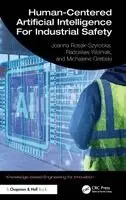
This book examines the transformative role of artificial intelligence (AI) in industrial safety, focusing on the shift from traditional reactive systems to proactive, predictive safety architectures in smart factories.
1 893 kr
Skickas inom 10-15 vardagar
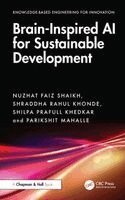
This book explores how biologically inspired artificial intelligence, rooted in neuroscience and cognitive science, can drive sustainable innovation aligned with the United Nations Sustainable Development Goals (UN SDGs). It introduces spiking neural networks, neuromorphic hardware, and cognitive architectures, showcasing their applications in healthcare, education, industry, smart cities, and climate systems. It emphasises energy-efficient, ethical, and socially responsible AI design, offering a transformative framework for creating sustainable technological ecosystems. With global case studies, SDG mapping, and a forward-looking Brain-Inspired AI 2030 roadmap, this interdisciplinary work bridges technical rigour with societal vision.
Comprehensive coverage of Brain-Inspired AI, including spiking neural networks and neuromorphic computing. Applications in healthcare, education, smart cities, and climate systems aligned with UN SDGs. Ethical and sustainable AI design principles, addressing energy efficiency, bias, and transparency. Forward-looking Brain-Inspired AI 2030 roadmap for interdisciplinary collaboration and policy integration. Pedagogical tools such as key takeaways, illustrative figures, and SDG mapping for clarity and practical relevance.The book is for researchers, postgraduate students, policymakers, and industry professionals in AI, cognitive science, sustainability, and governance.
1 509 kr
Kommande
This book examines the role of translational symmetry in shaping and stabilising quantum entanglement across spatial and temporal domains. Building on foundational concepts from the EPR paradox and Bell’s theorem, it introduces a nodal–antinodal framework to explain coherence preservation and entanglement amplification. The text integrates analytical models, numerical simulations, and applications in photonic crystals, nanocavities, and time crystals, demonstrating how symmetry-based approaches enhance noise resistance, quantum communication, and light–matter interaction control, while extending these principles to quantum-inspired computational and data analysis frameworks. Explains the theoretical foundations linking translational symmetry with the dynamics and stability of quantum entanglement. Presents a nodal–antinodal framework describing mechanisms for coherence preservation and entanglement amplification. Examines temporal symmetry and its role in time crystals for sustaining entangled quantum states. Demonstrates symmetry-based strategies for noise-resistant entanglement filtering in quantum communication systems. Analyzes applications in photonic crystal fibres, moiré systems, and nanocavities for controlled light–matter interactions This book is for researchers, graduate students, and professionals in quantum physics, photonics, nanotechnology, computational science, and interdisciplinary fields involving quantum technologies and data-driven systems.