If, for most of the past in most parts of the world, most women have been 'hidden from history', black women in South Africa have been doubly hidden, both as women and because they are black. Three women - two of them black - meet in the pages of this title. Lily Moya was a Transkei schoolgirl growing up in lonely and alien surroundings. She sought help with her education from Mabel Palmer, an elderly white academic, then Organiser of the Natal University College's Non-European section. The third was Subusisiwe Makhanya, a remarkable Zulu woman and a pioneer social worker. Their letters illuminate more of the South African condition than the majority of history textbooks; the generosities, yet humiliations, of white liberalism; the nature of mission education; the socialisation of black girls; and the dilemmas they confront. They also reveal the separate worlds which we all inhabit, but which are made more frightening and more separate by the divisions of age, ethnicity and race.
Thomas Pringle's intellectual and emotional quest for progressive conduct and action is his great contribution to South African literature, and what makes his work potent and relevant today. When his Poems Illustrative of South Africa was published in 1834 the following comment appeared in the Cape of Good Hope Literary Gazette: 'Pringle's new work is causing a shaking among the dry bones of the Colony. It has been aptly termed a bunch of whip-cord; it must certainly prove lacerating to much of the proud flesh around us. This book includes all the poems in Poems Illustrative of South Africa - out of print for some years - as well as Pringle's own Notes to the Poems. In an appendix are extracts from his Narrative of a Residence in South Africa and other supplementary texts illustrating his earlier Scottish poetry and his later writings. In a new Introduction the editors - both well known academics and teachers of South African literature - outline the poet's life, consider the influences on his writing and demonstrate the relevance of his work in twentieth century South Africa.For the issues he wrestled with are still alive today - racial conflict, political oppression, censorship and the needs for freedom of expression.' Pringle was born in 1789 and died in 1834, the year of the Emancipation of the Slaves - the cause to which he had devoted the last years of his life. It is fitting that the bicentenary of his birth should be marked by an African edition of his African poems.
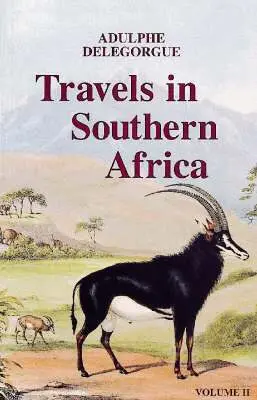
To South Africa, in 1838, came Delegorgue, a young French naturalist with a passion for information, a keen eye and a ready wit...and a mighty elephant gun. This first volume describes his brief journeying in the Cape Colony, and the early part of his several years of hunting and specimen-collecting in Natal and Zululand. No other tale of hunting and adventure, of Boers and Zulus, of travels in nineteenth century southern Africa, offers the reader such a rich blend of history, biology, Gallic charm - and vigorous entertainment.
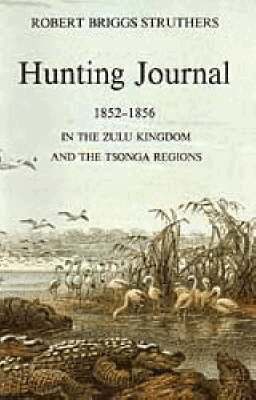
The ivory trade today is condemned worldwide. But in the nineteenth century hunting was regarded as manly and heroic and no one was ashamed that it contributed significantly to the economy of the Colony of Natal. RB Struthers was a typical hunter-trader, who from 1852-1856 covered Zululand and Tsongaland, shooting and bartering. His detailed journal is published here for the first time.
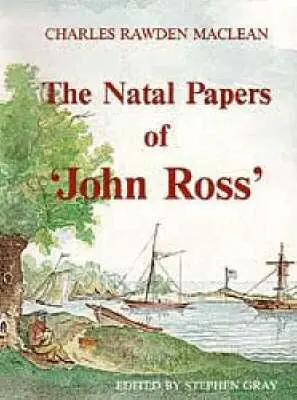
This collection of papers was written by the man who is known to history as the boy 'John Ross'. By undertaking the hazardous journey to Delagoa Bay in 1827, to bring back medicines and ship-building equipment, he acquired legendary status as the saviour of the tiny community at Port Natal. Born in Scotland in 1815, his real name was Charles Rawden Maclean. He was a ship's apprentice when shipwrecked off Port natal, and went on to become a sea-captain in the West Indian sugar trade. He became a noted spokesman for human rights and was committed to the emancipation of African slaves.
Gives a first-hand description of the conflict between the Boers and the British, at Port Natal, in 1842. After this, the author travels northwards to the Limpopo; and writes of birds and big game, and of peoples and customs.