835 kr
Skickas inom 3-6 vardagar
835 kr
Skickas inom 3-6 vardagar
713 kr
Skickas inom 3-6 vardagar
1 030 kr
Skickas inom 3-6 vardagar
3 146 kr
Skickas inom 3-6 vardagar
1 261 kr
Skickas inom 7-10 vardagar
860 kr
Skickas inom 3-6 vardagar
760 kr
Skickas inom 3-6 vardagar
658 kr
Läs direkt efter köp
Scientists and policymakers are beginning to understand in ever-increasing detail that environmental problems cannot be understood solely through the biophysical sciences. Environmental issues are fundamentally human issues and must be set in the context of social, political, cultural, and economic knowledge. The need both to understand how human beings in the past responded to climatic and other environmental changes and to synthesize the implications of these historical patterns for present-day sustainability spurred a conference of the world''s leading scholars on the topic. The Way the Wind Blows is the rich result of that conference.Articles discuss the dynamics of climate, human perceptions of and responses to the environment, and issues of sustainability and resiliency. These themes are illustrated through discussions of human societies around the world and throughout history.
1 315 kr
Läs direkt efter köp
This collection of studies by anthropologists, botanists, ecologists, and biologists is an important contribution to the emerging field of historical ecology. The book combines cutting-edge research with new perspectives to emphasize the close relationship between humans and their natural environment.Contributors examine how alterations in the natural world mirror human cultures, societies, and languages. Treating the landscape like a text, these researchers decipher patterns and meaning in the Ecuadorian Andes, Amazonia, the desert coast of Peru, and other regions in the neotropics. They show how local peoples have changed the landscape over time to fit their needs by managing and modifying species diversity, enhancing landscape heterogeneity, and controlling ecological disturbance. In turn, the environment itself becomes a form of architecture rich with historical and archaeological significance. Time and Complexity in Historical Ecology explores thousands of years of ecological history while also addressing important contemporary issues, such as biodiversity and genetic variation and change. Engagingly written and expertly researched, this book introduces and exemplifies a unique method for better understanding the link between humans and the biosphere.
596 kr
Läs direkt efter köp
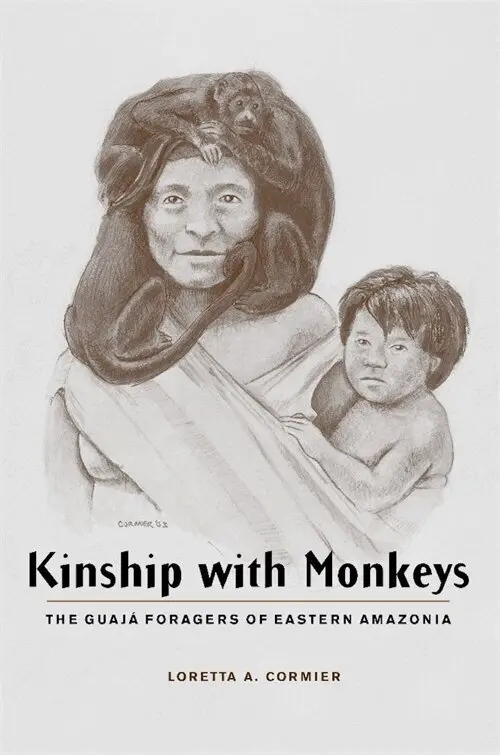
Intrigued by a slide showing a woman breast-feeding a monkey, anthropologist Loretta A. Cormier spent fifteen months living among the Guajá, a foraging people in a remote area of Brazil. The result is this ethnographic study of the extraordinary relationship between the Guajá Indians and monkeys. While monkeys are a key food source for the Guajá, certain pet monkeys have a quasi-human status. Some infant monkeys are adopted and nurtured as human children while others are consumed in accordance with the "symbolic cannibalism" of their belief system.The apparent contradiction of this predator/protector relationship became the central theme of Cormier''s research: How can monkeys be both eaten as food and nurtured as children? Her research reveals that monkeys play a vital role in Guajá society, ecology, economy, and religion. In Guajá animistic beliefs, all forms of plant and animal life—especially monkeys—have souls and are woven into a comprehensive kinship system. Therefore, all consumption can be considered a form of cannibalism.Cormier sets the stage for this enlightening study by examining the history of the Guajá and the ecological relationships between human and nonhuman primates in Amazonia. She also addresses the importance of monkeys in Guajá ecological adaptation as well as their role in the Guajá kinship system. Cormier then looks at animism and life classification among the Guajá and the role of pets, which provide a context for understanding "symbolic cannibalism" and how the Guajá relate to various forms of life in their natural and supernatural world. The book concludes with a discussion of the implications of ethnoprimatology beyond Amazonia, including Western perceptions of primates.
801 kr
Tillfälligt slut