827 kr
Economic Development in Africa Report – serie
Visar alla böcker i serien Economic Development in Africa Report. Handla med fri frakt och snabb leverans.
9 produkter
9 produkter
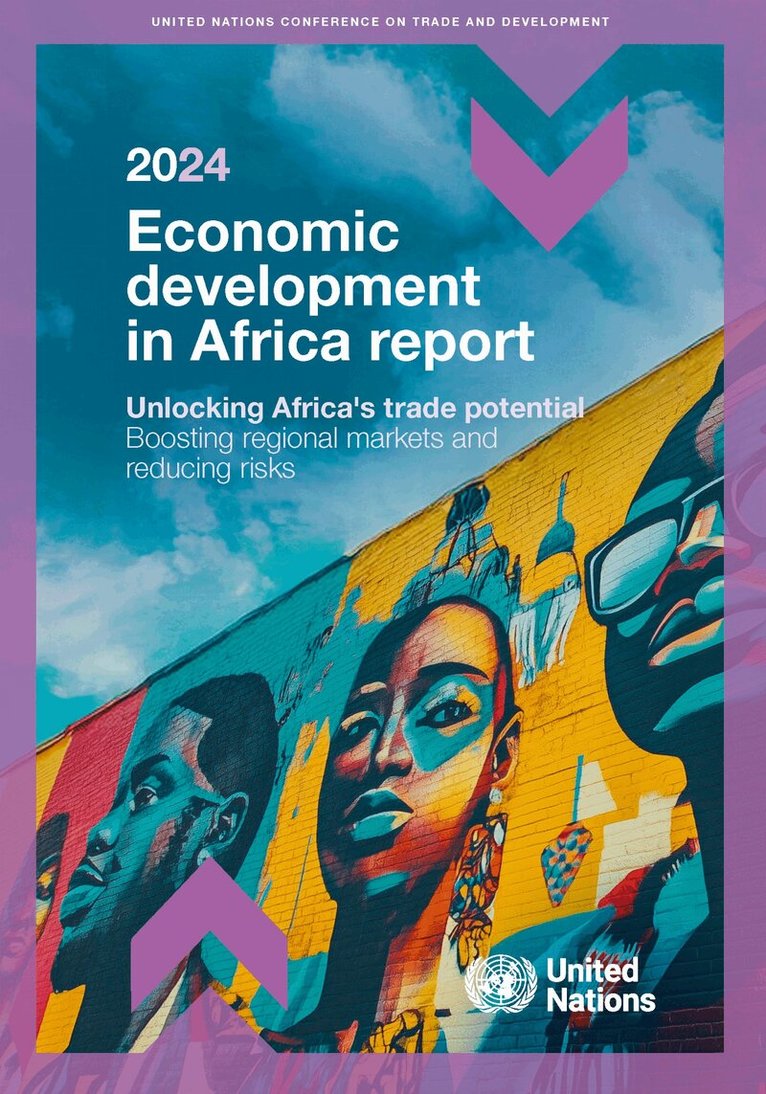
- Häftad, Engelska, 2025The Economic Development in Africa Report 2024 examines optimal strategies for countries in Africa and the private sector to mitigate trade risks associated with the uncertainties created by this global polycrisis. The report focuses on the optimization of regional market benefits to strengthen market resilience to specific shocks and vulnerabilities and explores the diverse trade risks in Africa stemming from a host of economic, political, environmental, energy, technological and logistical challenges. The report underscores the importance of robust risk management, regional cooperation and strategic investments in infrastructure and technology. It also highlights best practices across the continent, showing how countries and businesses have effectively addressed these challenges to unlock new opportunities. By providing a detailed analysis of the trade environment, potential risks and de-risking strategies, this report aims to equip stakeholders with the insights needed for informed decision-making. Ultimately, it seeks to foster sustainable economic growth and shared prosperity in Africa by leveraging the continent’s unique strengths to maximize regional market benefits.
- Häftad, Engelska, 2014
359 kr
Skickas inom 7-10 vardagar
The Economic Development in Africa Report 2014 addresses the current state of development in Africa. Over the past decade, African countries have had relatively good economic growth performance. But average investment rates on the continent remain low relative to what is considered necessary to achieve national development goals and relative to the average rate for developing countries. These facts suggest that Africa's recent growth may be fragile and that it is unlikely to be sustained in the medium to long term if current trends continue. The key question, then, is how can African Governments catalyse investment for sustained and transformative growth? This report addresses that question - Häftad, Engelska, 2016
533 kr
Skickas inom 3-6 vardagar
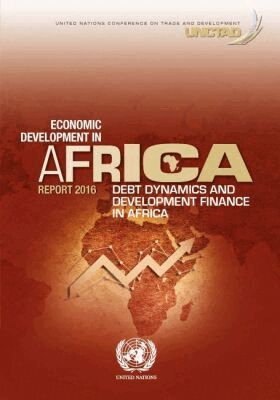
Africa has major development aspirations in the broader context of a global and continental economic development agenda. This calls for substantial financial resources at a time when the global development finance landscape is changing, from a model centred on official development assistance and the coverage of remaining financing needs through external debt, to a framework with greater emphasis on the mobilization of domestic resources. The Economic Development in Africa Report 2016 examines some of the key policy issues that underlie Africa's domestic and external debt, and provides policy guidance on the delicate balance required between financing development alternatives and overall debt sustainability. This report analyses Africa's international debt exposure and how domestic debt is increasingly playing a role in some African countries as a development finance option, and also examines complementary financing options and how they relate to debt. - Häftad, Engelska, 2019
576 kr
Skickas inom 7-10 vardagar
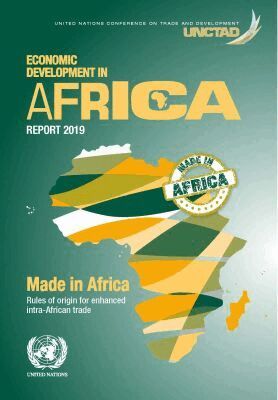
The advent of the African Continental Free Trade Area (AfCFTA) represents a historic opportunity for the continent to boost intra-African trade and accelerate structural transformation. However, this relies on a critical policy instrument: the effective implementation of preferential trade liberalization among the AfCFTA members. Whether in practice African firms will utilize tariff preferences under the AfCFTA depends on a critical factor: rules of origin (RoO) and the net benefits of complying with them. The Economic Development in Africa Report 2019 argues for the adoption of flexible RoO and a strengthening of institutional capacities to ensure an impartial, transparent, predictable, consistent and neutral implementation of agreed RoO. - Häftad, Engelska, 2021
593 kr
Skickas inom 7-10 vardagar
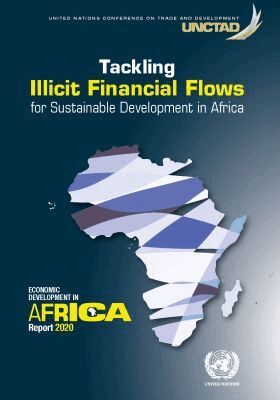
In the aftermath of COVID-19 (coronavirus), African countries will need to intensify their resource mobilization efforts to achieve the 2030 Sustainable Development Agenda. The Economic Development in Africa Report 2020 adopts a multi-disciplinary methodology to tackle the relationship between illicit financial flows (IFFs) and the economic, social and environmental dimensions of sustainable development in Africa. Its inclusive approach integrates a gender lens and gives voice to multiple vantage points, from civil society to firms doing business in Africa. Building on established measures of IFFs, the Report provides new insights on country estimates of export misinvoicing on the continent and highlights specific characteristics of mineral commodities. It also underlines some of the motivations and root causes of IFFs. - Häftad, Engelska, 2013
329 kr
Tillfälligt slut
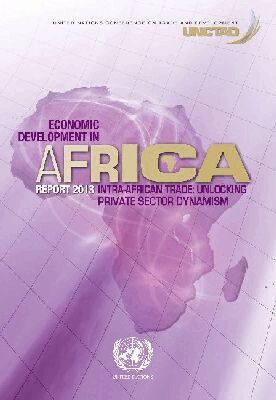
This report focuses on how to strengthen the private sector to boost intra-African trade. It argues that for African countries to reap developmental gains from intra-African trade and regional integration, they will need to place the building of productive capacities and domestic entrepreneurship at the heart of the policy agenda for boosting intra-regional trade. It also examines the challenges for regional trade posed by among others the non-implementation of regional trade agreements and provides new insights on how to enhance implementation of existing agreements. Furthermore, it highlights distinctive features of Africa’s enterprise structure that have to be addressed to promote regional trade and discusses how to boost intra-African trade in the context of developmental regionalism. - Häftad, Engelska, 2015
359 kr
Tillfälligt slut
Highlights the catalytic role that services can play in Africa, and the importance of understanding the static and dynamic effects the development of services may have on employment, trade and ultimately growth. The report examines areas where there appears to be a policy disconnect between existing national, regional and global policies that pertain to services trade and proposes recommendations as to how African countries may bridge this divide so that services trade can be better harnessed to address inclusive growth and economic development priorities in Africa. - Häftad, Engelska, 2017
476 kr
Tillfälligt slut
Tourism - in terms of its contribution to GDP, employment and trade - is a critical sector for many African economies, and its growth is increasingly driven by tourists originating from the continent itself. However, most African countries still face significant challenges and constraints in exploiting the potential of tourism services in trade and economic development. The Economic Development in Africa Report 2017, subtitled Tourism for Transformative and Inclusive Growth examines the role that tourism can play in Africa's development process. It aims to identify key barriers and impediments to unlocking the potential of tourism in Africa to help structurally transform the continent's economy and provides policy recommendations on how these barriers and impediments could be addressed. It argues that tourism can be an engine for inclusive growth and that it can complement development strategies aimed at fostering economic diversification and structural transformation within an appropriate policy context. - Häftad, Engelska, 2018
476 kr
Tillfälligt slut
The EDAR 2018 titled Migration and Structural Transformation in Africa highlights how intra-African migration is of relevance to the agenda for regional and continental integration and shows that there are still many knowledge gaps, including on the relationship between migration, economic and trade policies. The report seeks to remedy these gaps by drawing on a combination of quantitative and qualitative methods, global datasets, household surveys and sectoral level data to derive stylized facts about patterns of intra-African migration and channels through which they affect socio-economic development outcomes in Africa. This report innovatively adopts a human-centered narrative in identifying opportunities for absorption of extra labour in different sectors across the continent. The findings offer new insights for African governments as well as for migration stakeholders outside the continent.