469 kr
Skickas inom 11-20 vardagar
469 kr
Skickas inom 11-20 vardagar
593 kr
Skickas inom 7-10 vardagar
689 kr
Skickas inom 7-10 vardagar
593 kr
Skickas inom 7-10 vardagar
593 kr
Skickas inom 7-10 vardagar
1 295 kr
Skickas inom 7-10 vardagar
1 295 kr
Skickas inom 7-10 vardagar
1 258 kr
Skickas inom 7-10 vardagar
1 295 kr
Skickas inom 7-10 vardagar
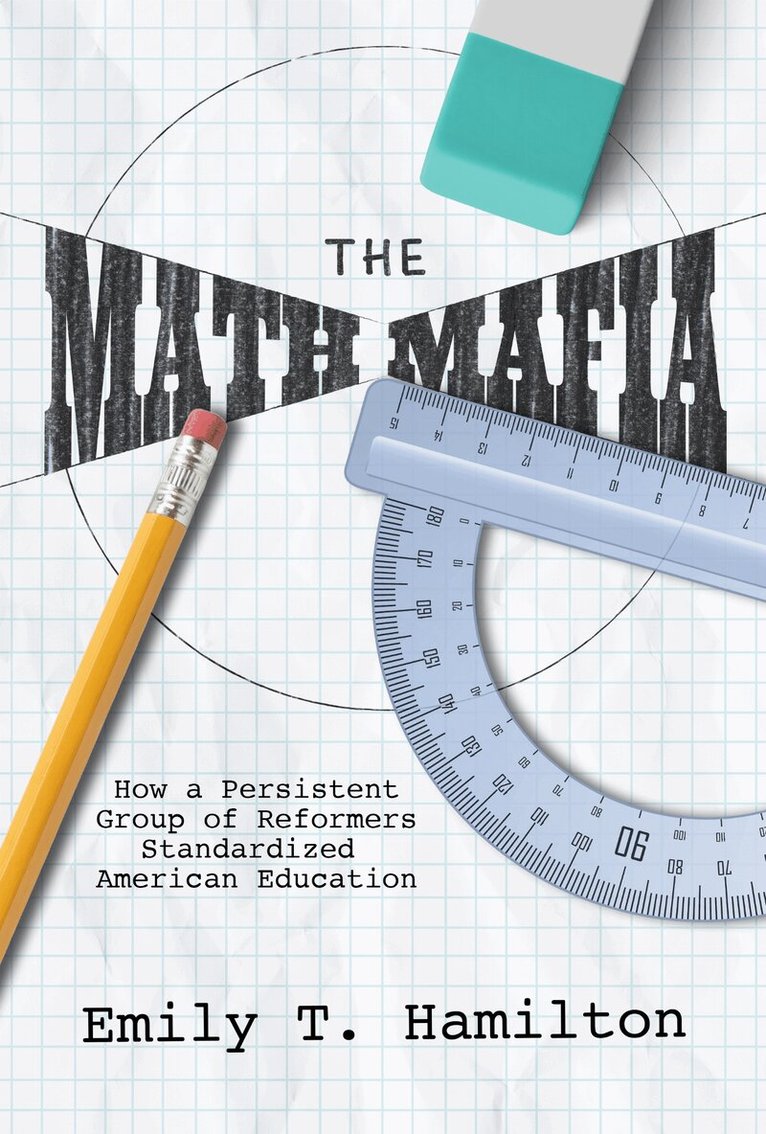
How Cold War urgency, academic ambition, and federal power converged to make math the cornerstone of American education policy.
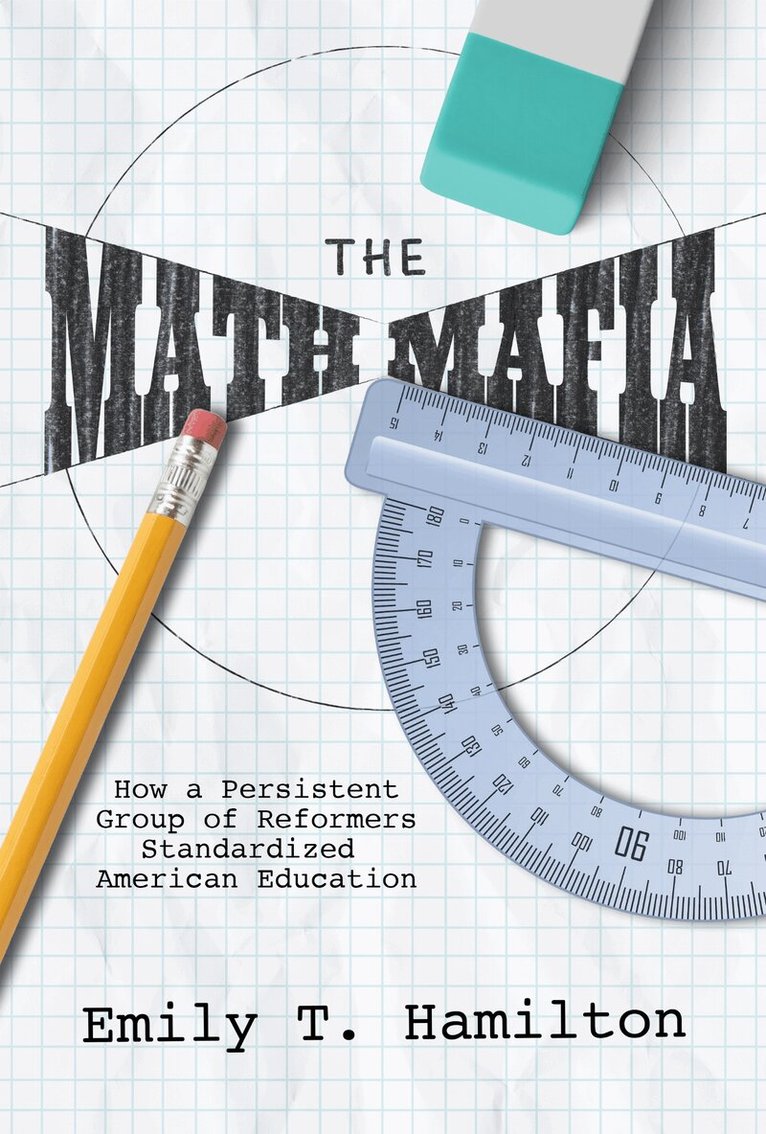
The Math Mafia by Emily T. Hamilton is a historical account of mathematics education reform in twentieth-century America and how that movement played a role in shaping the broader contours of national education policy. Hamilton contends that a cohesive and well-organized community of advocates was instrumental in the rise of standardized testing and curriculum reforms, as well as federal involvement in classrooms, especially during the Cold War. By positioning mathematics as central to national strength and security, these reformers established math education as a key area of federal focus.
The "mafia" at the center of Hamilton's story includes mathematicians, educators, and researchers from universities, as well as members of government-funded organizations such as the National Science Foundation and various educational psychology circles. Prominent figures such as Edward Begle, who led the School Mathematics Study Group during the "new math" movement, played key roles. Other influential participants include federal education officials, advocates from professional organizations such as the National Council of Teachers of Mathematics, and cognitive scientists, who contributed both research and theoretical frameworks that informed curriculum design and assessment methods.
The Math Mafia offers historians, educators, policymakers, and other interested readers a compelling perspective on the legacy of the math education reforms on federal education policy in the United States and is a welcome contribution to ongoing discourse around "teaching toward the test," educational equity, school performance, and other hot-button issues in US education today.
1 291 kr
Kommande
Explores how a US-led natural history survey of Puerto Rico served American Empire while yet catalyzing Boricua cultural nationalism
In Botanical Monroe Doctrine and American Empire, Darryl E. Brock interrogates the history, trajectory, and influence of an ambitious initiative to conduct a "physical and natural history survey of Porto [Puerto] Rico." As founder of The New York Botanical Garden, Nathaniel Lord Britton's formulation of a botanical Monroe Doctrine, reinforced by the 1912 survey proposal, served to check British and European botanical interests in the Americas. That is, American scientists would name American species according to American codes. Evolutionary theory would inform these taxonomic imperatives. Yet, while initially aligned with the "civilizing" mission, Britton's Scientific Survey of Puerto Rico would ultimately contribute to insular modernization as well as technocratic professionalization. The survey's foundational Taíno archaeological and jíbaro folkloric contributions would make possible today's Caguana Indigenous Ceremonial Park and indirectly advance Boricua cultural nationalism. Moreover, the overlap of scientific production with political economy affected outcomes as diverse as bilingual education in Puerto Rico and management of President Franklin D. Roosevelt's New Deal program on the island.
The New York Academy of Sciences sponsored the Scientific Survey of Puerto Rico with the final report issued in 1970. The New York Botanical Garden conducted the research in concert with the American Museum of Natural History and the Yale Peabody Museum. Over the course of the project, Puerto Rican intellectuals and scientists endorsed and even contributed to the survey. These included Cornell-trained mycologist Carlos Chardón who later served as the University of Puerto Rico's chancellor. Beyond natural history, the survey's geological commitment led to its leadership advancing insular economic development via the governor's Committee on Mineral Resources. Operations soon expanded to include the Virgin Islands and comprised nearly two dozen field expeditions. Botany alone achieved collection of ten thousand plant specimens with thirty-eight new species discovered. The nineteen published survey volumes boast some of the most complete multidisciplinary scientific descriptions of any tropical area. Brock's groundbreaking contribution is a must-read for those interested in the history of science (including forestry and geology), Puerto Rico, and US imperialism.
402 kr
Skickas inom 7-10 vardagar
402 kr
Skickas inom 7-10 vardagar
391 kr
Skickas inom 7-10 vardagar
344 kr
Skickas inom 7-10 vardagar
367 kr
Skickas
How Cold War urgency, academic ambition, and federal power converged to make math the cornerstone of American education policy.
The Math Mafia by Emily T. Hamilton is a historical account of mathematics education reform in twentieth-century America and how that movement played a role in shaping the broader contours of national education policy. Hamilton contends that a cohesive and well-organized community of advocates was instrumental in the rise of standardized testing and curriculum reforms, as well as federal involvement in classrooms, especially during the Cold War. By positioning mathematics as central to national strength and security, these reformers established math education as a key area of federal focus.
The "mafia" at the center of Hamilton's story includes mathematicians, educators, and researchers from universities, as well as members of government-funded organizations such as the National Science Foundation and various educational psychology circles. Prominent figures such as Edward Begle, who led the School Mathematics Study Group during the "new math" movement, played key roles. Other influential participants include federal education officials, advocates from professional organizations such as the National Council of Teachers of Mathematics, and cognitive scientists, who contributed both research and theoretical frameworks that informed curriculum design and assessment methods.
The Math Mafia offers historians, educators, policymakers, and other interested readers a compelling perspective on the legacy of the math education reforms on federal education policy in the United States and is a welcome contribution to ongoing discourse around "teaching toward the test," educational equity, school performance, and other hot-button issues in US education today.
430 kr
Kommande
Explores how a US-led natural history survey of Puerto Rico served American Empire while yet catalyzing Boricua cultural nationalism
In Botanical Monroe Doctrine and American Empire, Darryl E. Brock interrogates the history, trajectory, and influence of an ambitious initiative to conduct a "physical and natural history survey of Porto [Puerto] Rico." As founder of The New York Botanical Garden, Nathaniel Lord Britton's formulation of a botanical Monroe Doctrine, reinforced by the 1912 survey proposal, served to check British and European botanical interests in the Americas. That is, American scientists would name American species according to American codes. Evolutionary theory would inform these taxonomic imperatives. Yet, while initially aligned with the "civilizing" mission, Britton's Scientific Survey of Puerto Rico would ultimately contribute to insular modernization as well as technocratic professionalization. The survey's foundational Taíno archaeological and jíbaro folkloric contributions would make possible today's Caguana Indigenous Ceremonial Park and indirectly advance Boricua cultural nationalism. Moreover, the overlap of scientific production with political economy affected outcomes as diverse as bilingual education in Puerto Rico and management of President Franklin D. Roosevelt's New Deal program on the island.
The New York Academy of Sciences sponsored the Scientific Survey of Puerto Rico with the final report issued in 1970. The New York Botanical Garden conducted the research in concert with the American Museum of Natural History and the Yale Peabody Museum. Over the course of the project, Puerto Rican intellectuals and scientists endorsed and even contributed to the survey. These included Cornell-trained mycologist Carlos Chardón who later served as the University of Puerto Rico's chancellor. Beyond natural history, the survey's geological commitment led to its leadership advancing insular economic development via the governor's Committee on Mineral Resources. Operations soon expanded to include the Virgin Islands and comprised nearly two dozen field expeditions. Botany alone achieved collection of ten thousand plant specimens with thirty-eight new species discovered. The nineteen published survey volumes boast some of the most complete multidisciplinary scientific descriptions of any tropical area. Brock's groundbreaking contribution is a must-read for those interested in the history of science (including forestry and geology), Puerto Rico, and US imperialism.
689 kr
Tillfälligt slut