861 kr
Skickas
861 kr
Skickas
623 kr
Skickas
538 kr
Skickas inom 7-10 vardagar
467 kr
Skickas inom 7-10 vardagar
588 kr
Skickas inom 7-10 vardagar
592 kr
Skickas inom 7-10 vardagar
526 kr
Skickas inom 7-10 vardagar
737 kr
Skickas inom 7-10 vardagar
588 kr
Skickas inom 7-10 vardagar
522 kr
Skickas inom 7-10 vardagar
599 kr
Skickas inom 7-10 vardagar
495 kr
Skickas
542 kr
Skickas inom 7-10 vardagar
664 kr
Skickas inom 7-10 vardagar
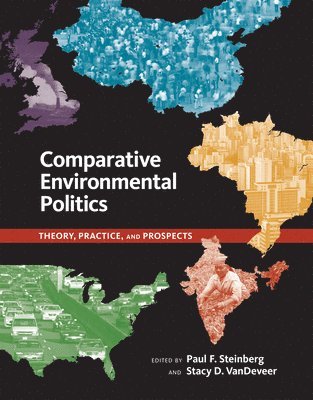
How do different societies respond politically to environmental problems around the globe? Answering this question requires systematic, cross-national comparisons of political institutions, regulatory styles, and state-society relations. The field of comparative environmental politics approaches this task by bringing the theoretical tools of comparative politics to bear on the substantive concerns of environmental policy. This book outlines a comparative environmental politics framework and applies it to concrete, real-world problems of politics and environmental management.
After a comprehensive review of the literature exploring domestic environmental politics around the world, the book provides a sample of major currents within the field, showing how environmental politics intersects with such topics as the greening of the state, the rise of social movements and green parties, European Union expansion, corporate social responsibility, federalism, political instability, management of local commons, and policymaking under democratic and authoritarian regimes. It offers fresh insights into environmental problems ranging from climate change to water scarcity and the disappearance of tropical forests, and it examines actions by state and nonstate actors at levels from the local to the continental. The book will help scholars and policymakers make sense of how environmental issues and politics are connected around the globe, and is ideal for use in upper-level undergraduateand graduate courses.
368 kr
Tillfälligt slut
172 kr
Tillfälligt slut
97 kr
Tillfälligt slut
849 kr
Tillfälligt slut
977 kr
Tillfälligt slut
137 kr
Tillfälligt slut
135 kr
Tillfälligt slut
153 kr
Tillfälligt slut
146 kr
Tillfälligt slut
179 kr
Tillfälligt slut
99 kr
Tillfälligt slut
99 kr
Tillfälligt slut
79 kr
Tillfälligt slut
331 kr
Tillfälligt slut
386 kr
Tillfälligt slut
290 kr
Tillfälligt slut
Climate change, economists generally agree, is best addressed by putting a price on the carbon content of fossil fuels—by taxing carbon, by cap-and-trade systems, or other methods. But what about the politics of carbon pricing? Do political realities render carbon pricing impracticable? In this book, Barry Rabe offers the first major political science analysis of the feasibility and sustainability of carbon pricing, drawing upon a series of real-world attempts to price carbon over the last two decades in North America, Europe, and Asia.
Rabe asks whether these policies have proven politically viable and, if adopted, whether they survive political shifts and managerial challenges over time. The entire policy life cycle is examined, from adoption through advanced implementation, on a range of pricing policies including not only carbon taxes and cap-and-trade but also such alternative methods as taxing fossil fuel extraction. These case studies, Rabe argues, show that despite the considerable political difficulties, carbon pricing can be both feasible and durable.