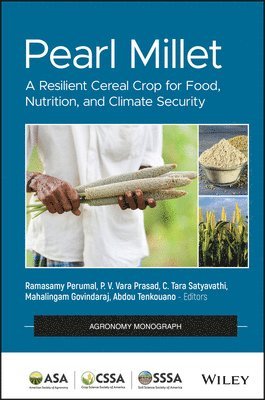
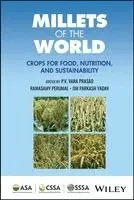
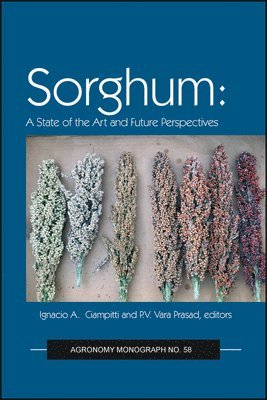
A detailed reference on millet crops for global food security Millet species tolerate drought, extreme heat, low soil fertility, and high salinity, yet consolidated scientific references on these climate-resilient nutri-cereals remain scarce. Millets of the World: Crops for Food, Nutrition, and Sustainability assembles current research on the major cultivated species, covering agronomy, physiology, classical and molecular breeding, nutritional properties, and their role in sustainable cropping systems across Asia and Africa. The book features dedicated chapters on eleven types of millets, including Sorghum, Pearl Millet, Finger Millet, Foxtail Millet, Proso Millet, Barnyard Millet, Little Millet, Kodo Millet, Browntop Millet, Teff, and Fonio. It examines functional properties including the C4 photosynthetic pathway, anti-inflammatory activity, high fiber content, and low glycemic index. Coverage of the short growing season highlights millets’ suitability for crop rotation under challenging environments. Readers will also find: Coverage of classical and molecular breeding advances and cultivar development targeting improved yield, stress tolerance, and bio-fortification across millet speciesAnalysis of millet species as forage and silage resources with strategies for increasing economic profitability in smallholder farming systemsInsights into cultivar adaptability under low moisture and marginal growing conditions encountered across semi-arid production regions globallyDetailed assessment of nutritional profiles including macro nutrients (carbs, protein, and fat), micronutrients (vitamins and minerals), and antioxidant content relevant to food scientists and food technologists worldwideDiscussion of alignment with UN Sustainable Development Goals addressing poverty, hunger, and climate action at a global scaleDesigned for crop scientists, agronomists, plant breeders, food scientists, and food technologists, this reference provides the consolidated scientific foundation needed to advance millet research, improve production systems, and harness these crops’ potential for strengthening food and nutritional security in climate-vulnerable regions.