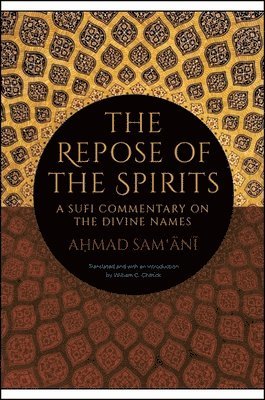
Major new translation of a unique and important Persian treatise on divine names in the Islamic tradition.The Repose of the Spirits is a translation of one of the earliest and most comprehensive treatises on Sufism in the Persian language. Written by Aḥmad Sam'ānī, an expert in Islamic law from a famous Central Asian scholarly family in about the year 1135, it is one of the handful of early Sufi texts available in English and is by far the most accessible. It also may well be the longest and the most accurately translated. Ostensibly a commentary on the divine names, it avoids the abstract discourse of theological nitpicking and explains the human significance of the names with a delightful mix of Quranic verses and sayings of the Prophet and various past teachers, interspersed with original interpretations of the received wisdom. Unlike the usual books on the divine names (such as that of al-Ghazali), The Repose of the Spirits reminds the reader of the later poetical tradition, especially the work of Rumi. The prose is richly embroidered with imagery and interspersed with a great variety of Arabic and Persian poetry. What is especially remarkable is the manner in which the author speaks to his readers about their own personal situations, explaining why they are driven by a love affair with God, a God who is full of compassion and good humor, whether they know it or not. William C. Chittick's masterful new translation brings this work to an English-language audience for the first time.
Created by the Prophet Muhammad and his twelve Imams, the Hadith is an ancient and profoundly influential body of religious texts in Shi'ite Muslim literature, second in importance only to the Holy Koran itself.Texts on the practical aspects of life and pure metaphysics are included in this first English translations of excerpts from the Hadith. Especially selected for the Western reader by the renowned Islamic scholar Tabataba'i, the passages from the Hadith shed light on the culture, history, law, and theology of the Shi'ite community and provide direct translations of some of the most famous of Islamic prayers.
Major new translation of a unique and important Persian treatise on divine names in the Islamic tradition.The Repose of the Spirits is a translation of one of the earliest and most comprehensive treatises on Sufism in the Persian language. Written by Aḥmad Sam'ānī, an expert in Islamic law from a famous Central Asian scholarly family in about the year 1135, it is one of the handful of early Sufi texts available in English and is by far the most accessible. It also may well be the longest and the most accurately translated. Ostensibly a commentary on the divine names, it avoids the abstract discourse of theological nitpicking and explains the human significance of the names with a delightful mix of Quranic verses and sayings of the Prophet and various past teachers, interspersed with original interpretations of the received wisdom. Unlike the usual books on the divine names (such as that of al-Ghazali), The Repose of the Spirits reminds the reader of the later poetical tradition, especially the work of Rumi. The prose is richly embroidered with imagery and interspersed with a great variety of Arabic and Persian poetry. What is especially remarkable is the manner in which the author speaks to his readers about their own personal situations, explaining why they are driven by a love affair with God, a God who is full of compassion and good humor, whether they know it or not. William C. Chittick's masterful new translation brings this work to an English-language audience for the first time.