135 kr
Skickas
135 kr
Skickas
159 kr
Tillfälligt slut
120 kr
Kommande
172 kr
Skickas inom 7-10 vardagar
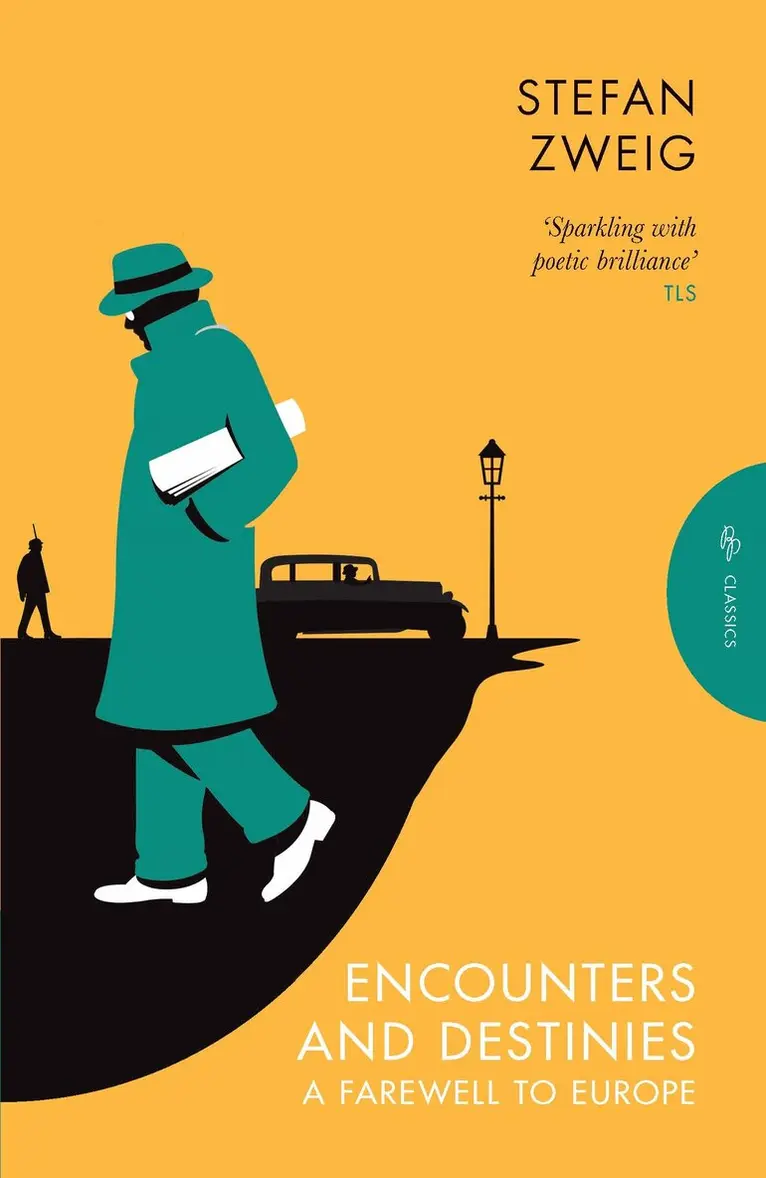
'The European voice... sparkling with poetic brilliance' - TLS
'Zweig's accumulated historical and cultural studies [are] almost too impressive to take in' - Clive James
Stefan Zweig was a born eulogist. In this collection of powerful elegies, homages and personal memories, Zweig forms a richly interconnected portrait of key creative figures in the European cultural diaspora up to 1939. Many of those mourned or celebrated here cast a long spiritual shadow over Zweig's own writing life: Verhaeren, Rolland, Nietzsche, Roth, Mahler, Rilke and Freud.
Zweig's farewells, souvenirs and declarations of gratitude demonstrate his ardent pan-Europeanism and rich friendships across borders. Elegant and haunting, these tributes are a monument to his reverence for the arts and his belief in the sacredness of individualism.
Part of the Pushkin Press Classics series: timeless storytelling by icons of literature, hand-picked from around the globe.
Translated by Will Stone.
Stefan Zweig (1881-1942) was born in Vienna, into a wealthy Austrian-Jewish family. He studied in Berlin and Vienna and was first known as a poet and translator, then as a biographer. Zweig travelled widely, living in Salzburg between the wars, and was an international bestseller with a string of hugely popular novellas including Letter from an Unknown Woman, Amok and Fear. In 1934, with the rise of Nazism, he moved to London, where he wrote his only novel Beware of Pity. He later moved on to Bath, taking British citizenship after the outbreak of the Second World War. With the fall of France in 1940 Zweig left Britain for New York, before settling in Brazil, where in 1942 he and his wife were found dead in an apparent double suicide. Much of his work is available from Pushkin Press.
Will Stone (b. 1966) is a poet, essayist and literary translator from French and German. Among many other volumes of poetry and prose, he has translated several wors by Stena Zweig publish bye Pushkin Press, including Montaigne, Nietzsche, Messages from a Lost World and Journeys.
165 kr
Skickas
Rainer Maria Rilke offers a compelling portrait of Parisian life, art, and culture at the beginning of the 20th century
In 1902, the young German poet Rainer Maria Rilke travelled to Paris to write a monograph on the sculptor Auguste Rodin. He returned many times over the course of his life, by turns inspired and appalled by the city's high culture and low society, and his writings give a fascinating insight into Parisian art and culture in the last century.
This book brings together Rilke's sublime poetic meditations on existence Notes on the Melody of Things and the first English translation of Rilke's experiences in Paris as observed by his French translator Maurice Betz.
141 kr
Skickas
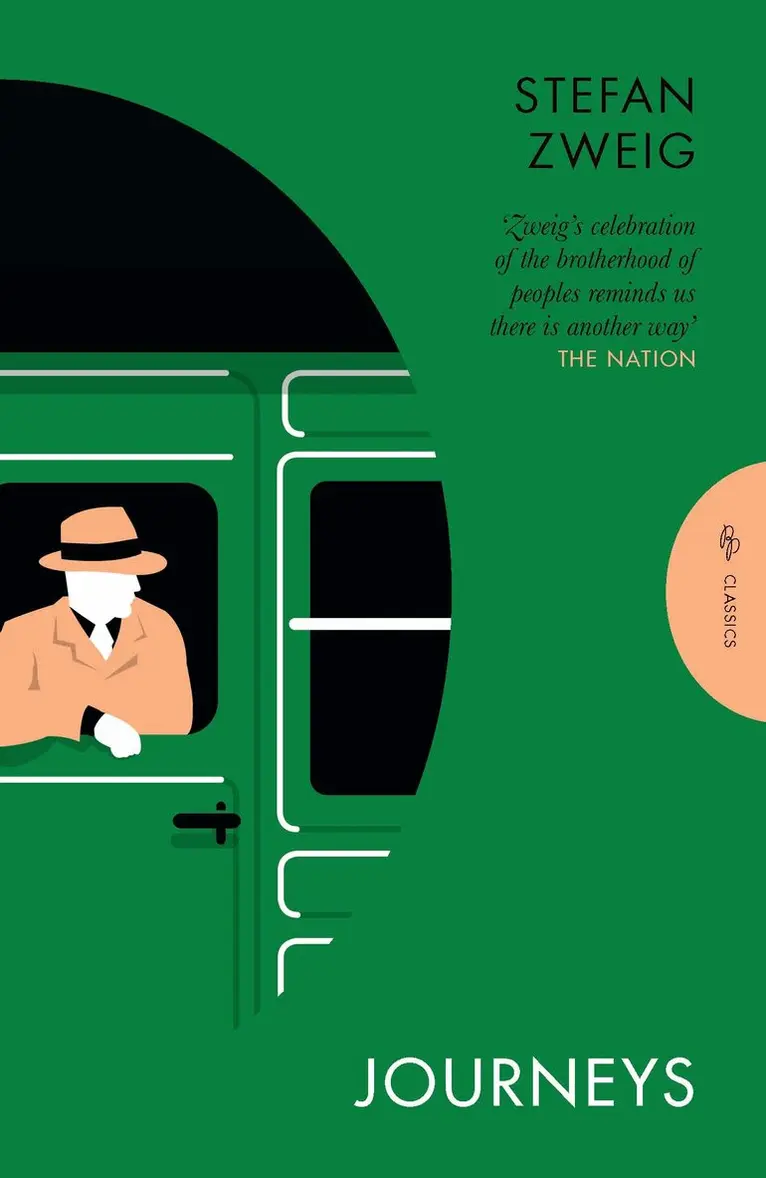
'Zweig's celebration of the brotherhood of peoples reminds us there is another way' The Nation
When I am on a journey, all ties suddenly fall away. I feel myself quite unburdened, disconnected, free - There is something in it marvellously uplifting and invigorating. Whole past epochs suddenly return: nothing is lost, everything still full of inception, enticement.
For the insatiably curious and ardent Europhile Stefan Zweig, travel was both a necessary cultural education and a personal balm for the depression he experienced when rooted in one place for too long. He spent much of his life weaving between the countries of Europe, visiting authors and friends, exploring the continent in the heyday of international rail travel.
Comprising a lifetime's observations on Zweig's travels in Europe, this collection can be dipped into or savoured at length, and paints a rich and sensitive picture of Europe before the Second World War.
Part of the Pushkin Press Classics series: timeless storytelling by icons of literature, hand-picked from around the globe.
Translated by Will Stone.
Stefan Zweig (1881-1942) was born in Vienna, into a wealthy Austrian-Jewish family. He studied in Berlin and Vienna and was first known as a poet and translator, then as a biographer. Zweig travelled widely, living in Salzburg between the wars, and was an international bestseller with a string of hugely popular novellas including Letter from an Unknown Woman, Amok and Fear. In 1934, with the rise of Nazism, he moved to London, where he wrote his only novel Beware of Pity. He later moved on to Bath, taking British citizenship after the outbreak of the Second World War. With the fall of France in 1940 Zweig left Britain for New York, before settling in Brazil, where in 1942 he and his wife were found dead in an apparent double suicide. Much of his work is available from Pushkin Press.
Will Stone (b. 1966) is a poet, essayist and literary translator from French and German. Among many other volumes of poetry and prose, he has translated several wors by Stena Zweig publish bye Pushkin Press, including Montaigne, Nietzsche, Messages from a Lost World and Encounters and Destinies.
126 kr
Skickas inom 7-10 vardagar
128 kr
Skickas inom 7-10 vardagar
131 kr
Skickas
'I owe Betz infinite gratitude...a first-rate poet, a creative spirit, and a friend to all creative spirits...an ornament to literary France...an artist with words, lovable and worthy of love' - Thomas Mann
'Maurice Betz is one of those artists whose importance only fully appears after they have disappeared' - Marcel Aymé
Walking in the Luxembourg Garden, describing encounters with enigmatic diva Eleonora Duse or an irascible Tolstoy: Rainer Maria Rilke's French translator Maurice Betz enjoyed a rare intimacy with the great poet. This account of their collaborative translation of Rilke's only novel brings the reader along on a tour of the glittering cultural scene of interwar Paris.
An elegant, poignant look at the great writer's final years, Betz's memoir, sensitively translated by Will Stone, is a portrait of genius, an evocation of a lost world, and a testament to enduring friendship.
Part of the Pushkin Press Classics series: timeless storytelling by icons of literature, hand-picked from around the globe.
Translated by Will Stone.
Maurice Betz (1898-1946), as well as writing poetry and novels, was a prolific translator of Friedrich Nietzsche, Stefan Zweig and Thomas Mann. He worked closely with Rilke on the French translations of his works while Rilke was alive, and continued translating the poet into French in the decades following his death. He fought in both World Wars and was made a prisoner in the Second. Shortly after the war, he was found dead in a hotel room in Tours, having asked for an early wake-up call.
Will Stone is a poet, essayist and literary translator of French, Franco-Belgian and German literature. His previous translations include Rilke in Paris, also by Maurice Betz, several works by Stefan Zweig, and poems by Georg Trakl and Rainer Maria Rilke, all available from Pushkin Press.
150 kr
Skickas
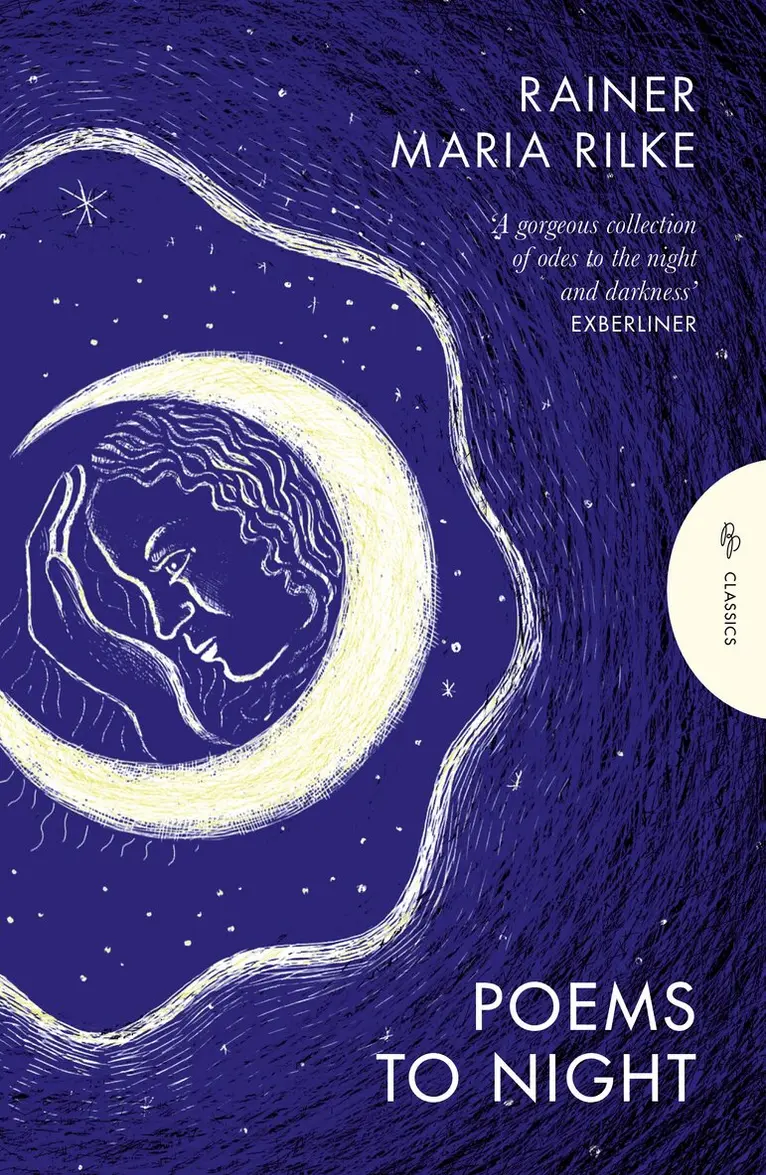
'A gorgeous collection of odes to the night and darkness' ExBerliner
In 1916, Rainer Maria Rilke presented his friend Rudolf Kassner with a notebook, containing twenty-two poems meticulously inscribed in his own hand and bearing the title Poems to Night. This evocative sequence of poems, which echoes some of the great themes of German romanticism, is now thought to represent one of the key stages in the creative breakthrough and spiritual evolution of the preeminent European poet of the twentieth century.
This translation was the first to bring all the poems together in English and is enhanced by the translator's valuable introduction and a rich selection of further poems Rilke dedicated to night at various stages of his life.
Part of the Pushkin Press Classics series: timeless storytelling by icons of literature, hand-picked from around the globe.
Translated by Will Stone.
Rainer Maria Rilke (1875-1926) is considered one of the greatest German-language writers to have ever lived. He published his first collection of verse, Leben und Lieder (Life and Songs), in 1894, while he was still at school, and continued to write poetry and prose throughout his life, becoming a master of both. He is perhaps best known for his Duino Elegies, Sonnets to Orpheus, and The Notebooks of Malte Laurids Brigge. Rilke died in Switzerland in 1926, after being diagnosed with leukaemia, and was buried in the churchyard of Raron. His chosen epitaph was 'Rose, oh pure contradiction, to be no-one's sleep under so many lids.'
Will Stone is a poet, essayist and literary translator. His translations for Pushkin Press include a series of titles by Stefan Zweig, and the books Rilke in Paris and Conversations with Rilke. His essays, reviews and poems have appeared in a range of publications including the TLS, the London Magazine and the Spectator.
193 kr
Skickas inom 7-10 vardagar
174 kr
Skickas inom 7-10 vardagar
192 kr
Tillfälligt slut
172 kr
Tillfälligt slut
As Europe faced its darkest days, Stefan Zweig was a passionate voice for tolerance, peace and a world without borders. In these moving, ardent essays, speeches and articles, composed before and during the Second World War, one of the twentieth century's greatest writers mounts a defence of European unity against terror and brutality.
These haunting lost messages, all appearing in English for the first time and some newly discovered, distil Zweig's courage, belief and richness of learning to give the essence of a writer; a spiritual will and testament to stand alongside his memoir, The World of Yesterday. Brief and yet intense, they are a tragic reminder of a world lost to the 'bloody vortex of history', but also a powerful statement of one man's belief in the creative imagination and the potential of humanity, with a resounding relevance today.
"At a time of monetary crisis and political disorder, of mounting border controls and barbed-wire fences... Zweig's celebration of the brotherhood of peoples reminds us that there is another way" The Nation
"One of liberalism's greatest defenders" New Republic
"Zweig's impassioned pursuit of personal freedom seems more relevant than ever" Newsweek
"These essays, few in number but rich in content, reveal the essence of Zweig's thought... Messages from a Lost World is ably translated from German into English for an American readership by Will Stone, making it an extraordinary and highly recommended addition to community and academic library collections" Midwest Book Review
"In pieces from the 1920s and early 30s, Zweig takes it as a moral imperative to champion the cause of peace by reminding his readers and listeners that humanity could no longer afford the sort of belligerent nationalism that had led them into the Great War" Inside Higher Ed
"While it is disheartening to read these pieces today, knowing how Zweig's life ended, it is inspiring to see that they have been published. However defeated Zweig might appear to contemporary readers, however aloof or naive, his idea of the European soul is still worth defending" Northwest Review of Books
Stefan Zweig was born in 1881 in Vienna, a member of a wealthy Austrian-Jewish family. He studied in Berlin and Vienna and was first known as a translator and later as a biographer. Zweig travelled widely, living in Salzburg between the wars, and enjoying literary fame. His stories and novellas were collected in 1934. In the same year, with the rise of Nazism, he briefly moved to London, taking British citizenship. After a short period in New York, he settled in Brazil. It was here that he completed his acclaimed memoir The World of Yesterday, a lament for the golden age of a Europe destroyed by two world wars. The articles and speeches in Messages from a Lost World were written as Zweig, a pacifist and internationalist, witnessed this destruction and warned of the threat to his beloved Europe. On 23 February 1942, Zweig and his second wife Lotte were found dead, following an apparent double suicide. Much of his work is available from Pushkin Press.

157 kr
Tillfälligt slut
80 kr
Tillfälligt slut