813 kr
813 kr
2 497 kr
Skickas inom 10-15 vardagar
2 871 kr
Skickas inom 10-15 vardagar
874 kr
Skickas inom 10-15 vardagar
1 365 kr
Skickas inom 10-15 vardagar
326 kr
Skickas inom 7-10 vardagar
1 293 kr
Skickas inom 10-15 vardagar
373 kr
Skickas
953 kr
Läs direkt efter köp
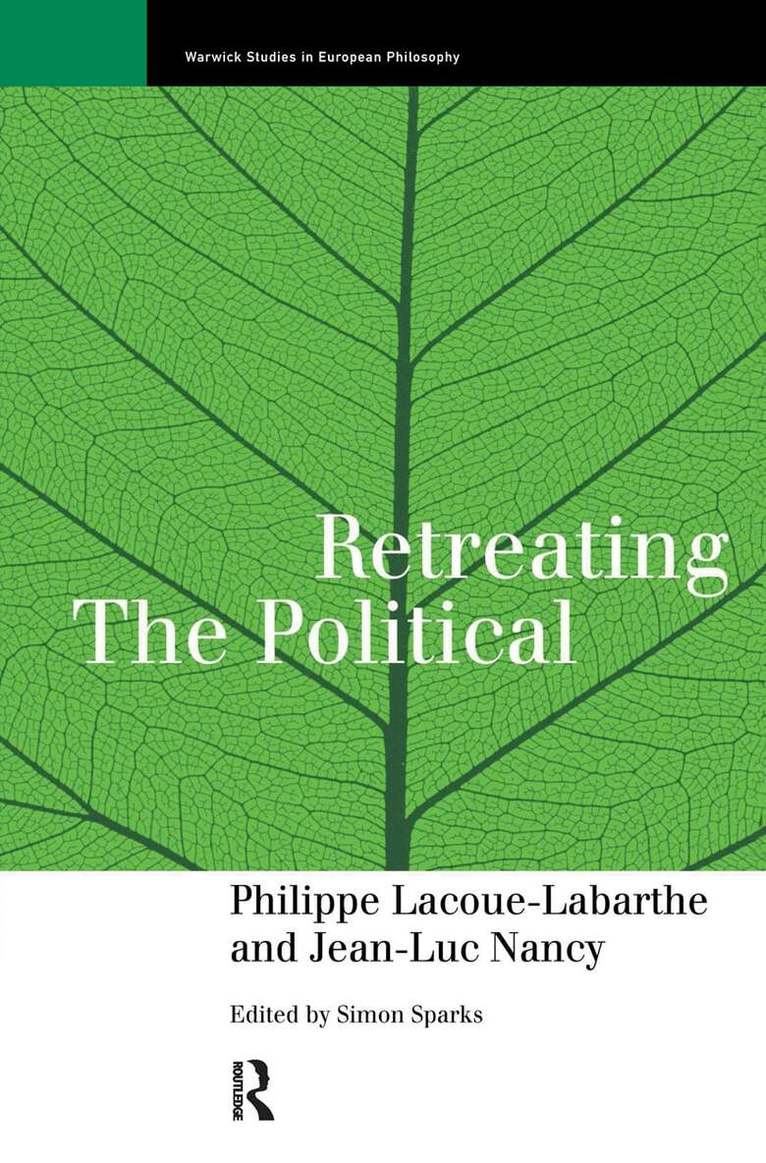
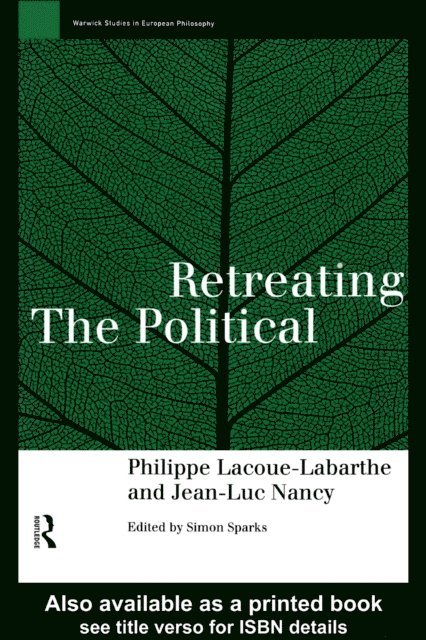
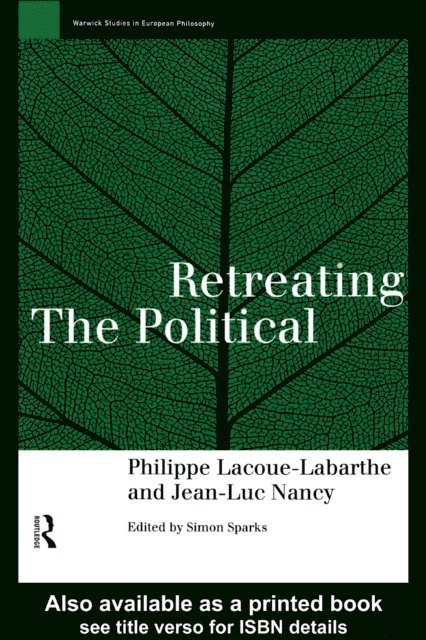
This collection of essays presents, for the first time in English, some of the key essays on the political by Philippe Lacoue-Labarthe and Jean-Luc Nancy. Including several unpublished essays, Retreating the Political offers some highly original perspectives on the relationship between philosophy and the political. Through contemporary readings of the political in Freud, Heidegger and Marx, the authors ask if we can talk of an a priori link between the philosophical and the political; they investigate the significance of the ''figure'' - the human being as political subject - in the history of metaphysics; and they inquire how we can ''re-treat'' the political today in the face of those who argue that philosophy is at an ''end''.
1 013 kr
Läs direkt efter köp
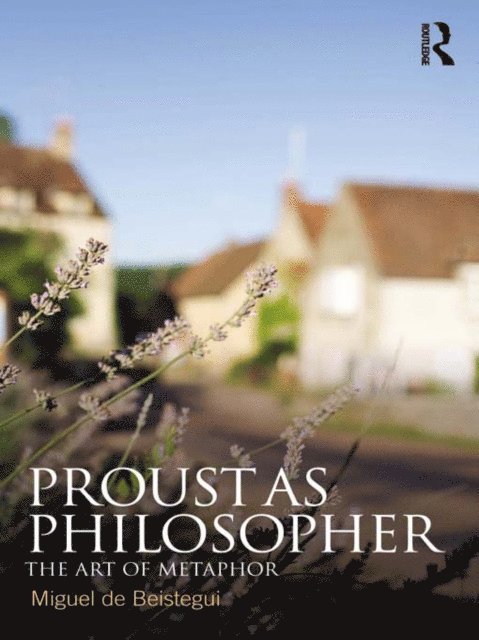
Marcel Proust’s In Search of Lost Time has long fascinated philosophers for its complex accounts of time, personal identity and narrative, amongst many other themes. Proust as Philosopher: The Art of Metaphor is the first book to try and connect Proust’s implicit ontology of experience with the question of style, and of metaphor in particular.
Miguel de Beistegui begins with an observation: throughout In Search of Lost Time, the two main characters seem prone to chronic dissatisfaction in matters of love, friendship and even art. Reality always falls short of expectation. At the same time, the narrator experiences unexpected bouts of intense elation, the cause and meaning of which remain elusive. Beistegui argues we should understand these experiences as acts of artistic creation, and that this is why Proust himself wrote that true life is the life of art.
He goes on to explore the nature of these joyful and pleasurable experiences and the transformation required of art, and particularly literature, if it is to incorporate them. He concludes that Proust revolutionises the idea of metaphor, extending beyond the confines of language to understand the nature of lived, bodily experience.
1 028 kr
Läs direkt efter köp
Marcel Proust’s In Search of Lost Time has long fascinated philosophers for its complex accounts of time, personal identity and narrative, amongst many other themes. Proust as Philosopher: The Art of Metaphor is the first book to try and connect Proust’s implicit ontology of experience with the question of style, and of metaphor in particular.
Miguel de Beistegui begins with an observation: throughout In Search of Lost Time, the two main characters seem prone to chronic dissatisfaction in matters of love, friendship and even art. Reality always falls short of expectation. At the same time, the narrator experiences unexpected bouts of intense elation, the cause and meaning of which remain elusive. Beistegui argues we should understand these experiences as acts of artistic creation, and that this is why Proust himself wrote that true life is the life of art.
He goes on to explore the nature of these joyful and pleasurable experiences and the transformation required of art, and particularly literature, if it is to incorporate them. He concludes that Proust revolutionises the idea of metaphor, extending beyond the confines of language to understand the nature of lived, bodily experience.