252 kr
Skickas inom 7-10 vardagar
252 kr
Skickas inom 7-10 vardagar
147 kr
Skickas
337 kr
Skickas inom 7-10 vardagar
208 kr
Skickas inom 7-10 vardagar
Not Stated
325 kr
Skickas inom 3-6 vardagar
141 kr
Kommande
294 kr
Skickas inom 3-6 vardagar
172 kr
Läs direkt efter köp
312 kr
Skickas inom 3-6 vardagar
138 kr
Skickas inom 7-10 vardagar
211 kr
Skickas inom 7-10 vardagar
221 kr
Läs direkt efter köp
275 kr
Skickas inom 7-10 vardagar
331 kr
Skickas inom 7-10 vardagar
285 kr
Skickas inom 7-10 vardagar
285 kr
Skickas inom 7-10 vardagar
250 kr
Skickas inom 7-10 vardagar
389 kr
Skickas inom 7-10 vardagar
271 kr
Läs direkt efter köp
A Times Literary Supplement Book of the Year, chosen by Tom Stoppard"A revelation."—Marc Weingarten, Washington PostAcclaimed film director Billy Wilder’s early writings—brilliantly translated into English for the first timeBefore Billy Wilder became the screenwriter and director of iconic films like Sunset Boulevard and Some Like It Hot, he worked as a freelance reporter, first in Vienna and then in Weimar Berlin. Billy Wilder on Assignment brings together more than fifty articles, translated into English for the first time, that Wilder (then known as "Billie") published in magazines and newspapers between September 1925 and November 1930. From a humorous account of Wilder''s stint as a hired dancing companion in a posh Berlin hotel and his dispatches from the international film scene, to his astute profiles of writers, performers, and political figures, the collection offers fresh insights into the creative mind of one of Hollywood’s most revered writer-directors.Wilder’s early writings—a heady mix of cultural essays, interviews, and reviews—contain the same sparkling wit and intelligence as his later Hollywood screenplays, while also casting light into the dark corners of Vienna and Berlin between the wars. Wilder covered everything: big-city sensations, jazz performances, film and theater openings, dance, photography, and all manner of mass entertainment. And he wrote about the most colorful figures of the day, including Charlie Chaplin, Cornelius Vanderbilt, the Prince of Wales, actor Adolphe Menjou, director Erich von Stroheim, and the Tiller Girls dance troupe. Film historian Noah Isenberg''s introduction and commentary place Wilder’s pieces—brilliantly translated by Shelley Frisch—in historical and biographical context, and rare photos capture Wilder and his circle during these formative years.Filled with rich reportage and personal musings, Billy Wilder on Assignment showcases the burgeoning voice of a young journalist who would go on to become a great auteur.
333 kr
Läs direkt efter köp
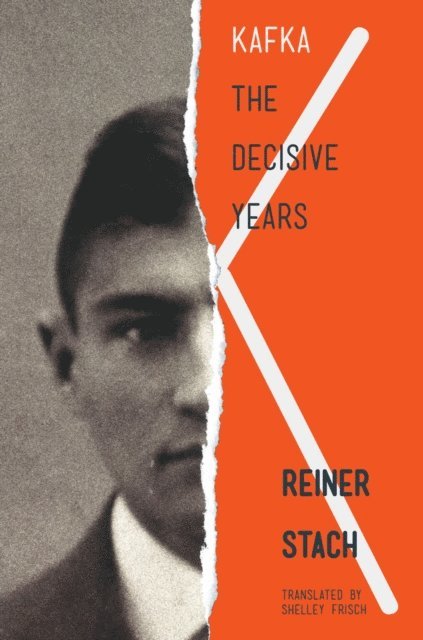
This is the acclaimed central volume of the definitive biography of Franz Kafka. Reiner Stach spent more than a decade working with over four thousand pages of journals, letters, and literary fragments, many never before available, to re-create the atmosphere in which Kafka lived and worked from 1910 to 1915, the most important and best-documented years of his life. This period, which would prove crucial to Kafka''s writing and set the course for the rest of his life, saw him working with astonishing intensity on his most seminal writings--The Trial, The Metamorphosis, The Man Who Disappeared (Amerika), and The Judgment. These are also the years of Kafka''s fascination with Zionism; of his tumultuous engagement to Felice Bauer; and of the outbreak of World War I. Kafka: The Decisive Years is at once an extraordinary portrait of the writer and a startlingly original contribution to the art of literary biography.
279 kr
Läs direkt efter köp
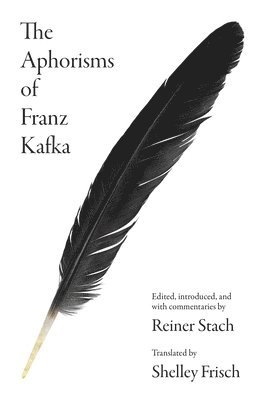
A splendid new translation of an extraordinary work of modern literature—featuring facing-page commentary by Kafka’s acclaimed biographerIn 1917 and 1918, Franz Kafka wrote a set of more than 100 aphorisms, known as the Zürau aphorisms, after the Bohemian village in which he composed them. Among the most mysterious of Kafka’s writings, they explore philosophical questions about truth, good and evil, and the spiritual and sensory world. This is the first annotated, bilingual volume of these extraordinary writings, which provide great insight into Kafka’s mind. Edited, introduced, and with commentaries by preeminent Kafka biographer and authority Reiner Stach, and freshly translated by Shelley Frisch, this beautiful volume presents each aphorism on its own page in English and the original German, with accessible and enlightening notes on facing pages.The most complex of Kafka’s writings, the aphorisms merge literary and analytical thinking and are radical in their ideas, original in their images and metaphors, and exceptionally condensed in their language. Offering up Kafka’s characteristically unsettling charms, the aphorisms at times put readers in unfamiliar, even inhospitable territory, which can then turn luminous: “I have never been in this place before: breathing works differently, and a star shines next to the sun, more dazzlingly still.”Above all, this volume reveals that these multifaceted gems aren’t far removed from Kafka’s novels and stories but are instead situated squarely within his cosmos—arguably at its very core. Long neglected by Kafka readers and scholars, his aphorisms have finally been given their full due here.
201 kr
Skickas inom 7-10 vardagar
307 kr
Kommande
111 kr
Skickas inom 7-10 vardagar
171 kr
Skickas inom 7-10 vardagar
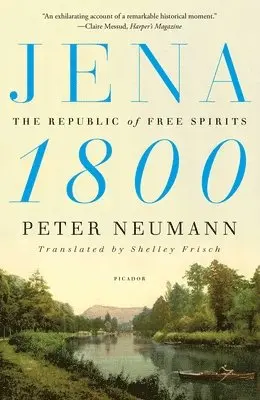
“An exhilarating account of a remarkable historical moment, in which characters known to many of us as immutable icons are rendered as vital, passionate, fallible beings . . . Lively, precise, and accessible.” —Claire Messud, Harper’s MagazineAt the turn of the nineteenth century, a steady stream of young German poets and thinkers coursed to the town of Jena to make history. In the wake of the French Revolution and the Napoleonic Wars, confidence in traditional social, political, and religious norms had been replaced by a profound uncertainty that was as terrifying for some as it was exhilarating for others. Nowhere was the excitement more palpable than among the extraordinary group of poets, philosophers, translators, and socialites who gathered in Jena.This village of just four thousand residents soon became the place to be for the young and intellectually curious in search of philosophical disruption. Influenced by Johann Wolfgang von Goethe, then an elder statesman and artistic eminence, the leading figures among the disruptors—the translator August Wilhelm Schlegel; the philosophers Friedrich Schlegel and Friedrich Schelling; the dazzling, controversial intellectual Caroline Schlegel, married to August; the poet and translator Dorothea Schlegel, married to Friedrich; and the poets Ludwig Tieck and Novalis—resolved to rethink the world, to establish a republic of free spirits. They didn’t just question inherited societal traditions; with their provocative views of the individual and of nature, they revolutionized our understanding of freedom and reality.With wit and elegance, Peter Neumann brings this remarkable circle of friends and rivals to life in Jena 1800, a work of intellectual history that is colorful and passionate, informative and intimate—as fresh and full of surprises as its subjects.
379 kr
Läs direkt efter köp
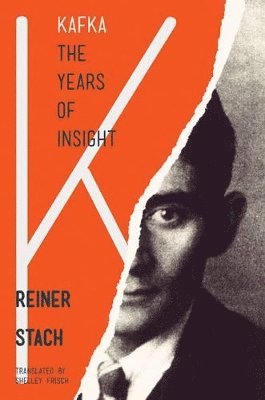
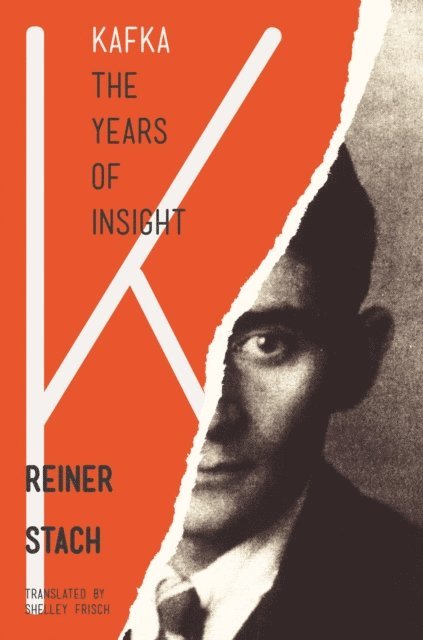
Telling the story of Kafka''s final years as never before—the third volume in the acclaimed definitive biographyThis volume of Reiner Stach''s acclaimed and definitive biography of Franz Kafka tells the story of the final years of the writer''s life, from 1916 to 1924—a period during which the world Kafka had known came to an end. Stach''s riveting narrative, which reflects the latest findings about Kafka''s life and works, draws readers in with nearly cinematic precision, zooming in for extreme close-ups of Kafka''s personal life, then pulling back for panoramic shots of a wider world blighted by World War I, disease, and inflation.In these years, Kafka was spared military service at the front, yet his work as a civil servant brought him into chilling proximity with its grim realities. He was witness to unspeakable misery, lost the financial security he had been counting on to lead the life of a writer, and remained captive for years in his hometown of Prague. The outbreak of tuberculosis and the collapse of the Austro-Hungarian Empire constituted a double shock for Kafka, and made him agonizingly aware of his increasing rootlessness. He began to pose broader existential questions, and his writing grew terser and more reflective, from the parable-like Country Doctor stories and A Hunger Artist to The Castle.A door seemed to open in the form of a passionate relationship with the Czech journalist Milena Jesenská. But the romance was unfulfilled and Kafka, an incurably ill German Jew with a Czech passport, continued to suffer. However, his predicament only sharpened his perceptiveness, and the final period of his life became the years of insight.
379 kr
Läs direkt efter köp
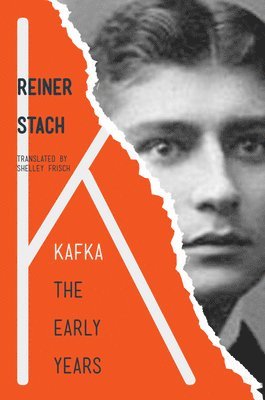
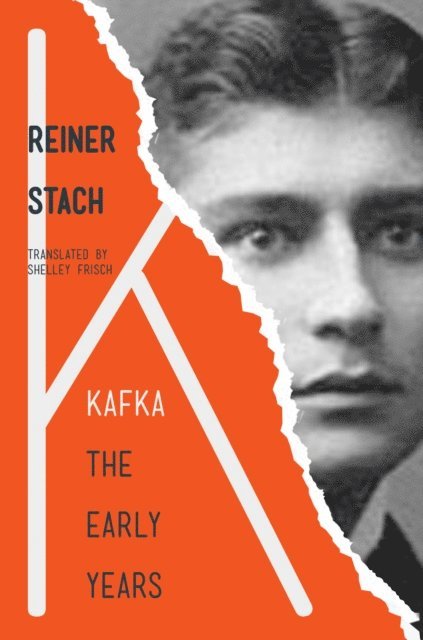
The eagerly anticipated final volume of the award-winning, definitive biography of Franz KafkaHow did Kafka become Kafka? This eagerly anticipated third and final volume of Reiner Stach''s definitive biography of the writer answers that question with more facts and insight than ever before, describing the complex personal, political, and cultural circumstances that shaped the young Franz Kafka (1883–1924). It tells the story of the years from his birth in Prague to the beginning of his professional and literary career in 1910, taking the reader up to just before the breakthrough that resulted in his first masterpieces, including "The Metamorphosis." Brimming with vivid and often startling details, Stach’s narrative invites readers deep inside this neglected period of Kafka’s life. The book’s richly atmospheric portrait of his German Jewish merchant family and his education, psychological development, and sexual maturation draws on numerous sources, some still unpublished, including family letters, schoolmates’ memoirs, and early diaries of his close friend Max Brod.The biography also provides a colorful panorama of Kafka’s wider world, especially the convoluted politics and culture of Prague. Before World War I, Kafka lived in a society at the threshold of modernity but torn by conflict, and Stach provides poignant details of how the adolescent Kafka witnessed violent outbreaks of anti-Semitism and nationalism. The reader also learns how he developed a passionate interest in new technologies, particularly movies and airplanes, and why another interest—his predilection for the back-to-nature movement—stemmed from his “nervous” surroundings rather than personal eccentricity.The crowning volume to a masterly biography, this is an unmatched account of how a boy who grew up in an old Central European monarchy became a writer who helped create modern literature.
199 kr
Läs direkt efter köp
199 kr
Läs direkt efter köp
386 kr
Skickas inom 3-6 vardagar