347 kr
Skickas inom 7-10 vardagar
347 kr
Skickas inom 7-10 vardagar
311 kr
Skickas inom 7-10 vardagar
296 kr
Läs direkt efter köp
296 kr
Läs direkt efter köp
1 550 kr
Läs direkt efter köp
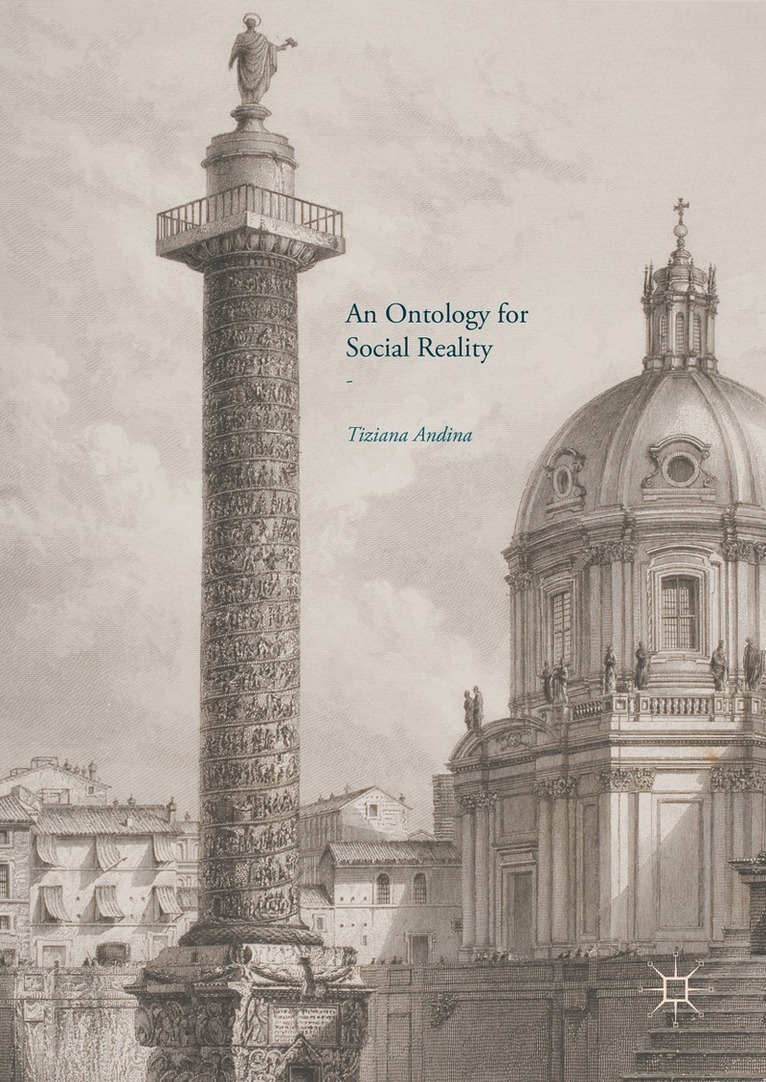
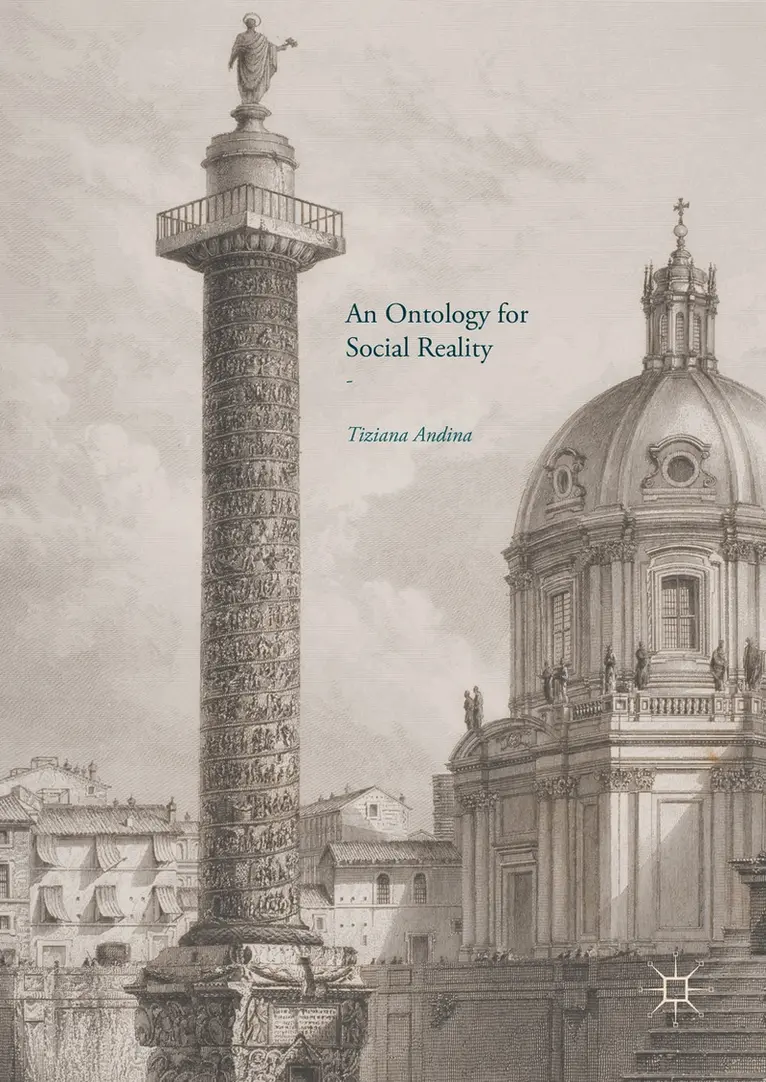
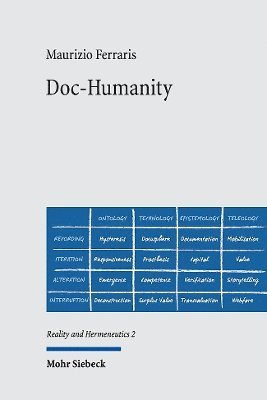
This book explores the complex domain of social reality, asking what this reality is, how it is composed and what its dynamics are in both theoretical and practical terms. Through the examination of some of the most important contemporary theories of social ontology, the book discusses the fundamentals of the discipline and lays the foundations for its development in the political sphere. By analyzing the notion of State and the redesign of ontology, the author argues in favor of a realist conception of the State and shows the reasons why this promotes a better understanding of the dynamics of power and the actualization of a greater justice between generations. This book captures the relationship between different generations within the same political context, and presents it as a necessary condition for the re-definition of the concepts of State and meta-State.
1 098 kr
Skickas inom 10-15 vardagar
1 098 kr
Skickas inom 10-15 vardagar
430 kr
Skickas inom 7-10 vardagar
542 kr
Skickas inom 3-6 vardagar
2 160 kr
Skickas inom 3-6 vardagar
375 kr
Skickas inom 7-10 vardagar
1 735 kr
Skickas inom 7-10 vardagar
1 799 kr
Läs direkt efter köp
During his late period, Nietzsche is particularly concerned with the value that mankind attributes to truth. In dealing with that topic, Nietzsche is not primarly interested in the metaphysical disputes on truth, but rather in the effects that the "will to truth" has on the human being. In fact, he argues that the "faith in a value as such of truth" influenced Western culture and started the anthropological degeneration of the human type that characterizes European morality. To call into question the value of truth is therefore necessary, if one wants to help mankind to find her way in the labyrinth of nihilism.
In this new addition to Nietzsche scholarship, Gori explores the origin and aim of the philosopher''s late perspectival thought by merging the theoretical with the historical approach, with a special focus on the epistemological debate that influenced Nietzsche. As a result, the book provides a contextual reading of the issue that supports the idea that Nietzsche’s attitude in addressing the problem of truth is, in a broad sense, pragmatic.
1 811 kr
Läs direkt efter köp
During his late period, Nietzsche is particularly concerned with the value that mankind attributes to truth. In dealing with that topic, Nietzsche is not primarly interested in the metaphysical disputes on truth, but rather in the effects that the "will to truth" has on the human being. In fact, he argues that the "faith in a value as such of truth" influenced Western culture and started the anthropological degeneration of the human type that characterizes European morality. To call into question the value of truth is therefore necessary, if one wants to help mankind to find her way in the labyrinth of nihilism.
In this new addition to Nietzsche scholarship, Gori explores the origin and aim of the philosopher''s late perspectival thought by merging the theoretical with the historical approach, with a special focus on the epistemological debate that influenced Nietzsche. As a result, the book provides a contextual reading of the issue that supports the idea that Nietzsche’s attitude in addressing the problem of truth is, in a broad sense, pragmatic.
1 432 kr
Skickas inom 7-10 vardagar
1 448 kr
Läs direkt efter köp
Ranging from Antiquity to contemporary analytic philosophy, it provides a concise but thorough analysis of the arguments developed by some of the most outstanding philosophers of all times. Besides the aesthetics of music proper, the volume touches upon metaphysics, ethics, philosophy of language, psychology, anthropology, and scientific developments that have influenced the philosophical explanations of music. Starting from the very origins of philosophy in Western thought (Pythagoras, Plato, Aristotle) the book talks about what music is according to Augustine, Descartes, Leibniz, Rousseau, Kant, Hegel, the Romantics, Schopenhauer, Nietzsche, Wittgenstein, Susanne Langer, Bloch, Adorno, and many others. Recent developments within the analytic tradition are illustrated with particular attention to the ontology of the musical artwork and to the problem of music and emotions. A fascinating idea which recurs throughout the book is that philosophers allow for a sort of a secret kinship between music and philosophy, as means to reveal complementary aspects of truth.
1 402 kr
Läs direkt efter köp
Ranging from Antiquity to contemporary analytic philosophy, it provides a concise but thorough analysis of the arguments developed by some of the most outstanding philosophers of all times. Besides the aesthetics of music proper, the volume touches upon metaphysics, ethics, philosophy of language, psychology, anthropology, and scientific developments that have influenced the philosophical explanations of music. Starting from the very origins of philosophy in Western thought (Pythagoras, Plato, Aristotle) the book talks about what music is according to Augustine, Descartes, Leibniz, Rousseau, Kant, Hegel, the Romantics, Schopenhauer, Nietzsche, Wittgenstein, Susanne Langer, Bloch, Adorno, and many others. Recent developments within the analytic tradition are illustrated with particular attention to the ontology of the musical artwork and to the problem of music and emotions. A fascinating idea which recurs throughout the book is that philosophers allow for a sort of a secret kinship between music and philosophy, as means to reveal complementary aspects of truth.
1 864 kr
Skickas inom 7-10 vardagar
1 857 kr
Läs direkt efter köp
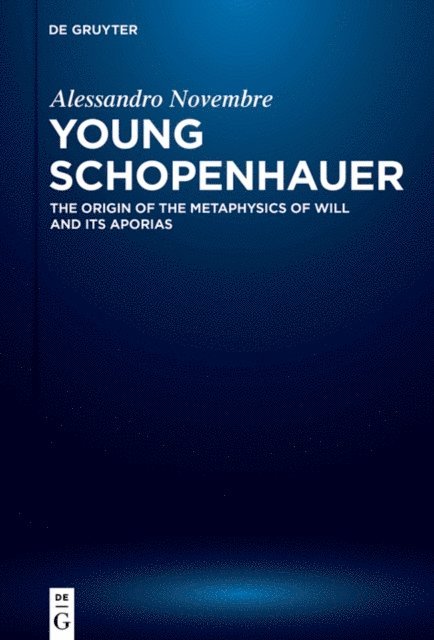
This book provides a detailed reconstruction of the origins of Schopenhauer''s philosophy and its inherent aporias.It is divided into four parts. The first section delves into the pietistic upbringing of young Schopenhauer and his introduction to philosophy through the teachings of G.E. Schulze, as well as his study of Plato, Schelling, and Kant. Faced with the "negative" outcomes of Kant''s criticism, particularly the unknowability of the thing-in-itself, young Schopenhauer initially engaged with Fichte and Schelling (this is covered in the second part of the volume). However, Schopenhauer formed the opinion that these two philosophers, instead of upholding and expanding upon Kant''s ideas, ultimately diverge from them. That notwithstanding, he implicitly inherited certain pivotal concepts from Fichte and Schelling.The third part explores Schopenhauer''s initial endeavor to formulate a new metaphysics after Kant, known as the theory of "better consciousness." In the fourth part, the book demonstrates how the internal contradictions within that theory and Schopenhauer''s transformative encounter with Indian wisdom (Hinduism and Buddhism) lead him to abandon his first attempt at a system and develop his metaphysics of will.The last and most substantial chapter of the book focuses on the author''s analysis of the inherent aporias within Schopenhauer''s mature system, approaching them from a genetic perspective.
267 kr
Skickas inom 7-10 vardagar
1 204 kr
Skickas inom 7-10 vardagar
1 069 kr
Tillfälligt slut
1 111 kr
Tillfälligt slut
1 103 kr
Tillfälligt slut
399 kr
Tillfälligt slut
1 079 kr
Tillfälligt slut