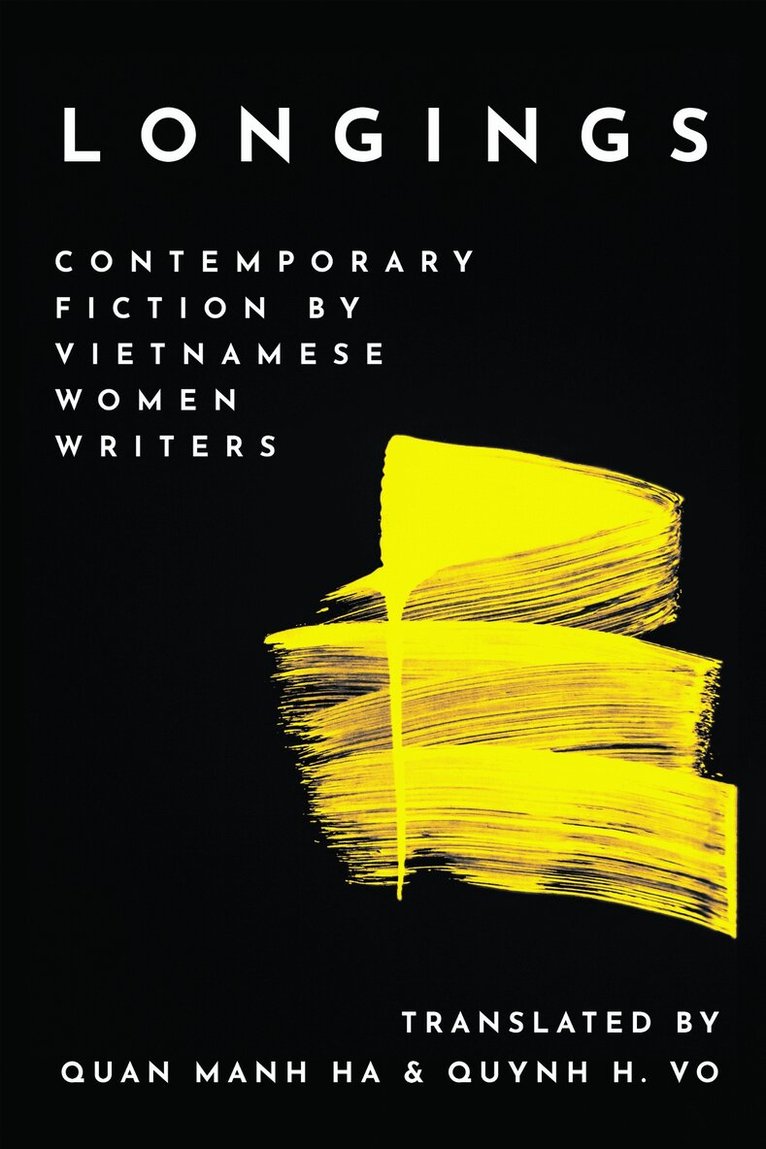
While mainstream Vietnamese history chronicles a few woman warriors of the past and some contemporary female activists, Vietnamese women always have performed their roles in the quiet shadows of men. To illuminate those shadows, Quan Manh Ha and Quynh H. Vo have brought into English the first anthology of its kind, featuring twenty-two contemporary stories written by Vietnamese women whose narratives make visible the multitudinous lives of Vietnamese women over the last two decades.All the stories in Longings appear in English for the first time, inviting new readers to appreciate the "Longings" or aspirations of Vietnamese women as they have had to face suffering and struggle, hope and despair, sorrow and joy, while navigating an uncharted course through the social and economic waves that have lifted or lowered their lives since the US–Vietnam normalization in the mid-1990s.The wife in Da Ngan's "The Innermost Feelings of White Pillows" suppresses sexual frustration at her husband's impotence by stuffing her pillows with new fibers. The rural women in Tran Thuy Mai's "Green Plums" have no choice but to become prostitutes to earn a living. The mother in Pham Thi Phong Diep's "Mother and Son" demonstrates an unconditional sacrifice and ineffable love for her adopted son despite his insolence and ingratitude. A woman in Nguyen Thi Chau Giang's "Late Moon" violates all prescribed gender norms in order to live freely.Longings brings together stories by both well-established and emerging Vietnamese writers, those who come from various regions in Vietnam and represent the diversity and richness in Vietnamese short fiction. This anthology expands the audience for deserving authors and broadens perspective on the heterogeneous voices, narrative styles, and thematic interests of women who contribute to the growing corpus of contemporary Vietnamese short fiction.
In Paris, in 1934, Bình has accompanied his employers, Gertrude Stein and Alice B. Toklas, to the train station for their departure to America. His own destination is unclear: will he go with "the Steins," stay in France, or return to his native Vietnam? For five years, he has been the live-in cook at the famous apartment at 27 rue de Fleurus. Before Bình's decision is revealed, his mesmerizing narrative catapults us back to his youth in French-colonized Vietnam, his years as a galley hand at sea, and his days turning out fragrant repasts for the doyennes of the Lost Generation.In The Book of Salt, Bình knows far more than the contents of the Steins' pantry: he knows their routines and intimacies, their manipulations and follies. With wry insight, he views Stein and Toklas ensconced in blissful domesticity. But is Bình's account reliable? A lost soul, he is a late-night habitué of the Paris demimonde, an exile and an alien, a man of musings and memories, and, possibly, lies.