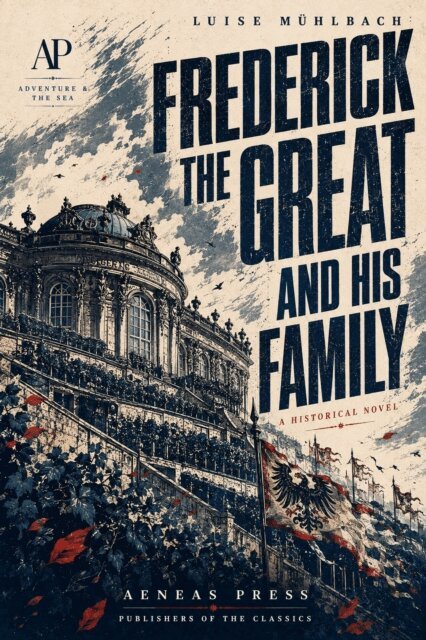
The Seven Years'' War: Frederick against Austria, Russia, France and Saxony at once, and the court at Sans Souci going on around him — his brothers, his sister, the actresses, the poets, the flute. Mühlbach was Klara Mundt, who wrote nearly three hundred volumes and put the courts of Europe into them; she is a gossip working from documents, and the family here is far more interesting than the battles. Fifty-five plates, from Menzel to Munch, follow the table and the battlefield alike, so that the suppers and councils of Frederick''s court are seen as clearly as his wars.
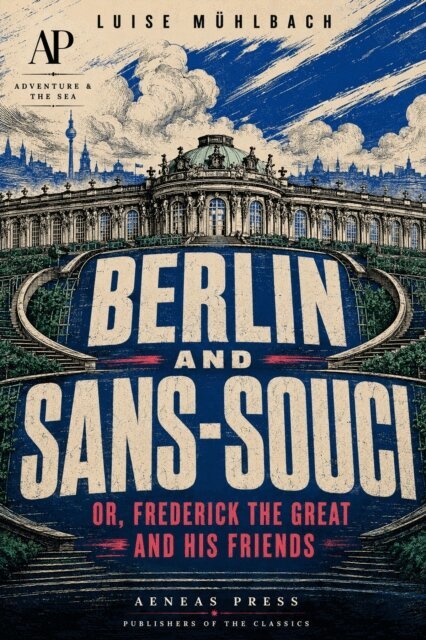
Frederick at home: Voltaire arriving, Voltaire quarreling, Voltaire leaving; the flute, the greyhounds, the Berlin theater, the brothers who cannot please him, and the ministers who dare not contradict. Mühlbach was Klara Mundt, who wrote nearly three hundred volumes; here the wars are offstage and the court is the whole subject, which suits her exactly — she is a gossip with archives. Fifty-six plates, from Menzel''s eighteenth-century court to Munch''s northern light, trace the same theatre of power and its aftermath that Mühlbach stages at Sans-Souci.
Egypt, 1800–1820: an Albanian tobacco merchant''s son arrives with a Turkish contingent, outlasts the French, the British and the Sultan''s governors, and massacres the Mamelukes in the Citadel to make himself Pasha. Mühlbach was Klara Mundt, who wrote nearly three hundred volumes; the rise here is history, and Mehmet Ali''s method — patience, then one afternoon of violence — is not softened. Fifty-six plates by painters including David Roberts and Giovanni Paolo Panini supply the architectural ruin and Mediterranean light this story of Pasha and Citadel demands.