A political thriller set mainly in Estonia during the dying days of the Soviet Union, but also in Russia, Finland and Sweden. It follows a group of young pro-independence dissidents who have an elaborate scheme for smuggling copies of KGB files out of the country, and whose fates are entangled, through family and romantic ties, with the security services who are tracking them. It describes the curious minutiae of everyday life, offers wry observations on the period through personal experience, and asks universal questions about how interpersonal relationships are affected when caught up in momentous historical changes. This sometimes wistful examination of how the Estonian Republic was reborn after a long hiatus speaks also of the courage and complex chemistry of those who pushed against a regime whose then weakness could not have been known to them.
This thoughtful spy novel cum love story is set mainly in Estonia during the dying days of the Soviet Union, but also in Russia, Finland and Sweden. A group of young pro-independence dissidents devise an elaborate scheme for smuggling copies of KGB files out of the country, and their fates become entangled, through family and romantic ties, with the security services never far behind them.Through multiple viewpoints the author evokes the curious minutiae of everyday life, offers wry observations on the period through personal experience, and asks universal questions about how interpersonal relationships are affected when caught up in momentous historical changes.This sometimes wistful examination of how the Estonian Republic was reborn after a long and stultifying hiatus speaks also of the courage and complex chemistry of those who pushed against a regime whose then weakness could not have been known to them.
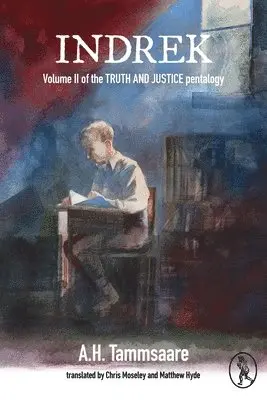
This second volume of A.H. Tammsaare's monumental pentalogy portrays the education of Indrek who emerges here as the protagonist and will remain so throughout the next three volumes. This is a story of moving to the polyglot city and abandoning the countryside which at that time was the heartland of the Estonian language. This new environment is a vortex of prejudices and national rivalries nevertheless held together in practice by a strange and very human tolerance. Here Tammsaare writes with his trademark wit and deep understanding of human nature, and we find ourselves in the company of a vast gallery of larger-than-life characters who jostle, scheme and argue over both trivialities and the great issues of the human condition. They may do the latter out of their own intellectual narcissism or simply for the joy of debate, but the ensuing dialogues rival those of the great Russian novelists. The boarding school is as dysfunctional as any Dickensian one, but it is a great deal more benevolent. Russians, Germans, Poles, Latvians and Caucasians mix with the Estonian majority, speaking in a mix of Russian, German and Estonian, and somehow compromises are nearly always arrived at in spite of, or possibly because of some extraordinary theatrics, in which Mr Maurus must outperform not only all the other characters in the book but very probably all other celebrated headmasters created by European literature over the centuries. Indrek not only has to come to terms with this world so utterly unsuited to his shy and innocent rural upbringing, but he also has to deal with his first encounters with love and death.
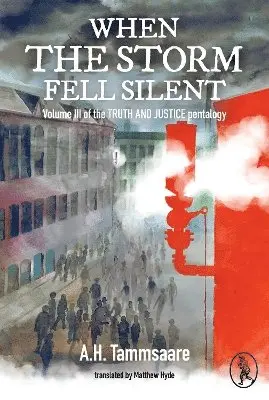
When the Storm Fell Silent is an ironic, tragic and contradictory work which reflects the author’s ambivalent attitude to the 1905 Revolution in Tsarist Russia, which Estonia was then a part of. He sympathised with the policies but disagreed with the random violence. This however does not do justice to the complexity of this great work which comprehends the difficult truth that the majority’s altruism, humanity and desire to improve other people’s lives can end in so much suffering without any durable gains. What appears simple becomes entangled in a web of mendacity, double-speak and false promises.Indrek, the central character, clearly represents Tammsaare’s own convictions, but not exactly. The author can approach any subject and stun the reader with his novel interpretations, and also gives the reader the opportunity to read his words and infer varied understandings and appreciations. Every actor in a revolution is represented here: from left to right and back again, every striking worker, every shopkeeper, every landowner, every policeman, every spy, every worker’s wife, every outsider and every starry-eyed teenager. Few people are who they first seem to be, and the shifting trends of the crowd are followed and carefully examined – a force of nature that ultimately is spent. When the Storm Fell Silent is Volume III in the Truth and Justice pentalogy, a monumental work which has been translated into many European languages, but only now being published in English for the first time by Vagabond Voices. The first two volumes, Vargamäe and Indrek deal with the personal and the familial and this third volume with the public and societal, but always both elements are present: one in foreground and one in the background, because Tammsaare is as much a holistic writer and he is an extraordinarily imaginative one.
In this collection which contains both autobiography and fiction, the prominent Estonian artist and writer Toomas Vint, whose career spans the Soviet period and Estonia’s re-gaining of independence, demonstrates his characteristic mischievous, dark sense of humour, an artist’s eye for visual detail, and an experimental approach to form. His main themes are the fine dividing line between fantasy and reality, man’s foibles, frailties and capacity for self-deception, and the absurd and sometimes tragicomic nature of the human condition.
Hanuman's Travels, which was shortlisted for the Russian Booker in 2010, translated into German and French, and put on the German stage, is the picaresque tale of two asylum-seekers, one a Russian Estonian man (the narrator) and the other an Indian (the protagonist), and about their daily lives in a Danish refugee camp and on the road in the late 1990s. While they are waiting to go to the Danish island of Lolland, which is said to be a paradise, the two companions in misfortune survive in any way they can. Among scams, big and small disgraces, humiliations and lies, a map is gradually drawn - a detailed map of itineraries where the hopes and the fears of thousands of marginal people flounder and intertwine. Andrei Ivanov was inspired to write this novel by his own vicissitudes as a stateless person living in Denmark.Their struggle at times engenders dismissiveness and even intolerance, but also humanity, courage and the wisdom born of experience and resignation.