568 kr
Skickas inom 7-10 vardagar
568 kr
Skickas inom 7-10 vardagar
837 kr
Skickas inom 10-15 vardagar
270 kr
Skickas inom 7-10 vardagar
1 128 kr
Skickas inom 7-10 vardagar
563 kr
Läs direkt efter köp
An argument that conceiving of economic value as a social force makes it possible to develop a new and more powerful theory of market behavior.
With the advent of the 2007–2008 financial crisis, the economics profession itself entered into a crisis of legitimacy from which it has yet to emerge. Despite the obviousness of their failures, however, economists continue to rely on the same methods and to proceed from the same underlying assumptions. André Orléan challenges the neoclassical paradigm in this book, with a new way of thinking about perhaps its most fundamental concept, economic value.
Orléan argues that value is not bound up with labor, or utility, or any other property that preexists market exchange. Economic value, he contends, is a social force whose vast sphere of influence, amounting to a kind of empire, extends to every aspect of economic life. Markets are based on the identification of value with money, and exchange value can only be regarded as a social institution. Financial markets, for example, instead of defining an extrinsic, objective value for securities, act as a mechanism for arriving at a reference price that will be accepted by all investors. What economists must therefore study, Orléan urges, is the hold that value has over individuals and how it shapes their perceptions and behavior.
Awarded the prestigious Prix Paul Ricoeur on its original publication in France in 2011, The Empire of Value has been substantially revised and enlarged for this edition, with an entirely new section discussing the financial crisis of 2007–2008.
575 kr
Skickas inom 7-10 vardagar
693 kr
2 682 kr
Skickas inom 10-15 vardagar
309 kr
Skickas inom 7-10 vardagar
266 kr
Skickas inom 7-10 vardagar
274 kr
Skickas inom 7-10 vardagar
500 kr
Läs direkt efter köp
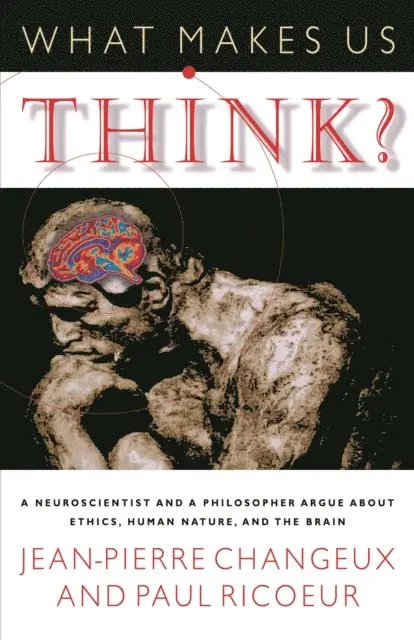
Will understanding our brains help us to know our minds? Or is there an unbridgeable distance between the work of neuroscience and the workings of human consciousness? In a remarkable exchange between neuroscientist Jean-Pierre Changeux and philosopher Paul Ricoeur, this book explores the vexed territory between these divergent approaches--and comes to a deeper, more complex perspective on human nature. Ranging across diverse traditions, from phrenology to PET scans and from Spinoza to Charles Taylor, What Makes Us Think? revolves around a central issue: the relation between the facts (or "what is") of science and the prescriptions (or "what ought to be") of ethics. Changeux and Ricoeur ask: Will neuroscientific knowledge influence our moral conduct? Is a naturally based ethics possible? Pursuing these questions, they attack key topics at the intersection of philosophy and neuroscience: What are the relations between brain states and psychological experience? Between language and truth? Memory and culture? Behavior and action? What is a mental representation? How does a sign relate to what it signifies? How might subjective experience be constructed rather than discovered? And can biological or cultural evolution be considered progressive? Throughout, Changeux and Ricoeur provide unprecedented insight into what neuroscience can--and cannot--tell us about the nature of human experience. Changeux and Ricoeur bring an unusual depth of engagement and breadth of knowledge to each other''s subject. In doing so, they make two often hostile disciplines speak to one another in surprising and instructive ways--and speak with all the subtlety and passion of conversation at its very best.
482 kr
Skickas inom 7-10 vardagar
1 973 kr
Skickas inom 3-6 vardagar
161 kr
Läs direkt efter köp
986 kr
Läs direkt efter köp
964 kr
Läs direkt efter köp
397 kr
Läs direkt efter köp
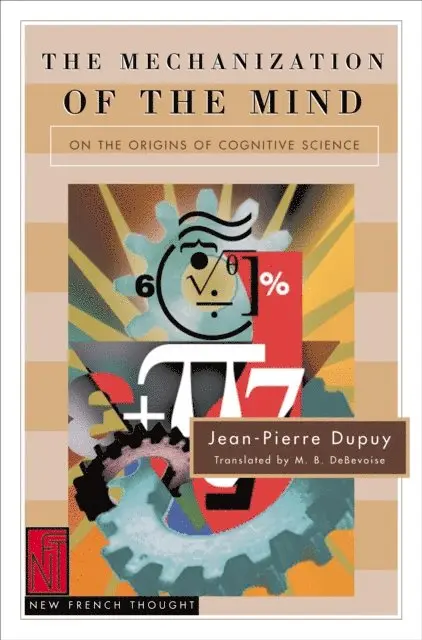
In March 1946, some of the greatest minds of the twentieth century--among them John von Neumann, Norbert Wiener, Warren McCulloch, and Walter Pitts--gathered at the Beekman Hotel in New York City with the aim of constructing a science of mental behavior that would resolve at last the ancient philosophical problem of mind and matter. The legacy of their collaboration is known today as cognitive science. Jean-Pierre Dupuy, one of the principal architects of cognitive science in France, reconstructs the early days of the field here in a provocative and engaging combination of philosophy, science, and historical detective work. He shows us how the ambitious and innovative ideas developed in the wake of that New York meeting prefigured some of the most important developments of late-twentieth-century thought. Many scholars, however, shunned the ideas as crude and resented them for being overpromoted. This rejection, Dupuy reveals, was a tragic mistake and a lost opportunity.As Dupuy explains, the founders of cognitive science--or, as they called it, "cybernetics"--drew passion and energy from two convictions: that the mind operates like a machine and that physical laws explain how nature can appear to have meaning. Armed with these convictions, they laid the foundations not only for cognitive science but also artificial intelligence, and foreshadowed the development of chaos theory, complexity theory, and a variety of other major scientific and philosophical breakthroughs. Today, their ideas speak directly to controversies that rage between cognitivists and connectionists, eliminative materialists and Wittgensteinians, functionalists and anti-reductionists. However, despite their genuine achievements, the cyberneticians had too much confidence in the power of their theories and made serious mistakes that led the next generation of thinkers to ignore their work. The development of a scientific theory of mind was thus significantly delayed.A profound and beautifully written book, The Mechanization of the Mind brings back to life the intellectual brilliance and excitement that attended the birth of cognitive science more than fifty years ago, and recasts our understanding of the history of the twentieth century thought.
622 kr
Läs direkt efter köp
288 kr
Tillfälligt slut