
Häftad, Engelska, 2013
510 kr
Skickas inom 3-6 vardagar
510 kr
Skickas inom 3-6 vardagar
504 kr
Skickas inom 3-6 vardagar
571 kr
Skickas inom 3-6 vardagar
394 kr
Skickas inom 3-6 vardagar
287 kr
Skickas inom 3-6 vardagar
401 kr
Skickas inom 7-10 vardagar
243 kr
Skickas inom 7-10 vardagar
205 kr
Skickas
368 kr
Skickas inom 7-10 vardagar
367 kr
Skickas inom 3-6 vardagar
390 kr
Skickas inom 7-10 vardagar
334 kr
Skickas inom 7-10 vardagar
317 kr
Skickas inom 7-10 vardagar
401 kr
Skickas inom 7-10 vardagar
317 kr
Skickas inom 7-10 vardagar
200 kr
Skickas inom 7-10 vardagar
182 kr
Skickas inom 7-10 vardagar
178 kr
Skickas inom 7-10 vardagar
49 kr
Läs direkt efter köp
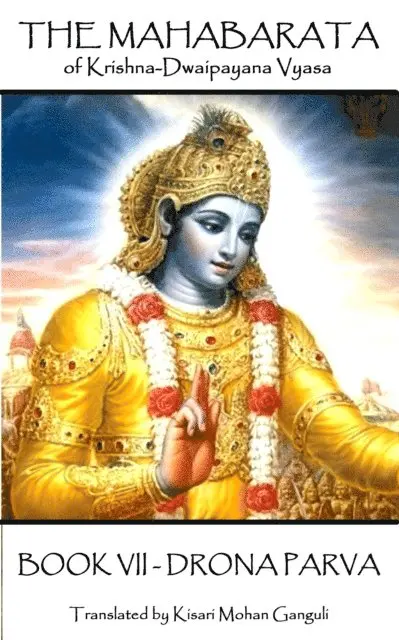
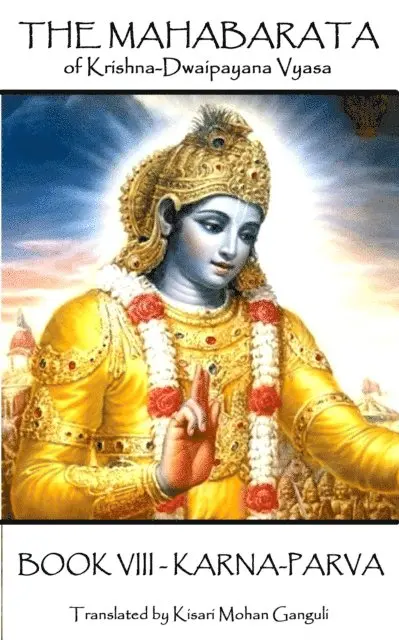
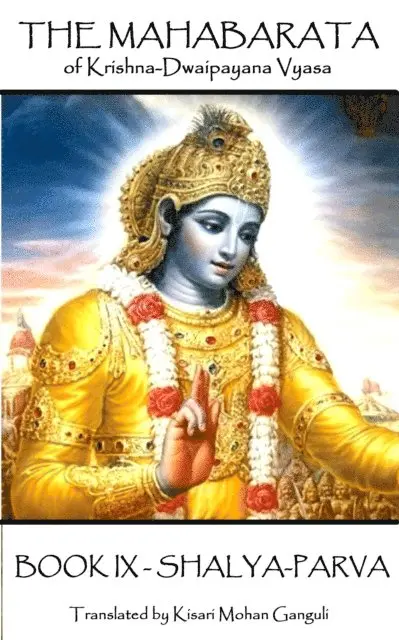
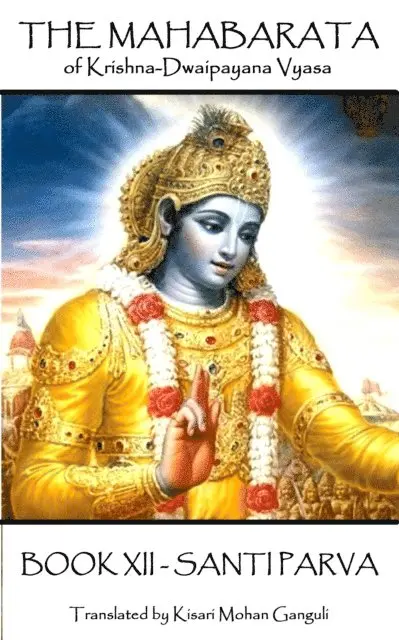
The Mahābhārata is one of the great works of world culture and the pinnacle of Sanskrit literature. It is also by some distance an epic of extraordinary length and breadth. Whilst there are many versions the longest is in the order of 1.9 million words across 200,000 lines of verse. In context if you combined both the Iliad and the Odyssey they would run to a mere quarter of its length.
Within this sweep lies the Kurukṣetra War and the fates of the Kaurava and the Pāṇḍava princes. Woven within this are many devotional and philosophical offerings, including much on the four "goals of life" or puruṣārtha; Dharma (righteousness, moral values), Artha (prosperity, economic values), Kama (pleasure, love, psychological values) and Moksha (liberation, spiritual values).
Also enclosed within it are other well-known stories such as the Bhagavad Gita, the story of Damayanti, an abbreviated version of the Rāmāyaṇa, and the story of Ṛṣyasringa. These are also considered as complete works in their own right.
Turning to the issue of authorship it has traditionally been attributed to Vyāsa (also known as Veda Vyāsa, or Krishna Dvaipāyana) who is also a character within it. Despite much scholarly detective work to unravel and reveal its history absolute certainty is difficult. The oldest preserved parts of the text are thought to be from around 400 BCE, although it is believed that its origin lies several centuries earlier perhaps as far back as the 9th century BCE and much of this was of oral tradition.
The final version of the text probably reached its finished form by the early Gupta period (around the 4th century CE).
The title ‘Mahābhārata’ may be best translated as "the great tale of the Bhārata dynasty".
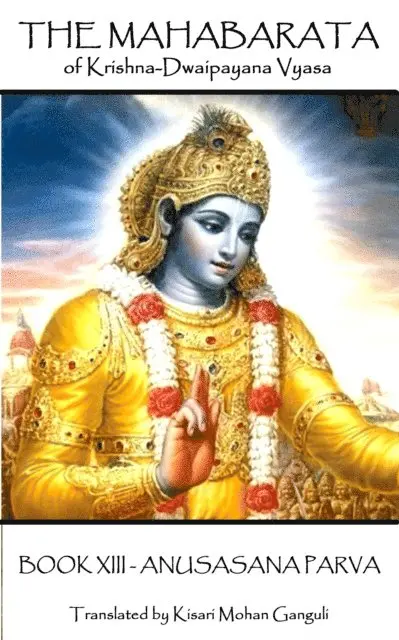
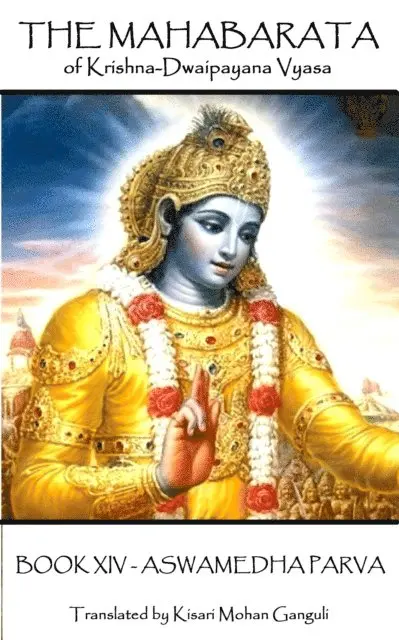
Kisari Mohan Ganguli, known also as K. M. Ganguli has translated this version of all eighteen books from Sanskrit into English between the years 1883 and 1896.
23 kr
Läs direkt efter köp
The Mahābhārata is one of the great works of world culture and the pinnacle of Sanskrit literature. It is also by some distance an epic of extraordinary length and breadth. Whilst there are many versions the longest is in the order of 1.9 million words across 200,000 lines of verse. In context if you combined both the Iliad and the Odyssey they would run to a mere quarter of its length.
Within this sweep lies the Kurukṣetra War and the fates of the Kaurava and the Pāṇḍava princes. Woven within this are many devotional and philosophical offerings, including much on the four "goals of life" or puruṣārtha; Dharma (righteousness, moral values), Artha (prosperity, economic values), Kama (pleasure, love, psychological values) and Moksha (liberation, spiritual values).
Also enclosed within it are other well-known stories such as the Bhagavad Gita, the story of Damayanti, an abbreviated version of the Rāmāyaṇa, and the story of Ṛṣyasringa. These are also considered as complete works in their own right.
Turning to the issue of authorship it has traditionally been attributed to Vyāsa (also known as Veda Vyāsa, or Krishna Dvaipāyana) who is also a character within it. Despite much scholarly detective work to unravel and reveal its history absolute certainty is difficult. The oldest preserved parts of the text are thought to be from around 400 BCE, although it is believed that its origin lies several centuries earlier perhaps as far back as the 9th century BCE and much of this was of oral tradition.
The final version of the text probably reached its finished form by the early Gupta period (around the 4th century CE).
The title ‘Mahābhārata’ may be best translated as "the great tale of the Bhārata dynasty".
Kisari Mohan Ganguli, known also as K. M. Ganguli has translated this version of all eighteen books from Sanskrit into English between the years 1883 and 1896.
49 kr
Läs direkt efter köp
The Mahābhārata is one of the great works of world culture and the pinnacle of Sanskrit literature. It is also by some distance an epic of extraordinary length and breadth. Whilst there are many versions the longest is in the order of 1.9 million words across 200,000 lines of verse. In context if you combined both the Iliad and the Odyssey they would run to a mere quarter of its length.
Within this sweep lies the Kurukṣetra War and the fates of the Kaurava and the Pāṇḍava princes. Woven within this are many devotional and philosophical offerings, including much on the four "goals of life" or puruṣārtha; Dharma (righteousness, moral values), Artha (prosperity, economic values), Kama (pleasure, love, psychological values) and Moksha (liberation, spiritual values).
Also enclosed within it are other well-known stories such as the Bhagavad Gita, the story of Damayanti, an abbreviated version of the Rāmāyaṇa, and the story of Ṛṣyasringa. These are also considered as complete works in their own right.
Turning to the issue of authorship it has traditionally been attributed to Vyāsa (also known as Veda Vyāsa, or Krishna Dvaipāyana) who is also a character within it. Despite much scholarly detective work to unravel and reveal its history absolute certainty is difficult. The oldest preserved parts of the text are thought to be from around 400 BCE, although it is believed that its origin lies several centuries earlier perhaps as far back as the 9th century BCE and much of this was of oral tradition.
The final version of the text probably reached its finished form by the early Gupta period (around the 4th century CE).
The title ‘Mahābhārata’ may be best translated as "the great tale of the Bhārata dynasty".
Kisari Mohan Ganguli, known also as K. M. Ganguli has translated this version of all eighteen books from Sanskrit into English between the years 1883 and 1896.
23 kr
Läs direkt efter köp
The Mahābhārata is one of the great works of world culture and the pinnacle of Sanskrit literature. It is also by some distance an epic of extraordinary length and breadth. Whilst there are many versions the longest is in the order of 1.9 million words across 200,000 lines of verse. In context if you combined both the Iliad and the Odyssey they would run to a mere quarter of its length.
Within this sweep lies the Kurukṣetra War and the fates of the Kaurava and the Pāṇḍava princes. Woven within this are many devotional and philosophical offerings, including much on the four "goals of life" or puruṣārtha; Dharma (righteousness, moral values), Artha (prosperity, economic values), Kama (pleasure, love, psychological values) and Moksha (liberation, spiritual values).
Also enclosed within it are other well-known stories such as the Bhagavad Gita, the story of Damayanti, an abbreviated version of the Rāmāyaṇa, and the story of Ṛṣyasringa. These are also considered as complete works in their own right.
Turning to the issue of authorship it has traditionally been attributed to Vyāsa (also known as Veda Vyāsa, or Krishna Dvaipāyana) who is also a character within it. Despite much scholarly detective work to unravel and reveal its history absolute certainty is difficult. The oldest preserved parts of the text are thought to be from around 400 BCE, although it is believed that its origin lies several centuries earlier perhaps as far back as the 9th century BCE and much of this was of oral tradition.
The final version of the text probably reached its finished form by the early Gupta period (around the 4th century CE).
The title ‘Mahābhārata’ may be best translated as "the great tale of the Bhārata dynasty".
Kisari Mohan Ganguli, known also as K. M. Ganguli has translated this version of all eighteen books from Sanskrit into English between the years 1883 and 1896.
49 kr
Läs direkt efter köp
The Mahābhārata is one of the great works of world culture and the pinnacle of Sanskrit literature. It is also by some distance an epic of extraordinary length and breadth. Whilst there are many versions the longest is in the order of 1.9 million words across 200,000 lines of verse. In context if you combined both the Iliad and the Odyssey they would run to a mere quarter of its length.
Within this sweep lies the Kurukṣetra War and the fates of the Kaurava and the Pāṇḍava princes. Woven within this are many devotional and philosophical offerings, including much on the four "goals of life" or puruṣārtha; Dharma (righteousness, moral values), Artha (prosperity, economic values), Kama (pleasure, love, psychological values) and Moksha (liberation, spiritual values).
Also enclosed within it are other well-known stories such as the Bhagavad Gita, the story of Damayanti, an abbreviated version of the Rāmāyaṇa, and the story of Ṛṣyasringa. These are also considered as complete works in their own right.
Turning to the issue of authorship it has traditionally been attributed to Vyāsa (also known as Veda Vyāsa, or Krishna Dvaipāyana) who is also a character within it. Despite much scholarly detective work to unravel and reveal its history absolute certainty is difficult. The oldest preserved parts of the text are thought to be from around 400 BCE, although it is believed that its origin lies several centuries earlier perhaps as far back as the 9th century BCE and much of this was of oral tradition.
The final version of the text probably reached its finished form by the early Gupta period (around the 4th century CE).
The title ‘Mahābhārata’ may be best translated as "the great tale of the Bhārata dynasty".
Kisari Mohan Ganguli, known also as K. M. Ganguli has translated this version of all eighteen books from Sanskrit into English between the years 1883 and 1896.
50 kr
Läs direkt efter köp
The Mahābhārata is one of the great works of world culture and the pinnacle of Sanskrit literature. It is also by some distance an epic of extraordinary length and breadth. Whilst there are many versions the longest is in the order of 1.9 million words across 200,000 lines of verse. In context if you combined both the Iliad and the Odyssey they would run to a mere quarter of its length.
Within this sweep lies the Kurukṣetra War and the fates of the Kaurava and the Pāṇḍava princes. Woven within this are many devotional and philosophical offerings, including much on the four "goals of life" or puruṣārtha; Dharma (righteousness, moral values), Artha (prosperity, economic values), Kama (pleasure, love, psychological values) and Moksha (liberation, spiritual values).
Also enclosed within it are other well-known stories such as the Bhagavad Gita, the story of Damayanti, an abbreviated version of the Rāmāyaṇa, and the story of Ṛṣyasringa. These are also considered as complete works in their own right.
Turning to the issue of authorship it has traditionally been attributed to Vyāsa (also known as Veda Vyāsa, or Krishna Dvaipāyana) who is also a character within it. Despite much scholarly detective work to unravel and reveal its history absolute certainty is difficult. The oldest preserved parts of the text are thought to be from around 400 BCE, although it is believed that its origin lies several centuries earlier perhaps as far back as the 9th century BCE and much of this was of oral tradition.
The final version of the text probably reached its finished form by the early Gupta period (around the 4th century CE).
The title ‘Mahābhārata’ may be best translated as "the great tale of the Bhārata dynasty".
Kisari Mohan Ganguli, known also as K. M. Ganguli has translated this version of all eighteen books from Sanskrit into English between the years 1883 and 1896.
50 kr
Läs direkt efter köp
The Mahābhārata is one of the great works of world culture and the pinnacle of Sanskrit literature. It is also by some distance an epic of extraordinary length and breadth. Whilst there are many versions the longest is in the order of 1.9 million words across 200,000 lines of verse. In context if you combined both the Iliad and the Odyssey they would run to a mere quarter of its length.
Within this sweep lies the Kurukṣetra War and the fates of the Kaurava and the Pāṇḍava princes. Woven within this are many devotional and philosophical offerings, including much on the four "goals of life" or puruṣārtha; Dharma (righteousness, moral values), Artha (prosperity, economic values), Kama (pleasure, love, psychological values) and Moksha (liberation, spiritual values).
Also enclosed within it are other well-known stories such as the Bhagavad Gita, the story of Damayanti, an abbreviated version of the Rāmāyaṇa, and the story of Ṛṣyasringa. These are also considered as complete works in their own right.
Turning to the issue of authorship it has traditionally been attributed to Vyāsa (also known as Veda Vyāsa, or Krishna Dvaipāyana) who is also a character within it. Despite much scholarly detective work to unravel and reveal its history absolute certainty is difficult. The oldest preserved parts of the text are thought to be from around 400 BCE, although it is believed that its origin lies several centuries earlier perhaps as far back as the 9th century BCE and much of this was of oral tradition.
The final version of the text probably reached its finished form by the early Gupta period (around the 4th century CE).
The title ‘Mahābhārata’ may be best translated as "the great tale of the Bhārata dynasty".
Kisari Mohan Ganguli, known also as K. M. Ganguli has translated this version of all eighteen books from Sanskrit into English between the years 1883 and 1896.
23 kr
Läs direkt efter köp
The Mahābhārata is one of the great works of world culture and the pinnacle of Sanskrit literature. It is also by some distance an epic of extraordinary length and breadth. Whilst there are many versions the longest is in the order of 1.9 million words across 200,000 lines of verse. In context if you combined both the Iliad and the Odyssey they would run to a mere quarter of its length.
Within this sweep lies the Kurukṣetra War and the fates of the Kaurava and the Pāṇḍava princes. Woven within this are many devotional and philosophical offerings, including much on the four "goals of life" or puruṣārtha; Dharma (righteousness, moral values), Artha (prosperity, economic values), Kama (pleasure, love, psychological values) and Moksha (liberation, spiritual values).
Also enclosed within it are other well-known stories such as the Bhagavad Gita, the story of Damayanti, an abbreviated version of the Rāmāyaṇa, and the story of Ṛṣyasringa. These are also considered as complete works in their own right.
Turning to the issue of authorship it has traditionally been attributed to Vyāsa (also known as Veda Vyāsa, or Krishna Dvaipāyana) who is also a character within it. Despite much scholarly detective work to unravel and reveal its history absolute certainty is difficult. The oldest preserved parts of the text are thought to be from around 400 BCE, although it is believed that its origin lies several centuries earlier perhaps as far back as the 9th century BCE and much of this was of oral tradition.
The final version of the text probably reached its finished form by the early Gupta period (around the 4th century CE).
The title ‘Mahābhārata’ may be best translated as "the great tale of the Bhārata dynasty".
Kisari Mohan Ganguli, known also as K. M. Ganguli has translated this version of all eighteen books from Sanskrit into English between the years 1883 and 1896.
23 kr
Läs direkt efter köp
The Mahābhārata is one of the great works of world culture and the pinnacle of Sanskrit literature. It is also by some distance an epic of extraordinary length and breadth. Whilst there are many versions the longest is in the order of 1.9 million words across 200,000 lines of verse. In context if you combined both the Iliad and the Odyssey they would run to a mere quarter of its length.
Within this sweep lies the Kurukṣetra War and the fates of the Kaurava and the Pāṇḍava princes. Woven within this are many devotional and philosophical offerings, including much on the four "goals of life" or puruṣārtha; Dharma (righteousness, moral values), Artha (prosperity, economic values), Kama (pleasure, love, psychological values) and Moksha (liberation, spiritual values).
Also enclosed within it are other well-known stories such as the Bhagavad Gita, the story of Damayanti, an abbreviated version of the Rāmāyaṇa, and the story of Ṛṣyasringa. These are also considered as complete works in their own right.
Turning to the issue of authorship it has traditionally been attributed to Vyāsa (also known as Veda Vyāsa, or Krishna Dvaipāyana) who is also a character within it. Despite much scholarly detective work to unravel and reveal its history absolute certainty is difficult. The oldest preserved parts of the text are thought to be from around 400 BCE, although it is believed that its origin lies several centuries earlier perhaps as far back as the 9th century BCE and much of this was of oral tradition.
The final version of the text probably reached its finished form by the early Gupta period (around the 4th century CE).
The title ‘Mahābhārata’ may be best translated as "the great tale of the Bhārata dynasty".
Kisari Mohan Ganguli, known also as K. M. Ganguli has translated this version of all eighteen books from Sanskrit into English between the years 1883 and 1896.
49 kr
Läs direkt efter köp
The Mahābhārata is one of the great works of world culture and the pinnacle of Sanskrit literature. It is also by some distance an epic of extraordinary length and breadth. Whilst there are many versions the longest is in the order of 1.9 million words across 200,000 lines of verse. In context if you combined both the Iliad and the Odyssey they would run to a mere quarter of its length.
Within this sweep lies the Kurukṣetra War and the fates of the Kaurava and the Pāṇḍava princes. Woven within this are many devotional and philosophical offerings, including much on the four "goals of life" or puruṣārtha; Dharma (righteousness, moral values), Artha (prosperity, economic values), Kama (pleasure, love, psychological values) and Moksha (liberation, spiritual values).
Also enclosed within it are other well-known stories such as the Bhagavad Gita, the story of Damayanti, an abbreviated version of the Rāmāyaṇa, and the story of Ṛṣyasringa. These are also considered as complete works in their own right.
Turning to the issue of authorship it has traditionally been attributed to Vyāsa (also known as Veda Vyāsa, or Krishna Dvaipāyana) who is also a character within it. Despite much scholarly detective work to unravel and reveal its history absolute certainty is difficult. The oldest preserved parts of the text are thought to be from around 400 BCE, although it is believed that its origin lies several centuries earlier perhaps as far back as the 9th century BCE and much of this was of oral tradition.
The final version of the text probably reached its finished form by the early Gupta period (around the 4th century CE).
The title ‘Mahābhārata’ may be best translated as "the great tale of the Bhārata dynasty".
Kisari Mohan Ganguli, known also as K. M. Ganguli has translated this version of all eighteen books from Sanskrit into English between the years 1883 and 1896.
49 kr
Läs direkt efter köp
The Mahābhārata is one of the great works of world culture and the pinnacle of Sanskrit literature. It is also by some distance an epic of extraordinary length and breadth. Whilst there are many versions the longest is in the order of 1.9 million words across 200,000 lines of verse. In context if you combined both the Iliad and the Odyssey they would run to a mere quarter of its length.
Within this sweep lies the Kurukṣetra War and the fates of the Kaurava and the Pāṇḍava princes. Woven within this are many devotional and philosophical offerings, including much on the four "goals of life" or puruṣārtha; Dharma (righteousness, moral values), Artha (prosperity, economic values), Kama (pleasure, love, psychological values) and Moksha (liberation, spiritual values).
Also enclosed within it are other well-known stories such as the Bhagavad Gita, the story of Damayanti, an abbreviated version of the Rāmāyaṇa, and the story of Ṛṣyasringa. These are also considered as complete works in their own right.
Turning to the issue of authorship it has traditionally been attributed to Vyāsa (also known as Veda Vyāsa, or Krishna Dvaipāyana) who is also a character within it. Despite much scholarly detective work to unravel and reveal its history absolute certainty is difficult. The oldest preserved parts of the text are thought to be from around 400 BCE, although it is believed that its origin lies several centuries earlier perhaps as far back as the 9th century BCE and much of this was of oral tradition.
The final version of the text probably reached its finished form by the early Gupta period (around the 4th century CE).
The title ‘Mahābhārata’ may be best translated as "the great tale of the Bhārata dynasty".
Kisari Mohan Ganguli, known also as K. M. Ganguli has translated this version of all eighteen books from Sanskrit into English between the years 1883 and 1896.
23 kr
Läs direkt efter köp
The Mahābhārata is one of the great works of world culture and the pinnacle of Sanskrit literature. It is also by some distance an epic of extraordinary length and breadth. Whilst there are many versions the longest is in the order of 1.9 million words across 200,000 lines of verse. In context if you combined both the Iliad and the Odyssey they would run to a mere quarter of its length.
Within this sweep lies the Kurukṣetra War and the fates of the Kaurava and the Pāṇḍava princes. Woven within this are many devotional and philosophical offerings, including much on the four "goals of life" or puruṣārtha; Dharma (righteousness, moral values), Artha (prosperity, economic values), Kama (pleasure, love, psychological values) and Moksha (liberation, spiritual values).
Also enclosed within it are other well-known stories such as the Bhagavad Gita, the story of Damayanti, an abbreviated version of the Rāmāyaṇa, and the story of Ṛṣyasringa. These are also considered as complete works in their own right.
Turning to the issue of authorship it has traditionally been attributed to Vyāsa (also known as Veda Vyāsa, or Krishna Dvaipāyana) who is also a character within it. Despite much scholarly detective work to unravel and reveal its history absolute certainty is difficult. The oldest preserved parts of the text are thought to be from around 400 BCE, although it is believed that its origin lies several centuries earlier perhaps as far back as the 9th century BCE and much of this was of oral tradition.
The final version of the text probably reached its finished form by the early Gupta period (around the 4th century CE).
The title ‘Mahābhārata’ may be best translated as "the great tale of the Bhārata dynasty".
Kisari Mohan Ganguli, known also as K. M. Ganguli has translated this version of all eighteen books from Sanskrit into English between the years 1883 and 1896.