"A well-written, deeply personal saga that acknowledges the resonance of historical identity, art, and literature in our present lives." -KIRKUS REVIEWS
1570: A street teems with activity in Renaissance Lisbon: boatmen unload passengers as jugglers entertain the crowd and vendors hawk their goods. The crowd is large, and more than half of it is Black. Most are enslaved African people performing an array of duties, but there are free Africans too, and somebody else: a Black knight astride a horse.
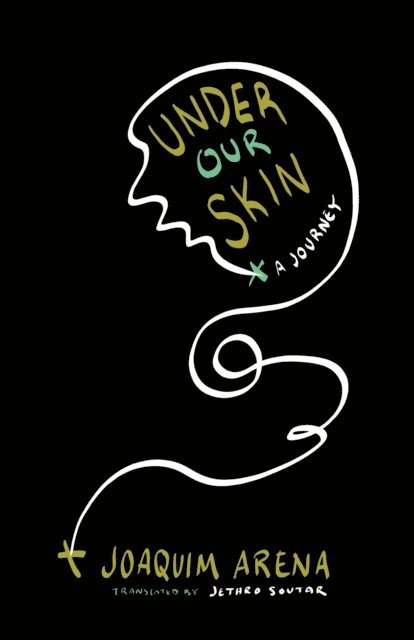
Four hundred and fifty years later, novelist and journalist Joaquim Arena stands in a museum, transfixed by the character depicted on this canvas by an anonymous Flemish painter. He doesn't know it yet, but the knight is Joao de Sáaacute; Panasco, a one-time slave who nevertheless became an Afro-Portuguese nobleman. So begins Under Our Skin, a wide-ranging investigation that seeks to know the people of the early African diaspora, and tell their stories.Arena was born in the tiny state of Cape Verde, a small chain of islands off the West Coast of Africa which were uninhabited before Portugal chose them for a slave-trade post—a place made famous in part by Herman Melville's essay on the nature of Cape Verdeans (known as 'Gees') who were common fixtures on whaling vessels.With this awareness, Arena creates a hybrid text of travel writing, memoir, and history, filled with portraits of complex and fascinating characters. There is Dido Elizabeth Belle, the daughter of a slave raised a gentlewoman in England; Abraham Petrovitch Gannibal, abducted from Africa as a boy, only to be groomed as a nobleman under Peter the Great; Thomas-Alexandre Dumas, son of a Haitian slave, who became a French general in the Napoleonic Wars; Jacobus Capitein, from Ghana, who studies at a European university only to become a pro-slavery Christian minister in the Netherlands; and Carlos Marcelino da Graça or ‘Sweet Daddy Grace’, from Cape Verde, who became an incredibly influential and successful church leader and faith healer in the United States.Triggered by the death of his adoptive father, Arena interlaces the stories of historical figures with those of his own childhood in Cape Verde, as well as his early years in Lisbon. Like many Cape Verdeans, his step-father was a seaman and heavy drinker whose death provides a springboard for connection to the Cape Verde immigrant experience at large. Arena ties these stories to the wider diasporas connecting the island to Europe, the US, and finally, back to Africa. In the end, the author heads to the southern tip of Portugal, known as the Algarve, where 230 Africans were brought in 1444, marking the beginning of the Atlantic slave trade. With a skillful translation by Jethro Soutar that captures Arena’s insightful, accessible style, Under Our Skin is a story unlike anything else. Of it the Jornal Econóoacute;mico, a leading newspaper in Portugal, has called it “the closest thing” the Portuguese language has to W.G. Sebald.