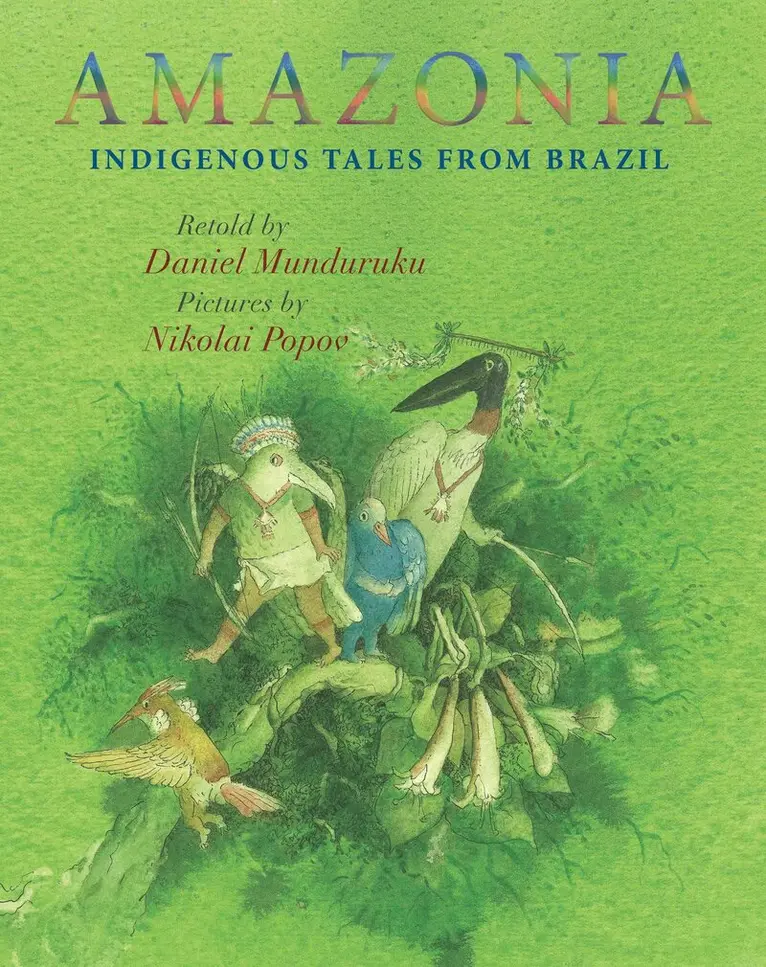
Amazonia is an extraordinary book of Brazilian folktales that combines the authentic voice of Daniel Munduruku, a noted indigenous author who grew up in the Amazon rainforest, with the imagined Amazon of Nikolai Popov, one of Russia's major artists and its foremost children's book illustrator. Many years ago, Nikolai Popov, Russia's leading children's book illustrator, illustrated an extensive, academic collection of Brazilian folktales. The sources for his illustrations were the stories themselves and his own richly imagined Amazonia. Today the book is out of print and only a few copies survive -- a fate shared by many great books from the golden age of Russian children's books. Groundwood in collaboration with a Brazilian publisher, Edicões SM Brasil, commissioned Daniel Munduruku, a noted indigenous Brazilian author, to select those stories he felt were most representative of the peoples of the Amazon and to retell them in his own voice. Mermaids, jaguars, snakes, flying men, witches -- extraordinary creatures from the world's most important wild jungle live on in these tales. The stories are fascinating, and sometimes startling, as protagonists are killed off or transformed into animals or rise up precipitously into the heavens. But they offer a panorama of experience -- conflict and death, love and seduction, greed and gluttony, hunting and fishing, cooking and caring for plants -- and describe the origins of the natural world. Munduruku's storytelling and Popov's imagination bring us the tales of the people of the Amazon in all their magic wonder. An introduction describes the importance of myths, how the stories have survived and their relevance today. A glossary provides more information about animals and plants that may be unfamiliar to North American readers.
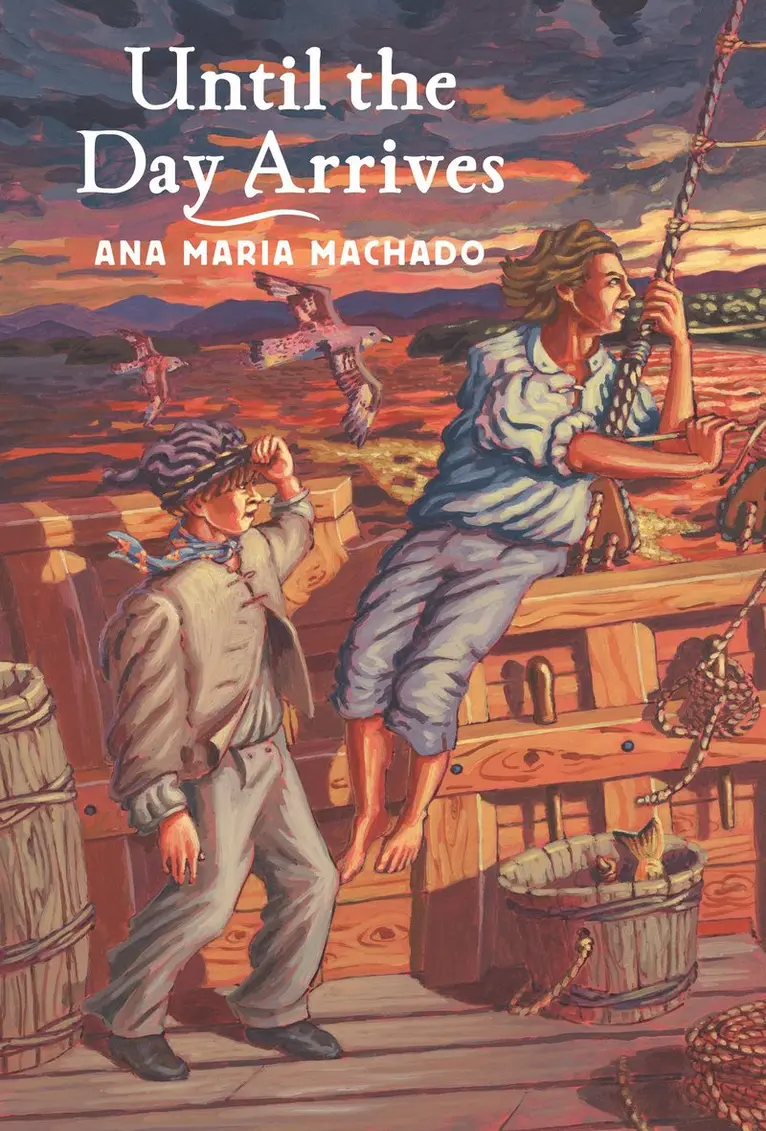
A fast-moving middle-grade novel set in the seventeenth century about two Portuguese orphans who are sent to Brazil where they encounter slaves from Africa. Together with their new friend, an aboriginal boy, they work towards reuniting the slaves with their families and helping them escape to freedom.The novel opens when Bento is wrongly thrown into Lisbon’s prison by the king’s guards, leaving his younger sibling, Manu, to fend for himself. Fortunately, a nobleman’s family helps to reunite the siblings — although they will have to lead a life of exile in Brazil. They keep secret the fact that Manu is a girl in disguise so that she will be able to accompany her brother aboard ship.The story shifts to the African savannah, where a young boy, Odjigi, is hunting gazelle with his father and other men. But the hunters soon become the hunted — they are kidnapped by slave traders, as are the women and children of the village, marched to the sea, shut up in dark, airless huts to prepare for the voyage across the Atlantic, and then undergo the horrifying trip itself.In Brazil, the siblings quickly adapt to their new lives, but they are shocked by the existence and treatment of African slaves. Manu befriends an aboriginal boy, Caiubi, and a slave, Didi, who has been separated from his father. Meanwhile Bento falls in love with Rosa, a beautiful young slave who is also searching for her family. When Manu learns from Caiubi that escaped slaves have formed quilombos — villages hidden deep in the forest where they live in freedom — she is determined that they must help Didi and Rosa escape.