275 kr
Skickas inom 7-10 vardagar
275 kr
Skickas inom 7-10 vardagar
231 kr
Skickas inom 7-10 vardagar
917 kr
Skickas inom 7-10 vardagar
146 kr
Skickas inom 7-10 vardagar
699 kr
Läs direkt efter köp
645 kr
Skickas inom 10-15 vardagar
699 kr
Läs direkt efter köp
380 kr
Skickas inom 10-15 vardagar
1 221 kr
Skickas inom 10-15 vardagar
412 kr
Läs direkt efter köp
412 kr
Läs direkt efter köp
1 060 kr
Läs direkt efter köp
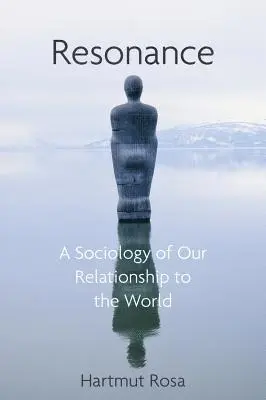
The pace of modern life is undoubtedly speeding up, yet this acceleration does not seem to have made us any happier or more content. If acceleration is the problem, then the solution, argues Hartmut Rosa in this major new work, lies in “resonance.” The quality of a human life cannot be measured simply in terms of resources, options, and moments of happiness; instead, we must consider our relationship to, or resonance with, the world.
Applying his theory of resonance to many domains of human activity, Rosa describes the full spectrum of ways in which we establish our relationship to the world, from the act of breathing to the adoption of culturally distinct worldviews. He then turns to the realms of concrete experience and action – family and politics, work and sports, religion and art – in which we as late modern subjects seek out resonance. This task is proving ever more difficult as modernity’s logic of escalation is both cause and consequence of a distorted relationship to the world, at individual and collective levels. As Rosa shows, all the great crises of modern society – the environmental crisis, the crisis of democracy, the psychological crisis – can also be understood and analyzed in terms of resonance and our broken relationship to the world around us.
Building on his now classic work on acceleration, Rosa’s new book is a major new contribution to the theory of modernity, showing how our problematic relation to the world is at the crux of some of the most pressing issues we face today. This bold renewal of critical theory for our times will be of great interest to students and scholars across the social sciences and humanities.
310 kr
Läs direkt efter köp
The pace of modern life is undoubtedly speeding up, yet this acceleration does not seem to have made us any more happy or content. If acceleration is the problem, then the solution, argues Hartmut Rosa in this major new work, lies in ''resonance''. The quality of a human life cannot be measured simply in terms of resources, options and moments of happiness: instead, we must consider our relationship to, or resonance with, the world.Applying his theory of resonance to many domains of human activity, Rosa describes the full spectrum of ways in which we establish our relationship to the world, from the act of breathing to the adoption of culturally distinct worldviews. He then turns to the realms of concrete experience and action – family and politics, work and sports, religion and art – in which we as late-modern subjects seek out resonance. This task is proving ever more difficult as modernity''s logic of escalation is both cause and consequence of a distorted relationship to the world, at individual and collective levels. As Rosa shows, all the great crises of modern society – the environmental crisis, the crisis of democracy, the psychological crisis – can also be understood and analyzed in terms of resonance and our broken relationship to the world around us. Building on his now classic work on acceleration, Rosa''s new book is a major new contribution to the theory of modernity, showing how our problematic relation to the world is at the crux of some of the most pressing issues we face today. This bold renewal of critical theory for our times will be of great interest to students and scholars across the social sciences and humanities.Also available as an audiobook.
480 kr
Skickas inom 7-10 vardagar
162 kr
Läs direkt efter köp
741 kr
Skickas inom 7-10 vardagar
274 kr
Skickas inom 7-10 vardagar
310 kr
Läs direkt efter köp
In everyday life, we generally assume that we can make our own decisions on matters which concern our own lives. We assume that a life followed only according to decisions taken by other people, against our will, cannot be a well-lived life – we assume, in other words, that we are and should be autonomous. However, it is equally true that many aspects of our lives are not chosen freely: this is true of social relations and commitments but also of all those situations we simply seem to stumble into, situations which just seem to happen to us. The possibility of both the success of an autonomous life and its failure are part of our everyday experiences.
In this brilliant and illuminating book, Beate Roessler examines the tension between failing and succeeding to live an autonomous life and the obstacles we have to face when we try to live our life autonomously, obstacles within ourselves as well as those that stem from social and political conditions. She highlights the ambiguities we encounter, examines the roles of self-awareness and self-deception, explores the role of autonomy for the meaning of life, and maps out the social and political conditions necessary for autonomy. Informed by philosophical perspectives but also drawing on literary texts, such as those of Siri Hustvedt and Jane Austen, and diaries, including those of Franz Kafka and Sylvia Plath, Roessler develops a formidable defense of autonomy against excessive expectations and, above all, against overpowering skepticism.667 kr
Skickas inom 7-10 vardagar
259 kr
Läs direkt efter köp