"Bitter Grass was written in 1976 while I was in my last year of high school in the city of Lushnje in Albania. It was refused by N. Frasheri, the government publication house in Tirana. According to the censor, 'the texts in this collection do not deal with the theme of our socialist village; the hero of the poems is a solitary person who flees from his contemporaries, from the Association of Pioneers, from reality; moreover, the transformations that socialism has brought to the countryside under the guidance of the Party are entirely absent...' At that time, the collection had the title Diary of the Wood. I translated the texts from Albanian into Italian in 1999. Two years later, in 2001, the work was published for the first time in Italy. This new publication has been expanded and includes new texts in respect to the first edition. Offering these poems to readers, it's as if I were going back many years to the icy and inhospitable winter of the Albanian dictatorship where I began my journey as a poet." -Gezim Hadari
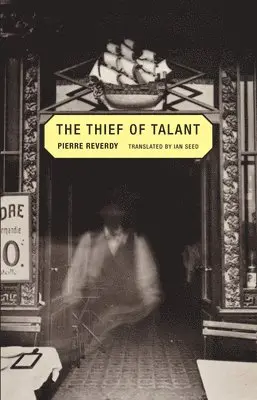
Challenged by his friend, poet and art critic Max Jacob, to write a novel, Pierre Reverdy produced this fragmented, beautiful assemblage of loneliness, paranoia and depersonalization drawn from his own experience of Paris in the early 20th century, the sometimes antagonistic atmosphere of the avant-garde and his own troubled relationship with Jacob, who tended to detect the threat of his literary treasures being plagiarized among everyone he knew. Toward the end of his life, Reverdy confirmed that the alienated, anxious “thief” of this novel in verse was a portrait of himself (“Talant” conveys both the dual echo in French of “talent” and the small town of Talan near Dijon, thereby evoking a potential plagiarizer from the countryside), and “Abel the Magus,” a semi-satirical portrait of Jacob.Originally published in French in 1917, The Thief of Talant is a radical experiment in verse and narrative, a moving evocation of the loss (and recovery) of self and an encrypted guidebook to the “heroic” years of Cubism.Pierre Reverdy (1889–1960) was a reclusive yet integral component of the early Parisian avant-garde and a friend to painters such as Modigliani, Picasso and Gris, who, with fellow poets such as Apollinaire and Jacob, came to represent a faction known as the “Cubist poets.” In 1926, Reverdy withdrew from Paris for a life of seclusion in the northwest of France.
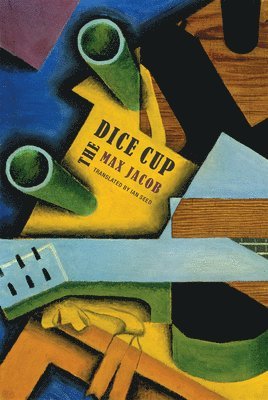
The most important prose-poem collection of the 20th century, available in a trade publication for the first timeMax Jacob’s role in French modernity was essential, and with this second volume of his work from Wakefield Press, it can now be fully and properly assessed. First published in 1917, The Dice Cup stands alongside Baudelaire’s Paris Spleen, Rimbaud’s Illuminations and Pierre Reverdy’s Prose Poems as one of the most important and foundational books of prose poetry. Jacob has been identified as a “cubist poet,” but this collection and its shifting style escape any such easy definition: dream accounts are rendered in playful prose that thumbs its nose at the fabular tradition of Baudelaire and Mallarmé and the Romantic disorder of Rimbaud, and subverts both poetic and narrative expectations in favor of dream logic, allusion, transformed autobiography and nonsensical parody. At once mystical and burlesque, the prose poems of Dice Cup are consciously constructed, yet as unstable and unfixed as both Jacob’s personality and our own.Max Jacob (1876–1944) was a French poet, painter, writer and critic. A key figure of bohemian Montmartre and the Cubist era, he rubbed shoulders with Apollinaire and Modigliani and was a lifelong friend to Picasso, Gris and Cocteau. Jacob converted from Judaism to Christianity in 1915. Arrested by the Gestapo in 1944, he died in a deportation camp of pneumonia. Rosanna Warren's critically acclaimed biography of Jacob was published in 2020.