249 kr
Skickas
249 kr
Skickas
11 kr
Läs direkt efter köp
442 kr
Skickas inom 7-10 vardagar
346 kr
223 kr
Skickas inom 7-10 vardagar
410 kr
Skickas inom 7-10 vardagar
166 kr
Skickas inom 7-10 vardagar
167 kr
Skickas inom 7-10 vardagar
166 kr
Skickas inom 7-10 vardagar
167 kr
Skickas inom 7-10 vardagar
167 kr
Skickas inom 7-10 vardagar
167 kr
Skickas inom 7-10 vardagar
264 kr
Skickas inom 3-6 vardagar
219 kr
Skickas inom 3-6 vardagar
197 kr
Skickas inom 3-6 vardagar
311 kr
Skickas inom 3-6 vardagar
215 kr
Skickas inom 7-10 vardagar
215 kr
Skickas inom 7-10 vardagar
364 kr
Skickas inom 7-10 vardagar
361 kr
Skickas inom 7-10 vardagar
364 kr
Skickas inom 7-10 vardagar
315 kr
Skickas inom 7-10 vardagar
322 kr
Skickas inom 7-10 vardagar
670 kr
Skickas inom 7-10 vardagar
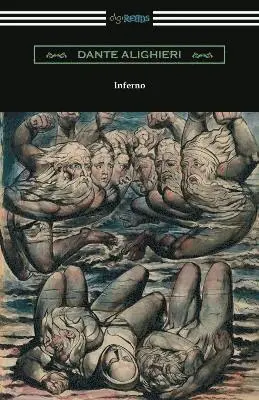
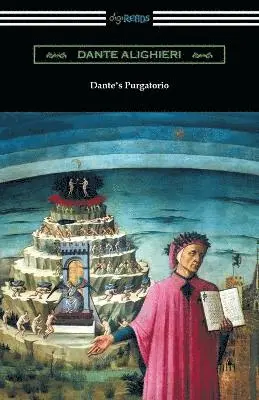
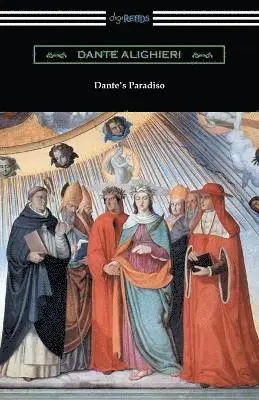
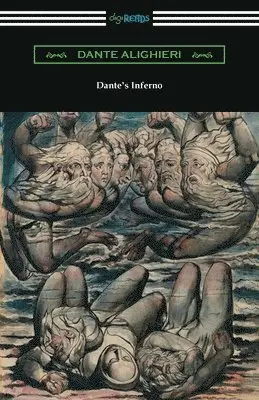
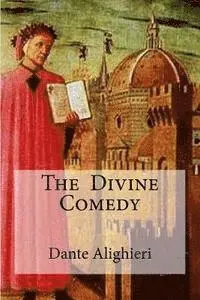
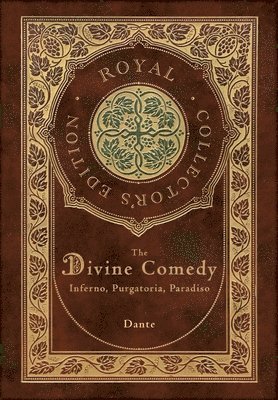
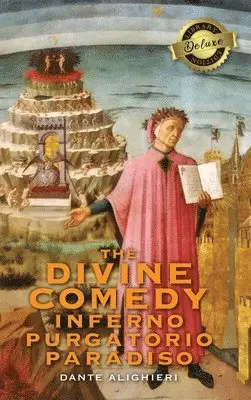
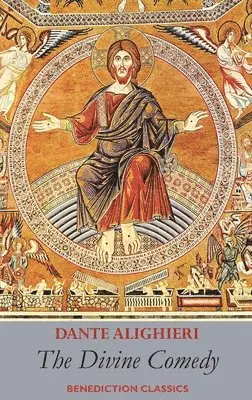
The Divine Comedy describes Dante's travels through Hell, Purgatory, and Paradise and represents the soul's journey towards God. This edition includes the complete texts of Dante's Inferno, Purgatoria, and Paradiso.
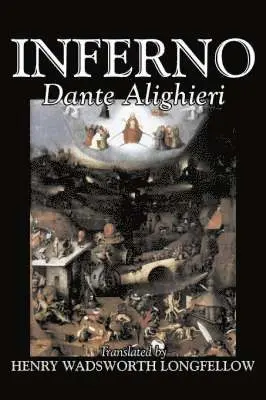
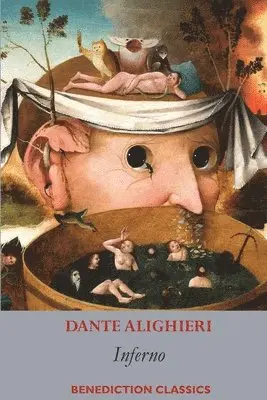
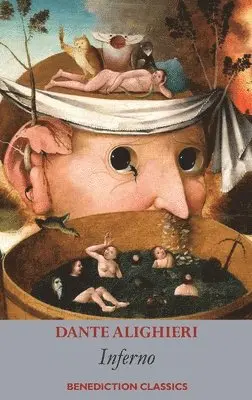
Inferno - Inferno begins with Dante lost in a dark wood, assailed by beasts he cannot evade, and unable to find the straight way to salvation. Conscious that he is ruining himself and that he is falling into a dark place, Dante is at last rescued by Virgil, and the two of them begin their journey to the underworld. Allegorically, the Inferno represents the Christian soul seeing sin for what it really is, and the three beasts represent three types of sin: the self-indulgent, the violent, and the malicious.
Purgatoria - Having survived the depths of Hell, Dante and Virgil ascend out of the undergloom to the Mountain of Purgatory on the far side of the world. The mountain has seven terraces, corresponding to the seven deadly sins. Dante's illustrative examples of sin and virtue draw on classical sources as well as on the Bible and on contemporary events.
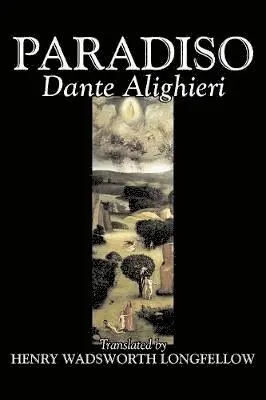
Paradiso - After an initial ascension, Beatrice guides Dante through the nine celestial spheres of Heaven. These are concentric and spherical, as in Aristotelian and Ptolemaic cosmology. The structure of Paradiso is based on the four cardinal virtues and the three theological virtues. In Paradiso, Dante meets and converses with several great saints of the Church, including Saint Peter, and St. John. Allegorically, the poem represents the soul's ascent to God.
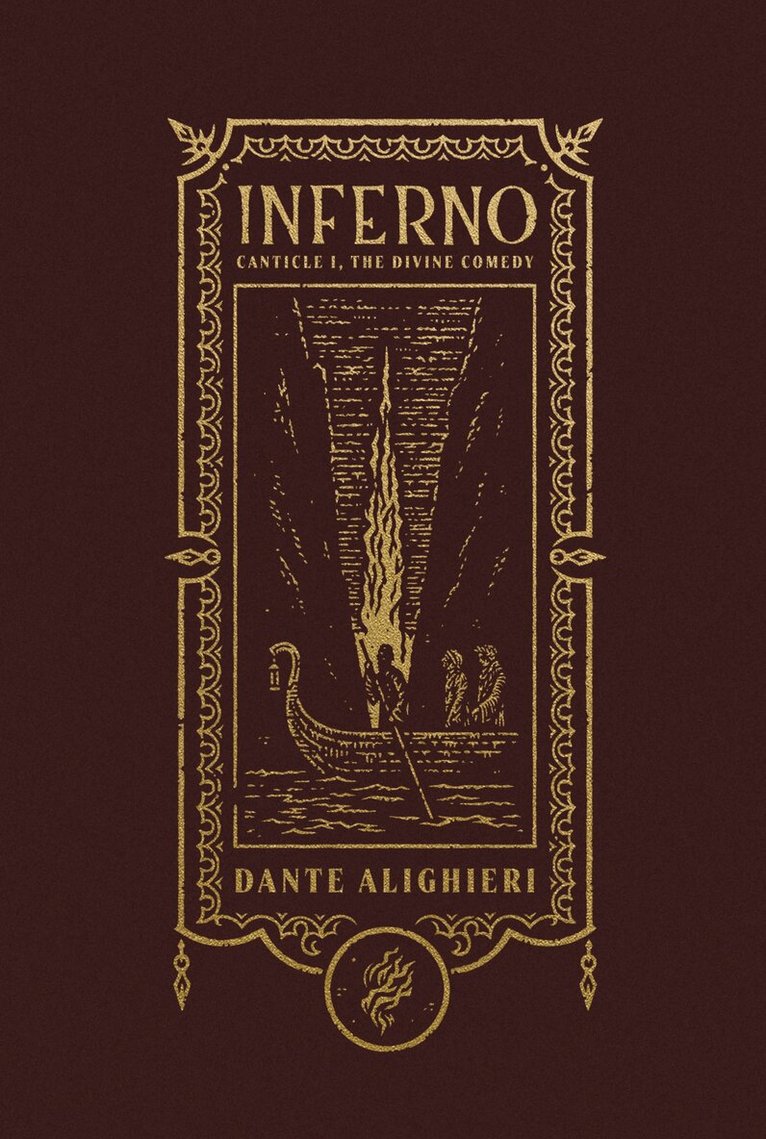
This case laminate collector's edition includes a Victorian inspired dust-jacket.
560 kr
Skickas inom 7-10 vardagar
917 kr
Skickas inom 3-6 vardagar
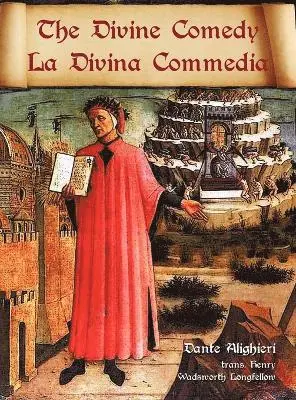
This edition gives a side-by-side parallel translation of Dante's Divine Comedy using Longfellow's translation.
The Divine Comedy is an epic poem written by Dante Alighieri between 1308 and his death in 1321. It is generally considered to be the preeminent work of Italian literature and one of the greatest works of world literature. The poem is written in the Tuscan dialect, and the poem helped establish this dialect as the standardized Italian language. The poem is divided into three parts: Inferno, Purgatorio, and Paradiso. At the superficial level, the poem describes Dante's travels through Hell, Purgatory, and Heaven; but at a deeper level, it is an allegory of the soul's journey towards God. In order to articulate this journey towards God, Dante uses medieval Christian theology and philosophy, especially Thomistic philosophy and the Summa Theologica of Thomas Aquinas. Longfellow's translation is considered to be the best translation, overall. Longfellow, being a poet himself, was able to create a flowing translation that has not been surpassed.
37 kr
Läs direkt efter köp
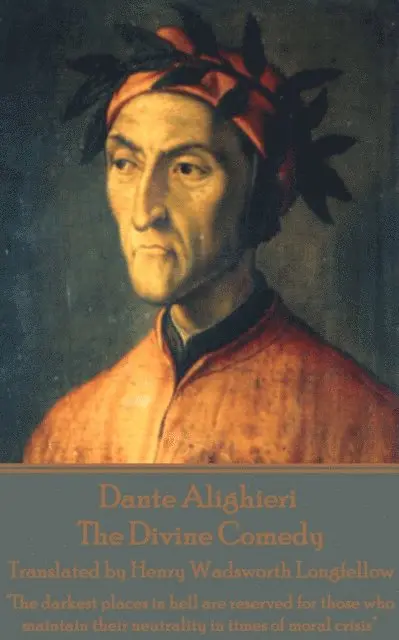
Durante degli Alighieri, but better known simply as Dante, was born in Florence in about 1265. He grew to be the major Italian poet of the Late Middle Ages and wrote perhaps the greatest of literary works in Italian: The Divine Comedy. In Italy, Dante is often referred to as il Sommo Poeta - "the Supreme Poet". Significantly he writes in the vernacular, an amalgam of Tuscan dialect, Latin and other influence and for this he is often cited as the Father of the Italian Language. As well he wrote The Divine Comedy in a three-line rhyme scheme, or the terza rima, a significant development and its first use, of course, is attributed to him. This major work provided influence for almost all who followed including Milton and Tennyson and has been translated into English by many world class poets including Henry Wadsworth Longfellow and Laurence Binyon. Henry Wadsworth Longfellow was born on February 27th, 1807 in Portland, Maine. As a young boy, it was obvious that he was very studious and he quickly became fluent in Latin. He published his first poem, "The Battle of Lovell''s Pond", in the Portland Gazette on November 17th, 1820. He was already thinking of a career in literature and, in his senior year, wrote to his father: “I will not disguise it in the least... the fact is, I most eagerly aspire after future eminence in literature, my whole soul burns most ardently after it, and every earthly thought centers in it....” After graduation travels in Europe occupied the next three years and he seemed to easily absorb any language he set himself to learn. On September 14th, 1831, Longfellow married Mary Storer Potter. They settled in Brunswick. His first published book was in 1833, a translation of poems by the Spanish poet Jorge Manrique. He also published a travel book, Outre-Mer: A Pilgrimage Beyond the Sea. During a trip to Europe Mary became pregnant. Sadly, in October 1835, she miscarried at some six months. After weeks of illness she died, at the age of 22 on November 29th, 1835. Longfellow wrote "One thought occupies me night and day... She is dead — She is dead! All day I am weary and sad". In late 1839, Longfellow published Hyperion, a book in prose inspired by his trips abroad. Ballads and Other Poems was published in 1841 and included "The Village Blacksmith" and "The Wreck of the Hesperus". His reputation as a poet, and a commercial one at that, was set. On May 10th, 1843, after seven years in pursuit of a chance for new love, Longfellow received word from Fanny Appleton that she agreed to marry him. On November 1st, 1847, the epic poem Evangeline was published. In 1854, Longfellow retired from Harvard, to devote himself entirely to writing. The Song of Haiwatha, perhaps his best known and enjoyed work was published in 1855. On July 10th, 1861, after suffering horrific burns the previous day. In his attempts to save her Longfellow had also been badly burned and was unable to attend her funeral. He spent several years translating Dante Alighieri''s Divine Comedy. It was published in 1867. Longfellow was also part of a group who became known as The Fireside Poets which also included William Cullen Bryant, John Greenleaf Whittier, James Russell Lowell, and Oliver Wendell Holmes Snr. Longfellow was the most popular poet of his day. As a friend once wrote to him, "no other poet was so fully recognized in his lifetime". Some of his works including "Paul Revere''s Ride" and “The Song of Haiwatha” may have rewritten the facts but became essential parts of the American psyche and culture. Henry Wadsworth Longfellow died, surrounded by family, on Friday, March 24th, 1882. He had been suffering from peritonitis.
148 kr
Skickas inom 7-10 vardagar
354 kr
Skickas inom 7-10 vardagar
445 kr
Skickas inom 7-10 vardagar