Ambrosiaster ("Star of Ambrose") is the name given to the anonymous author of the earliest complete Latin commentary on the thirteen epistles of Paul. The commentaries were thought to have been written by Ambrose throughout the Middle Ages, but their authorship was challenged by Erasmus, whose arguments have proved decisive.Here for the first time Ambrosiaster''s commentaries on Romans and the Corinthian correspondence are made available in English translation, ably translated and edited by Gerald L. Bray.The commentaries, which serve as important witnesses to pre-Vulgate Latin versions of Paul''s epistles, are noteworthy in other respects as well. Ambrosiaster was a careful and thoughtful interpreter, with little use for allegory, though he employed typology judiciously. Writing during the pontificate of Damasus (366-384), he is a witness to Nicene orthodoxy and frequently comments on themes related to the Trinity, the consubstantiality of the Son, the problem of the unbelief of the Jews and the nature of human sinfulness. He had a keen eye for moral issues and often offers comments that reflect his knowledge of how the church had changed from the time of the apostles to his own day.This commentary offers arich repository of insight into the thinking of pre-Reformation church leaders for the leaders and teachers of the church today.Ancient Christian Texts are new English translations of full-length commentaries or sermon series from ancient Christian authors that allow you to study key writings of the early church fathers in a fresh way.
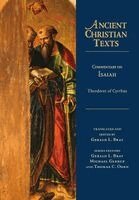
An Ancient Commentary Available for the First Time in EnglishFor the first time in English, discover the full text of Theodoret of Cyrrhus's Commentary on Isaiah. As part of the Ancient Christian Texts series, this volume provides a unique look into the biblical interpretation of the early church. Long thought to be lost, this commentary was rediscovered in 1899 and is now accessible in English to scholars, pastors, and students. Theodoret of Cyrrhus (c. 393 c. 458) was a significant and sometimes controversial figure in the fifth century church. He played a key role in the controversy between Cyril of Alexandria and his Antiochene opponents following the Council of Ephesus in 431. He is widely credited with helping the opposing sides reach an agreement. Excerpts from Theodoret's commentary on Isaiah were included in the two series of Catenae that summarized and circulated ancient Greek commentaries for general use. The full text was thought to have been lost until its rediscovery in its entirety in 1899. This volume features:- The full text of Theodoret of Cyrrhus's commentary on Isaiah, previously unavailable to the English-speaking world. - Historically significant insights into early church biblical interpretation and commentary. - An invaluable resource for scholars, pastors, and students of the patristic era, Old Testament studies, and church history. About the SeriesAncient Christian Texts is a collection of new English translations that opens a window into the wisdom of the early church. Many of these full-length commentaries and sermon series by ancient Christian authors are available for the first time in English, providing contemporary readers with the resources they need to study for themselves the key writings of the early church.