212 kr
Skickas
212 kr
Skickas
379 kr
Skickas inom 7-10 vardagar
379 kr
Skickas inom 7-10 vardagar
419 kr
Skickas inom 7-10 vardagar
574 kr
Läs direkt efter köp
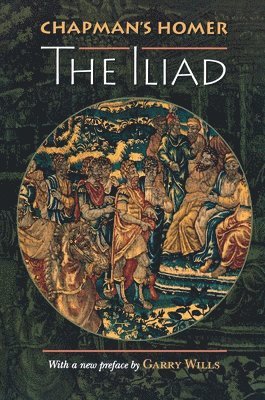
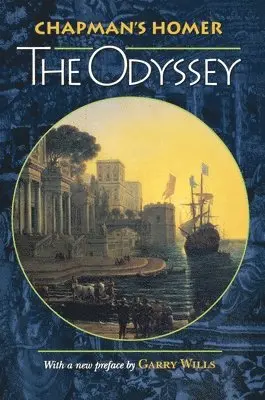
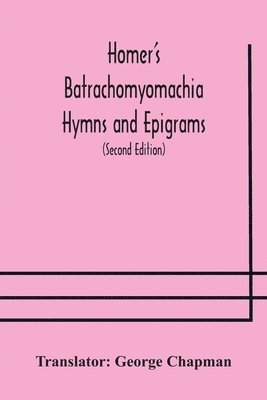
George Chapman''s translations of Homer--immortalized by Keats''s sonnet-- are the most famous in the English language. Swinburne praised their "romantic and sometimes barbaric grandeur," their "freshness, strength, and inextinguishable fire." And the great critic George Saintsbury wrote, "For more than two centuries they were the resort of all who, unable to read Greek, wished to know what the Greek was. Chapman is far nearer Homer than any modern translator in any modern language." This volume presents the original text of Chapman''s translation of the Homeric hymns. The hymns, believed to have been written not by Homer himself but by followers who emulated his style, are poems written to the gods and goddesses of the ancient Greek pantheon. The collection, originally titled by Chapman "The Crowne of all Homers Workes," also includes epigrams and poems attributed to Homer and known as "The Lesser Homerica," as well as his famous "The Battle of Frogs and Mice."
463 kr
Kommande
918 kr
Kommande
463 kr
Kommande
918 kr
Kommande
308 kr
Kommande
659 kr
Kommande
121 kr
Skickas inom 7-10 vardagar
86 kr
Skickas
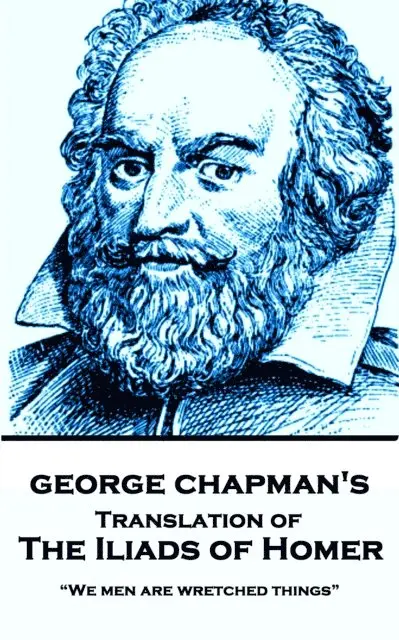
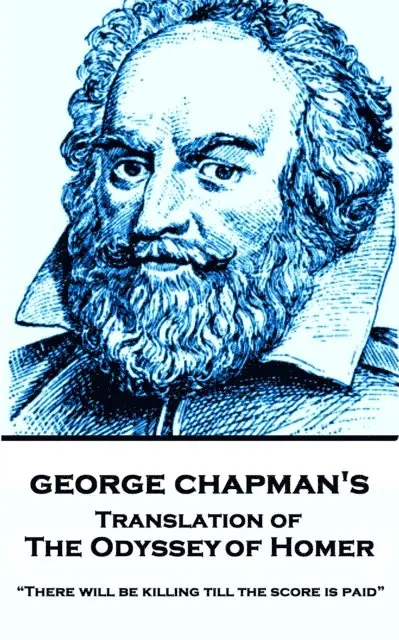
George Chapman was born at Hitchin in Hertfordshire in about 1559. There is some evidence that Chapman attended Oxford University but did not obtain a degree, but the evidence is rather scant. During the first part of the early 1590s Chapman was in Europe, in military action in the Low Countries fighting under the famed English general Sir Francis Vere. It is from this period that his earliest published works are found including the obscure philosophical poems The Shadow of Night (1594) and Ovid''s Banquet of Sense (1595). By the end of the 1590s, Chapman had become a successful playwright, working for the Elizabethan Theatrical entrepreneur, Philip Henslowe, and later for the Children of the Chapel. From 1598 he published his translation of the Iliad in installments. In 1616 the complete Iliad and Odyssey appeared in The Whole Works of Homer, the first complete English translation, which until Alexander Pope''s, was the most popular in the English language and was the entry point for most English readers of these magnificent poems. The great Ben Jonson was also using Chapman’s talents in the play Eastward Ho (1605), co-written with John Marston. Both Chapman and Jonson landed in jail over some satirical references to the Scots in the play but both were quick to say that Marston was the culprit. Chapman also wrote one of the most successful masques of the Jacobean era, The Memorable Masque of the Middle Temple and Lincoln''s Inn, performed on February 15th, 1613. Another masque, The Masque of the Twelve Months, performed on Twelfth Night 1619 is also now given as Chapman’s. George Chapman died in London on May 12th, 1634 having lived his latter years in poverty and debt. He was buried at St Giles in the Fields.
84 kr
Skickas
George Chapman was born at Hitchin in Hertfordshire in about 1559. There is some evidence that Chapman attended Oxford University but did not obtain a degree, but the evidence is rather scant. During the first part of the early 1590s Chapman was in Europe, in military action in the Low Countries fighting under the famed English general Sir Francis Vere. It is from this period that his earliest published works are found including the obscure philosophical poems The Shadow of Night (1594) and Ovid''s Banquet of Sense (1595). By the end of the 1590s, Chapman had become a successful playwright, working for the Elizabethan Theatrical entrepreneur, Philip Henslowe, and later for the Children of the Chapel. From 1598 he published his translation of the Iliad in installments. In 1616 the complete Iliad and Odyssey appeared in The Whole Works of Homer, the first complete English translation, which until Alexander Pope''s, was the most popular in the English language and was the entry point for most English readers of these magnificent poems. The great Ben Jonson was also using Chapman’s talents in the play Eastward Ho (1605), co-written with John Marston. Both Chapman and Jonson landed in jail over some satirical references to the Scots in the play but both were quick to say that Marston was the culprit. Chapman also wrote one of the most successful masques of the Jacobean era, The Memorable Masque of the Middle Temple and Lincoln''s Inn, performed on February 15th, 1613. Another masque, The Masque of the Twelve Months, performed on Twelfth Night 1619 is also now given as Chapman’s. George Chapman died in London on May 12th, 1634 having lived his latter years in poverty and debt. He was buried at St Giles in the Fields.
236 kr
Skickas inom 3-6 vardagar
342 kr
Skickas inom 7-10 vardagar
432 kr
Skickas inom 7-10 vardagar
294 kr
Skickas inom 7-10 vardagar