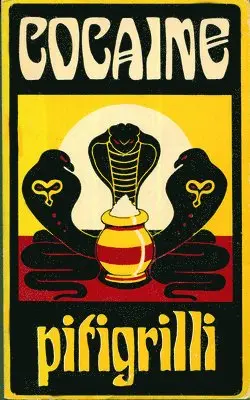
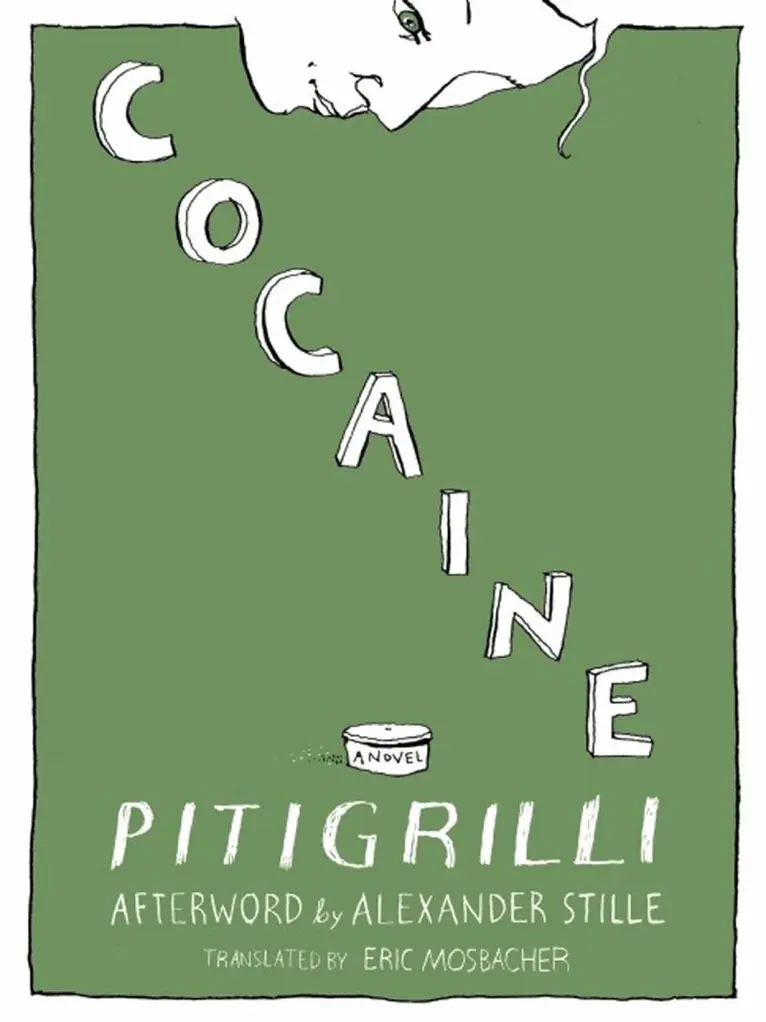
Cocaine is the story of a young man who runs off to Paris to seek fame, fortune, and fun. Pitigrilli's classic novel charts the comedy and pathos of a young man's tragic trajectory. Tito Arnaudi is a dandified hero with several mistresses he juggles. A failed medical student, Tito is hired as a journalist in Paris, where he investigates cocaine dens and invents lurid scandals and gruesome deaths that he sells to newspapers as his own life becomes more outrageous than his phony press reports. Telling of orgies and strawberries soaked in champagne and ether, Tito lives with intensity as he pursues his Italian girlfriend Maud (nee Maddalena) and wealthy Armenian Kalantan, who insists on making love in a black coffin. Provocatively illustrated, filled with lush, intoxicating prose, Cocaine is a wicked novel about the Lost Generation in 1920s Paris. Dizzy and decadent, Pitigrilli leaves nothing unexplored as he presents astonishing descriptions of upper class debauching -- strawberries and chloroform, naked dancing, cocaine aplenty, and guests openly injecting morphine. Despite its wit, Cocaine is a sobering account of the dangers of drugs and sexual obsession.Tito happily trades in his twilight years for moments of wicked ecstasy.
"I had just gotten away from it all, by which I mean all those ordinary, boring things like skyscrapers, cigar-smoking industrialists, linoleum, plastics, television, westerns and marihuana. I had either seen or heard about them. Whether they are good or bad is beside the point..."A nameless graphic designer is haunted by the concentration camp in which he was once interned. Obsessed with his past, as well as Italy's present 'economic miracle' he retreats to a rural villa where he decorates the rooms with "arrows, signs, advertisements"; invents a new, purposefully incomprehensible typeface; and attempts to devise a marketing campaign for stones. Upon finally returning to Milan life becomes even more unbalanced. He loses his job and acquires a mistress whom he soon confuses both with his wife and the memory of the young, Czech woman he abandoned at the end of the war...Known primarily as a screenwriter for Michelangelo Antonioni, Federico Fellini and Andrei Tarkovsky among many others, Tonino Guerra also wrote poetry and fiction. Reissued to mark the centenary of Guerra's birth, and with a new introduction by acclaimed cultural critic Michael Bracewell, Equilibrium remains a relevant, powerful, and intensely visual account of a truly (post-)modern man.
The Bound Man is storytelling for our times. Here we find works of fiction where a present darkness and obscurity usher extraordinary performances into the light of day: a man bound hand and foot; a death told in reverse; a speech under the gallows. Written with disarming simplicity, this collection of stories puts language to the test.