218 kr
Skickas inom 10-15 vardagar
218 kr
Skickas inom 10-15 vardagar
231 kr
Skickas inom 7-10 vardagar
376 kr
Skickas inom 7-10 vardagar
271 kr
Skickas inom 7-10 vardagar
826 kr
Skickas inom 7-10 vardagar
230 kr
Skickas inom 7-10 vardagar
267 kr
Skickas inom 7-10 vardagar
257 kr
Skickas inom 7-10 vardagar
778 kr
Skickas inom 7-10 vardagar
261 kr
Läs direkt efter köp
Four men in a cell in Rebibbia prison, Rome, awaiting trial on serious charges of subversion. One of them, the political thinker Antonio Negri, spends his days writing. Among his writings are twenty letters addressed to a young friend in France letters in which Negri reflects on his own personal development as a philosopher, theorist and political activist and analyses the events, activities and movements in which he has been involved. The letters recount an existential journey that links a rigorous philosophical education with a powerful political passion, set against the historical backdrop of postwar Italy. Crucially, Negri recalls the pivotal moment in 1978 when the former prime minister of Italy, Aldo Moro, was kidnapped and killed by the Red Brigades, and how the institutions then pinned that killing onto him and his associates.
Published here for the first time, these letters offer a unique and invaluable insight into the factors that shaped the thinking of one of the most influential political theorists of our time and they document Negri’s role in the development of political movements like Autonomia. They are a vivid testimony to one man’s journey through the political upheavals and intellectual traditions of the late 20th century, in the course of which he produced a body of work that has had, and continues to have, a profound impact on radical thought and politics around the world.
260 kr
Läs direkt efter köp
Much less well known is the fact that, up until 1979, Negri was a university professor teaching in Paris and Padova. On April 7th, 1979 he was arrested, charged with the murder of Italian politician Aldo Moro, accused of 17 other murders, of being the head of the Red Brigades and of fomenting insurrection against the state. He has since been absolved of all these accusations, but thanks to the emergency laws in Italy at the time, he was sentenced to 30 years in prison. Then, in July 1983, he was elected as a member of parliament, which meant that he was released from prison after four and a half years of preventive detention. After months of debate, the Lower House decided to strip him of his parliamentary immunity Ð by 300 votes in favour and 293 against. At that point he left Italy for exile in France where he remained until 1997 and continued to maintain his innocence of all the crimes of which he was accused.
This book is Negri''s diary in which he tells of his imprisonment, trial, the elections, and his escape to and exile in France. Both personal and political, it recounts a little known aspect of Negri''s life and will be of great interest to anyone concerned with the work of this enormously influential political thinker.

774 kr
Skickas inom 7-10 vardagar
246 kr
Skickas inom 7-10 vardagar
275 kr
Läs direkt efter köp
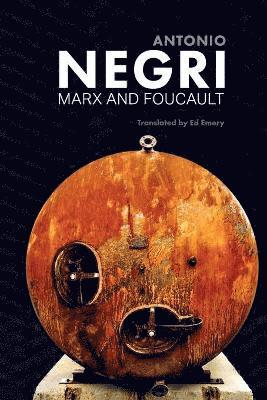
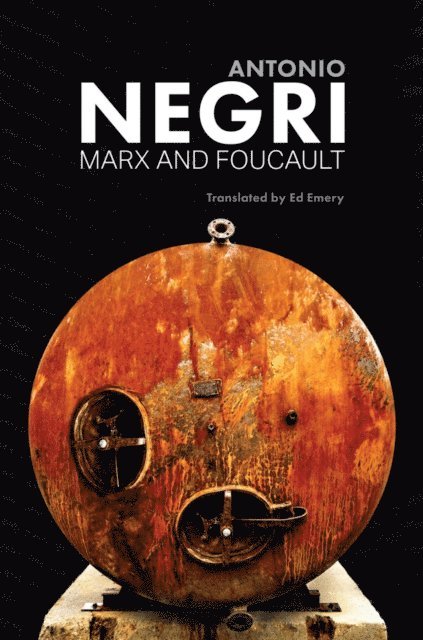
This the first of a new three-part series in which Antonio Negri, a leading political thinker of our time, explores key ideas that have animated radical thought and examines some of the social and economic forces that are shaping our world today. In this first volume Negri shows how the thinking of Marx and Foucault were brought together to create an original theoretical synthesis - particularly in the context of Italy from May ’68 onwards. At around that time, the structures of industry and production began to change radically, with the emergence of new producer-subjects and new fields of capitalist value creation. New concepts and theories were developed by Foucault, Deleuze and Guattari and others to help make sense of these and related developments - concepts such as biopower and biopolitics, subjectivation and subsumption, public and common, power and potentiality. These concepts and theories are examined by Negri within the broader context of the development of European philosophical discourse in the twentieth century. Marx and Foucault provides a unique account of the development of radical thought in the late 20th and early 21st centuries and will be a key text for anyone interested in radical politics today.
689 kr
Skickas inom 7-10 vardagar
216 kr
Skickas inom 7-10 vardagar
243 kr
Läs direkt efter köp
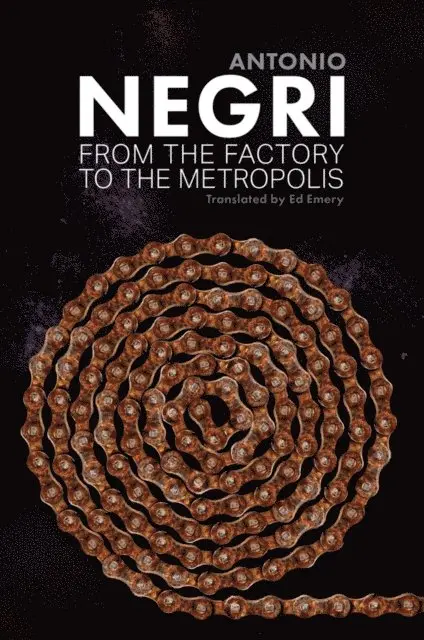
This second volume of a new three-part series of Antonio Negri''s work is focussed on the consequences of the rapid process of deindustrialisation that has occurred across the West in recent years.In this volume Negri investigates exactly what happens when the class subjects of industrial capitalism are demobilised and the factories close. Evidently capital continues to make profit, but how and where? According to Negri, the creation of value extends beyond the factory walls to embrace the whole of society; the ''mass worker'' of industrialism gives way to the ''socialised worker'' (operaio sociale) and the terrain of exploitation now becomes the whole of human life. In postmodernity, the metropolis becomes the privileged arena of value extraction. We must therefore understand the global city, with its stratifications, its enclosures and its resistances. Old categories of the private and the public are inadequate to describe the new matrix of production, which is characterised rather by the ''common'', the productive space of cognitive and immaterial labour. Today''s metropolis can be defined as a space of antagonisms between forms of life produced, on the one hand, by finance capital (the capital that operates around rents), and on the other by the ''cognitive proletariat''. The central question is then how ''the common'' of the latter can be mobilised for the destruction of capitalism.In an analysis that runs from the Italian workerism (operaismo) of the 1970s to the present day, From the Factory to the Metropolis offers readers valuable insight into the far-reaching impact of deindustrialisation, presenting both the challenges and opportunities. It will appeal to the many interested in the continuing development of Negri''s project and to anyone interested in radical politics today.
741 kr
Skickas inom 7-10 vardagar
260 kr
Skickas inom 7-10 vardagar
294 kr
Läs direkt efter köp
741 kr
Skickas inom 7-10 vardagar
260 kr
Skickas inom 7-10 vardagar
294 kr
Läs direkt efter köp
This first volume in a new trilogy of books by Antonio Negri examines and develops the Italian tradition of radical Marxist thought known as operaismo or ‘autonomist Marxism’ – the tradition to which Negri himself adheres and in which he is a leading figure.
The tradition of operaismo emphasizes the role of the worker in capitalism and the primacy of class struggle. Within this framework, Negri’s key contribution has been to theorize the transition from the ‘mass worker’ to the ‘social worker’ – that is, to broaden the concept of living labour and liberate it from the theoretical cages that locked it into the factory. It was only by moving beyond the ideology and political practice of the mass worker that the revolutionary character of the Marxist concept of class could be updated for our times and developed in relation to the exploitation and socialization of living labour, including networks of cognitive work, reproductive work and care work, networks which also have the potential to become the bases for new forms of resistance to capitalist exploitation.
By bringing together Negri’s key contributions to the reconceptualization of the worker and class struggle, this volume demonstrates the vitality of the Marxist tradition of operaismo and its continued relevance for understanding the key social and political struggles of our time.741 kr
Skickas inom 7-10 vardagar
260 kr
Skickas inom 7-10 vardagar
284 kr
Läs direkt efter köp
741 kr
Skickas inom 7-10 vardagar
260 kr
Skickas inom 7-10 vardagar
284 kr
Läs direkt efter köp
This book brings together Antonio Negri’s critical writings on the nature and form of the modern state. The central theme that runs through these writings is our need to be done with the sovereign state – that is, with the particular form of political power that the capitalist organization of bourgeois society has imposed upon us. Negri seeks to show how the sovereign bourgeois state built in the course of modernity has now become a weapon in the hands of a declining ruling class, a class sometimes exhausted in its institutional expressions and sometimes frenetic, zombie-like and parafascist.
In arguing that the despotic power of the state should be abolished, Negri distances himself from some other left-wing thinkers who, erroneously in his view, have come to see the state as an unavoidable institution rather than as a place of power that, once conquered, should be transformed and ultimately dissolved, since it represents the central moment in the organization of force against living labour and free citizenship. In Negri’s view, the call for the abolition of the state remains vital and active today, as a concrete utopia that is expressed in every thought and act of liberation.
The articles brought together in this volume range from Negri’s analysis of the first great transformation of the capitalist state in the twentieth century, a phenomenon precipitated by the triumph of Keynesianism, to his more recent work on how the form of sovereignty changed from being a figure of transcendent and local command to being a dispositif of immanent and global control. Like its companion volumes, this new collection of essays by Negri will be a valuable resource for anyone interested in radical politics and in the key social and political struggles of our time.
877 kr
Läs direkt efter köp
This book brings together Antonio Negri’s critical writings on the nature and form of the modern state. The central theme that runs through these writings is our need to be done with the sovereign state – that is, with the particular form of political power that the capitalist organization of bourgeois society has imposed upon us. Negri seeks to show how the sovereign bourgeois state built in the course of modernity has now become a weapon in the hands of a declining ruling class, a class sometimes exhausted in its institutional expressions and sometimes frenetic, zombie-like and parafascist.
In arguing that the despotic power of the state should be abolished, Negri distances himself from some other left-wing thinkers who, erroneously in his view, have come to see the state as an unavoidable institution rather than as a place of power that, once conquered, should be transformed and ultimately dissolved, since it represents the central moment in the organization of force against living labour and free citizenship. In Negri’s view, the call for the abolition of the state remains vital and active today, as a concrete utopia that is expressed in every thought and act of liberation.
The articles brought together in this volume range from Negri’s analysis of the first great transformation of the capitalist state in the twentieth century, a phenomenon precipitated by the triumph of Keynesianism, to his more recent work on how the form of sovereignty changed from being a figure of transcendent and local command to being a dispositif of immanent and global control. Like its companion volumes, this new collection of essays by Negri will be a valuable resource for anyone interested in radical politics and in the key social and political struggles of our time.