508 kr
508 kr
1 249 kr
Skickas inom 3-6 vardagar
554 kr
Skickas inom 3-6 vardagar
589 kr
Läs direkt efter köp
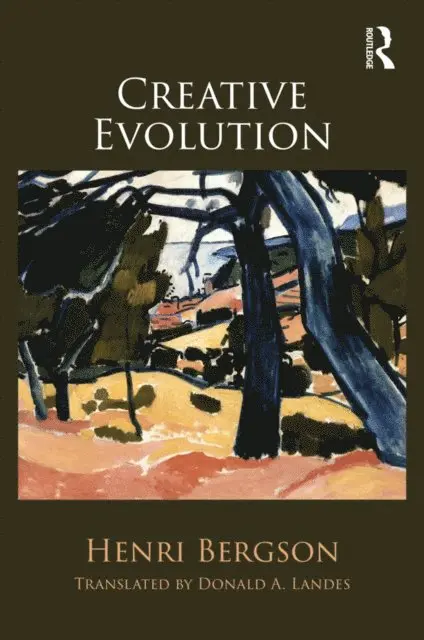
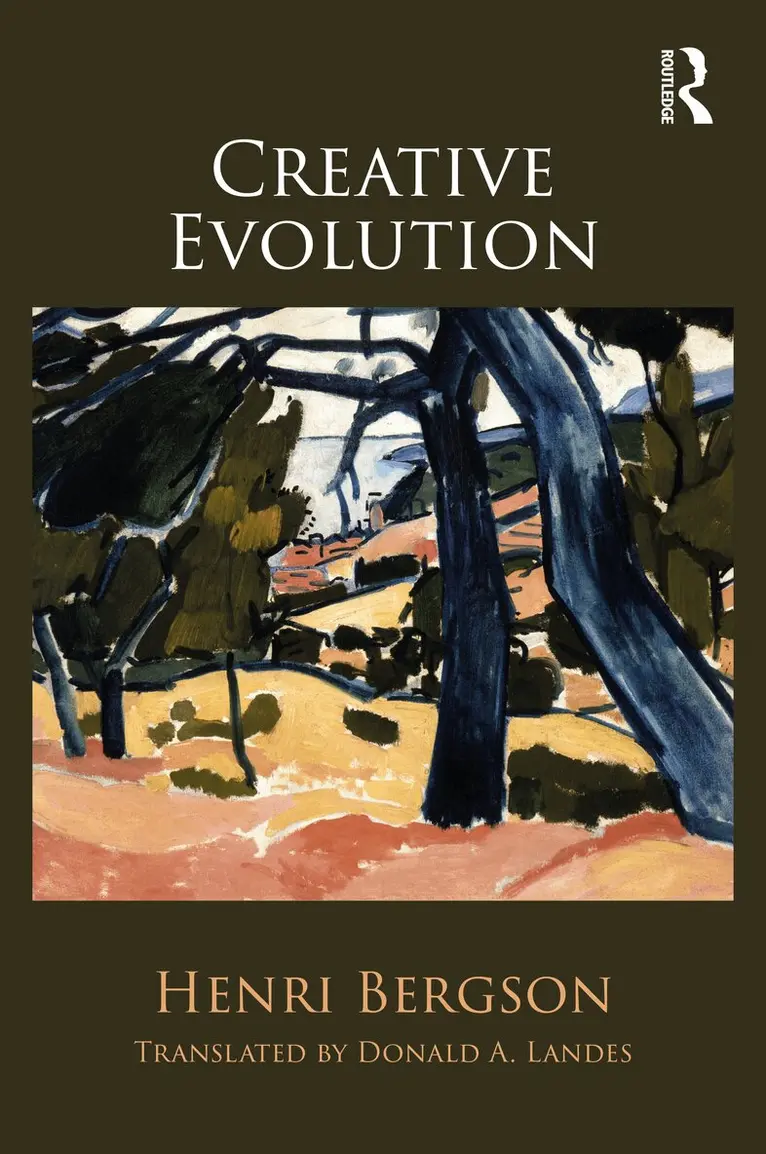
First published in French in 1907, Henri Bergson’s L’évolution créatrice is a scintillating and radical work by one of the great French philosophers of the nineteenth and twentieth centuries. This outstanding new translation, the first for over a hundred years, brings one of Bergson’s most important and ambitious works to a new generation of readers.
A sympathetic though critical reader of Darwin, Bergson argues in Creative Evolution against a mechanistic, reductionist view of evolution. For Bergson, all life emerges from a creative, shared impulse, which he famously terms élan vital and which passes like a current through different organisms and generations over time. Whilst this impulse remains as forms of life diverge and multiply, human life is characterized by a distinctive form of consciousness or intellect. Yet as Bergson brilliantly shows, the intellect’s fragmentary and action- oriented nature, which he likens to the cinematograph, means it alone cannot grasp nature’s creativity and invention over time. A major task of Creative Evolution is to reconcile these two elements. For Bergson, the answer famously lies in intuition, which brings instinct and intellect together and takes us “into the very interior of life.”
A work of great rigour and imaginative richness that contributed to Bergson winning the Nobel Prize for Literature in 1927, Creative Evolution played an important and controversial role in the trajectory of twentieth-century philosophy and continues to create significant discussion and debate. The philosopher and psychologist William James, who admired Bergson’s work, was writing an introduction to the first English translation of the book before his death in 1910.
This new translation includes a foreword by Elizabeth Grosz and a helpful translator’s introduction by Donald Landes. Also translated for the first time are additional notes, articles, reviews and letters on the reception of Creative Evolution in biology, mathematics, and theology. This edition includes fascinating commentaries by philosophers Maurice Merleau-Ponty, Georges Canguilhem, and Gilles Deleuze.
589 kr
Läs direkt efter köp
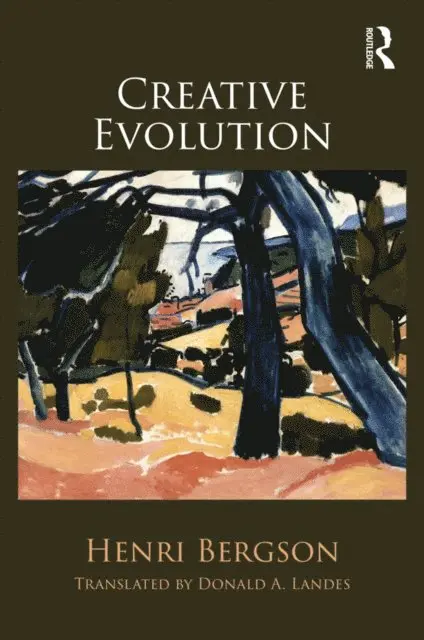
First published in French in 1907, Henri Bergson’s L’évolution créatrice is a scintillating and radical work by one of the great French philosophers of the nineteenth and twentieth centuries. This outstanding new translation, the first for over a hundred years, brings one of Bergson’s most important and ambitious works to a new generation of readers.
A sympathetic though critical reader of Darwin, Bergson argues in Creative Evolution against a mechanistic, reductionist view of evolution. For Bergson, all life emerges from a creative, shared impulse, which he famously terms élan vital and which passes like a current through different organisms and generations over time. Whilst this impulse remains as forms of life diverge and multiply, human life is characterized by a distinctive form of consciousness or intellect. Yet as Bergson brilliantly shows, the intellect’s fragmentary and action- oriented nature, which he likens to the cinematograph, means it alone cannot grasp nature’s creativity and invention over time. A major task of Creative Evolution is to reconcile these two elements. For Bergson, the answer famously lies in intuition, which brings instinct and intellect together and takes us “into the very interior of life.”
A work of great rigour and imaginative richness that contributed to Bergson winning the Nobel Prize for Literature in 1927, Creative Evolution played an important and controversial role in the trajectory of twentieth-century philosophy and continues to create significant discussion and debate. The philosopher and psychologist William James, who admired Bergson’s work, was writing an introduction to the first English translation of the book before his death in 1910.
This new translation includes a foreword by Elizabeth Grosz and a helpful translator’s introduction by Donald Landes. Also translated for the first time are additional notes, articles, reviews and letters on the reception of Creative Evolution in biology, mathematics, and theology. This edition includes fascinating commentaries by philosophers Maurice Merleau-Ponty, Georges Canguilhem, and Gilles Deleuze.
554 kr
Läs direkt efter köp
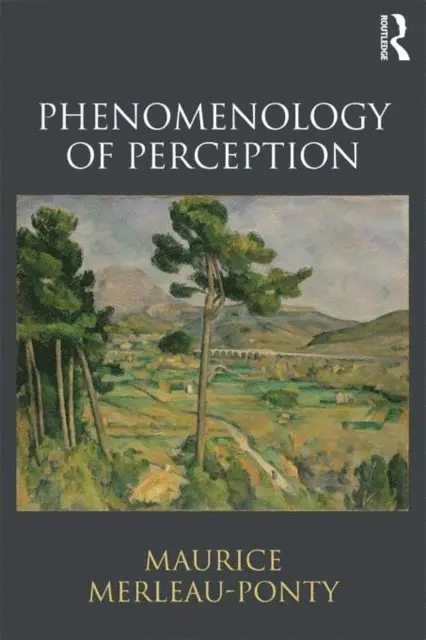
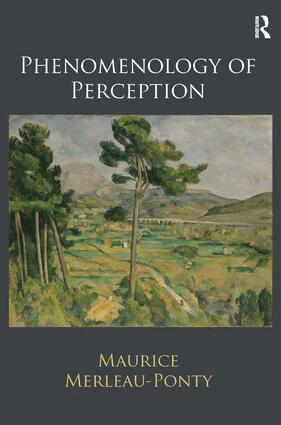
First published in 1945, Maurice Merleau-Ponty’s monumental Phénoménologie de la perception signalled the arrival of a major new philosophical and intellectual voice in post-war Europe. Breaking with the prevailing picture of existentialism and phenomenology at the time, it has become one of the landmark works of twentieth-century thought. This new translation, the first for over fifty years, makes this classic work of philosophy available to a new generation of readers.
Phenomenology of Perception stands in the great phenomenological tradition of Husserl, Heidegger, and Sartre. Yet Merleau-Ponty’s contribution is decisive, as he brings this tradition and other philosophical predecessors, particularly Descartes and Kant, to confront a neglected dimension of our experience: the lived body and the phenomenal world. Charting a bold course between the reductionism of science on the one hand and "intellectualism" on the other, Merleau-Ponty argues that we should regard the body not as a mere biological or physical unit, but as the body which structures one’s situation and experience within the world.
Merleau-Ponty enriches his classic work with engaging studies of famous cases in the history of psychology and neurology as well as phenomena that continue to draw our attention, such as phantom limb syndrome, synaesthesia, and hallucination. This new translation includes many helpful features such as the reintroduction of Merleau-Ponty’s discursive Table of Contents as subtitles into the body of the text, a comprehensive Translator’s Introduction to its main themes, essential notes explaining key terms of translation, an extensive Index, and an important updating of Merleau-Ponty’s references to now available English translations.
Also included is a new foreword by Taylor Carman and an introduction to Merleau-Ponty by Claude Lefort.
Translated by Donald A. Landes.
974 kr
Skickas inom 7-10 vardagar