139 kr
Skickas
139 kr
Skickas
143 kr
177 kr
Skickas inom 7-10 vardagar
182 kr
Skickas
223 kr
Skickas
204 kr
Skickas inom 7-10 vardagar
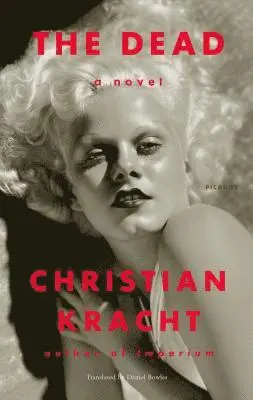
“A great Faustian fable, and a literary endeavor of historical ingenuity that we now may start to characterize as Krachtian.” —Karl Ove Knausgaard The follow-up to Christian Kracht's acclaimed novel Imperium (a Publishers Weekly Best Book of the Year), The Dead mines the feverish early years of the Nazis' rise to power for a Gothic tale of global conspiracy, personal loss, and historical entanglements large and small. In Berlin, Germany, in the early 1930s, the acclaimed Swiss film director Emil Nägeli receives the assignment of a lifetime: travel to Japan and make a film to establish the dominance of Adolf Hitler’s Nazi empire once and for all. But his handlers are unaware that Nägeli has colluded with the Jewish film critics to pursue an alternative objective—to create a monumental, modernist, allegorical spectacle to warn the world of the horror to come. Meanwhile, in Japan, the film minister Masahiko Amakasu intends to counter Hollywood’s growing influence and usher in a new golden age of Japanese cinema by exploiting his Swiss visitor. The arrival of Nägeli’s film-star fiancée and a strangely thuggish, pistol-packing Charlie Chaplin—as well as the first stirrings of the winds of war—soon complicates both Amakasu’s and Nägeli’s plans, forcing them to face their demons . . . and their doom."The Dead is the beautiful, brilliant, and utterly mad novel that Thomas Mann would have written had he known the East like Yukio Mishima and loved his adopted Hollywood with the gusto of Nathanael West." —Joshua Cohen"The Dead is a story of love and sadness in times when the weak were broken by the unforgiving ideologies of fascism and National Socialism . . . I read The Dead twice in a row, first for the story and then for the beauty of the prose." —Sjón
181 kr
Skickas inom 7-10 vardagar
158 kr
Skickas inom 7-10 vardagar
224 kr
Skickas inom 7-10 vardagar
245 kr
Lyssna direkt efter köp
The United States has long congratulated itself on being the world’s melting pot, but during a long, hot summer in coastal North Carolina, three young people will put that theory to the test.
Our protagonist is Tillmann, a German vacationing in the States and corresponding with both his ex-girlfriend about the genesis of techno and an African American colleague about their research into the evolution of blues music. Over the course of the season, the trio’s discussions range from Mariah Carey to Ronald Reagan, from the Black Power movement to the legacy of Nazi Germany. And as a hurricane churns across the Atlantic, their exploration of how ethnicity, race, and gender are defined—particularly for America’s African and Jewish diasporas—will culminate in revelations about their own ethnic identities. Through the eyes of our three narrators, readers will explore the ideas of ethnicity and multiculturalism in our world, illustrated by humorous and poignant anecdotes woven into a single compelling narrative.
Thomas Meinecke’s groundbreaking writing style is on full display here, as the writer-DJ has crafted this insightful novel with the same uncanny skill with which jazz and blues musicians create their improvisational styles.
587 kr
Lyssna direkt efter köp
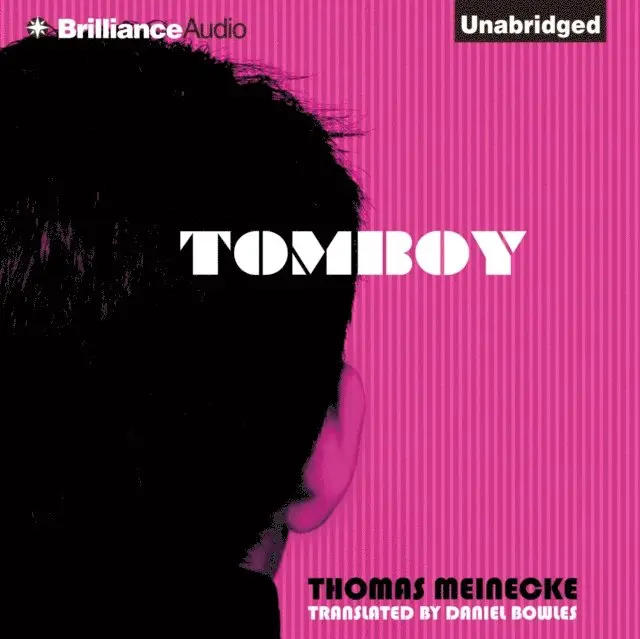
This innovative novel from German author Thomas Meinecke takes a thought-provoking look at the role of gender in the social, artistic, and intellectual pursuits of a group of inquisitive university students living in Heidelberg. The clique includes bisexual Korinna, a star tennis player and obsessive reader of Michel Foucault’s and Judith Butler’s theories of sexuality; Frauke, a lesbian doctoral student writing her dissertation about Christ’s foreskin; Frauke’s fiancée Angela, formerly Angelo, a Bible-reading Italian Catholic who considers himself a lesbian; and Hans, a self-described male feminist who believes that men suffer from “reproduction envy.” Last but not least is Vivian, a half-German, half-American student whose work on her master’s thesis leads her to throw out an incessant series of questions to these friends and classmates—and thus to us, the readers. Structured around Vivian’s questions, Tomboy examines why things are the way they are, particularly regarding the perception of gender between individuals and in society as a whole. Fans of novelists David Foster Wallace and J. G. Ballard, as well as such theorists as Foucault and Butler, are sure to be intrigued by this extraordinary postmodern exercise in literature.
528 kr
Skickas inom 7-10 vardagar
260 kr
Läs direkt efter köp
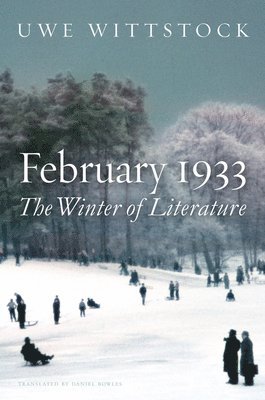
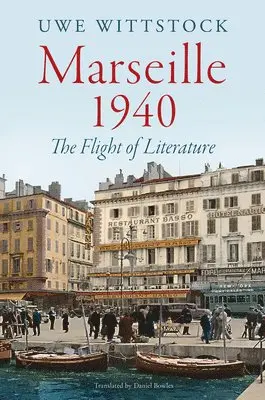
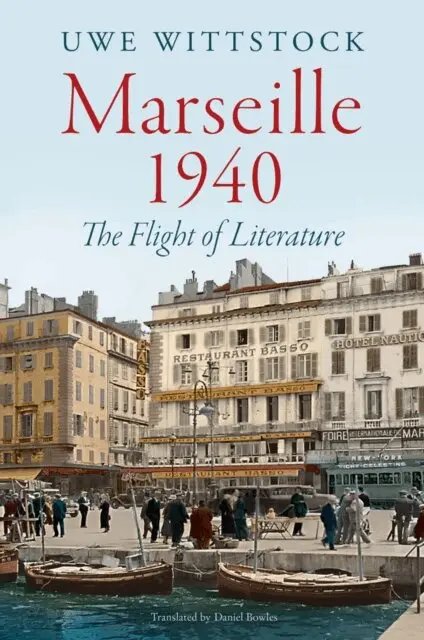
It all happened in a flash. February 1933 was the month in which the fate of German writers, as for so many others, was decided. In a tensely spun narrative, Uwe Wittstock tells the story of a demise which was predicted by some but also scarcely thought possible. He reveals how, in a matter of weeks, the glittering Weimar literary scene gave way to a long, dark winter, and how the net drew ever closer for Thomas Mann, Bertolt Brecht, Else Lasker-Schüler, Alfred Döblin, and countless others.
Monday, January 30: Adolf Hitler is sworn in as Chancellor of Germany. Joseph Roth cannot wait any longer to learn what today’s paper will report. He leaves for the station early in the morning and takes the train to Paris; bidding Berlin farewell comes naturally to him. Meanwhile, Thomas Mann barely spares a thought for politics during the next ten days, focusing instead on his forthcoming speech on Richard Wagner.
Weaving an intimate portrait of the major figures whose lives he follows day by day, Wittstock shows how the landslide of events which immediately followed Hitler’s victory spelled disaster for the country’s literary elite. He resurrects the atmosphere of the times, marked by anxiety for many, by passivity and self-betrayal for some, and by grim determination for others. Who will applaud the new dictator, and who will flee, fearing for their life?
Drawing on unpublished archival material, this important work is both a meticulous historical narrative and a timely reminder that we must remain vigilant in the face of the forces that threaten democracy, however distant the prospect of totalitarianism may seem.
225 kr
Skickas inom 7-10 vardagar
411 kr
Läs direkt efter köp
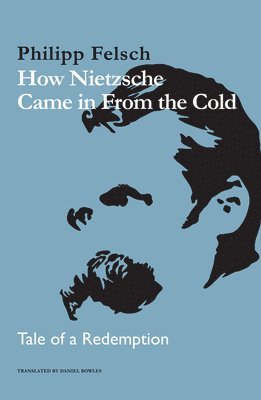
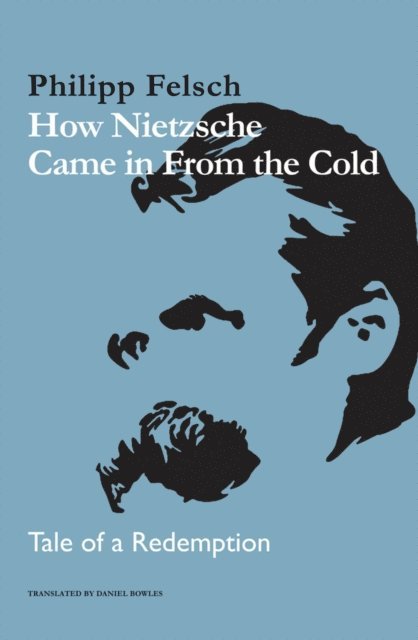
Nietzsche’s reputation, like much of Europe, lay in ruins in 1945. Giving a platform to a philosopher venerated by the Nazis was not an attractive prospect for Germans eager to cast off Hitler’s shadow. It was only when two ambitious antifascist Italians, Giorgio Colli and Mazzino Montinari, began to comb through the archives that anyone warmed to the idea of rehabilitating Nietzsche as a major European philosopher.
Their goal was to interpret Nietzsche’s writings in a new way and free them from the posthumous falsification of his work. The problem was that 10,000 barely legible pages were housed behind the Iron Curtain in the German Democratic Republic, where Nietzsche had been officially designated an enemy of the state. In 1961, Montinari moved from Tuscany to the home of actually existing socialism to decode the “real” Nietzsche under the watchful eyes of the Stasi. But he and Colli would soon realize that the French philosophers making use of their edition were questioning the idea of the authentic text and of truth itself.
Felsch retraces the journey of the two Italian editors and their edition, telling a gripping and unlikely story of how one of Europe’s most controversial philosophers was resurrected from the baleful clutch of the Nazis and transformed into an icon of postmodern thought.
231 kr
Skickas inom 7-10 vardagar
408 kr
Läs direkt efter köp
143 kr
Läs direkt efter köp
139 kr
Kommande
283 kr
Kommande