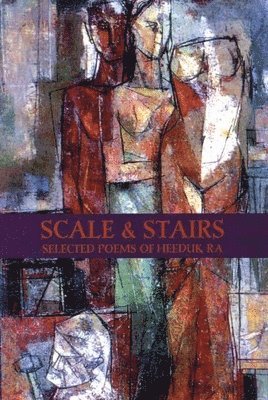
The poems of Heeduck Ra are charged with a friction between image and idea, sound and sense. She glimpses an arc, which may light a path from the visible world to the invisible. Her work occupies the ever-shifting border region between what we know and what we do not know, a zone in which to apprehend the world anew. Heeduk Ra has published five books of poetry and two of prose, for which she has received many honors. She teaches creative writing at Chosun University and is regarded as one of the best poets in Korea.
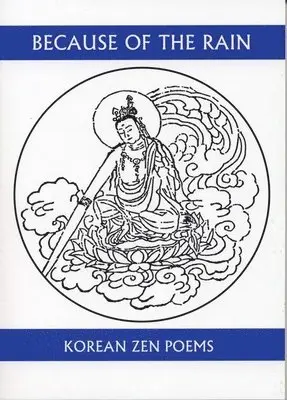
This selection of Korean Zen poems, spanning twelve centuries, distils the essence of Korean Buddhism. The poets range from Great Master Wonhyo (617-686), the founder of Korean Buddhism, to Choeui Eusoon (1786-1866), a hermit-monk whose poems address the monk's primary goal of seeking enlightenment. Although the age of traditional Buddhism ended in Korea by the early twentieth century when the country was exposed to the relentless flow of Western culture, the poets writing in Korea today have a deep respect for those who went before them and incorporate Buddhist lore into their work, thus enabling the Zen poets to continue to contribute to the development of Korean literature.
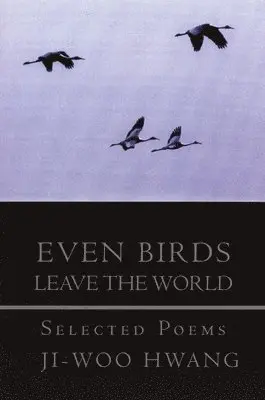
Ji-Woo Hwang's poems describe a life governed by the inescapable reality that all hell may break loose at any time, a reality that now permeates our own culture. His poems mix lyrical intensity with an acute political sensibility, creating an uneasy tension that makes them by turns moving, humorous, and unnerving.