133 kr
Skickas
133 kr
Skickas
164 kr
Skickas
1 408 kr
Läs direkt efter köp
138 kr
Skickas
190 kr
Skickas inom 7-10 vardagar
100 kr
Läs direkt efter köp
102 kr
Läs direkt efter köp
1 353 kr
Läs direkt efter köp
1 515 kr
Läs direkt efter köp
1 450 kr
Läs direkt efter köp
1 398 kr
Läs direkt efter köp
838 kr
Skickas inom 7-10 vardagar
250 kr
Skickas inom 7-10 vardagar
615 kr
Skickas inom 3-6 vardagar
427 kr
Skickas inom 7-10 vardagar
922 kr
Skickas inom 7-10 vardagar
1 279 kr
Läs direkt efter köp
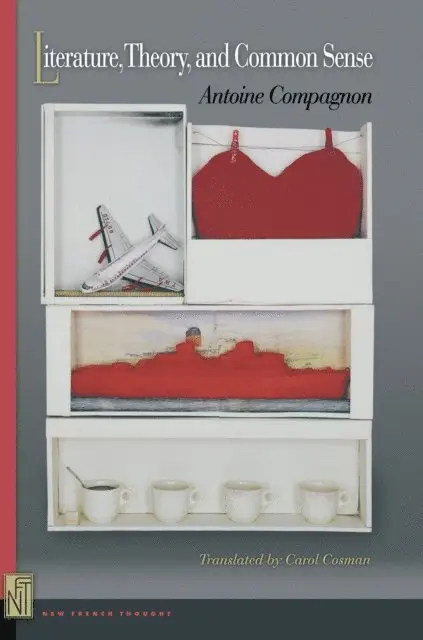
An engaging introduction to contemporary debates in literary theoryIn the late twentieth century, the common sense approach to literature was deemed naïve. Roland Barthes proclaimed the death of the author, and Hillis Miller declared that all interpretation is theoretical. In many a literature department, graduate students spent far more time on Derrida and Foucault than on Shakespeare and Milton. Despite this, common sense approaches to literature—including the belief that literature represents reality and authorial intentions matter—have resisted theory with tenacity. As a result, argues Antoine Compagnon, theorists have gone to extremes, boxed themselves into paradoxes, and distanced others from their ideas. Eloquently assessing the accomplishments and failings of literary theory, Compagnon ultimately defends the methods and goals of a theoretical commitment tempered by the wisdom of common sense.The book is organized not by school of thought but around seven central questions: literariness, the author, the world, the reader, style, history, and value. What makes a work literature? Does fiction imitate reality? Is the reader present in the text? What constitutes style? Is the context in which a work is written important to its apprehension? Are literary values universal?As he examines how theory has wrestled these themes, Compagnon establishes not a simple middle-ground but a state of productive tension between high theory and common sense. The result is a book that will be met with both controversy and sighs of relief.
599 kr
Läs direkt efter köp
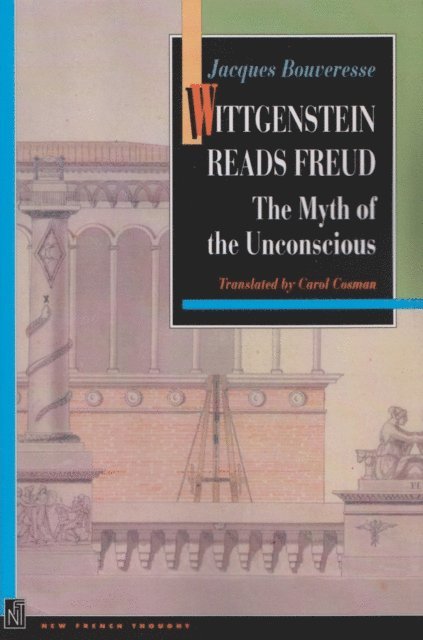
Did Freud present a scientific hypothesis about the unconscious, as he always maintained and as many of his disciples keep repeating? This question has long prompted debates concerning the legitimacy and usefulness of psychoanalysis, and it is of utmost importance to Lacanian analysts, whose main project has been to stress Freud''s scientific grounding. Here Jacques Bouveresse, a noted authority on Ludwig Wittgenstein, contributes to the debate by turning to this Austrian-born philosopher and contemporary of Freud for a candid assessment of the early issues surrounding psychoanalysis. Wittgenstein, who himself had delivered a devastating critique of traditional philosophy, sympathetically pondered Freud''s claim to have produced a scientific theory in proposing a new model of the human psyche. What Wittgenstein recognized--and what Bouveresse so eloquently stresses for today''s reader--is that psychoanalysis does not aim to produce a change limited to the intellect but rather seeks to provoke an authentic change of human attitudes. The beauty behind the theory of the unconscious for Wittgenstein is that it breaks away from scientific, causal explanations to offer new forms of thinking and speaking, or rather, a new mythology. Offering a critical view of all the texts in which Wittgenstein mentions Freud, Bouveresse immerses us in the intellectual climate of Vienna in the early part of the twentieth century. Although we come to see why Wittgenstein did not view psychoanalysis as a science proper, we are nonetheless made to feel the philosopher''s sense of wonder and respect for the cultural task Freud took on as he found new ways meaningfully to discuss human concerns. Intertwined in this story of Wittgenstein''s grappling with the theory of the unconscious is the story of how he came to question the authority of science and of philosophy itself. While aiming primarily at the clarification of Wittgenstein''s opinion of Freud, Bouveresse''s book can be read as a challenge to the French psychoanalytic school of Lacan and as a provocative commentary on cultural authority.
207 kr
Läs direkt efter köp
198 kr
Skickas
142 kr
Tillfälligt slut