

Inbunden, Engelska, 2003
4 281 kr
Skickas inom 10-15 vardagar
First published in 2003. Routledge is an imprint of Taylor & Francis, an informa company.
4 281 kr
Skickas inom 10-15 vardagar

3 102 kr
Skickas inom 10-15 vardagar

275 kr
Skickas inom 3-6 vardagar
172 kr
Skickas inom 3-6 vardagar
310 kr
Skickas inom 7-10 vardagar
458 kr
Skickas inom 7-10 vardagar
131 kr
Läs direkt efter köp
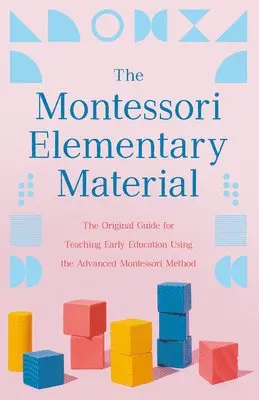
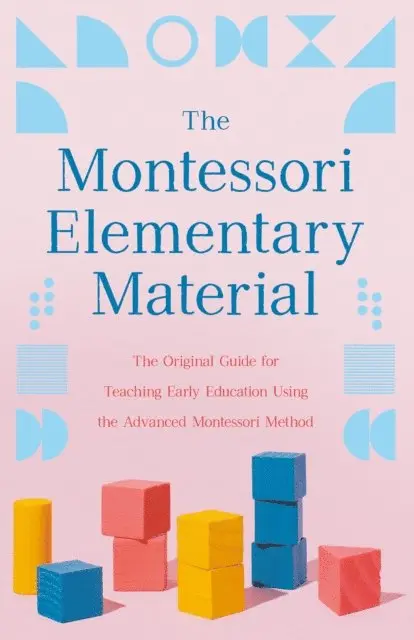
An illustrated guide to the Montessori method of childhood development and education, written by the renowned Italian physician Dr. Maria Montessori.
The Montessori method has become a popular approach to educating and nurturing children’s development, particularly between the ages of three and six. In this volume, Dr. Montessori gives detailed explanations of her approach to various subjects, including grammar and arithmetic. First published in 1917, this guide is illustrated and features many examples of recommended exercises that can be completed by children anywhere, including the classroom and their home.
The Montessori Elementary Material is divided into seven sections:- Grammar- Reading- Arithmetic- Geometry- Drawing- Music- Metrics
221 kr
Skickas inom 3-6 vardagar
238 kr
Skickas inom 3-6 vardagar
274 kr
Skickas inom 3-6 vardagar
35 kr
Läs direkt efter köp
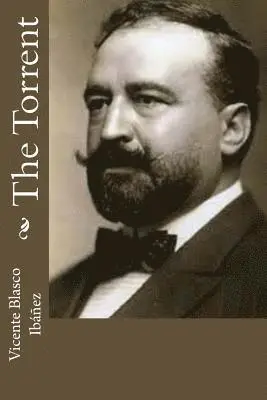
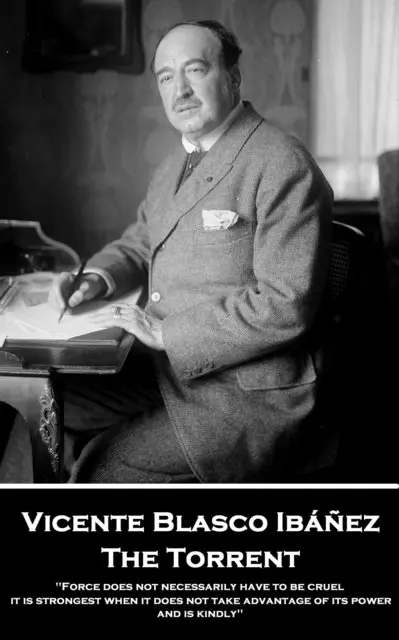
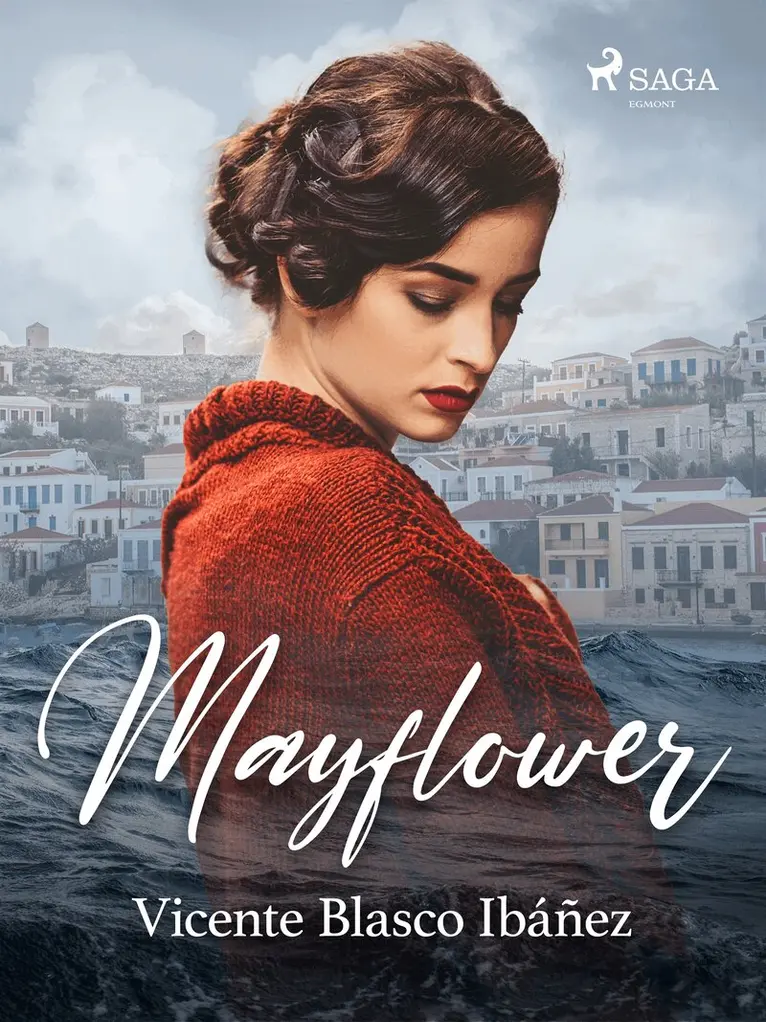
Vicente Blasco Ibáñez was born in Valencia, Spain on 29th January 1867.
At university, he studied law and graduated in 1888 but never felt the urgency to practice - he was more interested in politics, journalism, literature and women.
Politically he was a militant Republican partisan and, in his youth, founded a newspaper, El Pueblo (The People). The newspaper was taken to court many times and he made many enemies. In one incident he was shot and almost killed. In 1896, Ibáñez was arrested and sentenced to a few months in prison.
Despite this colourful background he found time to write novels. His first published work was ‘La Araña Negra’ (The Black Spider) in 1892, a work that he later repudiated although at the time it was a useful vehicle for him to express his anti-clerical views.
In 1894, he published ‘Arroz y Tartana’ (Airs and Graces), about a late 19th Century widow in Valencia trying to keep up appearances in order to marry her daughters well.
Ibáñez’s next sequence of books studied rural life in the farmlands of Valencia and failed to gain much of an audience.
His writing now took on a new direction with its now familiar sensational and melodramatic themes in 1908 with ‘Sangre y Arena’ (Blood and Sand), which follows the career of Juan Gallardo from his poor beginnings as a child in Seville, to his rise to becoming a famous matador in Madrid
However, his greatest success was ‘Los Cuatro Jinetes del Apocalipsis (The Four Horsemen of the Apocalypse) in 1916, which tells a tangled tale of the French and German sons-in-law of an Argentinian land-owner who find themselves fighting on opposite sides in the First World War. It was a literary and commercial sensation and became the best-selling book of 1919. It also propelled Rudolph Valentino to stardom in the 1921 film.
Ironically his fame in the English-speaking world has come not as a novelist but as the stories behind some of Hollywood’s greatest silent movies.
Vicente Blasco Ibáñez died in Menton, France on January 28th, 1928, the day before his 61st birthday.
26 kr
Läs direkt efter köp
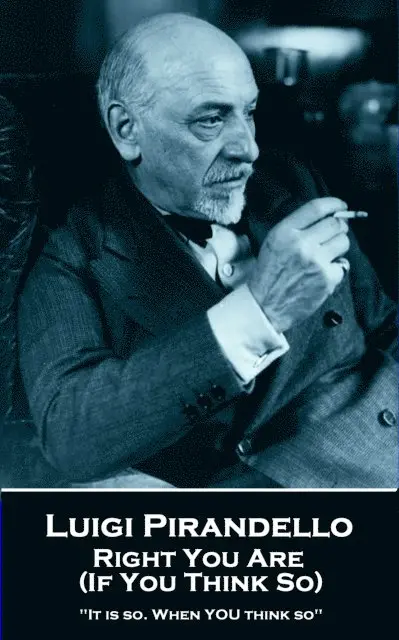
Luigi Pirandello was born on 28th June 1867 into an upper-class family in a small village in Sicily.
In 1880, the family moved to Palermo and there he completed high school. He then registered at the University of Palermo, at that time the centre of what became the Fasci Siciliani movement. Although not an active member Pirandello had close friendships with many of its leading ideologists. Pirandello then completed his university studies in Rome and Bonn, receiving his Doctorate in March, 1891.
His time in Rome had provided him with the opportunity to visit its many theatres. "Oh the dramatic theatre! I will conquer it. I cannot enter into one without experiencing a strange sensation, an excitement of the blood through all my veins..."
1894 brought marriage, at his father''s suggestion, to a shy, withdrawn girl: Mara Antonietta Portulano.The marriage encouraged his studies and writings and produced three children. In 1895, the first part of the ‘Dialoghi tra Il Gran Me e Il Piccolo Me’ was published.
In 1903 the flooding of the sulphur mines in which his father had invested the family capital and Antonietta''s dowry, brought financial catastrophe. Antonietta on hearing the news had her mental balance profoundly and irremediably shaken. While watching over his mentally ill wife at night (after the day spent at work) he wrote ‘Il Fu Mattia Pascal’ (The Late Mattia Pascal). It was an immediate and resounding success.
In 1909, Pirandello began his collaboration with the prestigious Corriere della Sera. Whilst his fame as a writer was increasing his private life was poisoned by the suspicion and jealousy of Antonietta who now turned physically violent.
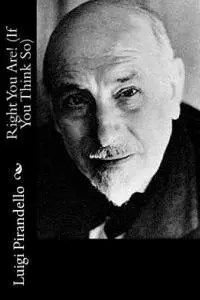
By 1917 his theatrical works were beginning to take centre stage: ‘Così è (se vi pare)’ (Right you are (if you think so)) and ‘Il Piacere dell''onestà’ (The Pleasure Of Honesty).
In 1919 Pirandello had Antonietta placed in an asylum. She never left the asylum.
In 1921, in Rome his play, ‘Sei personaggi in cerca d''autore’, (Six Characters in Search of an Author) was staged. It was a failure. However, when presented in Milan it was a great success. Pirandello''s international reputation was set when it was performed in London and New York.
In 1925, Pirandello, with Mussolini’s help, assumed the artistic direction and ownership of the Teatro d''Arte di Roma. He now described himself both as ‘a Fascist because I am Italian’ and ‘I''m apolitical, I''m only a man in the world...’ He later had several conflicts with fascist leaders and would fall under close surveillance by the secret fascist police OVRA.
In 1934 he won the Nobel Prize but asked that medal be melted down for Italy’s occupation of Abyssinia Campaign to which he had given his support.
Pirandello''s canon stretches across novels, hundreds of short stories, poetry volumes, essays and some 40 plays. His tragic farces are often cited as forerunners of the Theatre of the Absurd.
Luigi Pirandello died on 10th December 1936 at his home at Via Bosio, Rome, Italy.
26 kr
Läs direkt efter köp
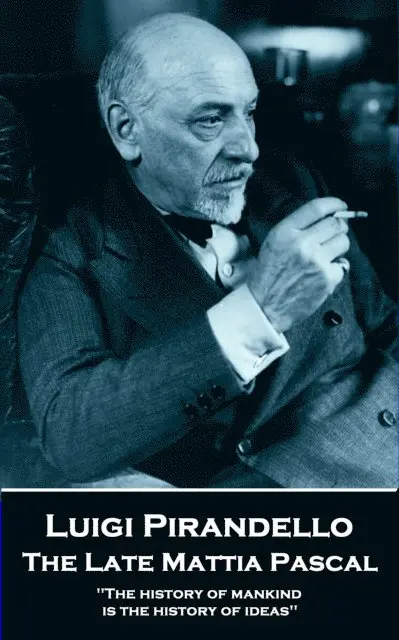
Luigi Pirandello was born on 28th June 1867 into an upper-class family in a small village in Sicily.
In 1880, the family moved to Palermo and there he completed high school. He then registered at the University of Palermo, at that time the centre of what became the Fasci Siciliani movement. Although not an active member Pirandello had close friendships with many of its leading ideologists. Pirandello then completed his university studies in Rome and Bonn, receiving his Doctorate in March, 1891.
His time in Rome had provided him with the opportunity to visit its many theatres. "Oh the dramatic theatre! I will conquer it. I cannot enter into one without experiencing a strange sensation, an excitement of the blood through all my veins..."
1894 brought marriage, at his father''s suggestion, to a shy, withdrawn girl: Mara Antonietta Portulano.The marriage encouraged his studies and writings and produced three children. In 1895, the first part of the ‘Dialoghi tra Il Gran Me e Il Piccolo Me’ was published.
In 1903 the flooding of the sulphur mines in which his father had invested the family capital and Antonietta''s dowry, brought financial catastrophe. Antonietta on hearing the news had her mental balance profoundly and irremediably shaken. While watching over his mentally ill wife at night (after the day spent at work) he wrote ‘Il Fu Mattia Pascal’ (The Late Mattia Pascal). It was an immediate and resounding success.
In 1909, Pirandello began his collaboration with the prestigious Corriere della Sera. Whilst his fame as a writer was increasing his private life was poisoned by the suspicion and jealousy of Antonietta who now turned physically violent.
By 1917 his theatrical works were beginning to take centre stage: ‘Così è (se vi pare)’ (Right you are (if you think so)) and ‘Il Piacere dell''onestà’ (The Pleasure Of Honesty).
In 1919 Pirandello had Antonietta placed in an asylum. She never left the asylum.
In 1921, in Rome his play, ‘Sei personaggi in cerca d''autore’, (Six Characters in Search of an Author) was staged. It was a failure. However, when presented in Milan it was a great success. Pirandello''s international reputation was set when it was performed in London and New York.
In 1925, Pirandello, with Mussolini’s help, assumed the artistic direction and ownership of the Teatro d''Arte di Roma. He now described himself both as ‘a Fascist because I am Italian’ and ‘I''m apolitical, I''m only a man in the world...’ He later had several conflicts with fascist leaders and would fall under close surveillance by the secret fascist police OVRA.
In 1934 he won the Nobel Prize but asked that medal be melted down for Italy’s occupation of Abyssinia Campaign to which he had given his support.
Pirandello''s canon stretches across novels, hundreds of short stories, poetry volumes, essays and some 40 plays. His tragic farces are often cited as forerunners of the Theatre of the Absurd.
Luigi Pirandello died on 10th December 1936 at his home at Via Bosio, Rome, Italy.
154 kr
Läs direkt efter köp
239 kr
Skickas inom 7-10 vardagar
315 kr
Skickas inom 7-10 vardagar
413 kr
Skickas inom 7-10 vardagar