1 228 kr
Skickas
1 228 kr
Skickas
175 kr
Skickas
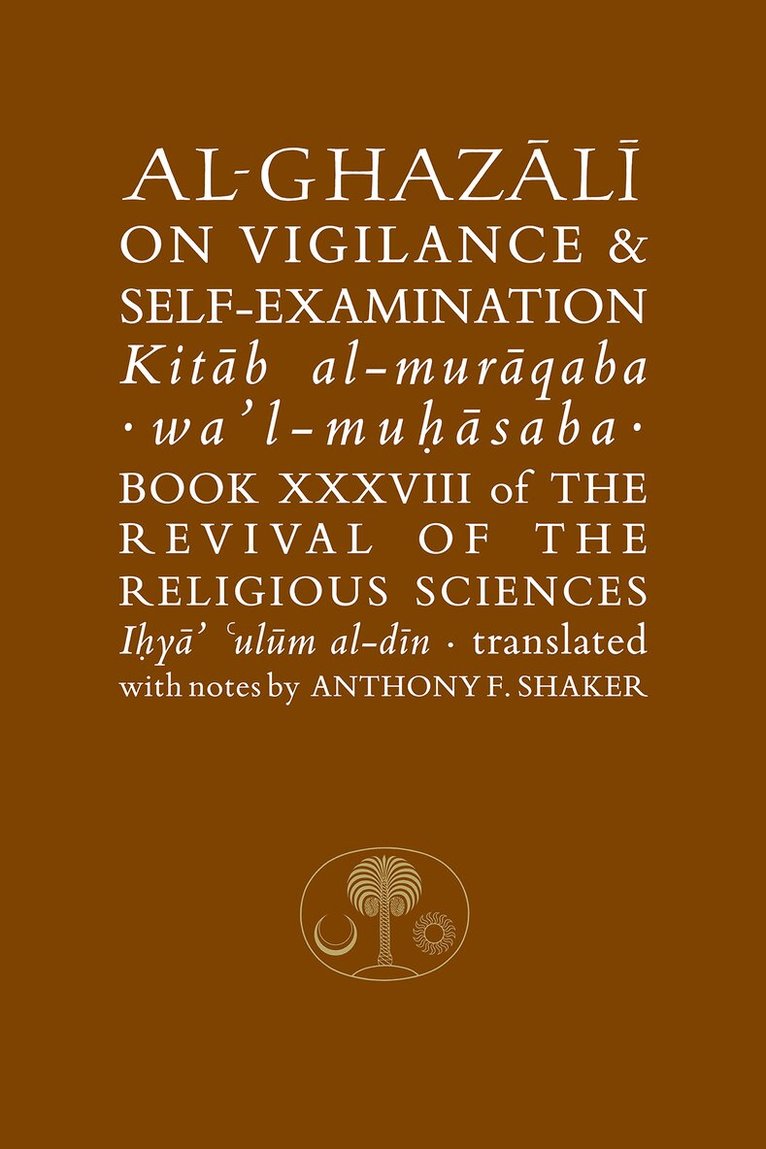
Al-Ghazali on Vigilance and Self-examination is the thirty-eighth chapter of the Revival of the Religious Sciences and follows on from Al-Ghazali on Intention, Sincerity & Truthfulness. Here Ghazali focuses on the different stations of steadfastness in religion (murabata), vigilance and self-examination being its cornerstones. As in all his writings, Ghazali bases his arguments on the Qur'an, the example of the Prophet and the sayings of numerous scholars and Sufis.
208 kr
Skickas
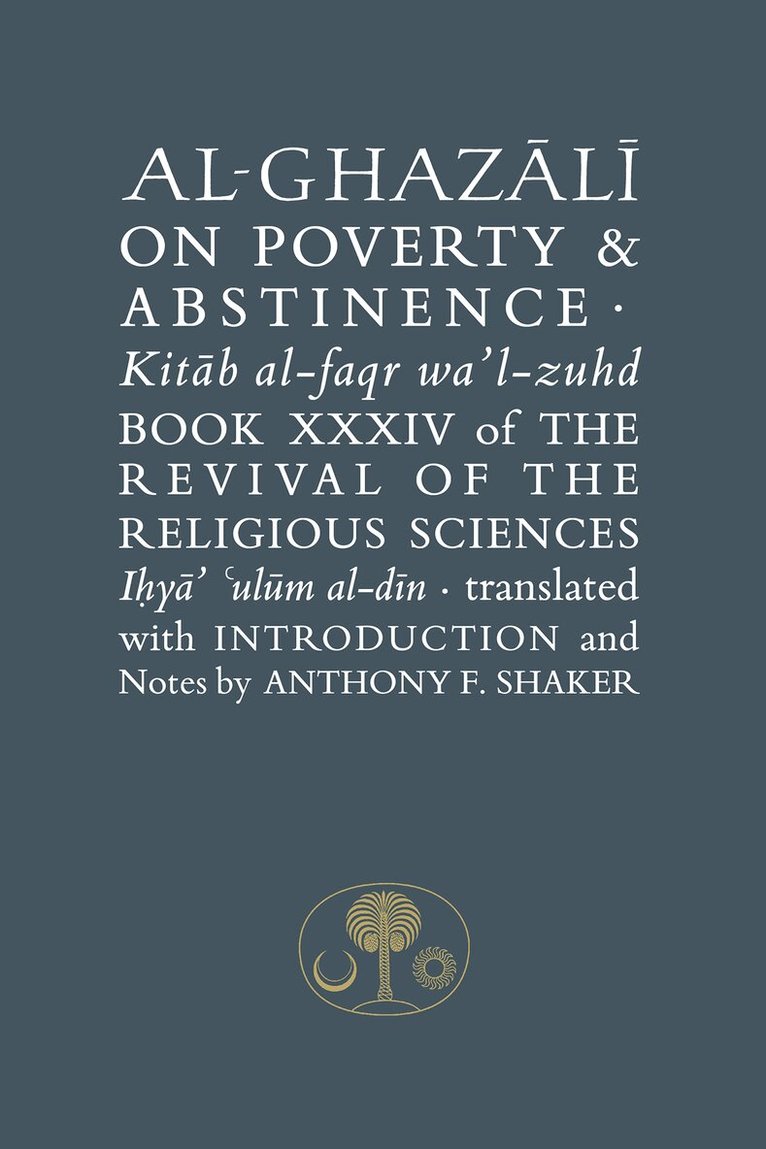
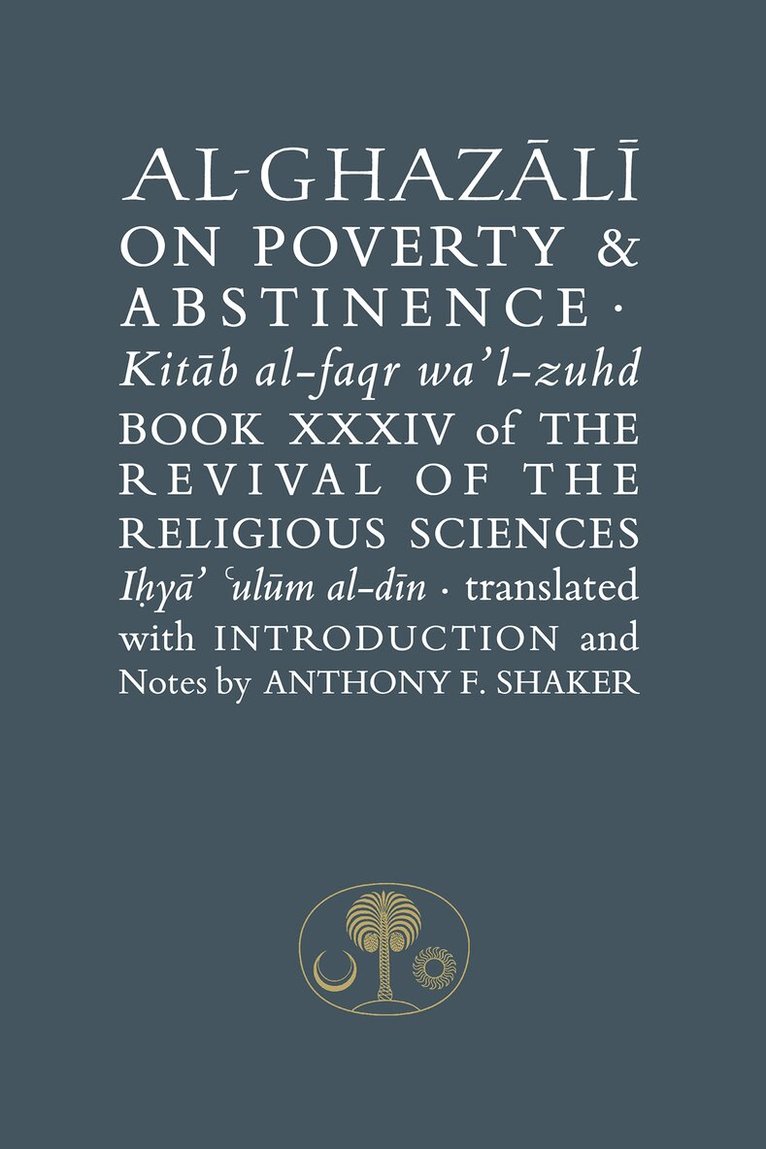
Al-Ghazali on Poverty and Abstinence is the thirty-fourth chapter of the Revival of the Religious Sciences (Ihya' 'Ulum al-Din), which is widely regarded as the greatest work of Muslim spirituality. In Al-Ghazali on Poverty and Abstinence, Abu Hamid al-Ghazali considers two themes dear to Islamic devotional literature: poverty and abstinence. Taking as his example the Prophet's love for the poor, Ghazali explains that poverty is not simply an accidental state of destitution that might befall anyone but rather an inner acceptance of the Will of God and a form of abstinence for His sake. Thus the life of poverty described by Ghazali in Al-Ghazali on Poverty and Abstinence refers to what every devoted follower of the Prophet is meant to adopt whatever his or her outer state may be.
In this new edition, the Islamic Texts Society has included the translation of Abu Hamid al-Ghazali's own Introduction to the Revival of the Religious Sciences which gives the reasons that caused him to write the work, the structure of the whole of the Revival and places each of the chapters in the context of the others.
197 kr
Skickas
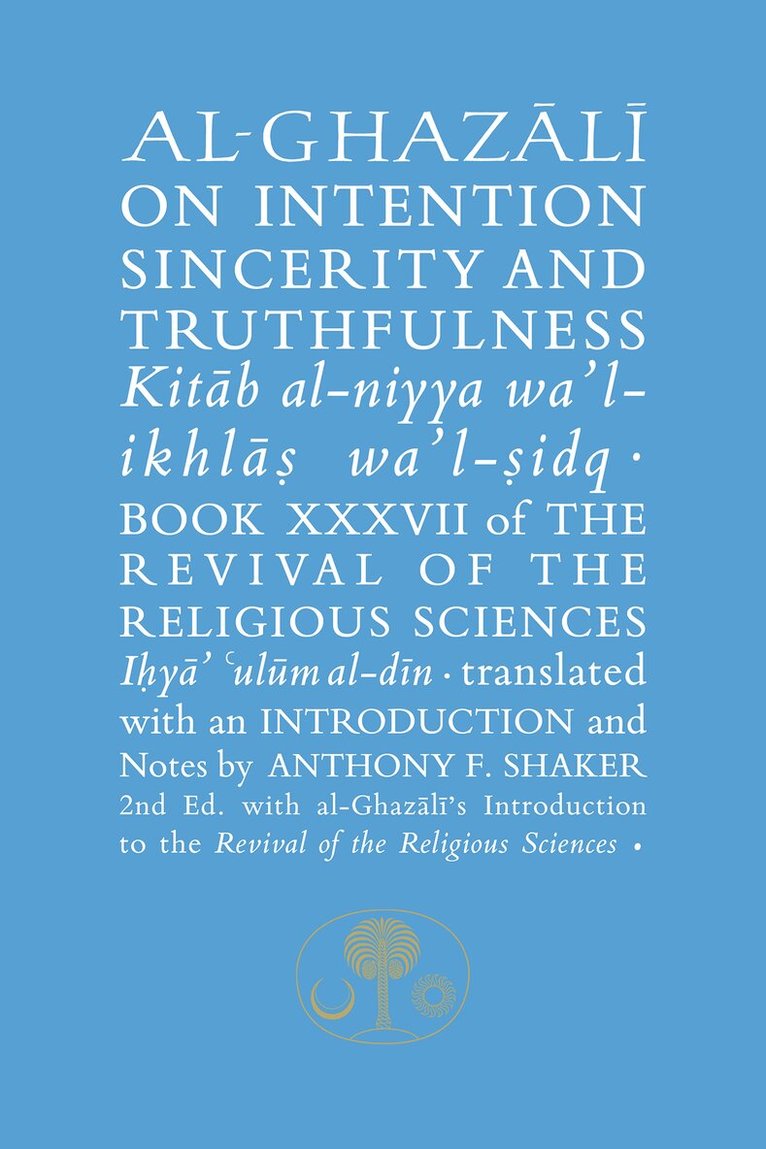
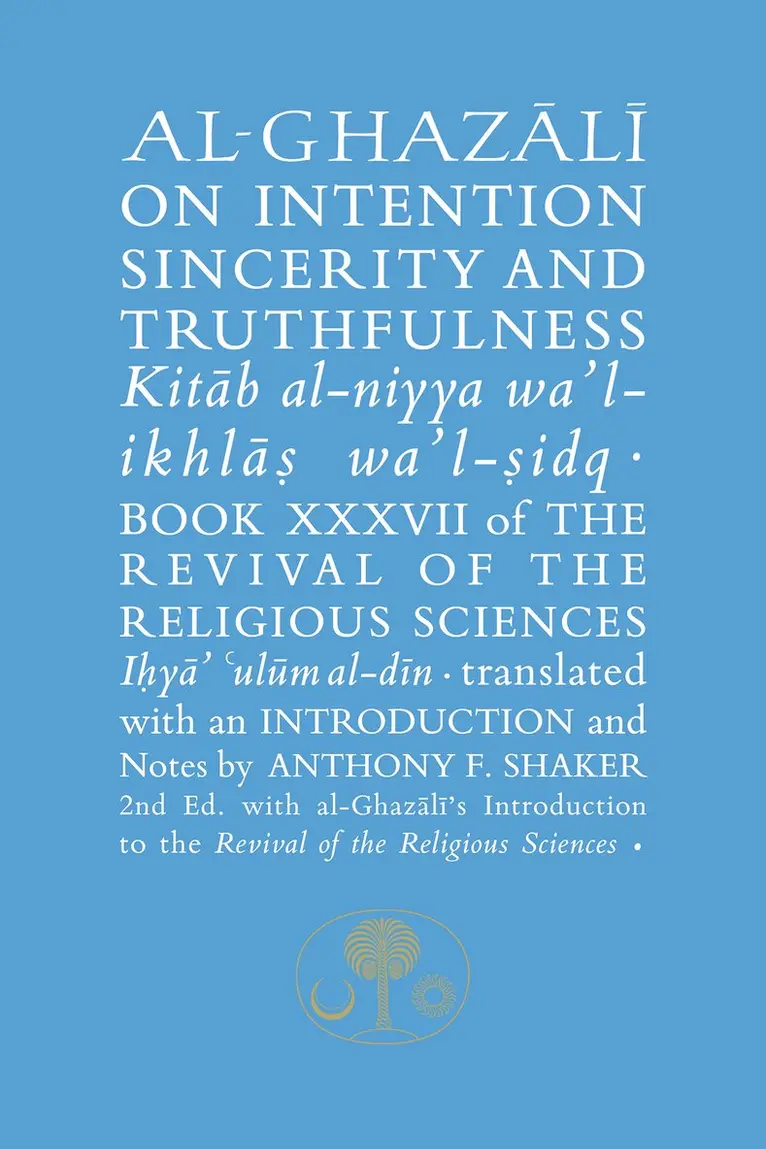
Al-Ghazali on Intention, Sincerity & Truthfulness is the thirty-seventh chapter of the Revival of the Religious Sciences. It falls in the section dealing with the virtues. Here Ghazali deals with the very important subject of intention, which is of crucial importance in Islam. He asks: 'How can someone ignorant of the meaning of intention verify his own intention; or how can someone ignorant of the meaning of sincerity verify his own sincerity; or how can someone sincerely claim truthfulness if he has not verified its meaning?'
In the Book of Intention, Sincerity & Truthfulness, Ghazali gives a response to each of these questions by expounding the reality and levels of intention, sincerity and truthfulness, those acts which affirm them and those acts which mar them. As in all his writings, Ghazali bases his arguments on the Qur'an, the example of the Prophet and the sayings of numerous scholars and Sufis.
298 kr
Tillfälligt slut
Al-Ghazali on Vigilance and Self-examination is the thirty-eighth chapter of the Revival of the Religious Sciences and follows on from Al-Ghazali on Intention, Sincerity & Truthfulness. Here Ghazali focuses on the different stations of steadfastness in religion (murabata), vigilance and self-examination being its cornerstones. As in all his writings, Ghazali bases his arguments on the Qur'an, the example of the Prophet and the sayings of numerous scholars and Sufis.
363 kr
Tillfälligt slut
Al-Ghazali on Intention, Sincerity & Truthfulness is the thirty-seventh chapter of the Revival of the Religious Sciences. It falls in the section dealing with the virtues. Here Ghazali deals with the very important subject of intention, which is of crucial importance in Islam. He asks: 'How can someone ignorant of the meaning of intention verify his own intention; or how can someone ignorant of the meaning of sincerity verify his own sincerity; or how can someone sincerely claim truthfulness if he has not verified its meaning?'
In the Book of Intention, Sincerity & Truthfulness, Ghazali gives a response to each of these questions by expounding the reality and levels of intention, sincerity and truthfulness, those acts which affirm them and those acts which mar them. As in all his writings, Ghazali bases his arguments on the Qur'an, the example of the Prophet and the sayings of numerous scholars and Sufis.
353 kr
Tillfälligt slut
Al-Ghazali on Poverty and Abstinence is the thirty-fourth chapter of the Revival of the Religious Sciences (Ihya' 'Ulum al-Din), which is widely regarded as the greatest work of Muslim spirituality. In Al-Ghazali on Poverty and Abstinence, Abu Hamid al-Ghazali considers two themes dear to Islamic devotional literature: poverty and abstinence. Taking as his example the Prophet's love for the poor, Ghazali explains that poverty is not simply an accidental state of destitution that might befall anyone but rather an inner acceptance of the Will of God and a form of abstinence for His sake. Thus the life of poverty described by Ghazali in Al-Ghazali on Poverty and Abstinence refers to what every devoted follower of the Prophet is meant to adopt whatever his or her outer state may be.
In this new edition, the Islamic Texts Society has included the translation of Abu Hamid al-Ghazali's own Introduction to the Revival of the Religious Sciences which gives the reasons that caused him to write the work, the structure of the whole of the Revival and places each of the chapters in the context of the others.