Dante's Convivio, composed in exile between 1304 and 1307, is a series of self-commentaries on three of Dante's long poems. These allegorical love poems and philosophical verse become the basis for philosophical, literary, moral, and political exposition. The prose is written in Italian so that those who were not educated in Latin could take part in what Dante called his 'banquet of knowledge'. In this edition, eminent Dante translator-scholar Andrew Frisardi offers the first fully annotated translation of the work into English, with an extensive introduction, making Dante's often complex writings accessible to scholars and students. The parallel Italian text is also included for the first time in an English translation of the Convivio. Readers of this work can gain a strong understanding of the philosophical themes across Dante's work, including the Divine Comedy, as well as the logic, politics and science of his time.
Dante's Convivio, composed in exile between 1304 and 1307, is a series of self-commentaries on three of Dante's long poems. These allegorical love poems and philosophical verse become the basis for philosophical, literary, moral, and political exposition. The prose is written in Italian so that those who were not educated in Latin could take part in what Dante called his 'banquet of knowledge'. In this edition, eminent Dante translator-scholar Andrew Frisardi offers the first fully annotated translation of the work into English, with an extensive introduction, making Dante's often complex writings accessible to scholars and students. The parallel Italian text is also included for the first time in an English translation of the Convivio. Readers of this work can gain a strong understanding of the philosophical themes across Dante's work, including the Divine Comedy, as well as the logic, politics and science of his time.
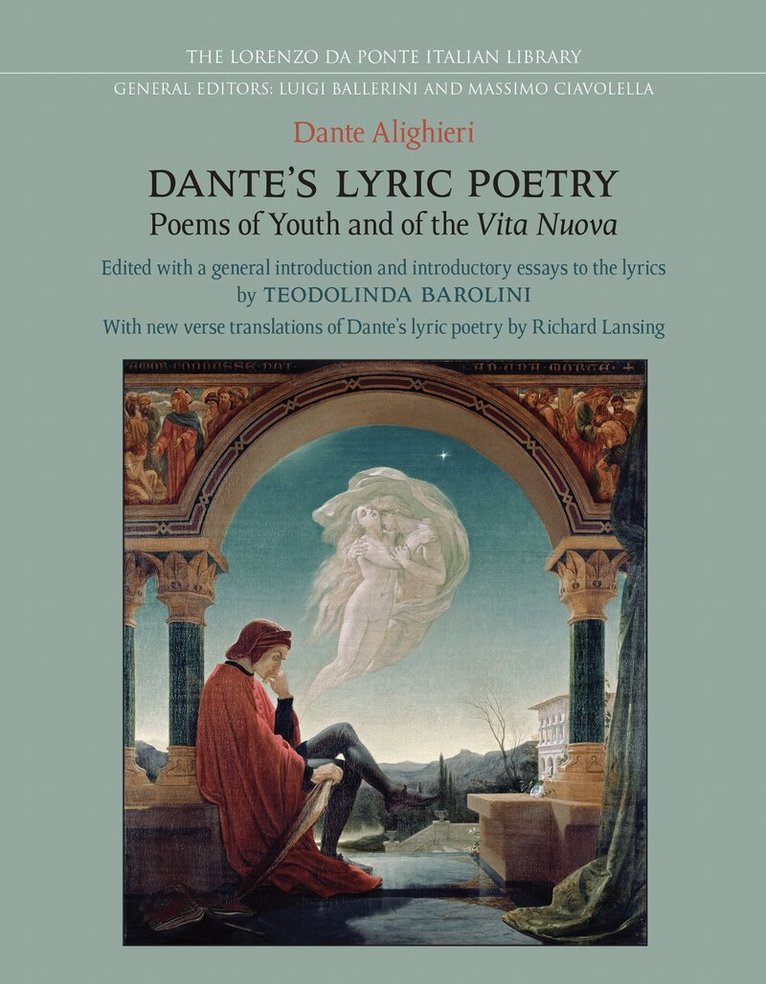
The first comprehensive English translation and commentary on Dante’s early verse to be published in almost fifty years, Dante’s Lyric Poetry includes all the poems written by the young Dante Aligheri between c. 1283 and c. 1292. Essays by Teodolinda Barolini guide the reader through the new verse translations by Richard Lansing, illuminating Dante’s transformation from a young courtly poet into the writer of the vast and visionary Commedia.Barolini’s commentary exposes Dante’s lyric poems as early articulations of many of the ideas in the Commedia, including the philosophy and psychology of desire and its role as motor of all human activity, the quest for vision and transcendence, the frustrating search for justice on earth, and the transgression of boundaries in society and poetry. A wide-ranging and intelligent examination of one of the most important poets in the Western tradition, this book will be of interest to scholars and poetry-lovers alike.
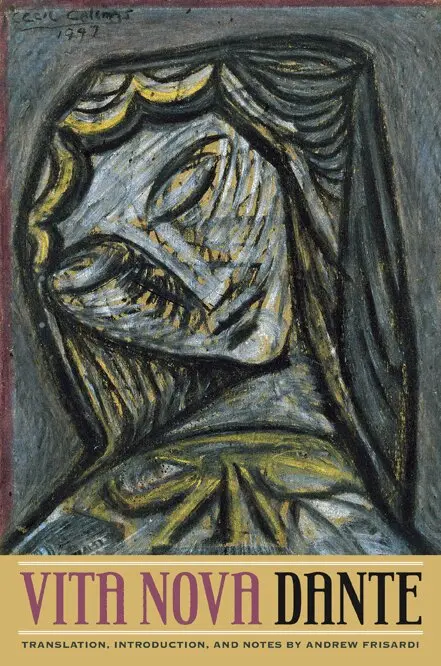
Dante’s Vita Nova (circa 1292–1295) depicts the joys and sorrows, the discoveries and conflicts of Dante’s early love for Beatrice—who would achieve later and even greater fame in Commedia—starting with his first sighting of her and culminating in his prevision of Beatrice among the beatified in heaven. Award-winning translator and poet Andrew Frisardi channels the vigor and nuance of Dante’s first masterpiece for a modern audience. The “little book,” as Dante calls it, consists of thirty-one lyric poems—mostly sonnets—embedded in a prose narrative, which both recounts an apparently autobiographical set of events also evoked in the poems and offers analysis of the poems’ construction in the medieval critical tradition of divisio textus, or division of the text. Dante selected poetry he had written before age twenty-eight or so and wrote the prose to shape it into a story. The poems anthologize Dante’s growth as a poet, from the influence of his earliest mentors to the stylistic and thematic breakthroughs of his poetic coming-of-age. The interplay of poetry and prose in Vita Nova, along with the further distinction in the latter between autobiography and critical divisioni, presents a particular challenge for any translator. Frisardi faithfully voices the complex meter and rhyme schemes of the poetry while capturing the tone of each of the prose styles. His introduction and in-depth annotations provide additional context for the twenty-first-century reader.