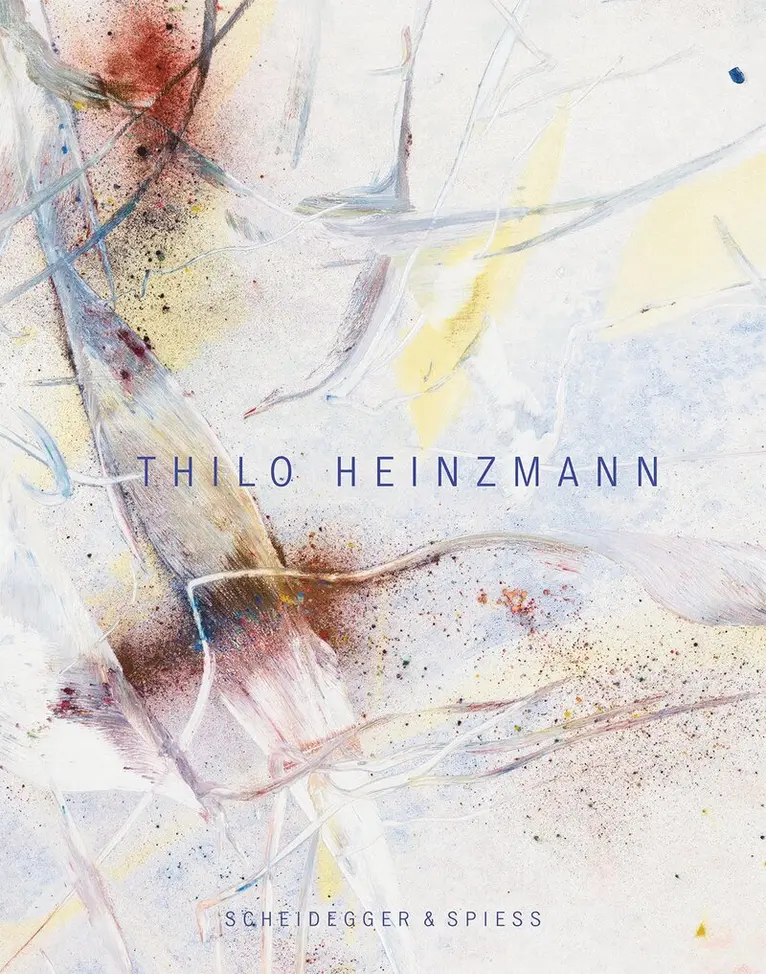
For more than three decades, German artist Thilo Heinzmann has been expanding our understanding of what a painting can be. With a material palette spanning the extremes of commonplace—chipboard, Styrofoam, cotton wool—and rare—precious raw pigments from across the world— he has developed a singular visual language that is both rich and restrained.This lavishly illustrated book, Heinzmann’s first monograph in 10 years, charts the evolution of his art since the outset of his career in the early 1990s, when he was a student of Thomas Bayrle at Frankfurt’s Städelschule and worked as an assistant in the studio of Martin Kippenberger. A conversation between Heinzmann and curator Mark Godfrey, as well as essays by writers Vanessa Onwuemezi and Kristian Vistrup Madsen touch upon these and other influences while drawing out the recurring fascinations with composition, colour, and texture that structure his oeuvre. Heinzmann’s paintings are reproduced in high-quality colour reproductions, including 1:1 details and fold-outs that convey their highly tactile surfaces to the reader.Text in English and German.
Überwachen und StrafenIm Panoptikum, Jeremy Benthams idealem Gefängnis- und Erziehungsbau, werden die Delinquenten permanenter Überwachung durch einen Aufseher unterzogen, der im Mittelpunkt eines kreisförmigen Gebäudes sitzt. Aber zu welchem Zweck? Michel Foucault interpretierte in seinem Werk Überwachen und Strafen (1975) Benthams Bau als Prototyp für die latente Perversion bürgerlicher Aufklärung, die Schizophrenie eines Liberalismus, der stets das Gute will und stets das Böse schafft. Aber stimmt das wirklich?Die erste deutsche Übersetzung von Panoptikum offenbart die Aktualität von Benthams Gedankenwelt. Als Begründer des Utilitarismus und Anhänger des Wirtschaftsliberalismus war er davon überzeugt, dass der Kapitalismus der wahre Schlüssel zum Glück des Menschen ist - und nichts anderes als den Weg zum Glück wollte er mit dem Panoptikum jedem Menschen ebnen.Ebook-Version ohne Interview mit Michel Foucault.