486 kr
Läs direkt efter köp
486 kr
Läs direkt efter köp
336 kr
Skickas inom 7-10 vardagar
456 kr
Skickas inom 7-10 vardagar
189 kr
Skickas inom 7-10 vardagar
347 kr
Läs direkt efter köp
864 kr
Skickas inom 7-10 vardagar
279 kr
Skickas inom 3-6 vardagar
1 515 kr
Skickas inom 3-6 vardagar
269 kr
Skickas inom 7-10 vardagar
380 kr
Läs direkt efter köp
1 027 kr
Kommande
392 kr
Kommande
401 kr
Skickas inom 7-10 vardagar
53 kr
Läs direkt efter köp
Seattle, Washington, has earned a national reputation as a "City of Neighborhoods" and a place where citizens take an active role in finding solutions to the problems of urban life. The efforts of Seattle''s neighborhood-based councils and not-for-profit organizations were also seen as part of a national "neighborhood movement" that achieved prominence in the 1960s and 1970s.
Originally completed in 1982 as a series of radio programs exploring the history and directions of the neighborhood movement, "In the City of Neighborhoods" was written and produced by award-winning journalist Arthur J. O''Donnell. The series also highlighted economic survival skills for non-profit organizations during an era of budget constraints.
In this edition of In the City of Neighborhoods, O''Donnell augments his exploration of neighborhood activism with later articles covering the Not In My Back Yard (NIMBY) syndrome. This special section, called "It''s My Backyard, Too", provides insights into the arguments and tactics of those who oppose power plants, transmission lines and other energy developments.
316 kr
Skickas inom 7-10 vardagar
428 kr
Läs direkt efter köp
How a system of colonial trusteeship converted Native wealth into settler capitalFrom the earliest days of its founding, the United States set its sights on Native territory. Amid better-known “Indian wars,” the federal government quietly built an empire by treaty, offering payments to Native peoples for their land. Routinely inadequate, these payments were nonetheless pivotal because federal officials chose not to deliver them as a lump sum. Instead, the government kept the bulk of payments owed to Native nations under its own control as a trustee, and made access to future installments contingent on Native compliance. In Vested Interests, Emilie Connolly describes how a system of “fiduciary colonialism” seized a continent from its original inhabitants—and, ironically, furnished Native peoples with financial resources that sustained their nations.Connolly documents two centuries of dispossession in the guise of fiduciary benevolence. Acting as both dispossessor and trustee, the federal government invested Native wealth in state bonds that financed banks, canals, and other infrastructural projects that enabled the country to expand further westward. Meanwhile, Native peoples protected the money they did receive for future generations, investing it in their own institutions and mounting legal challenges to hold their trustees accountable. Still, federal trusteeship placed tight constraints on Native economies in the aim of containing Native power, forcing nations to endure through sheer resilience and ingenuity. By chronicling the long history of Native land dispossession through financial paternalism, Vested Interests reveals the unequal dividends of colonialism in the United States.
888 kr
Skickas inom 7-10 vardagar
271 kr
Skickas inom 7-10 vardagar
357 kr
Läs direkt efter köp
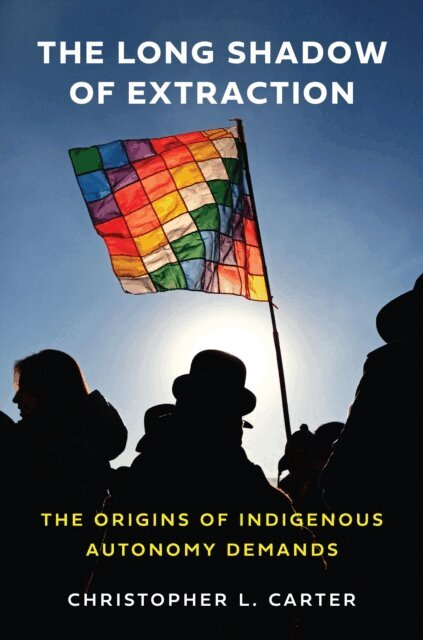
How resistance to extraction shaped Indigenous demands for autonomy, integration, or assimilationFrom the onset of colonialism, Indigenous communities have faced seizure of their land, labor, and resources by non-Indigenous actors. In The Long Shadow of Extraction, Christopher Carter argues that the native groups’ resistance to extraction took distinct forms, and that this variation explains why some communities demanded autonomy while others demanded integration or assimilation. Countering existing scholarship that assumes a universal demand for autonomy, Carter shows that some Indigenous communities in fact refused government offers to recognize their local political authority and longstanding economic institutions.Carter argues that contemporary Indigenous demands were forged in early twentieth-century efforts to resist extraction. Drawing on two emblematic Latin American cases, Peru and Bolivia, Carter shows that in communities where traditional Indigenous leaders organized resistance, ethnic mobilization occurred and gave rise to enduring demands for autonomy, or state recognition of Indigenous identities and institutions. In communities where unions and leftist parties organized resistance, class-based mobilization became the norm. This led communities to reject autonomy and demand instead integration (state recognition of Indigenous identities but not Indigenous institutions) or assimilation (state recognition of neither Indigenous identities nor institutions). Carter’s groundbreaking account of Indigenous resistance has important implications for understanding not only the historical emergence of autonomy but variations in identity-based mobilization in multiethnic democracies.
1 835 kr
Skickas inom 7-10 vardagar
316 kr
Skickas inom 7-10 vardagar
425 kr
Läs direkt efter köp
425 kr
Läs direkt efter köp
83 kr
Läs direkt efter köp
176 kr
Skickas inom 7-10 vardagar
418 kr
Skickas inom 7-10 vardagar
223 kr
Kommande
1 298 kr
Skickas inom 10-15 vardagar
452 kr
Läs direkt efter köp
449 kr
Läs direkt efter köp