

Häftad, Franska, 2022
374 kr
Skickas inom 7-10 vardagar
374 kr
Skickas inom 7-10 vardagar

388 kr
Skickas inom 10-15 vardagar
655 kr
Skickas inom 10-15 vardagar
296 kr
Skickas inom 7-10 vardagar

437 kr
Skickas inom 7-10 vardagar

244 kr
Skickas inom 3-6 vardagar
371 kr
Skickas inom 7-10 vardagar

324 kr
Tillfälligt slut

218 kr
Tillfälligt slut

169 kr
Läs direkt efter köp
1 437 kr
Skickas inom 10-15 vardagar

777 kr
Skickas inom 10-15 vardagar

649 kr
Skickas inom 7-10 vardagar

229 kr
Skickas
658 kr
Läs direkt efter köp
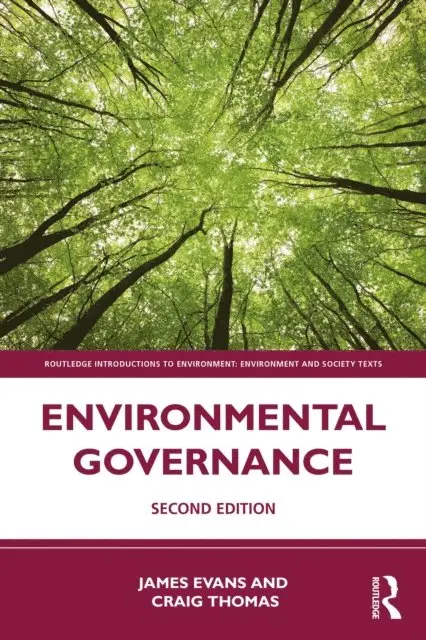
Climate change is prompting an unprecedented questioning of the fundamental bases upon which society is founded. Businesses claim that technology can save the environment, while politicians champion the role of international environmental agreements to secure global action. Economists suggest that we should pay developing countries not to destroy their forests, while environmentalists question whether we can solve ecological problems with the same thinking that created them. As the process of steering society, governance has a critical role to play in coordinating these disparate voices and securing collective action to achieve a more sustainable future.
Environmental Governance is the only book to discuss the first principles of governance, while also providing a critical overview of the wide-ranging theories and approaches that underpin policy and practice today. It places governance within its wider political context to explore how the environment is controlled, manipulated, regulated and contested by a range of actors and institutions. This book shows how network and market governance have shaped current approaches to environmental issues, while also introducing approaches such as transition management and adaptive governance. In so doing, it highlights the strengths and weaknesses of the different approaches currently in play, and considers their political implications.
This second edition has been comprehensively updated to build upon the success of the acclaimed first edition, with a new chapter on the environmental governance of outer space and updated analysis of international climate change summits. It provides a ground-breaking overview of dominant and emerging approaches of environmental governance, forging critical links between them. Each chapter has been updated with new case studies, key debates and figures, and includes questions for discussion and further reading. It is essential reading for students of the environment, politics and sociology, and, indeed, anyone concerned with changing society to secure a more sustainable future.
658 kr
Läs direkt efter köp
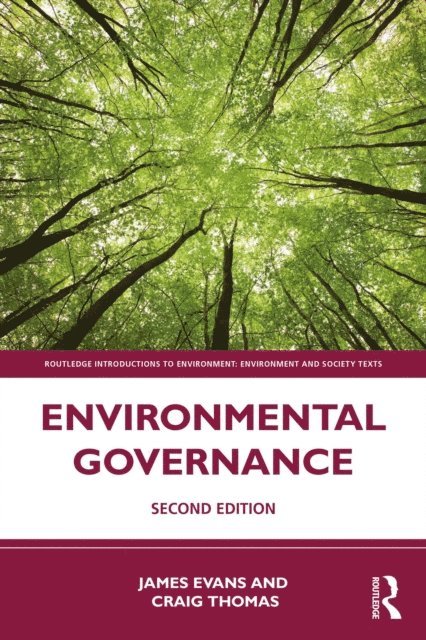
Climate change is prompting an unprecedented questioning of the fundamental bases upon which society is founded. Businesses claim that technology can save the environment, while politicians champion the role of international environmental agreements to secure global action. Economists suggest that we should pay developing countries not to destroy their forests, while environmentalists question whether we can solve ecological problems with the same thinking that created them. As the process of steering society, governance has a critical role to play in coordinating these disparate voices and securing collective action to achieve a more sustainable future.
Environmental Governance is the only book to discuss the first principles of governance, while also providing a critical overview of the wide-ranging theories and approaches that underpin policy and practice today. It places governance within its wider political context to explore how the environment is controlled, manipulated, regulated and contested by a range of actors and institutions. This book shows how network and market governance have shaped current approaches to environmental issues, while also introducing approaches such as transition management and adaptive governance. In so doing, it highlights the strengths and weaknesses of the different approaches currently in play, and considers their political implications.
This second edition has been comprehensively updated to build upon the success of the acclaimed first edition, with a new chapter on the environmental governance of outer space and updated analysis of international climate change summits. It provides a ground-breaking overview of dominant and emerging approaches of environmental governance, forging critical links between them. Each chapter has been updated with new case studies, key debates and figures, and includes questions for discussion and further reading. It is essential reading for students of the environment, politics and sociology, and, indeed, anyone concerned with changing society to secure a more sustainable future.

379 kr
Skickas inom 7-10 vardagar
397 kr
Skickas inom 7-10 vardagar
566 kr
Skickas inom 10-15 vardagar
849 kr
Läs direkt efter köp
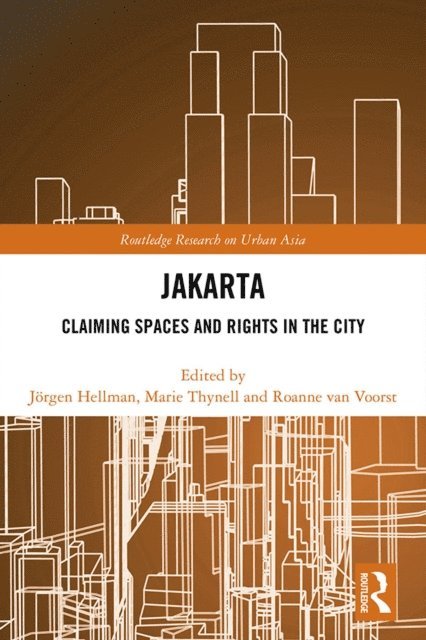
Jakarta is being transformed in an unknown speed and manner by new types of urban authorities and drivers of transformation. These actors are moving in a field of opportunity that was created by recent and severe changes in the economic, socio-political and natural environment of Jakarta.
Including chapters written by contributors who have lived and worked in Jakarta for years, this book shows how urban space in Jakarta is increasingly created by the entanglement of different layers that co-exist in political and socio-economic life, with actors criss-crossing between formal and informal spheres. In each case the authors explore who are the drivers of urban change, and what are the processes in shaping the current and future city of Jakarta. Not denying that former elites are still a critical force in shaping Jakarta, the book analyses to what extent former stakeholders are undermined, and what types of new authorities or social institutions are emerging. It examines how drivers of transformation claim their right to space in the city and how their actions and strategies reflect their vision on the future of Jakarta.
An important addition to the discussion of urban change and development, this book will be of interest to scholars interested in Indonesia, South-East Asia, urbanization, development research, anthropology and globalization.
495 kr
Läs direkt efter köp
The only book to focus on implementing public policy, this state-of-the-art text offers a comprehensive and lively account of the major insights found in implementation theory and research. Its exploration of the field provides a reflective overview of work in the study of policy implementation worldwide. In doing so, the book reconceptualizes the policy process to highlight the essential role those implementing policy have in moulding, shaping and directing policy during their work.
Realizing policy goals may be the key to ballot box victory, while policies perceived as failures may symbolise declining trust and confidence in government and politics. As such, implementing policy is as crucial to the actors in power as it is for democracy. Policymakers respond to challenging problems in highly dynamic and pressurised contexts. From the global pandemic to climate change, financial regulation to education, effective policy has never been more important to governments and society – and the role of street-level bureaucrats in implementing policy never so crucial.
This is the seminal work in the field, used by thousands worldwide. Now fully revised and updated, the 20th anniversary edition includes substantial changes and additions. This edition features two entirely new chapters on the consequences of populism and the latest street-level bureaucracy research, as well as extensive examination of comparative cross-national work and a refined and more explicit conceptualization of implementation in terms of its role in governance throughout. The book concludes with an all-new chapter exploring emergent issues on implementation in practice and on the research agenda.
The text is essential reading for anyone interested in public policy, social policy, public administration, public management and governance.

1 663 kr
Kommande
219 kr
Skickas inom 5-8 vardagar
757 kr
Läs direkt efter köp
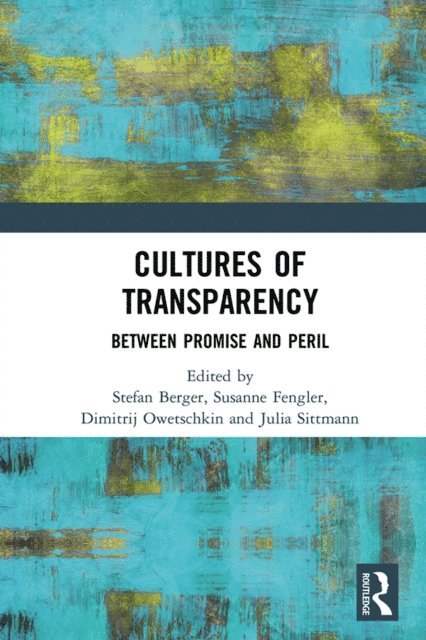
This volume addresses the major questions surrounding a concept that has become ubiquitous in the media and in civil society as well as in political and economic discourses in recent years, and which is demanded with increasing frequency: transparency.
How can society deal with increasing and often diverging demands and expectations of transparency? What role can different political and civil society actors play in processes of producing, or preventing, transparency? Where are the limits of transparency and how are these boundaries negotiated? What is the relationship of transparency to processes of social change, as well as systems of social surveillance and control? Engaging with transparency as an interrelated product of law, politics, economics and culture, this interdisciplinary volume explores the ambiguities and contradictions, as well as the social and political dilemmas, that the age of transparency has unleashed.
As such it will appeal to researchers across the social sciences and humanities with interests in politics, history, sociology, civil society, citizenship, public policy, criminology and law.
746 kr
Läs direkt efter köp
This volume addresses the major questions surrounding a concept that has become ubiquitous in the media and in civil society as well as in political and economic discourses in recent years, and which is demanded with increasing frequency: transparency.
How can society deal with increasing and often diverging demands and expectations of transparency? What role can different political and civil society actors play in processes of producing, or preventing, transparency? Where are the limits of transparency and how are these boundaries negotiated? What is the relationship of transparency to processes of social change, as well as systems of social surveillance and control? Engaging with transparency as an interrelated product of law, politics, economics and culture, this interdisciplinary volume explores the ambiguities and contradictions, as well as the social and political dilemmas, that the age of transparency has unleashed.
As such it will appeal to researchers across the social sciences and humanities with interests in politics, history, sociology, civil society, citizenship, public policy, criminology and law.

1 479 kr
Skickas inom 10-15 vardagar

710 kr
Skickas inom 7-10 vardagar

499 kr
Skickas inom 7-10 vardagar
813 kr
Läs direkt efter köp
This analysis of the Swedish criminal system makes sense of a markedly punitive turn in policy despite the country’s relatively liberal approach. That Sweden, often considered the welfare state par excellence, should show a move towards punitiveness needs an explanation from the view of both criminology and criminal policy. The book explores how the politicization of criminal policy, the questioning of experts, the increasingly emotional orientation of politics, and the proactive policy all contribute to the development towards increased repression in criminal policy. The types of crime that are at the centre of the criminal policy debate - drugs, violence, and organized crime - also all contribute to these general trends, and are politically exploited and affected by a growing political populism. The author contends that the crime-reducing effects of the policy must be considered to be very limited, while the costs of the increased criminal and coercive legislation are becoming considerable, especially in the form of an increasing number of people in prison. This book is of interest to researchers and instructors focusing on the sociology of punishment as well as policymakers concerned with crime policy and prison development.
2 541 kr
Skickas inom 10-15 vardagar