1 130 kr
Skickas inom 10-15 vardagar
1 130 kr
Skickas inom 10-15 vardagar
256 kr
Skickas inom 7-10 vardagar
256 kr
Skickas inom 7-10 vardagar
256 kr
Skickas inom 7-10 vardagar
1 020 kr
Läs direkt efter köp
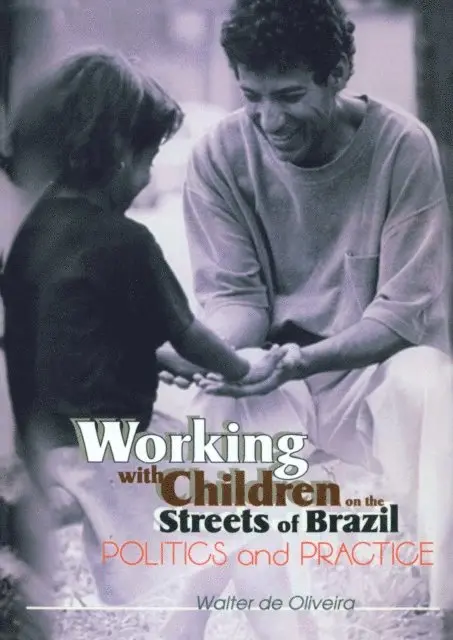
Reaffirm your political and spiritual commitment to helping the poor and oppressed!How can teachers and social workers reach the endangered kids who seldom come to school? By going to the streets, where the children live, work, fight, steal, get sick, sell their bodies, and all too often die. Working with Children on the Streets of Brazil is an in-depth study of Brazil''s homeless children and the street youthworkers who offer them food, clothing, beds, hope, medical attention, education, and simple respect.The street children of Brazil live in unimaginable poverty and squalor, stealing jewelry or selling their bodies to survive, wandering homeless and untaught, pursued by death squads who clean up the streets by washing them with blood. Yet the street youthworkers interviewed in this moving, powerful book--some inspired by the Catholic Church''s Liberation Theology movement, some employed by the government or private agencies--continue their efforts to help and heal these children, often with remarkable success. Their work is widely respected, and their unique viewpoint on serving throwaway children can offer creative solutions for social service workers around the globe.Many of the issues discussed in Working with Children on the Streets of Brazil will be painfully familiar to social service workers everywhere, including:
the problems of how to identify, classify, and count the children of the streets the reasons children leave or lose their homes the implications of policy decisions and socioeconomic forces on the children''s lives the clash between law-and-order advocates and social service professionals the negative effects of deinstitutionalization and overcrowded youth homes the tragic societal consequences of the widening gap between rich and poor the problems of youth crime and violence the difficulties in delivering education, health care, and basic services for homeless childrenThis impressive book offers a detailed history of the development of street social education; a study of the aims, methods, and experiences of youthworkers; and solid advice on using the principles and practices of street social education to reach the at-risk youth of any country, including the United States. Working with Children on the Streets of Brazil is both a scholarly work on the phenomenon of homeless children and a rousing call to action that will remind you of the reasons you chose to work in social services.1 020 kr
Läs direkt efter köp
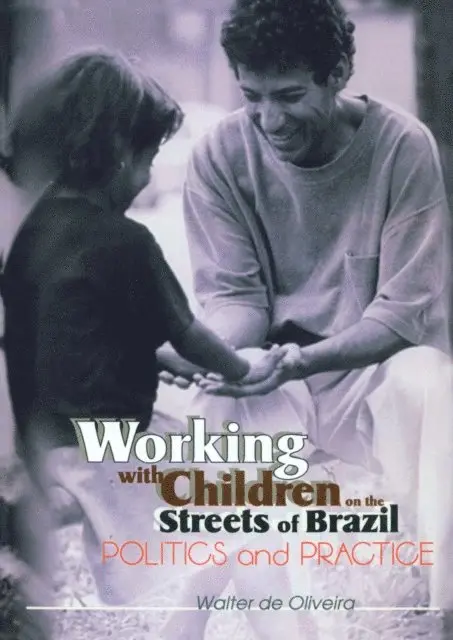
Reaffirm your political and spiritual commitment to helping the poor and oppressed!How can teachers and social workers reach the endangered kids who seldom come to school? By going to the streets, where the children live, work, fight, steal, get sick, sell their bodies, and all too often die. Working with Children on the Streets of Brazil is an in-depth study of Brazil''s homeless children and the street youthworkers who offer them food, clothing, beds, hope, medical attention, education, and simple respect.The street children of Brazil live in unimaginable poverty and squalor, stealing jewelry or selling their bodies to survive, wandering homeless and untaught, pursued by death squads who clean up the streets by washing them with blood. Yet the street youthworkers interviewed in this moving, powerful book--some inspired by the Catholic Church''s Liberation Theology movement, some employed by the government or private agencies--continue their efforts to help and heal these children, often with remarkable success. Their work is widely respected, and their unique viewpoint on serving throwaway children can offer creative solutions for social service workers around the globe.Many of the issues discussed in Working with Children on the Streets of Brazil will be painfully familiar to social service workers everywhere, including:
the problems of how to identify, classify, and count the children of the streets the reasons children leave or lose their homes the implications of policy decisions and socioeconomic forces on the children''s lives the clash between law-and-order advocates and social service professionals the negative effects of deinstitutionalization and overcrowded youth homes the tragic societal consequences of the widening gap between rich and poor the problems of youth crime and violence the difficulties in delivering education, health care, and basic services for homeless childrenThis impressive book offers a detailed history of the development of street social education; a study of the aims, methods, and experiences of youthworkers; and solid advice on using the principles and practices of street social education to reach the at-risk youth of any country, including the United States. Working with Children on the Streets of Brazil is both a scholarly work on the phenomenon of homeless children and a rousing call to action that will remind you of the reasons you chose to work in social services.657 kr
Läs direkt efter köp
Theory and Methods for Public Pedagogy Research introduces promising new methods of public pedagogy research centered around transforming rather than explaining knowledge. The new methods are premised on a new theorisation of public pedagogy which recognises the educative agent. The agency of the public to speak, to be heard, to know is manifest as the educative agent speaks their knowledge and the researcher must be attentive to that speaking.
This work extends the well-established intellectual projects in the field to introduce four new methods for public pedagogy research: organisation, performance, curation and researcher. A key focus of this work is attending to how the circulation of knowledge in non-formal settings can be recognised. It examines the under-published area of pedagogy and research in public spaces and engages post-qualitative approaches to inquiry to open up the field. Moreover, it explores the possibility of performances, art exhibitions and museums as public spaces of knowledge generation and pedagogy. It also shows how research can be applied in practice in public pedagogy to discover best practices for working in these spaces. Finally, it confronts and critiques the dilemmas of public pedagogy research and the limits of research methods which have previously been deployed in this field.
This book will be of interest to researchers and students in the field of public education and teaching in a variety of social science and arts disciplines, and education.
657 kr
Läs direkt efter köp
Theory and Methods for Public Pedagogy Research introduces promising new methods of public pedagogy research centered around transforming rather than explaining knowledge. The new methods are premised on a new theorisation of public pedagogy which recognises the educative agent. The agency of the public to speak, to be heard, to know is manifest as the educative agent speaks their knowledge and the researcher must be attentive to that speaking.
This work extends the well-established intellectual projects in the field to introduce four new methods for public pedagogy research: organisation, performance, curation and researcher. A key focus of this work is attending to how the circulation of knowledge in non-formal settings can be recognised. It examines the under-published area of pedagogy and research in public spaces and engages post-qualitative approaches to inquiry to open up the field. Moreover, it explores the possibility of performances, art exhibitions and museums as public spaces of knowledge generation and pedagogy. It also shows how research can be applied in practice in public pedagogy to discover best practices for working in these spaces. Finally, it confronts and critiques the dilemmas of public pedagogy research and the limits of research methods which have previously been deployed in this field.
This book will be of interest to researchers and students in the field of public education and teaching in a variety of social science and arts disciplines, and education.
762 kr
Läs direkt efter köp
This volume engages with issues of moral responsibility and multiethnic co-existence in the context of contemporary Africa. Post-colonial African states are by and large ethnically diverse. Constructively managing ethnic diversity, however, has always been a challenge to these states, which often fail to be democratic and all-inclusive. As a result, ethnic enmity and conflicts that obliterate bonds of togetherness between ethnic communities have been rampant throughout the continent. In dialogue with Africa’s cultural and religious assets, this interdisciplinary multi-authored book aims at articulating the need to interpret past and present ethnic hostilities in Africa, and generating moral resources of togetherness to foster a social pedagogy of responsible cohabitation for Africans. The chapters of this volume, categorized into two parts, are framed according to these two niches.
746 kr
Läs direkt efter köp
This volume engages with issues of moral responsibility and multiethnic co-existence in the context of contemporary Africa. Post-colonial African states are by and large ethnically diverse. Constructively managing ethnic diversity, however, has always been a challenge to these states, which often fail to be democratic and all-inclusive. As a result, ethnic enmity and conflicts that obliterate bonds of togetherness between ethnic communities have been rampant throughout the continent. In dialogue with Africa’s cultural and religious assets, this interdisciplinary multi-authored book aims at articulating the need to interpret past and present ethnic hostilities in Africa, and generating moral resources of togetherness to foster a social pedagogy of responsible cohabitation for Africans. The chapters of this volume, categorized into two parts, are framed according to these two niches.
675 kr
Läs direkt efter köp
This book documents the rise in youth creativity, entrepreneurship, and collective strategies to address systemic barriers and discrimination in the creative industries and create an expanded, more diverse, inclusive, equitable, and caring field.
Although the difficulties of entering and making a living in the creative industries—a field which can often perpetuate dominant patterns of social exclusion and economic inequality—are well documented, there is still an absence of guidance on how young creatives can navigate this environment. Foregrounding an intersectional approach, Reimagining the Creative Industries responds to this gap by documenting the work of contemporary youth collectives and organizations that are responding to these systemic barriers and related challenges by creating more caring and community-oriented alternatives. Mobilizing a care ethics framework, Miranda Campbell underscores forms of care that highlight relationality, recognize structural barriers, and propose new visions for the creative industries. This book posits a future where creativity, collaboration, and community are possible through increased avenues for co-creation, teaching and learning, and community engagement.
Anyone interested in thinking critically about the creative industries, youth culture, community work, and creative employment will be drawn to Campbell''s incisive work.
690 kr
Läs direkt efter köp
This book documents the rise in youth creativity, entrepreneurship, and collective strategies to address systemic barriers and discrimination in the creative industries and create an expanded, more diverse, inclusive, equitable, and caring field.
Although the difficulties of entering and making a living in the creative industries—a field which can often perpetuate dominant patterns of social exclusion and economic inequality—are well documented, there is still an absence of guidance on how young creatives can navigate this environment. Foregrounding an intersectional approach, Reimagining the Creative Industries responds to this gap by documenting the work of contemporary youth collectives and organizations that are responding to these systemic barriers and related challenges by creating more caring and community-oriented alternatives. Mobilizing a care ethics framework, Miranda Campbell underscores forms of care that highlight relationality, recognize structural barriers, and propose new visions for the creative industries. This book posits a future where creativity, collaboration, and community are possible through increased avenues for co-creation, teaching and learning, and community engagement.
Anyone interested in thinking critically about the creative industries, youth culture, community work, and creative employment will be drawn to Campbell''s incisive work.
685 kr
Läs direkt efter köp
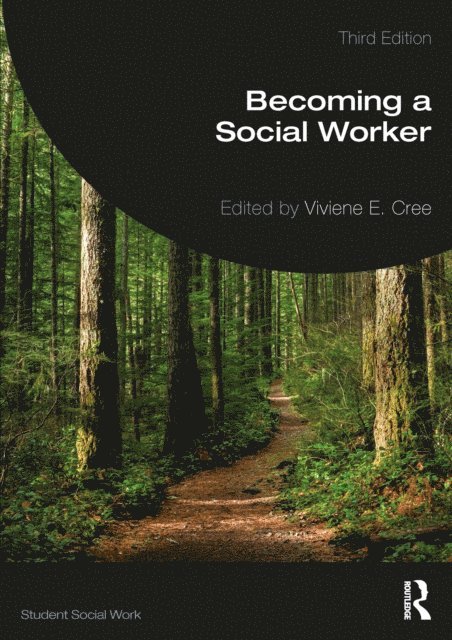
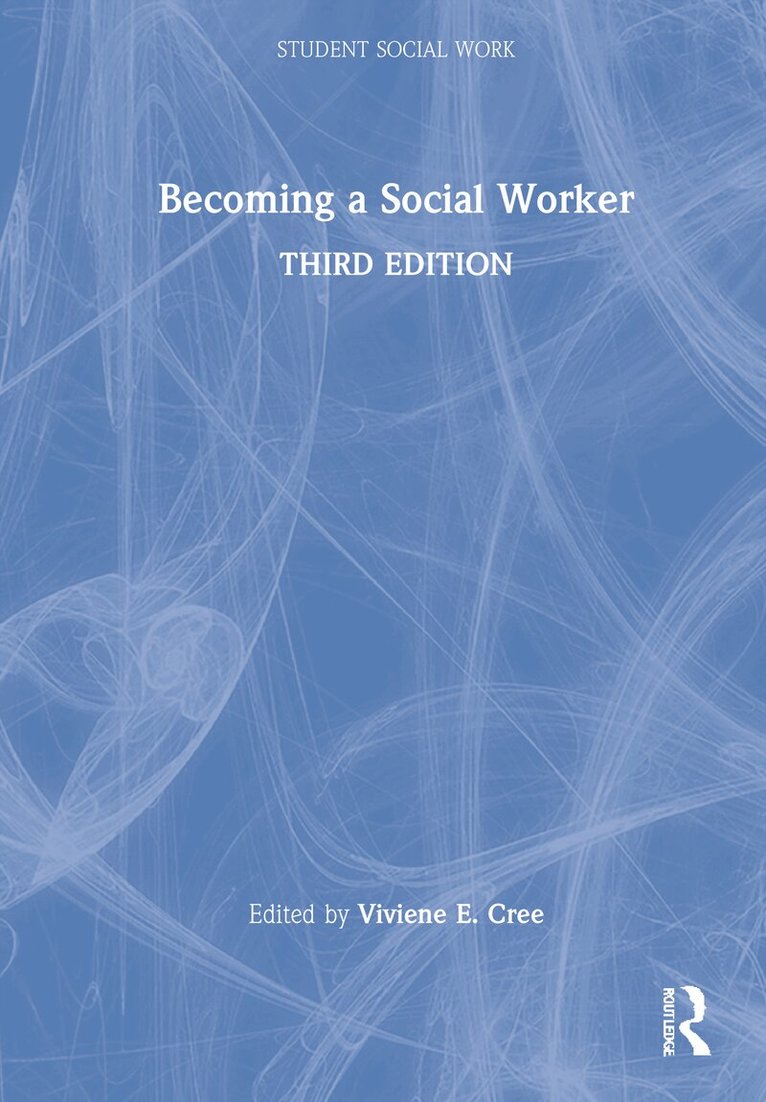
This fully revised new edition of Becoming a Social Worker is made up of entirely new stories. Providing a ‘glocal’ frame of reference, the book describes the personal and professional narratives of a diverse range of people working in social work in the UK, what brought them into the field and what has kept them in it ever since.
The lively accounts reveal what it is like to be a social worker in a range of practice settings today and, at the same time, demonstrate that commitment and passion remain at the heart of social work. Some contributors will be recognised as people who have played a key part in shaping social work over the years; they provide insights into how the profession has developed over time. Other contributors, less well known but no less interesting, give a vivid account of the ongoing challenges that social work education and practice face, and the values that underpin social work. Social work is a demanding and difficult job that goes largely unseen within society. We only ever hear about social work and social workers when something goes wrong and a vulnerable adult or child is hurt. Becoming a Social Worker sets out to change that – to make social work visible, so that those considering a career in the caring professions across the world can make an informed choice about whether social work is the career for them.
It is relevant for all induction courses at the beginning and prior to coming on social work programmes including all relevant HNC and HND courses as well as preparation for practice courses on all undergraduate and postgraduate social work programmes.
675 kr
Läs direkt efter köp
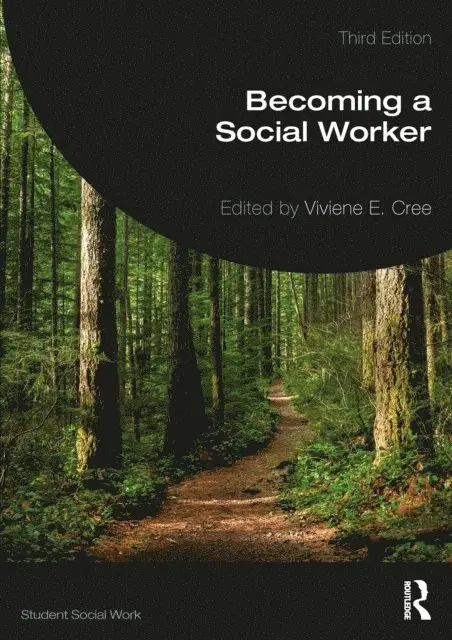
This fully revised new edition of Becoming a Social Worker is made up of entirely new stories. Providing a ‘glocal’ frame of reference, the book describes the personal and professional narratives of a diverse range of people working in social work in the UK, what brought them into the field and what has kept them in it ever since.
The lively accounts reveal what it is like to be a social worker in a range of practice settings today and, at the same time, demonstrate that commitment and passion remain at the heart of social work. Some contributors will be recognised as people who have played a key part in shaping social work over the years; they provide insights into how the profession has developed over time. Other contributors, less well known but no less interesting, give a vivid account of the ongoing challenges that social work education and practice face, and the values that underpin social work. Social work is a demanding and difficult job that goes largely unseen within society. We only ever hear about social work and social workers when something goes wrong and a vulnerable adult or child is hurt. Becoming a Social Worker sets out to change that – to make social work visible, so that those considering a career in the caring professions across the world can make an informed choice about whether social work is the career for them.
It is relevant for all induction courses at the beginning and prior to coming on social work programmes including all relevant HNC and HND courses as well as preparation for practice courses on all undergraduate and postgraduate social work programmes.
774 kr
Läs direkt efter köp
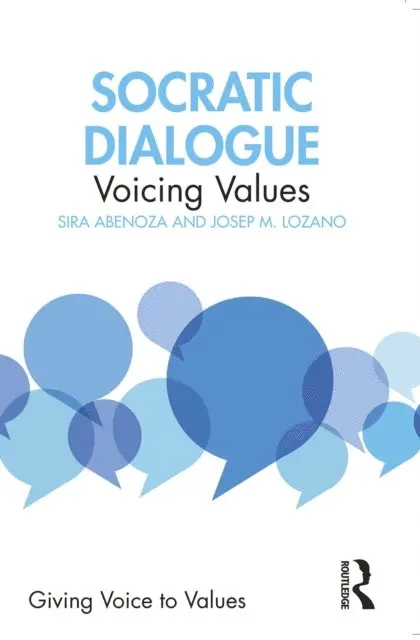
Giving Voice to Values is a very important tool that has helped many professionals better align what they do with what they value and believe. This book introduces the methodology of Socratic Dialogue as a complementary set of tools for creating spaces of joint reflection in which one can gain clarity about one’s values and gain the confidence to voice them effectively.
Socrates’ main concern was to progressively reach a higher alignment between ideas and actions: that is, to achieve a harmony between what we think, what we say and what we do. The first step to giving voice to our values involves introspection and dialogue with others – which is how we can become aware of what we really think and value. An examined life, Socrates reminds us, is a fulfilled one. Based on the authors'' more than ten years’ experience teaching Socratic Dialogue to business and law students, executives and professionals, faculty, incarcerated people and other vulnerable groups, the book provides teachers and practitioners with a roadmap to conceive, design and conduct Socratic Dialogue courses and sessions. It provides context for the method and its adaptation to the challenges of the 21st century. The book also offers guidance on how to structure a Socratic Dialogue classroom, as well as a series of tried-and-true activities and exercises, practical recommendations and testimonies of the transformative impact that dialogue courses have had on participants.
The book is of prime interest to professors and educators of business ethics, as well as professional consultants working to help organizations become more responsible and introduce ethical reasoning in their decisions. It also serves as a valuable resource for social educators and practitioners in prisons and rehabilitation units, as well as teachers in primary and secondary education.
791 kr
Läs direkt efter köp
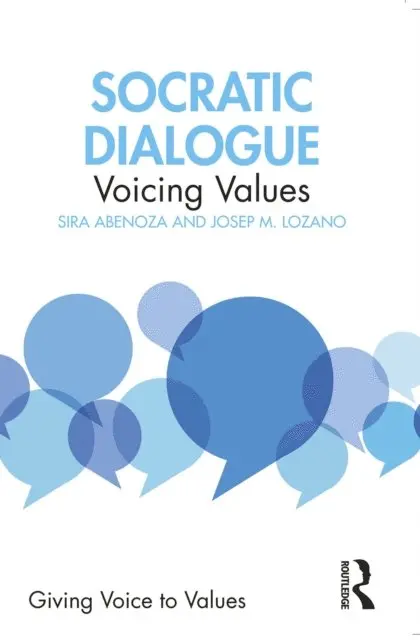
Giving Voice to Values is a very important tool that has helped many professionals better align what they do with what they value and believe. This book introduces the methodology of Socratic Dialogue as a complementary set of tools for creating spaces of joint reflection in which one can gain clarity about one’s values and gain the confidence to voice them effectively.
Socrates’ main concern was to progressively reach a higher alignment between ideas and actions: that is, to achieve a harmony between what we think, what we say and what we do. The first step to giving voice to our values involves introspection and dialogue with others – which is how we can become aware of what we really think and value. An examined life, Socrates reminds us, is a fulfilled one. Based on the authors'' more than ten years’ experience teaching Socratic Dialogue to business and law students, executives and professionals, faculty, incarcerated people and other vulnerable groups, the book provides teachers and practitioners with a roadmap to conceive, design and conduct Socratic Dialogue courses and sessions. It provides context for the method and its adaptation to the challenges of the 21st century. The book also offers guidance on how to structure a Socratic Dialogue classroom, as well as a series of tried-and-true activities and exercises, practical recommendations and testimonies of the transformative impact that dialogue courses have had on participants.
The book is of prime interest to professors and educators of business ethics, as well as professional consultants working to help organizations become more responsible and introduce ethical reasoning in their decisions. It also serves as a valuable resource for social educators and practitioners in prisons and rehabilitation units, as well as teachers in primary and secondary education.
457 kr
Läs direkt efter köp
457 kr
Läs direkt efter köp
435 kr
Skickas
1 481 kr
Skickas inom 7-10 vardagar
280 kr
Skickas
911 kr
Skickas inom 7-10 vardagar
324 kr
Skickas
272 kr
Skickas
286 kr
Läs direkt efter köp
286 kr
Läs direkt efter köp
879 kr
Skickas inom 7-10 vardagar
818 kr
Skickas
2 478 kr
Skickas inom 10-15 vardagar
567 kr
Skickas inom 10-15 vardagar