665 kr
Skickas inom 10-15 vardagar
665 kr
Skickas inom 10-15 vardagar
622 kr
Skickas inom 5-8 vardagar
269 kr
Skickas inom 7-10 vardagar
199 kr
Skickas
96 kr
Skickas
133 kr
Skickas
1 213 kr
Skickas inom 10-15 vardagar
118 kr
Läs direkt efter köp
490 kr
Skickas inom 3-6 vardagar
306 kr
Skickas inom 7-10 vardagar
138 kr
Skickas inom 7-10 vardagar
268 kr
Skickas inom 3-6 vardagar
846 kr
Skickas inom 7-10 vardagar
257 kr
Läs direkt efter köp
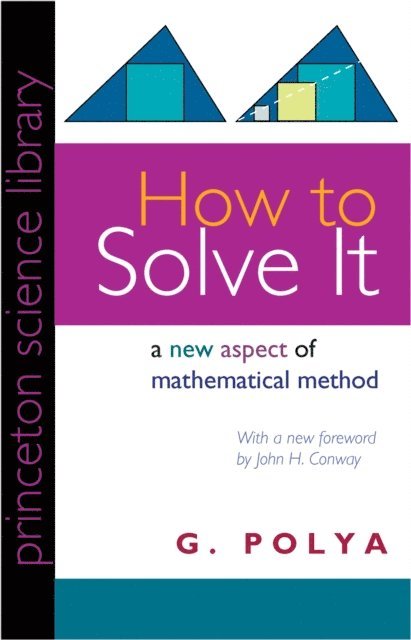
The bestselling book that has helped millions of readers solve any problemA must-have guide by eminent mathematician G. Polya, How to Solve It shows anyone in any field how to think straight. In lucid and appealing prose, Polya reveals how the mathematical method of demonstrating a proof or finding an unknown can help you attack any problem that can be reasoned out—from building a bridge to winning a game of anagrams. How to Solve It includes a heuristic dictionary with dozens of entries on how to make problems more manageable—from analogy and induction to the heuristic method of starting with a goal and working backward to something you already know.This disarmingly elementary book explains how to harness curiosity in the classroom, bring the inventive faculties of students into play, and experience the triumph of discovery. But it’s not just for the classroom. Generations of readers from all walks of life have relished Polya’s brilliantly deft instructions on stripping away irrelevancies and going straight to the heart of a problem.
200 kr
Skickas
815 kr
Läs direkt efter köp
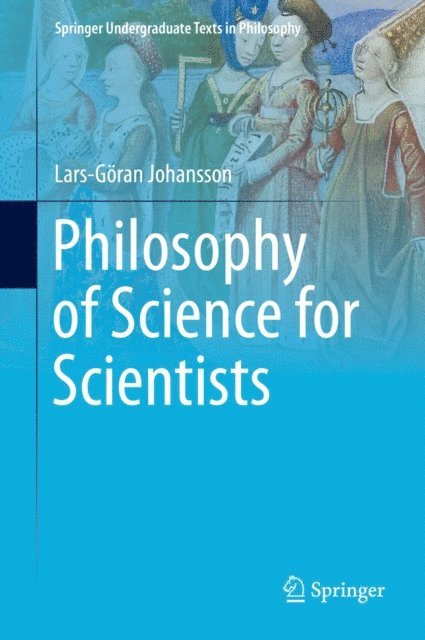
This textbook offers an introduction to the philosophy of science. It helps undergraduate students from the natural, the human and social sciences to gain an understanding of what science is, how it has developed, what its core traits are, how to distinguish between science and pseudo-science and to discover what a scientific attitude is. It argues against the common assumption that there is fundamental difference between natural and human science, with natural science being concerned with testing hypotheses and discovering natural laws, and the aim of human and some social sciences being to understand the meanings of individual and social group actions. Instead examines the similarities between the sciences and shows how the testing of hypotheses and doing interpretation/hermeneutics are similar activities. The book makes clear that lessons from natural scientists are relevant to students and scholars within the social and human sciences, and vice versa. It teaches its readers howto effectively demarcate between science and pseudo-science and sets criteria for true scientific thinking.
Divided into three parts, the book first examines the question What is Science? It describes the evolution of science, defines knowledge, and explains the use of and need for hypotheses and hypothesis testing. The second half of part I deals with scientific data and observation, qualitative data and methods, and ends with a discussion of theories on the development
of science. Part II offers philosophical reflections on four of the most important concepts in science: causes, explanations, laws and models. Part III presents discussions on philosophy of mind, the relation between mind and body, value-free and value-related science, and reflections on actual trends in science.775 kr
Skickas inom 10-15 vardagar
104 kr
Skickas inom 7-10 vardagar
89 kr
Läs direkt efter köp
145 kr
Skickas
223 kr
Skickas inom 3-6 vardagar
1 542 kr
Skickas inom 10-15 vardagar
88 kr
Läs direkt efter köp
994 kr
Skickas inom 10-15 vardagar
138 kr
Skickas inom 7-10 vardagar
154 kr
Skickas
612 kr
Skickas inom 10-15 vardagar
279 kr
Skickas inom 7-10 vardagar
121 kr
Skickas
139 kr
Skickas inom 7-10 vardagar