
Inbunden, Tyska, 2016
311 kr
Skickas inom 3-6 vardagar
311 kr
Skickas inom 3-6 vardagar
1 702 kr
Skickas inom 11-20 vardagar
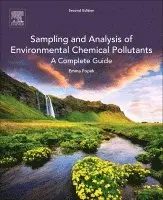
Sampling and Analysis of Environmental Chemical Pollutants, A Complete Guide, Second Edition promotes the knowledge of data collection fundamentals and offers technically solid procedures and basic techniques that can be applied to daily workflow solutions. The book's organization emphasizes the practical issues facing the project scientist. In focusing the book on data collection techniques that are oriented toward the project objectives, the author clearly distinguishes the important issues from the less relevant ones. Stripping away the layers of inapplicable or irrelevant recommendations, the book centers on the underlying principles of environmental sampling and analytical chemistry and summarizes the universally accepted industry practices and standards.
This Guide is a resource that will help students and practicing professionals alike better understand the issues of environmental data collection, capitalize on years of existing sampling and analysis practices, and become more knowledgeable and efficient in the task at hand.
The three phases of environmental chemical data collection (planning, implementation, and assessment) are explained in a logical and concise manner. A discussion on the physical and chemical properties of environmental chemical pollutants promotes the understanding of their fate and transport. A chapter on common analytical chemistry techniques, methods of compound quantitation, and laboratory quality control and quality assurance may be used as a standalone introduction to instrumental analytical chemistry. Eleven case studies demonstrate the application of the Data Quality Objectives process to the development of sampling designs and illustrate specific data interpretation problems. Numerous call-out boxes in each chapter offer practical tips on widely used industry practices, which originate from years of experience in the field. Appendices contain the most frequently used action levels and reference material, calculation aides, and useful field forms and checklists. Authored by an analytical chemist and environmental pollutant expert with more than 30 years of experience in research and industry.
908 kr
Skickas inom 10-15 vardagar
1 090 kr
Skickas inom 11-20 vardagar
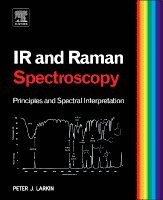
Infrared and Raman Spectroscopy: Principles and Spectral Interpretation explains the background, core principles and tests the readers understanding of the important techniques of Infrared and Raman Spectroscopy. These techniques are used by chemists, environmental scientists, forensic scientists etc to identify unknown chemicals. In the case of an organic chemist these tools are part of an armory of techniques that enable them to conclusively prove what compound they have made, which is essential for those being used in medical applications.
The book reviews basic principles, instrumentation, sampling methods, quantitative analysis, origin of group frequencies and qualitative interpretation using generalized Infrared (IR) and Raman spectra. An extensive use of graphics is used to describe the basic principles of vibrational spectroscopy and the origins of group frequencies, with over 100 fully interpreted FT-IR and FT-Raman spectra included and indexed to the relevant qualitative interpretation chapter. A final chapter with forty four unknown spectra and with a corresponding answer key is included to test the readers understanding. Tables of frequencies (peaks) for both infrared and Raman spectra are provided at key points in the book and will act as a useful reference resource for those involve interpreting spectra.
This book provides a solid introduction to vibrational spectroscopy with an emphasis placed upon developing critical interpretation skills. Ideal for those using and analyzing IR and Raman spectra in their laboratories as well as those using the techniques in the field.
Uniquely integrates discussion of IR and Raman spectra Theory illustrated and explained with over 100 fully interpreted high quality FT-IR and FT-Raman spectra (4 cm-1 resolution) Selected problems at the end of chapters and 44 unknown IR and Raman spectra to test readers understanding (with a corresponding answer key)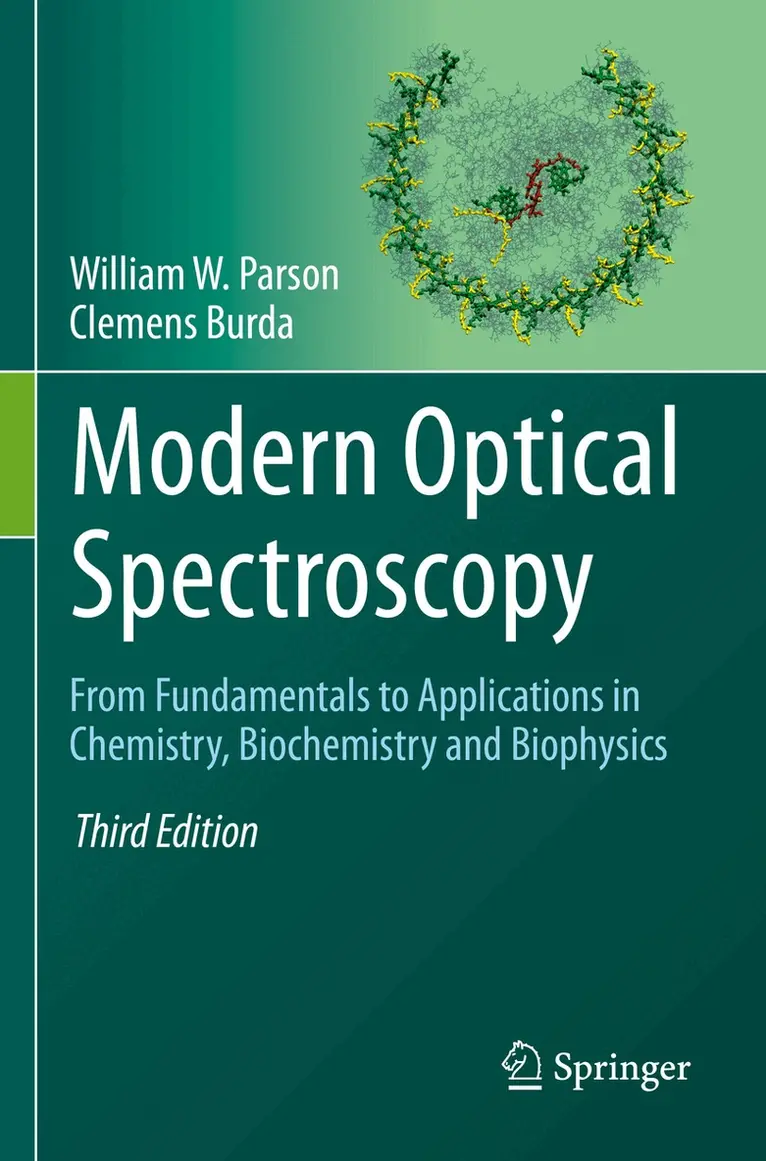
1 104 kr
Skickas inom 10-15 vardagar

712 kr
Läs direkt efter köp
1 982 kr
Skickas inom 11-20 vardagar
Modern Environmental Analysis Techniques for Pollutants presents established environmental analysis methods, rapidly emerging technologies, and potential future research directions. As methods of environmental analysis move toward lower impact, lower cost, miniaturization, automation, and simplicity, new methods emerge and ultimately improve the accuracy of their analytical results. This book gives in-depth, step-by-step descriptions of a variety of techniques, including methods used in sampling, field sample handling, sample preparation, quantification, and statistical evaluation.
Modern Environmental Analysis Techniques for Pollutants aims to deliver a comprehensive and easy-to-read text for students and researchers in the environmental analysis arena and to provide essential information to consultants and regulators about analytical and quality control procedures helpful in their evaluation and decision-making procedures.
Bridges the gap in current literature on analytical chemistry techniques and their application to environmental analysis Covers the use of nanomaterials in environmental analysis, as well as the monitoring and analysis of nanomaterials in the environment Looks to the past, present and future of environmental analysis, with chapters on historical background, established and emerging techniques and instrumentation, and predictions
489 kr
Skickas inom 3-6 vardagar
939 kr
Skickas inom 10-15 vardagar
860 kr
Skickas inom 3-6 vardagar
2 119 kr
Läs direkt efter köp
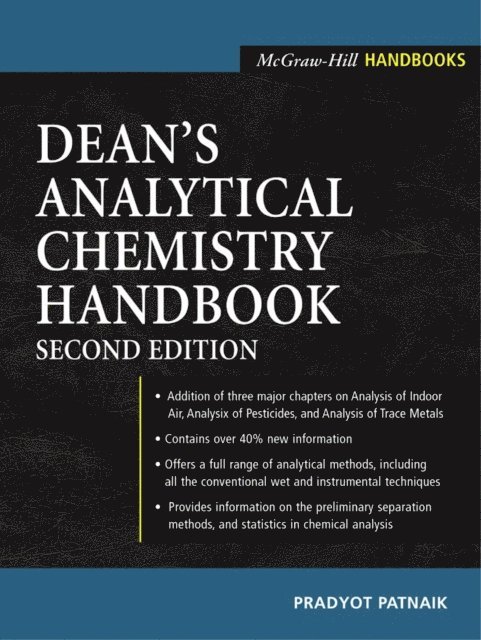
This essential on-the-job resource for the analytical chemist has been revised and updated with 40% new material. Readers will find all the conventional wet and instrumental techniques in one exhaustive reference along with all the critical data needed to apply them. Worked examples, troubleshooting tips, and numerous tables and charts are provided for easy access to the data.* The most up-to-date and complete guide to analytical chemistry available today* NEW: 3 major chapters on Analysis of Indoor Air, Analysis of Pesticides, Analysis of Trace Metals
2 727 kr
Läs direkt efter köp
788 kr
Skickas inom 3-6 vardagar

1 504 kr
Skickas inom 10-15 vardagar
6 156 kr
Skickas inom 11-20 vardagar
5 590 kr
Skickas inom 11-20 vardagar
Volume 6: Ionization Methods captures the story of molecular ionization and its phenomenal evolution that makes mass spectrometry the powerful method it is today. Chapters 1 and 2 cover fundamentals and various issues that are common to all ionization (e.g., accurate mass, isotope clusters, and derivatization).
Chapters 3-9 acknowledge that some ionization methods are appropriate for gas-phase molecules and others for molecules that are in the solid or liquid states. Chapters 3-6 cover gas-phase molecules, dividing the subject into: (1) ionization of gas-phase molecules by particles (e.g., EI), (2) ionization by photons, (3) ionization by ion-molecule and molecule-molecule reactions (e.g., APCI and DART), and ionization in Strong electric fields (i.e., Electrohydrodynamic and Field Ionization/Desorption).
"Ionization in a Strong Electric Field" illustrates the transition to ionization of molecules in the solid or liquid states, covered in Chapters 7-9: (1) spray methods for ionization (e.g., electrospray), (2) desorption ionization by particle bombardment (e.g., FAB), and (3) desorption by photons (e.g., MALDI). Electrospray and MALDI also lead to applications in biophysical chemistry, the theme of Chapter 10.
Chapter 11 reconsiders ionization from the view of choosing an ionization method. The range of subjects is from ionization of organic and biomolecules to the study of microorganisms.
Reviews range of ionization methods used in mass spectrometry today Includes tutorials describing the principles and instrumentation applied to each method Considers appropriate methods of ionization for analysis of various substances
6 884 kr
Skickas inom 11-20 vardagar
5 994 kr
Skickas inom 11-20 vardagar
5 185 kr
Skickas inom 11-20 vardagar
Volume 5: Elemental and Isotope Ratio Mass Spectrometry focuses on (1) the plethora of mostly atomic ionization techniques that have been coupled to MS for elemental analysis, the measurement of isotope ratios, and even the determination of inorganic compounds and (2) the precise measurement of isotope ratios of organic elements as small gas molecules by isotope ratio mass spectrometry (IRMS).
Reviews the wide range of ionization and isotope methods used in inorganic mass spectrometry today Features tutorials describing the key principles and instrumentation relevant to each method Evaluates practical applications for the analysis of environmental, biological, biomedical, nutritional, geological, nuclear, microelectronic and extra-terrestrial materials Includes more than 3400 references, 100 tables and 500 figures of which more than 200 are in color
6 156 kr
Skickas inom 11-20 vardagar
Volume 4: Organic and Organometallic Compounds presents a cross section of applications in organic and organometallic chemistry in two parts. Chapters 1 to 6 are devoted to the fundamentals whereas chapters 7 and 8 cover applications to organic and organometallic compounds, either available as pure compounds or present in complex mixtures.
Chapter 1 describes the theory for organic mass spectrometry, building on and complementing material in Volume 1. The themes for Chapter 2 are the structures and properties of gas-phase ions of conventional, distonic, and non-covalent complexes. Chapter 3 covers methodology used in study of gas-phase ions. Chapters 4 and 5 turn to mechanisms of both unimolecular and bimolecular reactions of ions and include topics in stereochemistry and radical chemistry. Chapter 6 contains a number of articles on the formation and reactivity of metal ion complexes and organometallic cations and anions, drawing connections with molecular recognition, catalysis and organic synthesis.
Chapter 7 deals with the structure determination of organic compounds, including chiral compounds and natural products. In chapter 8 are contributions that provide illustrative examples of the determination of organic compounds present at low levels in complex samples that originate from various natural and biological sources. Included is an article on the determination of explosives.
Cross section of the field of Organic and Organometallic MS Covers fundamental Ion Chemistry as well as applications from simple to complicated systems Suitable for new graduate students entering the field
5 590 kr
Skickas inom 11-20 vardagar
Volume 8: Hyphenated Methods
Starting with gas chromatography-mass spectrometry (GC-MS) and continuing through GCxGC-MS, LC-MSn, and LC-NMR-MS, hyphenated methods have revolutionized chemical analysis. This volume covers that revolution in two parts. The first (Chapters 1-4) describes principles, instrumentation, and technology, and the second (Chapters 5-10) organizes major application areas in GC-MS and LC-MS.
After a general introduction (Chapter 1), attention is paid to principles and instrumentation of GC-MS (Chapter 2) and LC-MS (Chapter 3). Other hyphenated methods, including online combinations of capillary electromigration methods and supercritical fluid chromatography with mass spectrometry, are in Chapter 4.
Applications are then covered in the remaining chapters. The application-oriented chapters are focused on the role of mainly LC-MS in the pharmaceutical field (Chapter 5) and biochemical and biotechnological applications (Chapter 10), and the application of both GC-MS and LC-MS in relation to environmental analysis (Chapter 6), food safety and food analysis (Chapter 7), characterization of natural products (Chapter 8), and clinical, toxicological, and forensic analysis (Chapter 9).
Covers principles, instrumentation and applications of hyphenated methods involving mass spectrometry Details applications of hyphenated methods in the most important fields Written in the style of tutorials, providing sufficient detail to bring the reader up-to date on the subject area
1 965 kr
Skickas inom 11-20 vardagar
3 504 kr
Läs direkt efter köp
1 402 kr
Läs direkt efter köp
1 392 kr
Läs direkt efter köp
5 280 kr
Läs direkt efter köp
3 399 kr
Läs direkt efter köp
4 767 kr
Läs direkt efter köp
2 643 kr
Läs direkt efter köp
4 400 kr
Läs direkt efter köp