365 kr
Skickas inom 7-10 vardagar
365 kr
Skickas inom 7-10 vardagar
794 kr
Kommande
1 109 kr
Skickas inom 7-10 vardagar
1 022 kr
Skickas
566 kr
Kommande
1 041 kr
Skickas inom 10-15 vardagar
1 231 kr
Läs direkt efter köp
2 214 kr
Läs direkt efter köp
2 656 kr
Läs direkt efter köp
2 094 kr
Läs direkt efter köp
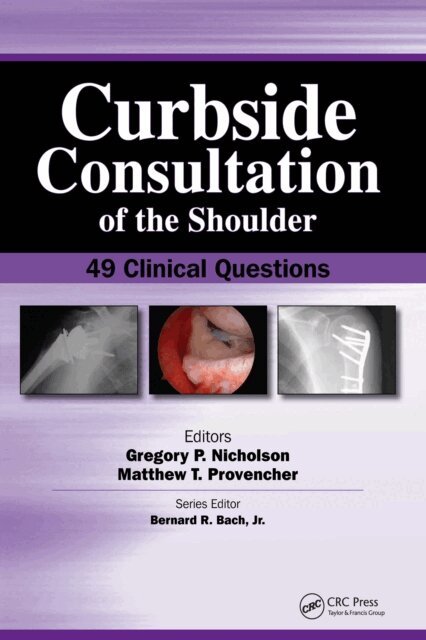
Are you looking for concise, practical answers to those questions that are often left unanswered by traditional shoulder references? Are you seeking brief, evidence-based advice for complicated cases or controversial decisions? Curbside Consultation of the Shoulder: 49 Clinical Questions provides quick answers to the thorny questions most commonly posed during a “curbside consultation†between orthopedic surgical colleagues.
Drs. Gregory P. Nicholson and Matthew T. Provencher have designed this unique reference which offers expert advice, preferences, and opinions on tough clinical questions commonly associated with the shoulder. The unique Q&A format provides quick access to current information related to the shoulder with the simplicity of a conversation between two colleagues. Numerous images, diagrams, and references are included to enhance the text and to illustrate the management of shoulders.
Curbside Consultation of the Shoulder: 49 Clinical Questions provides information basic enough for residents while also incorporating expert advice that even high-volume clinicians will appreciate. Practicing orthopedic surgeons, orthopedic residents, and medical students will benefit from the user-friendly and casual format and the expert advice contained within.
Some of the questions that are answered:
How do you manage first time shoulder dislocations in a high level athlete? How do you diagnose and manage SLAP lesion, both in athletes and in laborers, and the impact of age on outcomes? What are the indications for long head of biceps tenotomy versus tenodesis in RC repair surgery? After an arthroscopic instability repair for recurrent anterior instability, when is the patient allowed to return to contact sports? What are the indications of ORIF of an acute fracture of the mid-shaft clavicle? What are the indications of ORIF and indications for hemiarthroplasty in the treatment of a proximal humerus fracture? When is arthroscopic closure of the rotator interval indicated in the setting of shoulder instability—anterior, posterior, multidirectional?2 094 kr
Läs direkt efter köp
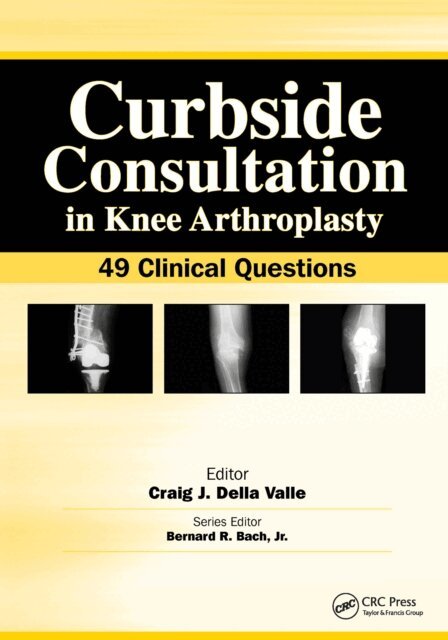
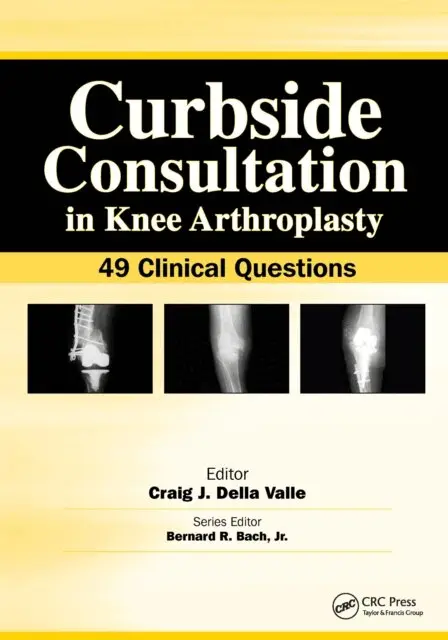
Are you looking for concise, practical answers to those questions that are often left unanswered by traditional knee arthroplasty references? Are you seeking brief, evidence-based advice for complicated cases or controversial decisions? Curbside Consultation in Knee Arthroplasty: 49 Clinical Questions provides quick answers to the thorny questions most commonly posed during a “curbside consultation†between orthopedic surgical colleagues.
Dr. Craig J. Della Valle has designed this unique reference which offers expert advice, preferences, and opinions on tough clinical questions commonly associated with knee arthroplasty. The unique Q&A format provides quick access to current information related to knee arthroplasty with the simplicity of a conversation between two colleagues. Numerous images, diagrams, and references are included to enhance the text and to illustrate the management of the knee.
Curbside Consultation in Knee Arthroplasty: 49 Clinical Questions provides information basic enough for residents while also incorporating expert advice that even high-volume clinicians will appreciate. Practicing orthopedists, orthopedic residents, and non-physician personnel will benefit from the user-friendly and casual format and the expert advice contained within.
Some of the questions that are answered:
I have a patient who has a deformity of the distal femur and arthritis of the knee. Should I do an osteotomy to correct the deformity? If I am doing a total knee arthroplasty and the patella does not seem to track well, what should I do? I am doing a total knee in a patient with a varus deformity. I have done my standard release and the knee is still tight medially. What should I do? What do I do if I cut the MCL intra-operatively? How do you assess joint line position at the time of revision TKA? What are the clinical consequences if it is elevated?1 192 kr
Läs direkt efter köp
2 214 kr
Läs direkt efter köp
2 656 kr
Läs direkt efter köp
2 094 kr
Läs direkt efter köp
Are you looking for concise, practical answers to those questions that are often left unanswered by traditional shoulder references? Are you seeking brief, evidence-based advice for complicated cases or controversial decisions? Curbside Consultation of the Shoulder: 49 Clinical Questions provides quick answers to the thorny questions most commonly posed during a “curbside consultation†between orthopedic surgical colleagues.
Drs. Gregory P. Nicholson and Matthew T. Provencher have designed this unique reference which offers expert advice, preferences, and opinions on tough clinical questions commonly associated with the shoulder. The unique Q&A format provides quick access to current information related to the shoulder with the simplicity of a conversation between two colleagues. Numerous images, diagrams, and references are included to enhance the text and to illustrate the management of shoulders.
Curbside Consultation of the Shoulder: 49 Clinical Questions provides information basic enough for residents while also incorporating expert advice that even high-volume clinicians will appreciate. Practicing orthopedic surgeons, orthopedic residents, and medical students will benefit from the user-friendly and casual format and the expert advice contained within.
Some of the questions that are answered:
How do you manage first time shoulder dislocations in a high level athlete? How do you diagnose and manage SLAP lesion, both in athletes and in laborers, and the impact of age on outcomes? What are the indications for long head of biceps tenotomy versus tenodesis in RC repair surgery? After an arthroscopic instability repair for recurrent anterior instability, when is the patient allowed to return to contact sports? What are the indications of ORIF of an acute fracture of the mid-shaft clavicle? What are the indications of ORIF and indications for hemiarthroplasty in the treatment of a proximal humerus fracture? When is arthroscopic closure of the rotator interval indicated in the setting of shoulder instability—anterior, posterior, multidirectional?2 140 kr
Läs direkt efter köp
Are you looking for concise, practical answers to those questions that are often left unanswered by traditional knee arthroplasty references? Are you seeking brief, evidence-based advice for complicated cases or controversial decisions? Curbside Consultation in Knee Arthroplasty: 49 Clinical Questions provides quick answers to the thorny questions most commonly posed during a “curbside consultation†between orthopedic surgical colleagues.
Dr. Craig J. Della Valle has designed this unique reference which offers expert advice, preferences, and opinions on tough clinical questions commonly associated with knee arthroplasty. The unique Q&A format provides quick access to current information related to knee arthroplasty with the simplicity of a conversation between two colleagues. Numerous images, diagrams, and references are included to enhance the text and to illustrate the management of the knee.
Curbside Consultation in Knee Arthroplasty: 49 Clinical Questions provides information basic enough for residents while also incorporating expert advice that even high-volume clinicians will appreciate. Practicing orthopedists, orthopedic residents, and non-physician personnel will benefit from the user-friendly and casual format and the expert advice contained within.
Some of the questions that are answered:
I have a patient who has a deformity of the distal femur and arthritis of the knee. Should I do an osteotomy to correct the deformity? If I am doing a total knee arthroplasty and the patella does not seem to track well, what should I do? I am doing a total knee in a patient with a varus deformity. I have done my standard release and the knee is still tight medially. What should I do? What do I do if I cut the MCL intra-operatively? How do you assess joint line position at the time of revision TKA? What are the clinical consequences if it is elevated?716 kr
Läs direkt efter köp
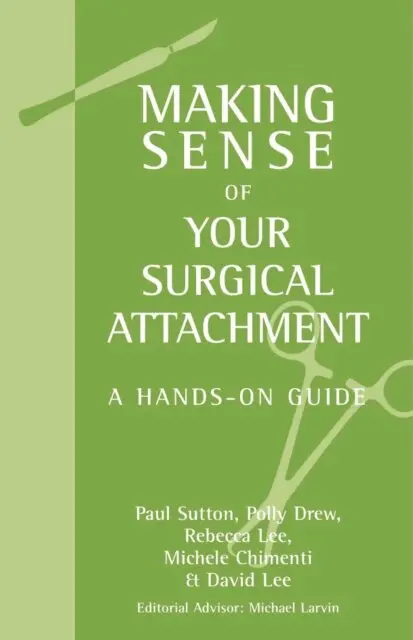
Your surgical attachment is fast approaching and you have a number of questions that need answering to help you make the most of your experience... Making Sense of Your Surgical Attachment will answer them for you. Everything you need to know about the operating theatre and the use of surgical instruments is packed into this one handy guide:* The names and functions of surgical instruments * Electrosurgery and its techniques * How to use laparoscopic equipment * Sutures - put your best knot forward! * Operating theatre conduct and etiquette, and ''do''s and don''ts'' when assisting * How to scrub up* Pre-operative and peri-operative care* The surgical career ladder and how to climb it.With a foreword by Andrew Raftery, Chair of the Royal College of Surgeons of England''s Medical Students Liaison Committee, Making Sense of Your Surgical Attachment offers an engaging insight into the practical aspects of surgery.
1 675 kr
Läs direkt efter köp
The concept of integrating pain management into the surgical process as a single entity is new and exciting. The use of local anaesthetic to block post-operative pain at the site of its generation is here refined into a management program allowing early mobilisation and dramatic pain control in the early post-operative period. This multimodal technique is demonstrated here with application to lower limb arthroplasty and spinal surgery. This is not only a detailed explanation and instruction in the technique and concept, but a historical perspective on its development, and will be of great interest to all orthopaedic surgeons as well as anaesthetists.
Using easy-to-understand terminology, this text covers:
LIA methods Pre- and postoperative management How to select a needle injection location The benefits of combining the LIA technique with the drugs Naropin, Marcain, and XylocaineColor images throughout the text highlight the advantages of LIA, including:
avoidance of sedation simple execution for physicians reduced risk of infection and blood clots little physiological disturbance earlier patient discharge and return to the workforce improved patient performance, outlook, and mobility fewer medical expenses.2 318 kr
Läs direkt efter köp
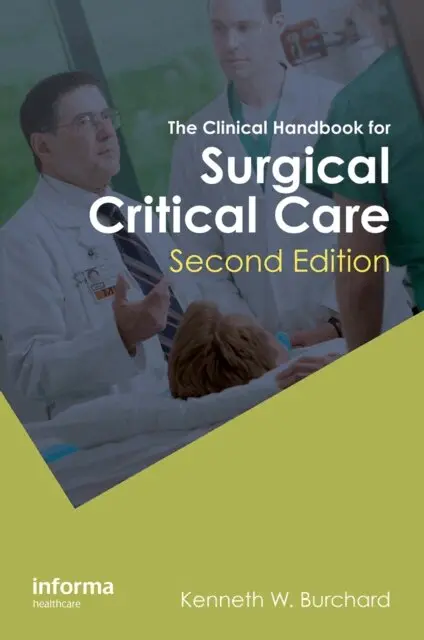
The Clinical Handbook for Surgical Critical Care, Second Edition covers all aspects of acute and emergency care for the critically ill or injured patient who may be in the ICU and/or CCU. This new edition is separated into chapters by organ systems, and takes a look at the critical disease states associated with these organs. All chapters follow the same structure:
Pathophysiology Physical examination and monitoring Laboratory results Treatment options (with supporting evidence)New to this edition:
Full update on the advances in basic and clinical science since publication of the first edition An update to treatment options in all sections A new chapter on acute abdominal illness Online learning features including questions & answers and case studies.4 781 kr
Läs direkt efter köp
1 231 kr
Läs direkt efter köp
3 441 kr
Läs direkt efter köp
999 kr
Läs direkt efter köp
3 265 kr
Skickas inom 7-10 vardagar
1 298 kr
Skickas inom 7-10 vardagar
1 598 kr
Skickas inom 7-10 vardagar
3 202 kr
Läs direkt efter köp
3 273 kr
Läs direkt efter köp
1 153 kr
Skickas inom 3-6 vardagar
1 442 kr
Skickas inom 7-10 vardagar